In this article (10)▾
Most "immune boosting" products in the wellness aisle are either too aggressive (single high-dose herbs at acute-phase intensity, taken daily) or too dilute (kitchen-sink blends at sub-therapeutic dose). The middle path is a daily-strength immune tea that supports baseline immune function without exhausting the system.
This guide is what that middle-path tea looks like, why these herbs in particular, and how to integrate the daily cup into your fall and winter rhythm.
A daily cup is the heart of this, so my guide to brewing herbal tea for immune support is a good companion piece.
What immune support actually means
The immune system is not a single thing you "boost." It is several interacting systems: barrier defenses (skin, mucous membranes), innate immunity (first-responder cells), adaptive immunity (antibody and T-cell response), and the underlying inflammatory baseline. Supporting it well means working across these layers, not pushing one of them harder.
Herbs do this through three primary mechanisms:
- Mucous membrane support: Strengthening the barriers where viruses enter (mouth, nose, throat).
- Immune modulation: Helping the system respond appropriately to threats without over-reacting.
- Anti-inflammatory baseline: Lowering chronic inflammation that drains immune resources.
The four-herb daily blend
This is a blend to make, not a blend to buy from me. I do not currently offer a seasonal-immune formula, and I would rather teach you the four herbs than point you at something of mine that was built for a different job. All four are inexpensive, easy to source from a reputable bulk-herb supplier, and easy to keep on hand.
Elderflower (Sambucus nigra)
The upper-respiratory mucous-membrane herb. Daily elderflower tea supports the barrier defenses in the sinuses and throat, which is where most viral exposure happens.
Thyme (Thymus vulgaris)
The antimicrobial respiratory herb. Volatile oils (thymol, carvacrol) provide background antiviral and antibacterial activity, plus support for the lung's mucous-clearing function.
Ginger (Zingiber officinale)
The warming, anti-inflammatory base. Daily ginger supports digestion (where much of the immune system actually lives), provides gentle anti-inflammatory action, and supports peripheral circulation.
Lemon (Citrus limon, fresh)
The vitamin-C-and-flavor herb. Fresh lemon adds bright flavor and a small but consistent vitamin-C contribution. The pectin in the peel also supports gut health if you use organic lemon with peel.
The daily ritual
- One mug, morning or mid-afternoon. The morning slot sets the tone for the day; the afternoon slot rides through the energy dip.
- One teaspoon of dried blend, hot water just off the boil, covered for 8-10 minutes. The cover is not optional; it keeps the volatile oils in.
- Add fresh lemon and a small amount of honey if you like sweet. Both are functional, not just flavor.
- Daily through cold-and-flu season (September through April). The benefit compounds.
When to step up
When symptoms start (sore throat, sneezing, that "off" feeling), shift from one mug daily to three or four. Add echinacea tincture every 2-3 hours for the first 48 hours, plus elderberry syrup at acute-phase doses. The tea is still the daily anchor; the acute additions handle the active illness.
Echinacea: the acute amplifier, not a daily herb
Echinacea (Echinacea purpurea, angustifolia) is the herb to reach for in the first 48 hours of symptoms rather than as a daily preventive, since chronic daily use can blunt its acute effect. The Linde 2014 Cochrane review concluded echinacea preparations can shorten cold duration; the effect is modest but real. It layers onto the daily tea during active illness, not before it.
Where to go from here
- Step 1 (free): Match your essence in 7 questions. Take the essence quiz.
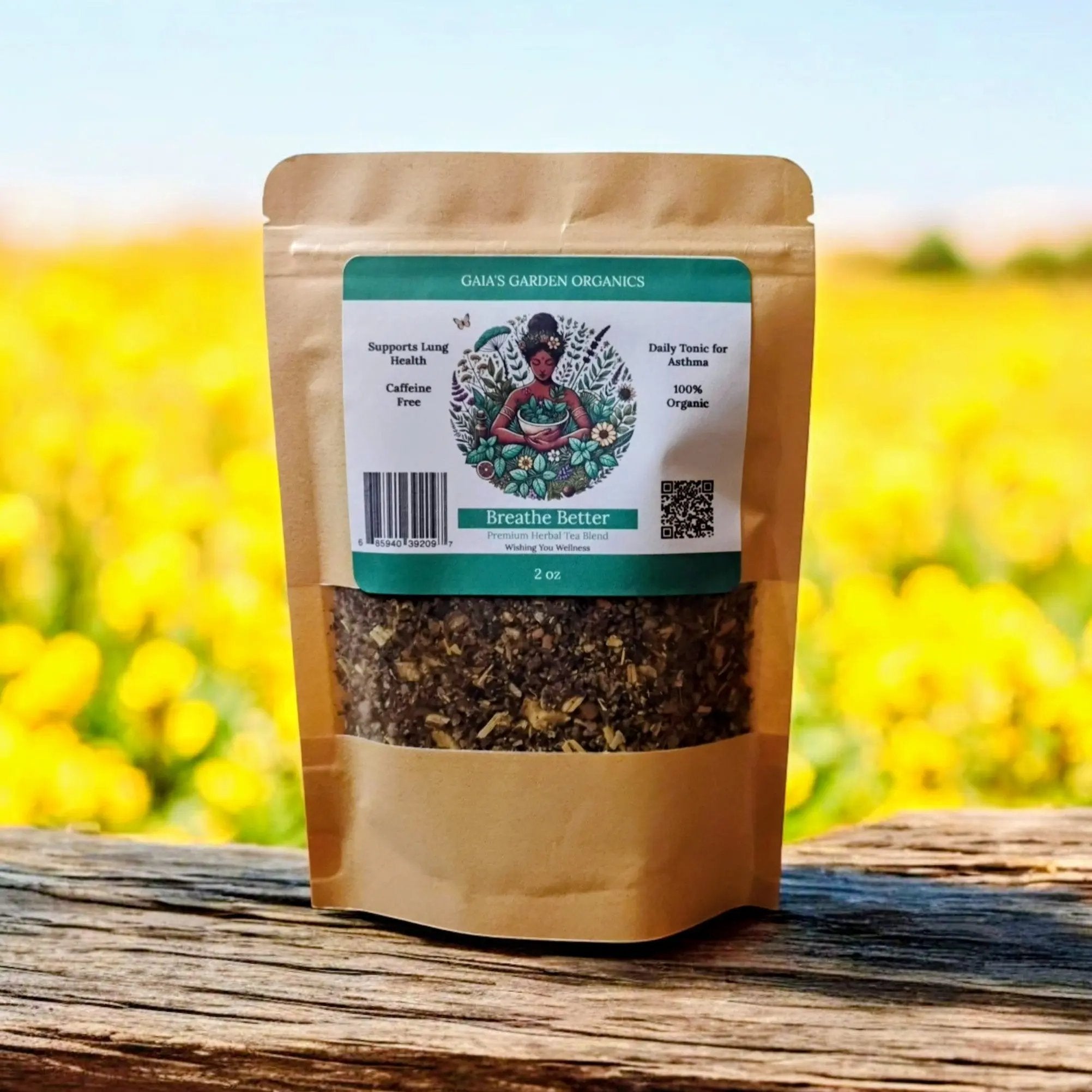
- Step 2 (30-night guarantee): There is no bottle of mine for this one. I do not make an immune formula, and Breathe Better Tea is a respiratory-comfort blend for dry air and the tight-chested cough pattern, not an immune product. If that is the pattern you actually have, it is the right cup. If what you want is seasonal immune support, blend the four herbs above yourself and keep the jar where you will see it.
- Step 3 (coming soon): Harmony Within, my Yoga Nidra book.
This guide is general seasonal-wellness education. Severe symptoms or recurring infections need medical evaluation.
Related products from our apothecary
Handcrafted in Umpire, Arkansas by Gaia Devi, clinical herbalist.
Explore our apothecary
Learn more
Flower Essences 101
A clinical herbalist's plain-English guide to what flower essences are and how to take them.
Find your match
Browse the Free Practice Library
8 pattern-matched archetype entry points (sleep, anxiety, tension, heart, inner quiet, clarity, boundary, spark), each as a 5-question quiz, a 3-day mini-course, or a one-tap interactive tool.
Shop the apothecary
Medicinal Herbal Teas
Loose-leaf, clinical-herbalist-blended teas, each built around a specific job.
Sources & further reading
Authoritative references consulted in writing this article. Open in a new tab.
- PubMed (Hawkins et al., 2019)Black elderberry (Sambucus nigra) supplementation effectively treats upper respiratory symptoms: A meta-analysis of randomized, controlled clinical trials
- PubMed (Tiralongo et al., 2016)Elderberry Supplementation Reduces Cold Duration and Symptoms in Air-Travellers: A Randomized, Double-Blind Placebo-Controlled Clinical Trial
- PubMed (Chandrasekhar et al., 2012)A prospective, randomized double-blind, placebo-controlled study of safety and efficacy of a high-concentration full-spectrum extract of ashwagandha root in reducing stress and anxiety in adults
- NCCIHHerbs at a Glance (per-herb safety and evidence)
- Chestnut School of Herbal MedicineFlowering Herbs (article archive)