In this article (9)▾
Spring allergies show up at the same time every year in the same population with the same symptoms. They also respond to the same general herbal allies if you start before pollen hits, not after symptoms are already loud.
This guide is the four-herb framework I use in clinic for the seasonal allergy adult: stuffy head, watery eyes, sinus pressure, scratchy throat starting in mid-March and running through May.
The allergy herbs here are easiest to dose as a tincture, and my overview of how to use a herbal tincture covers the basics.
Why timing matters more than dose
Allergy is an immune over-response. The body learns the pattern of the allergen and ramps up its reaction over the season. Herbal allies work best when they have time to modulate that pattern before it peaks. Starting two to three weeks before your local pollen season is more effective than starting at peak symptoms.
Late starters can still get benefit, but it takes longer to land.
The four herbs
Nettles (Urtica dioica)
Nettle leaf is the classical Western allergy herb. Traditional use and limited modern evidence both support its mast-cell stabilizing effect (mast cells are the immune cells that release histamine during allergic response). Used as freeze-dried leaf or as strong infusion (a quart per day during the season).
Goldenrod (Solidago)
Counterintuitively, goldenrod is often blamed for hay fever but is actually an effective allergy ally. The visible yellow plant gets blamed because it blooms when ragweed (the actual culprit) is also blooming; ragweed pollen is wind-borne and invisible. Goldenrod taken as tea or tincture supports kidney drainage and sinus circulation. It is also the herb of Confidence Essence; the same plant works differently as flower essence (emotional) vs. herbal preparation (physical).
Elderflower (Sambucus)
Elderflower is the upper-respiratory ally for the watery-eyes, runny-nose, congested-sinus picture. Traditional use spans European, North American, and Eastern European herbal medicine. Best as hot tea during acute symptom moments.
Reishi mushroom (optional, for the systemic immune layer)
For severe seasonal allergies that have escalated year after year, reishi as a daily decoction or tincture for 2-3 months before and during the season can modulate the underlying immune over-reactivity. This is a long-arc intervention.
The daily protocol
- Two to three weeks before pollen season: Daily strong nettle infusion (1 quart of strongly steeped nettle leaf tea, sipped through the day). Build the baseline.
- During pollen season: Continue daily nettles. Add a cup of elderflower tea morning and evening. Goldenrod tincture or tea as needed for acute sinus pressure or stuffiness.
- For peak weeks: Layer reishi if you have it, or step up the elderflower frequency.
- For acute breakthrough: Saline nasal rinse, hot elderflower tea, rest. The herbs work better when you also reduce exposure (HEPA filter, change clothes when coming inside).
What this is not for
Severe allergic reactions (anaphylaxis, asthma exacerbation, food-allergy events) need pharmaceutical-grade response (epinephrine, prescription antihistamines, asthma medications). The herbal protocol supports mild-to-moderate seasonal allergies; it is not a replacement for emergency response or for pulmonologist or allergist care if you have a diagnosed condition.
Where to go from here
- Step 1 (free): Match your essence in 7 questions. Take the essence quiz.
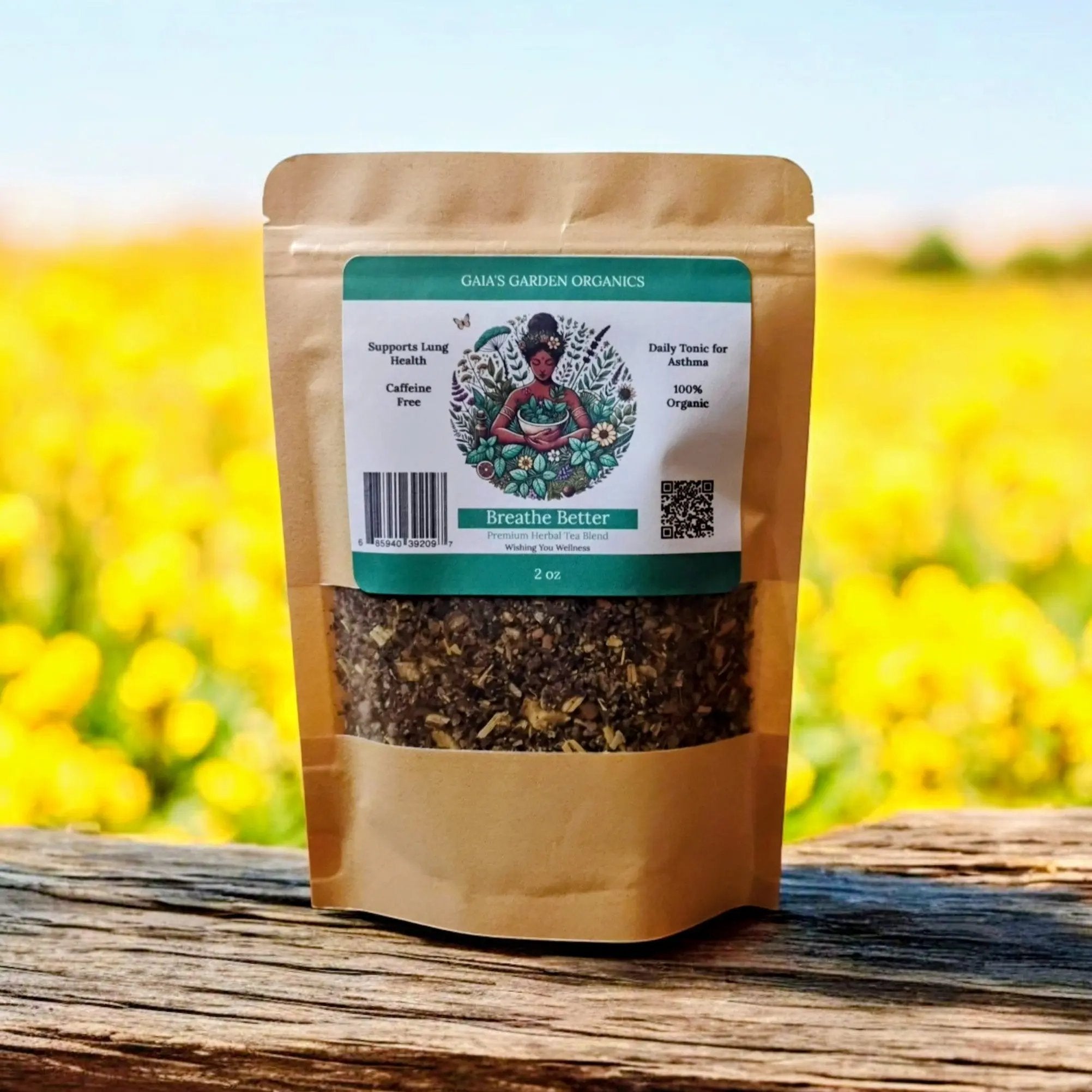
- Step 2 (30-night guarantee): Our daily teas for chronic baseline support: Breathe Better Tea for respiratory wellness alongside the nettle protocol. Healing Hypnotic Tea for the secondary sleep disruption that allergies often bring.
- Step 3 (coming soon): Harmony Within, my Yoga Nidra book.
This guide is general seasonal-wellness education. Severe or worsening allergies should be evaluated by an allergist; asthma exacerbation needs prompt medical attention.
Frequently asked
When exactly should I start the protocol?
Two to three weeks before pollen typically arrives in your area. For most of the temperate US, that means starting in late February to early March for tree pollen, late March for grass pollen, and mid-July for ragweed. Use a local pollen tracker for your zip code and back up three weeks from the first day numbers start climbing. Starting later still helps; it just takes longer to land.
Can I take herbal allergy support with my antihistamine?
Generally yes. The herbs work on different mechanisms than antihistamines (mast-cell stabilization and immune modulation rather than blocking histamine receptors). Many clients use the herbs daily as the baseline and antihistamines as needed for breakthrough symptoms. Over a season or two, most find they need less antihistamine. Never stop a prescription medication without your prescriber.
Will nettles taste bad?
Strong nettle infusion has an earthy, mineral-rich, slightly grassy taste. Some people love it; others tolerate it. Adding a small amount of mint, lemon, or honey makes it more palatable. You can also use freeze-dried nettle capsules if the tea isn't your style; the dose is roughly 2 grams of freeze-dried leaf twice daily.
Is this safe for kids?
Nettle tea (mild infusion, not the strong adult dose) is safe from age 3 up. Elderflower tea has traditional pediatric use. Goldenrod is generally fine. Reishi is best avoided in young children due to immune-modulating effects in a still-developing immune system. For child-specific dosing, work with a pediatric herbalist or check the children's protocols in our other seasonal posts.
What about local honey for allergies?
The folk theory is that local honey contains small amounts of local pollen and acts as a desensitizer. The evidence is mixed and the effect is small if real. It is also pleasant. We have no opinion against it as part of the protocol; just do not expect it to substitute for the active herbal allies.
Products from this article
Handcrafted in Umpire, Arkansas by Gaia Devi, clinical herbalist.
Explore our apothecary
Learn more
Flower Essences 101
A clinical herbalist's plain-English guide to what flower essences are and how to take them.
Find your match
Browse the Free Practice Library
8 pattern-matched archetype entry points (sleep, anxiety, tension, heart, inner quiet, clarity, boundary, spark), each as a 5-question quiz, a 3-day mini-course, or a one-tap interactive tool.
Shop the apothecary
Medicinal Herbal Teas
Loose-leaf, clinical-herbalist-blended teas, each built around a specific job.
Sources & further reading
Authoritative references consulted in writing this article. Open in a new tab.
- PubMed (review, 2022)Health-promoting and disease-mitigating potential of Verbascum thapsus L. (common mullein): A review
- NCCIHHerbs at a Glance (per-herb safety and evidence)
- NCCIHDietary and Herbal Supplements
- Chestnut School of Herbal MedicineFlowering Herbs (article archive)