In this article (7)▾
A woman comes into my clinic six months after losing her husband. She has done everything right: she sees a grief counselor weekly, her friends have shown up, she eats and sleeps and walks. She tells me the grief is still there but she does not feel it any more. She just feels nothing.
That is the place rose essence is for. Not the acute breaking-open phase of grief. The closed-off, defended, "I don't even know what I'm feeling anymore" phase that comes later. The phase where the heart has put up a wall to survive, and the wall is now in the way of healing.
Heartful Essence is the rose flower essence I formulate for that pattern. Bach method, sun-infused rose blossoms from our medicine garden in Umpire, Arkansas, preserved in brandy and mountain water. This guide covers what rose essence does, who it is genuinely for, and how to use it across the long arc the heart actually heals on.
What rose has been used for, across two thousand years
Rose is one of the most-used plant medicines in recorded history. Every major herbal tradition has rose at the heart of its emotional pharmacopeia.
- Persian medicine used rose for emotional inflammation: states of overheated feeling, including grief, rage, and obsessive love.
- Chinese medicine uses rose for "stuck liver qi", emotional stagnation, the energy that should be moving but isn't.
- European herbal tradition uses rose for grief, heartbreak, and the recovery period after emotional wounds.
- Modern clinical herbalism uses rose essence for emotional armoring, the closed-down heart, postpartum mood patterns, and the deep slow work of letting love back in after loss.
What is consistent across all of these is that rose is for the heart specifically. Not the nervous system (that's lavender). Not the mind (that's gotu kola). The heart, in both the felt sense and the energetic sense.
The closed-heart pattern
Acute grief looks like crying, like overwhelm, like not being able to function. Heartful is not really for that phase. The acute breaking-open phase needs human company and time more than it needs herbs.
What Heartful is for is the phase after: where the heart has armored itself to survive, and the armor is now what is keeping the heart from healing.
Signs:
- Emotional numbness that feels like the absence of feeling, not the presence of peace.
- Difficulty receiving care, even from people you love.
- A sense of being watchful, defended, unwilling to be vulnerable.
- The chest feels physically tight in a way that is not anxiety; it is closed.
- You know you're grieving but you cannot actually feel it.
- Disconnection from your own heart, from your own joy, from your own grief.
This is the heart that needs a slow soft medicine. Rose is that medicine.
The Bach method, briefly
Dr. Edward Bach developed the flower essence method in 1930s England. The preparation is simple and specific: fresh blossoms float on a clean glass bowl of mountain water, in direct sunlight, for three to four hours. The infused water is preserved with high-proof brandy. That preserved liquid is the mother essence.
Our Heartful Essence is prepared this way, in our medicine garden in Umpire, Arkansas, with fresh rose blossoms we grow ourselves. The brandy preservative is not optional; it is the traditional menstruum Bach used and is what keeps the essence shelf-stable for years. We do not use glycerin alternatives. We work to the clinical gold standard for flower essences.
How to take Heartful
- Standard dose: Four drops in the morning. Four drops at night. Under the tongue or in a sip of water. The morning dose anchors the day; the evening dose lets the heart soften toward sleep.
- During hard moments: A few extra drops, generously, when the closed feeling is loud. Anniversaries, holidays, moments of unexpected memory. There is no overdose risk.
- For postpartum mood: Same dose. Rose is one of the few flower essences with a long tradition of postpartum use. Gentle enough for nursing.
- For pets in grief: Four drops in the water bowl twice daily. Pets respond to rose much the way humans do, and grieving animals often shift within two weeks.
What to expect
This is slow medicine. Not slow because it doesn't work; slow because the heart heals on a different timeline than the nervous system or the body.
- First two weeks: Often nothing felt at the surface. The chest is still tight, the numbness is still there. Underneath, the heart is starting to thaw.
- Weeks three to four: Tears come more easily, often for things you would not have expected. This is healing, not relapse.
- Weeks four to eight: The closed feeling softens. You start being able to receive small kindnesses without flinching. You can sit with the grief instead of being defended against it.
- Months two through six: The heart has its rhythm back. Joy and grief can live in the same room. You are not "over it." You are with it differently.
This is not a 7-day reset. It is a 4-week to 6-month support for what the heart is already trying to do.
The deeper work
The essence is the daily anchor. The protocol is where the heart actually relearns its rhythm.
The 4-Week Heart Rhythm is our free clinical-herbalist guide for grief, heartbreak, and the tender-heart pattern. A daily 3-minute Hand-on-Heart practice runs across all four weeks. The weekly themes shift: Week 1 is Permission. Week 2 is Body Practices. Week 3 is Honoring (the Letter, the Spoken Name, the Candle). Week 4 is Re-emerging. Most readers who pair the essence with the rhythm feel the chest soften by Week 2.
Where to go from here
- Step 1 (free): The 4-Week Heart Rhythm PDF, a tender clinical-herbalist guide for grief and the closed-heart phase. Get the rhythm.
- Step 2 (30-night guarantee): Heartful Essence, four drops twice a day. Heartful Essence. If the heart pattern is layered with anxiety (chest tightness alongside the numbness), pair with Calm Spirit Tonic, which carries rose again at tincture strength alongside motherwort, tulsi, and blue vervain. Rose twice, on two different layers: the essence for the emotional pattern, the tincture for the body holding it. That pairing is the two-layer protocol I reach for in clinic for a tender heart that is also asking for nervous-system softening.
- Step 3 (coming soon): Harmony Within, my Yoga Nidra book. Three full scripts dedicated to grief and healing, including a body-scan that focuses on the heart center.
This guide is for general emotional support during grief and heart-opening and is not a substitute for therapeutic care. If your grief is unmanageable, please work with a grief counselor or therapist.
Looking for the broader context on flower essences? Our pillar guide Flower Essences 101 covers the history of the Bach method, how preparation actually works, and how to choose between the five active essences we make.
Frequently asked
How is Heartful different from Tranquility?
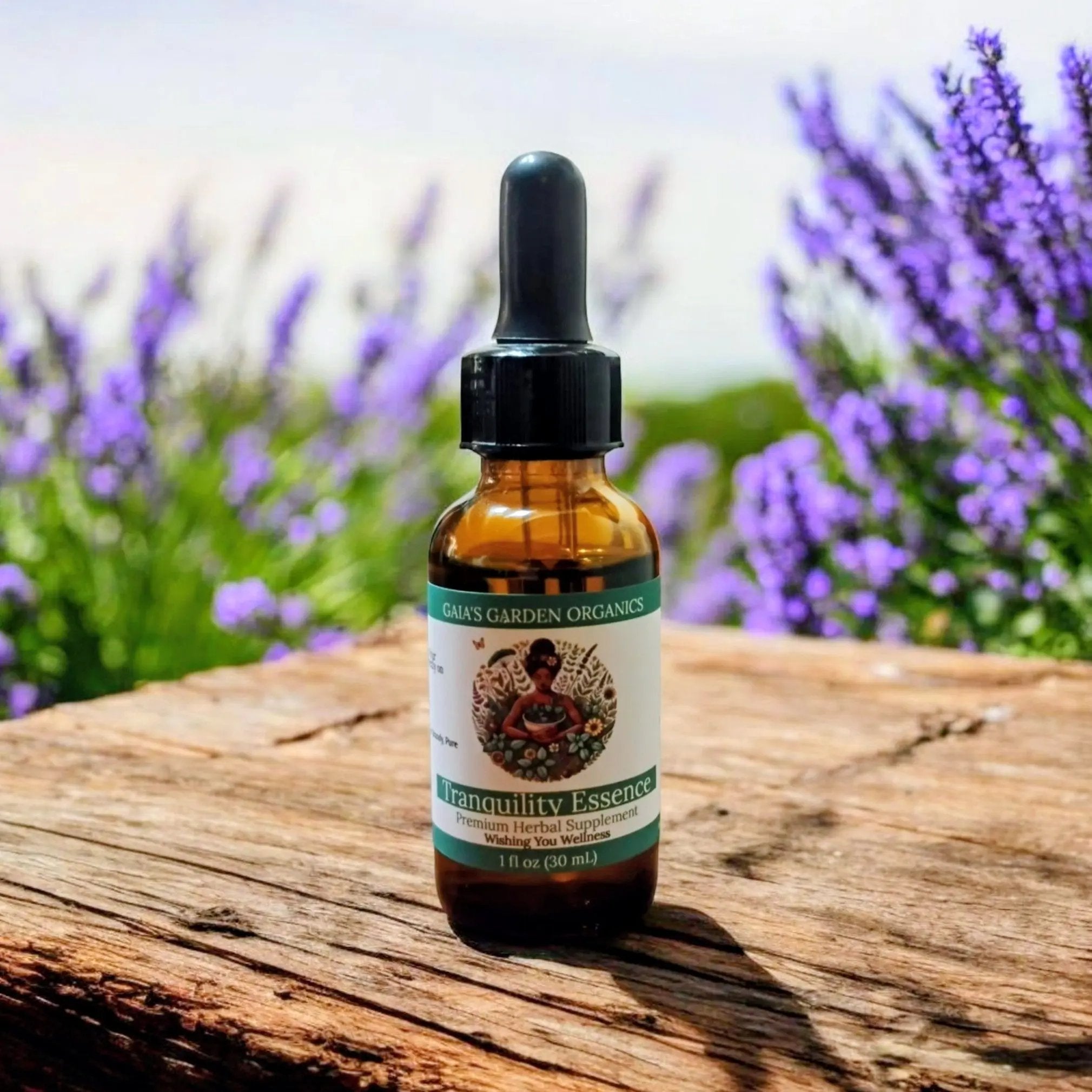
Both are Bach-method flower essences but they target different patterns. Tranquility is lavender essence for the chest-tight, racing-thought anxious heart, when the body is wound too tight. Heartful is rose essence for the closed, defended heart, when grief or loss has put a wall up that's now blocking healing. Many of my clients use both: Tranquility for the anxious nervous-system layer, Heartful for the underneath grief or shame layer. They're complementary, not competitive.
I lost someone recently. Should I take rose essence right away?
Not necessarily. The acute breaking-open phase of grief (the first weeks where you are crying, overwhelmed, unable to function in normal ways) doesn't really need an essence, it needs human company, rest, and time. Heartful is more useful in the phase after, when the heart has armored itself to survive and the armor is now keeping you from healing. That phase usually shows up 4-12 weeks after the loss. If you're unsure where you are, reply to any of our emails and we'll help you figure out the right starting point.
How long does it take to feel something?
Heartful is slow medicine. Most readers feel nothing in the first two weeks at the surface; underneath, the heart is thawing. Weeks 3-4 often bring unexpected tears, which is the healing showing itself. Weeks 4-8 are when the closed feeling softens and you can start receiving care without flinching. The full arc is 2-6 months, not 7 days. If you want a faster acute tool for grief-driven anxiety or sleep loss, pair with Calm Spirit Tonic (anxiety) or Dreamweaver Tonic (sleep), both work on the nervous-system layer that rose doesn't reach.
Is Heartful safe during pregnancy or nursing?
Yes. Rose is one of the safest plants in herbal medicine and has a long tradition of pregnancy and postpartum use. The flower essence form is even gentler than the tincture form (no measurable plant matter, brandy preservative at very small doses). Many of my clinic clients use Heartful through pregnancy for prenatal emotional support and into nursing for postpartum mood. As always, consult your healthcare provider if you have specific concerns.
Can I give it to my grieving pet?
Yes, and many do. Pets respond to rose essence much the way humans do, the same closed-off, defended pattern after losing a housemate (human or animal) often softens within two weeks of daily essence. Four drops in the water bowl twice daily is the standard dose. The brandy preservative is at such a small concentration that it's safe for pets at this dose. We have a separate guide on pet grief and a dog-specific flower-essence quiz; reply to any email and we'll send the link.
Products from this article
Handcrafted in Umpire, Arkansas by Gaia Devi, clinical herbalist.
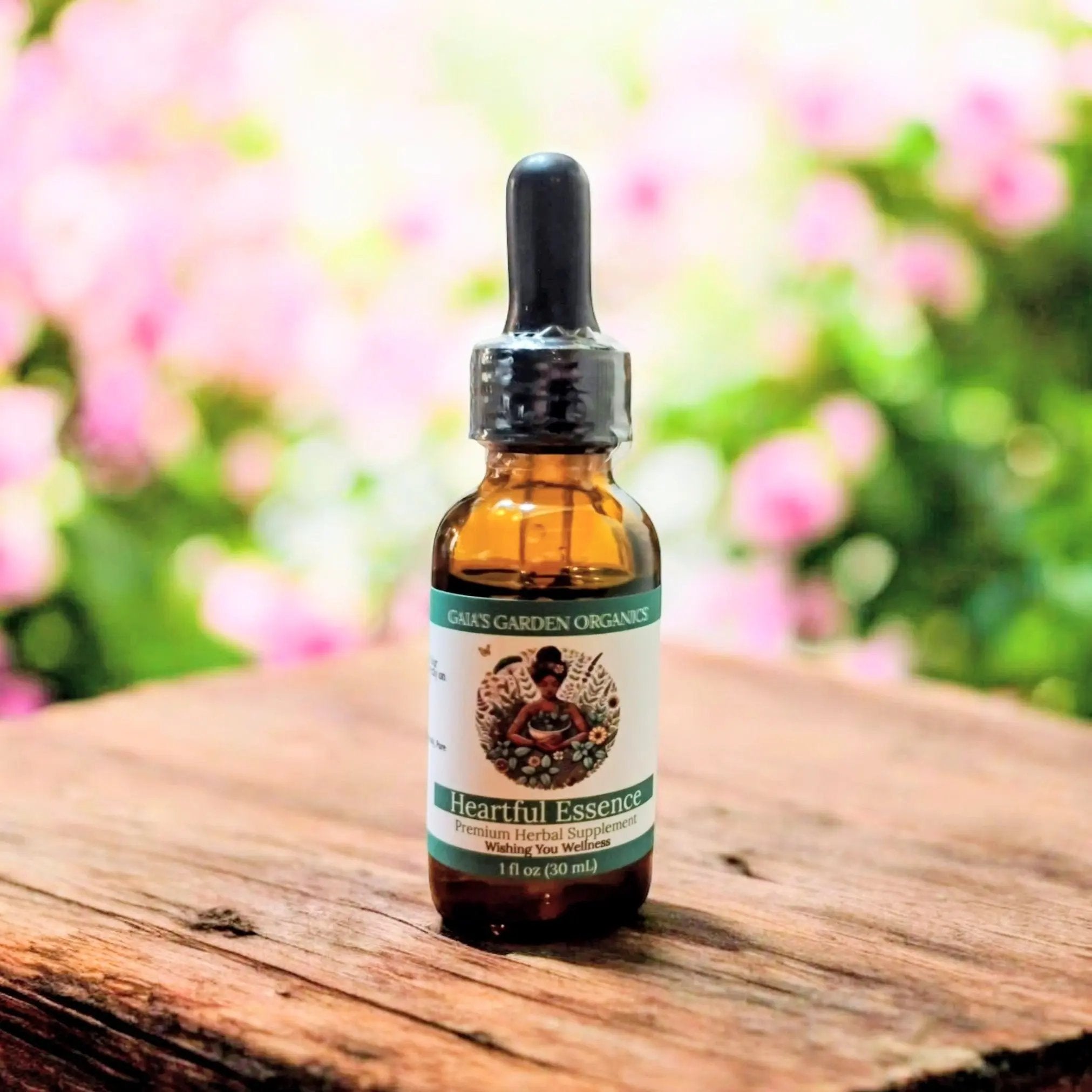
Heartful Essence - Organic Rose Flower Essence
for grief & heart-opening
 Bestseller
Tranquility Essence - Organic Lavender Flower Essence
for stress & anxious hearts
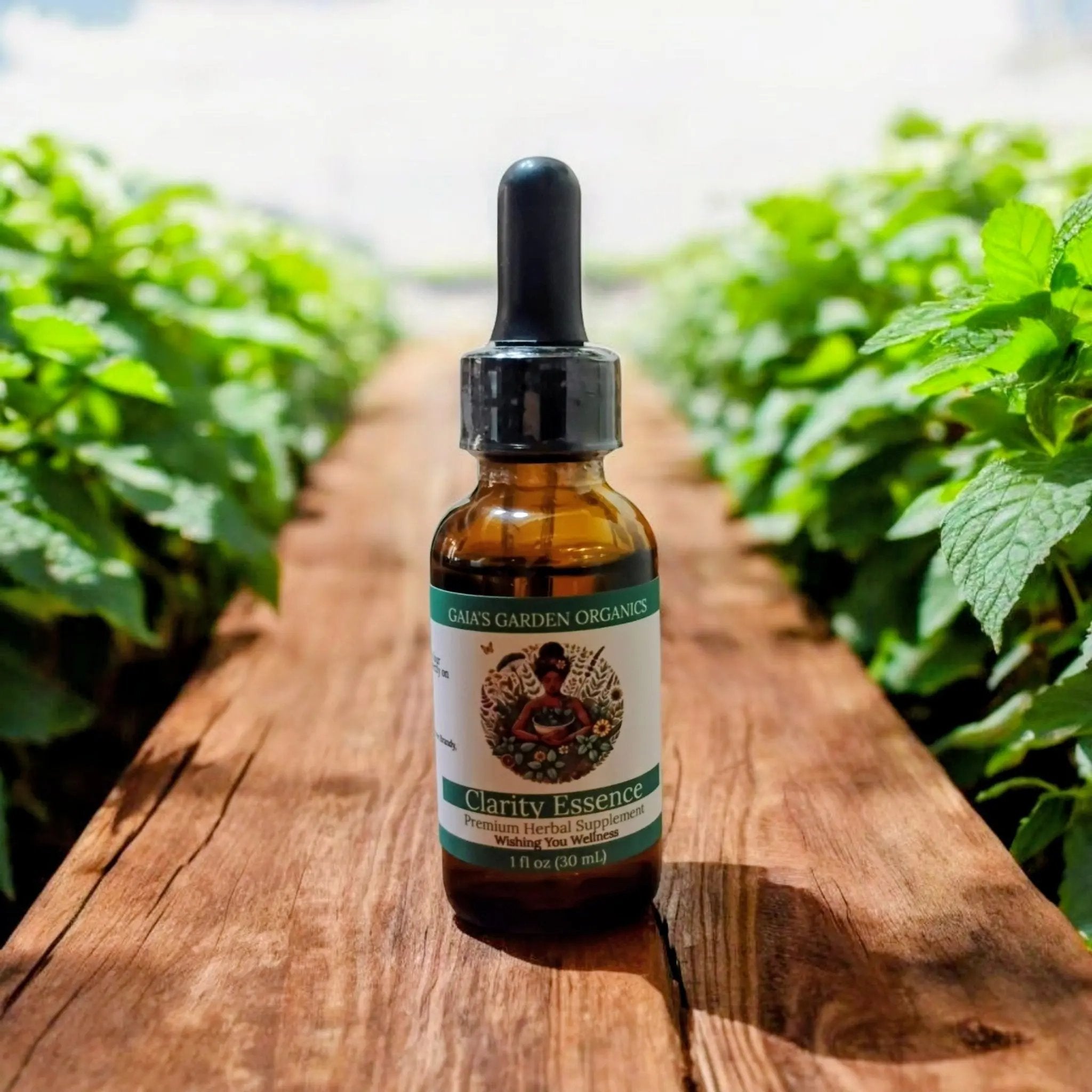
Clarity Essence - Organic Peppermint Flower Essence
for focus & mental alertness
 Bestseller
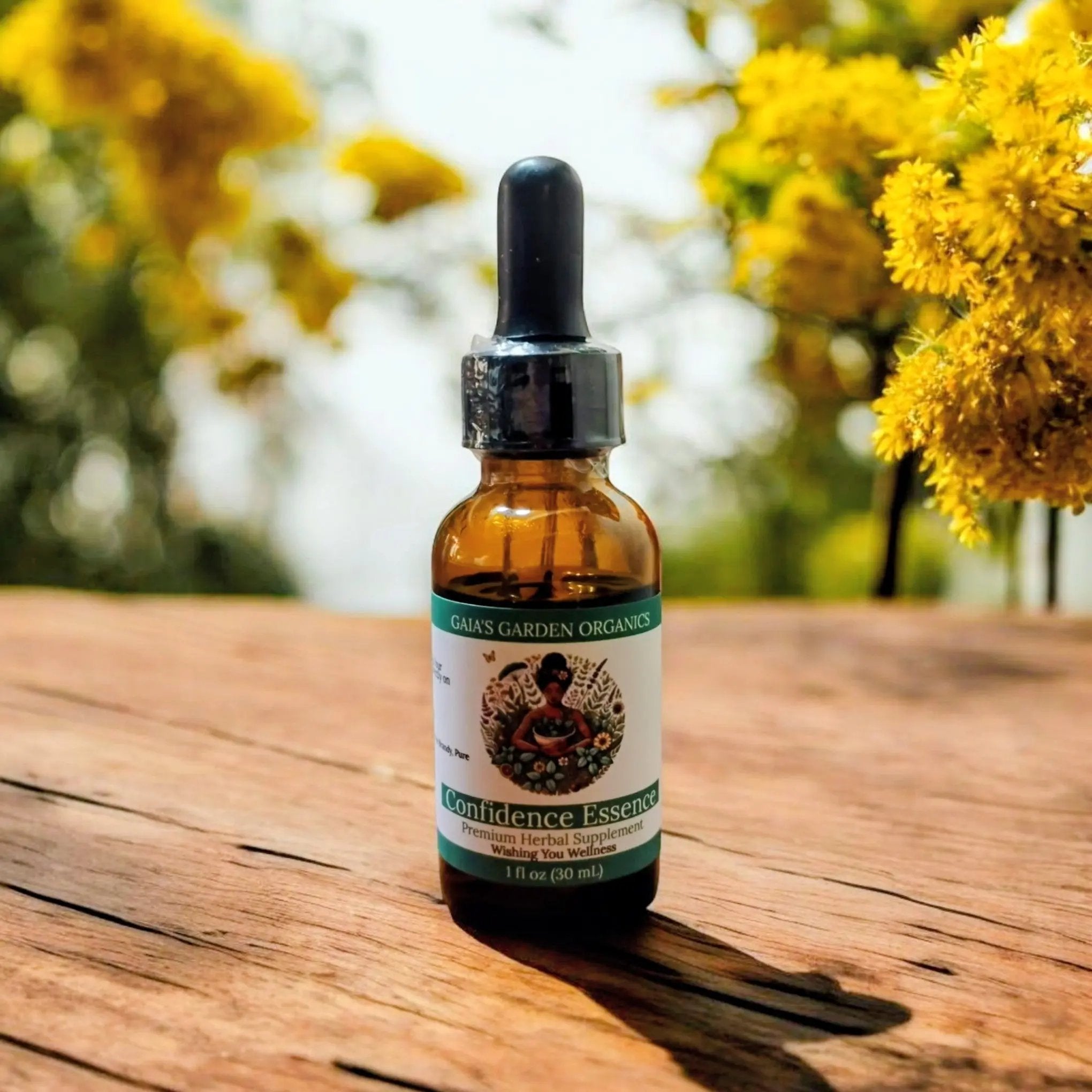
Confidence Essence - Organic Goldenrod Flower Essence
for courage & self-assurance
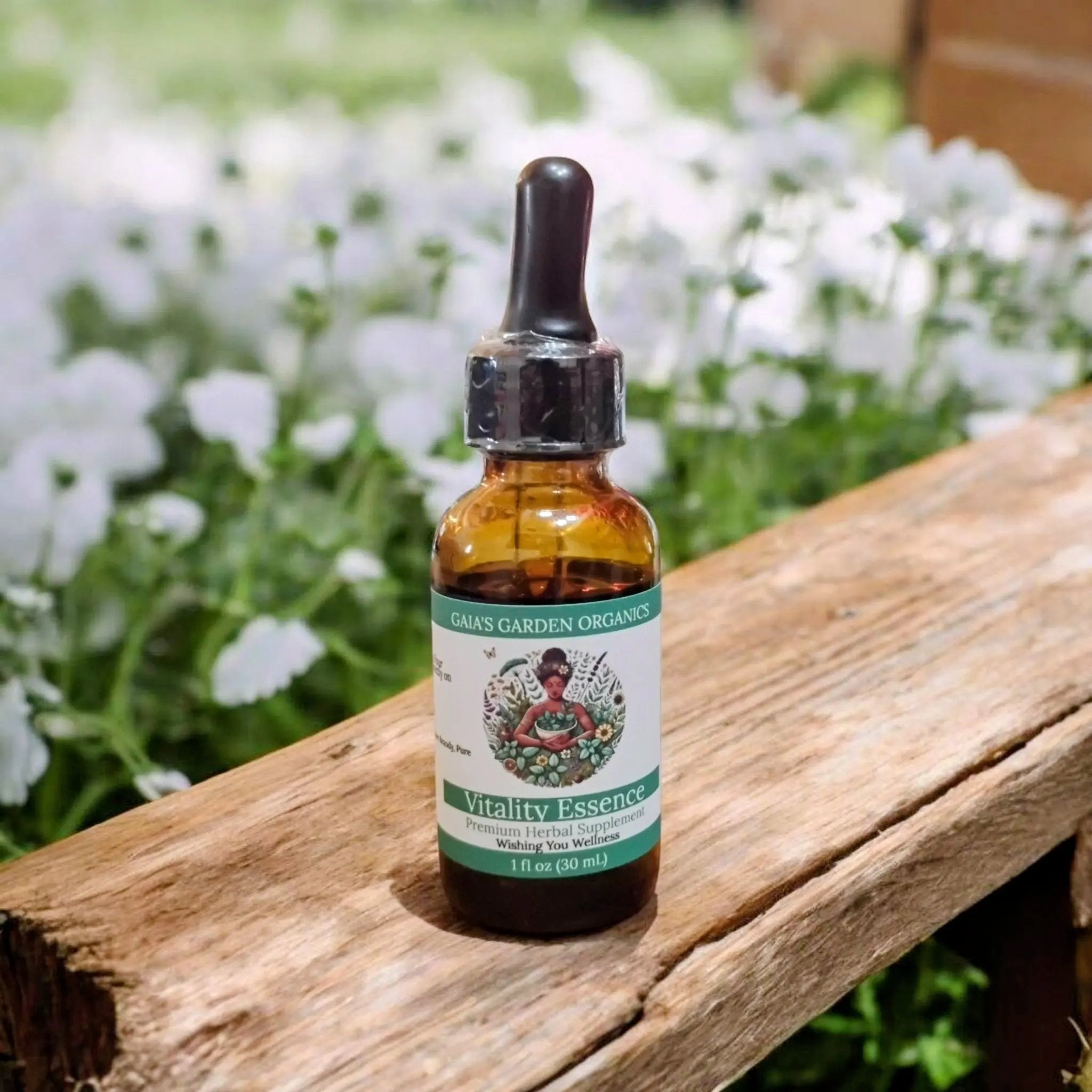
Vitality Essence - Organic Spearmint Flower Essence
for energy & renewed lightness
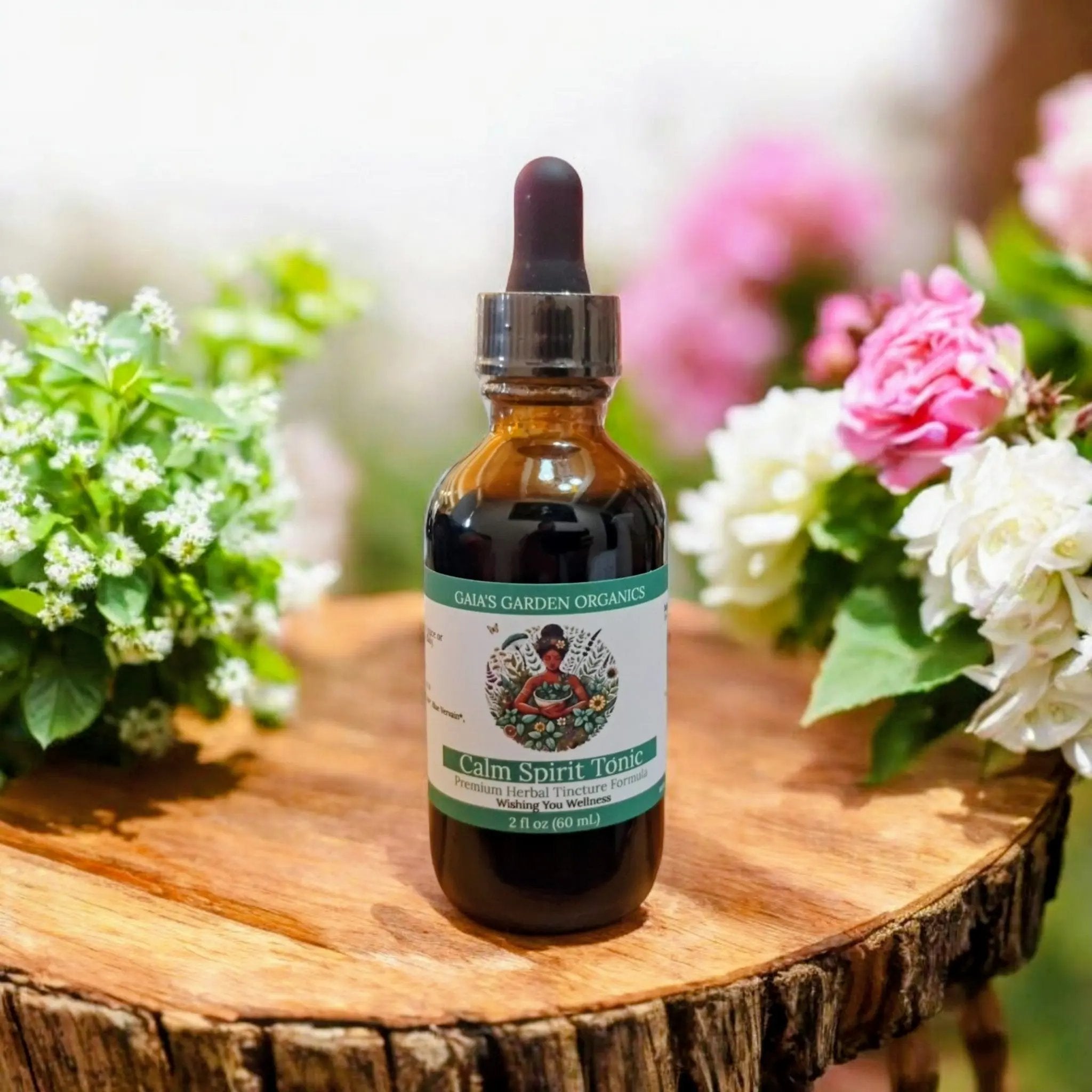
Calm Spirit Tonic
for calm and a quiet mind
Explore our apothecary
Learn more
Flower Essences 101
A clinical herbalist's plain-English guide to what flower essences are and how to take them.
Find your match
The Heart-Type Quiz
5-question clinical yoga therapist's diagnostic for the quietly grieving heart. Matches a 4-week rhythm to your pattern.
Shop the apothecary
The 5-Essence Starter Cabinet
All 5 essences bundled at 20% off, the full emotional toolkit.
Sources & further reading
Authoritative references consulted in writing this article. Open in a new tab.
- The Bach CentreWhat are the sun and boiling methods?
- Bach FlowerAn Overview of the Bach Flower Essences
- PubMed (Thaler et al., 2009)Bach Flower Remedies for psychological problems and pain: a systematic review
- Chestnut School of Herbal MedicineFlowering Herbs (article archive)