In this article (15)▾
The most common question I get from new flower essence users is "how long until I feel something?" The honest answer is that essences work differently from pharmaceuticals and tinctures, and the timeline reflects the difference.
The second most common thing that happens is someone quietly deciding, around day nine, that it isn't working. They don't tell me. They just stop, and the bottle sits in a drawer, and months later they mention it in passing. Day nine is almost exactly the wrong moment to quit, and it is the reason I wrote this.
Here is what to actually expect.
The short answer
Most people notice their first real shift somewhere between two and four weeks of consistent daily use. A minimum useful course is about three weeks. A deep pattern that has been running for years takes months, not weeks.
That range is not just my clinic. Practitioners across the field converge on it: a minimum of roughly two to three weeks for a shift to register, extending to three or six months for long-standing patterns.
First, the part that changes the timeline most
Before the arc, the mechanics, because the single biggest cause of "it isn't working" is not the essence. It is how it is being taken.
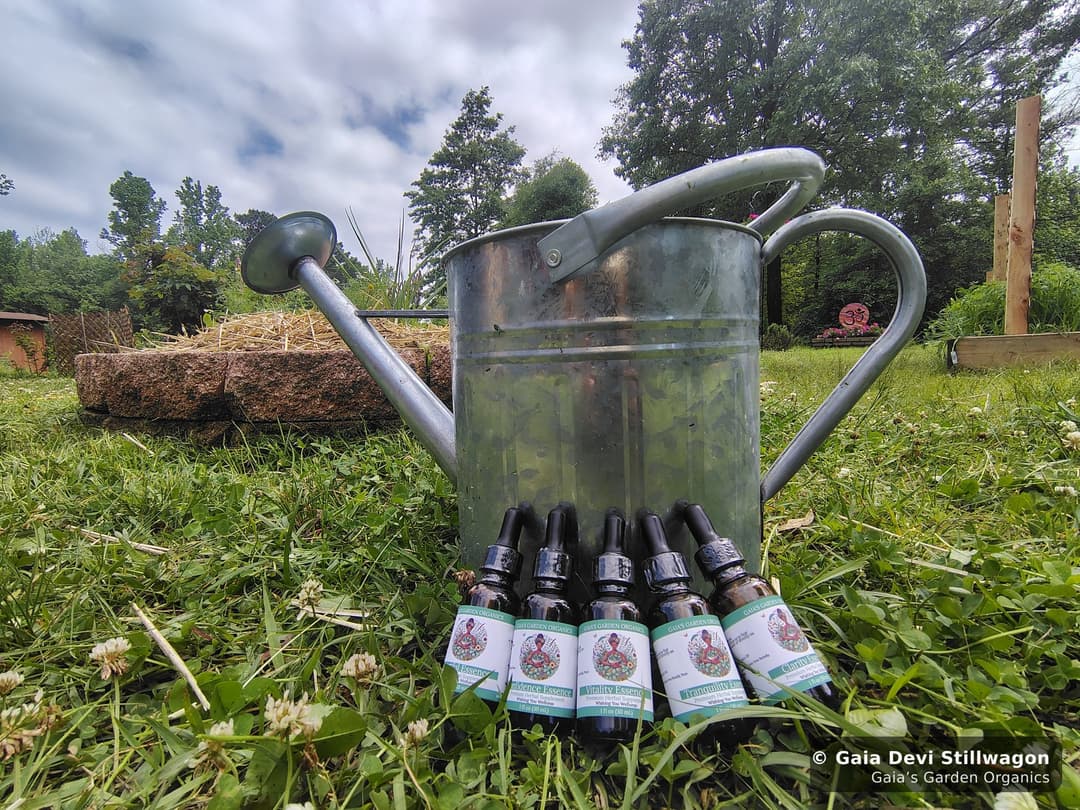
The standard approach is a small number of drops, several times through the day, rather than a large dose once. Our own direction for the essences is four drops, under the tongue, onto the pulse points of the wrist, or in a glass of water sipped slowly, traditionally taken up to four times a day. There is no risk in the repetition. Flower essences work on the emotional body rather than the pharmacological one, and you cannot overshoot the way you can with a tincture.
What matters far more than the size of the dose is the number of days without a gap. Frequency and consistency drive the arc. A generous dose once a week does essentially nothing. A few drops four times a day for a month does the work.
Two practical notes on this:
- Anchor the doses to things you already do. Morning, before you pick up your phone. Mid-day. Late afternoon. Bedtime. Anchoring to existing habits is the difference between thirty days of dosing and eleven days of dosing that felt like thirty.
- If you are taking more than one essence, space them out. Common practice is to leave a few hours between different essences rather than stacking them in the same moment.
What to do about a missed dose
Nothing dramatic. Take the next one at the next natural moment and carry on. There is no doubling up, because the dose size is not what drives the result. Missing one dose is genuinely irrelevant. Missing four days in a row is the thing that costs you, and the fix is not guilt, it is a better anchor.
If you find yourself missing doses repeatedly, the useful question is not "how do I try harder." It is whether the bottle is in the wrong place. An essence that lives in a bathroom cabinet you open twice a day gets taken. An essence that lives in a drawer does not.
The arc, in phases
Phase 1: First 7-10 days (the surface stays quiet)
Most people feel nothing at the surface in the first week or two of daily essence use. The chest is still tight, the anxiety is still there, the closed-off feeling has not visibly shifted. This is normal and it is not a sign the essence is not working.
Underneath, the emotional baseline is beginning to thaw. The shift is happening on a layer that is not yet visible in daily experience. This is the phase where most people quit, which is why I front-loaded the warning.
Phase 2: Weeks 2-4 (the first noticing)
Somewhere between day 10 and day 28, most people notice the first surface shift. It usually arrives as a small unexpected moment.
- You handled a familiar trigger with less bracing than usual.
- You said no once without elaborate justification.
- You felt a tear surface during a song that would normally not have moved you (this is healing, not relapse).
- You realized your shoulders have been lower than usual for several hours.
The shifts are small. They are also real. Track them; the noticing reinforces the work.
Phase 3: Weeks 4-8 (the new baseline lands)
By week 4 to 8 of consistent daily use, the new emotional baseline starts being the default. People around you may comment that you seem softer, more grounded, or different in some way they cannot quite name. The old chronic pattern feels less familiar; the new pattern feels like home.
Phase 4: Months 2-6 (integration)
The deeper integration arc runs across months. Old patterns that have been running for decades take time to fully reorganize. Most clients in clinic continue daily essence use for two to six months for a primary pattern, then taper to as-needed maintenance.
Why the timeline is slower than tinctures
Tinctures act on the body's biochemistry, which can shift in minutes. A nervine tincture held under the tongue reaches circulation fast and you feel the result the same evening.
Essences act on the emotional and dispositional layer. That layer was built over years of lived experience, and it reorganizes over months. The mechanism difference is why the timeline difference is built in rather than a sign of weak medicine.
It also means the two are not competitors. In clinic I frequently run both: a tincture for the acute evening, an essence for the pattern underneath that keeps producing acute evenings. They operate on different clocks and do not interfere with each other.
What "working" actually looks like
Nobody warns you that the sign of a flower essence working is usually an absence, and absences are hard to notice.
You will not get a moment. There is no rush, no wave, no unmistakable event. What happens instead is that a reaction you would have had does not happen, and you only catch it in retrospect, sometimes days later. The email that would have ruined your morning got answered. The 2am spiral started and then, unusually, stopped. The conversation you had been dreading turned out to be a conversation.
This is why I ask clients to write things down. Not a journal, nothing elaborate. One line a day about how the day went emotionally, dated. Four weeks of one-line entries will show you a trend that your memory will not, because your memory rewrites the baseline as it moves and leaves you convinced you have always felt this way.
The things worth tracking:
- How long it takes you to recover from a small upset.
- Whether the familiar trigger still lands the same way.
- What your sleep onset feels like.
- Whether you noticed anything you would previously have missed.
What speeds the work
- Consistency: Daily dosing for at least 30 days. Inconsistent dosing extends the timeline significantly, and it is the most common problem by a wide margin.
- Matched pattern: The right essence for the actual pattern lands faster than a generally-applicable one.
- Awareness: Noticing the small shifts as they happen reinforces the work. Tracking helps.
- Layered support: Therapy, body work, or a daily practice that engages the same emotional pattern compounds the essence's effect. An essence works with what you are already doing, not instead of it.
- Repetition inside the day: Four small doses beat one large one, every time.
What slows or blocks the work
- Skipping doses: The essence wants consistency. A week of dosing followed by three days off significantly slows the arc.
- Wrong pattern match: Taking Tranquility for a closed-heart pattern, or Heartful for an everyday anxiety pattern. The essence is real medicine but only for its specific layer.
- Active untreated trauma: Severe PTSD or trauma activation responds best to therapeutic support; an essence alone often hits a wall, and it should not be asked to do that job.
- Mixing too many essences: Three or four at once dilutes the signal. Two is the upper limit for clinical effect.
- Expecting a tincture: Waiting for a felt event means missing the absences, which is what there actually is to notice.
- Quitting at day nine. Which is where we started.
When to reassess, and when to switch
Consistency is not the same as stubbornness. There is a point at which an honest reassessment is the right move, and here is how I judge it.
Give it four full weeks of genuinely consistent use before you evaluate at all. Not four weeks on the calendar. Four weeks of actually taking it. If you have missed a third of the doses, you have not run the experiment yet, and the answer is to run it properly rather than to change the essence.
Signs it is time to reassess:
- Four consistent weeks with nothing at all, not even the small absences described above.
- You keep forgetting it for several days at a stretch. In my experience that is rarely a memory problem. It usually means the essence is not speaking to what is actually going on.
- The pattern you chose it for has genuinely resolved, and you are now dosing out of habit.
- Something else has surfaced. This happens often, and it is usually a good sign rather than a bad one. The anxiety softens and grief appears underneath it, because the anxiety was doing a job.
Signs you are finished, not stuck: the old pattern has stopped feeling like yours, you keep forgetting doses because nothing is asking for them, and the thing that used to define your week now barely registers. Most people find that after three to six weeks on a well-matched essence for a defined pattern, they simply do not need it any more. That is completion, not failure.
If you are reassessing, the fastest route is to re-take the matching quiz honestly, based on how you feel now rather than how you felt when you bought the bottle. The answer often changes.
How long a bottle lasts
A practical question that turns out to be a timeline question.
At a few drops several times a day, a 30ml bottle runs for roughly three to four weeks of consistent use, which is not a coincidence. It is approximately one course. If a bottle is lasting you three months, you are not dosing often enough to produce the effect, and that is worth knowing before you conclude the essence did not work.
An unopened brandy-preserved essence is shelf-stable for years, so there is no penalty for keeping a matched essence on hand for the pattern that tends to return.
Where to go from here
- Step 1 (free): Match your essence in 7 questions. Take the essence quiz.
- Step 2 (30-night guarantee): Start with the matched essence. A few drops several times daily, for a minimum of 30 days. Track the small shifts as they emerge.
- Step 3 (coming soon): Harmony Within, my Yoga Nidra book.
For broader context, our pillar guide Flower Essences 101 covers the Bach method, how preparation actually works, and how to choose between essences.
Frequently asked
How long does it take to feel a flower essence?
Subtle shifts often begin within 3 to 7 days of consistent daily use. More noticeable pattern change typically lands between weeks 2 and 4. A full course is 3 to 6 weeks.
Can you feel flower essences working?
Some people feel a calm or clarifying effect within the first dose. Most notice changes by the first week. The clearest sign an essence is working is noticing what you are not doing that you used to, the reaction that did not happen, the thought loop that did not start.
Why isn''t my flower essence working?
The most common reason is a match that is close but not right. Essences are more targeted than most people realize, and the wrong essence will not produce a response regardless of dosage. Inconsistent dosing is the second most common cause.
Can I take flower essences daily for months?
Yes. Flower essences are gentle enough for indefinite daily use. Most people find that after 3 to 6 weeks on one essence they naturally do not need it anymore because the pattern has shifted.
Do flower essences work immediately or take time?
Both. For acute emotional states, sudden grief, an immediate wave of anxiety, a few drops can bring noticeable settling within minutes. For deeper patterns, the shift takes weeks of consistent use.
Can I take flower essences with herbal tinctures or medications?
Yes. Because flower essences work on the vibrational rather than chemical level, they do not interact with medications, supplements, or herbal tinctures.
Products from this article
Handcrafted in Umpire, Arkansas by Gaia Devi, clinical herbalist.
 Bestseller
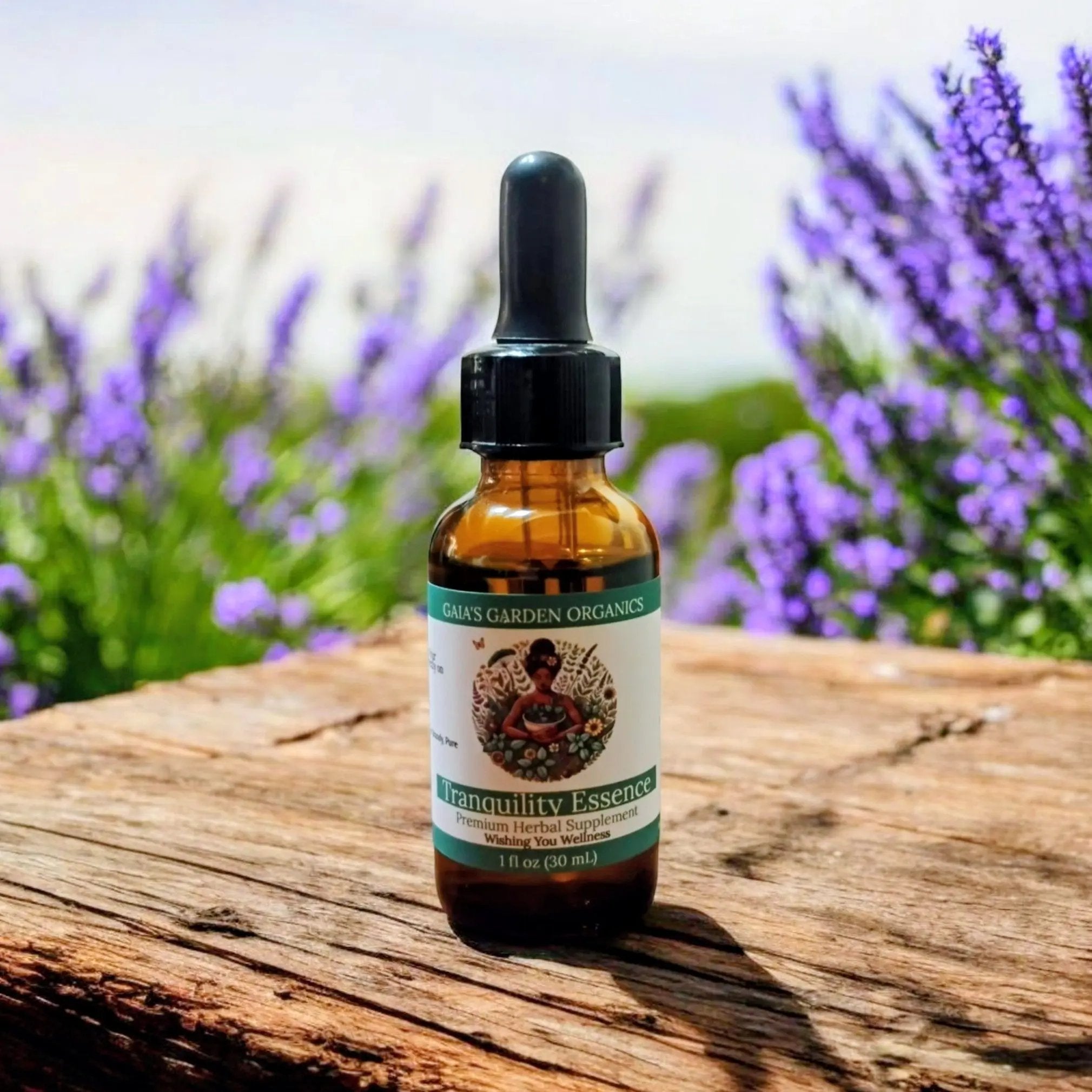
Tranquility Essence - Organic Lavender Flower Essence
for stress & anxious hearts
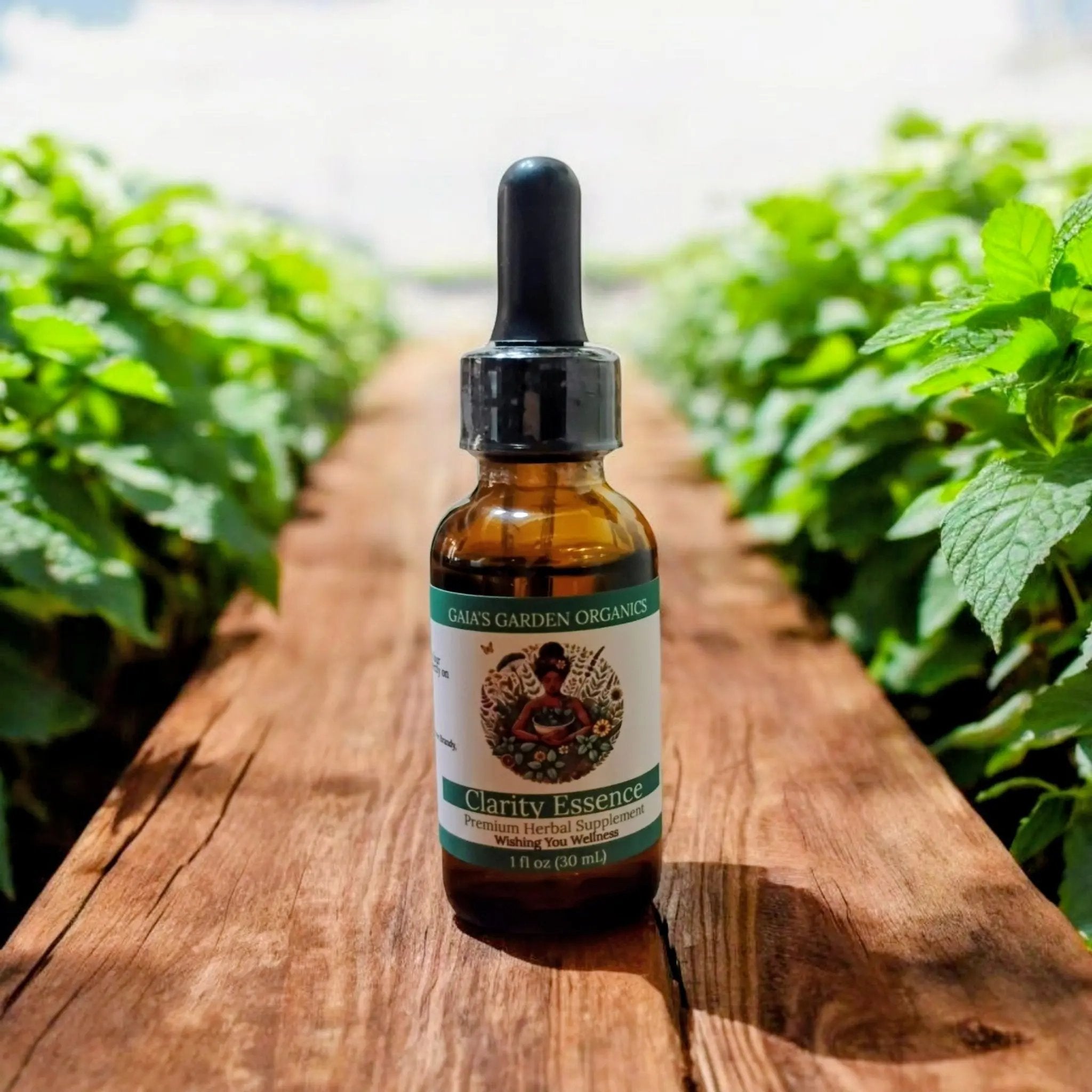
Clarity Essence - Organic Peppermint Flower Essence
for focus & mental alertness
 Bestseller
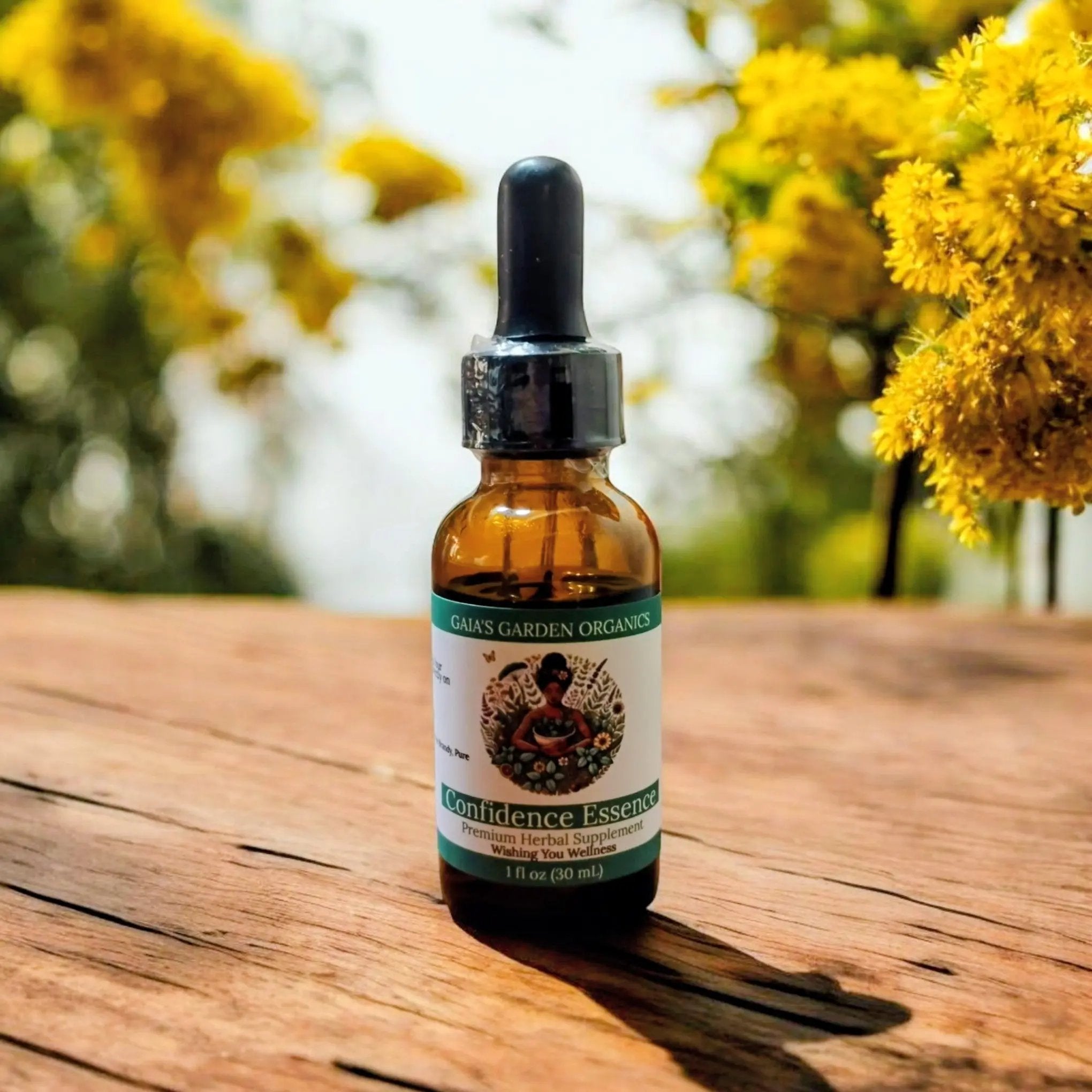
Confidence Essence - Organic Goldenrod Flower Essence
for courage & self-assurance
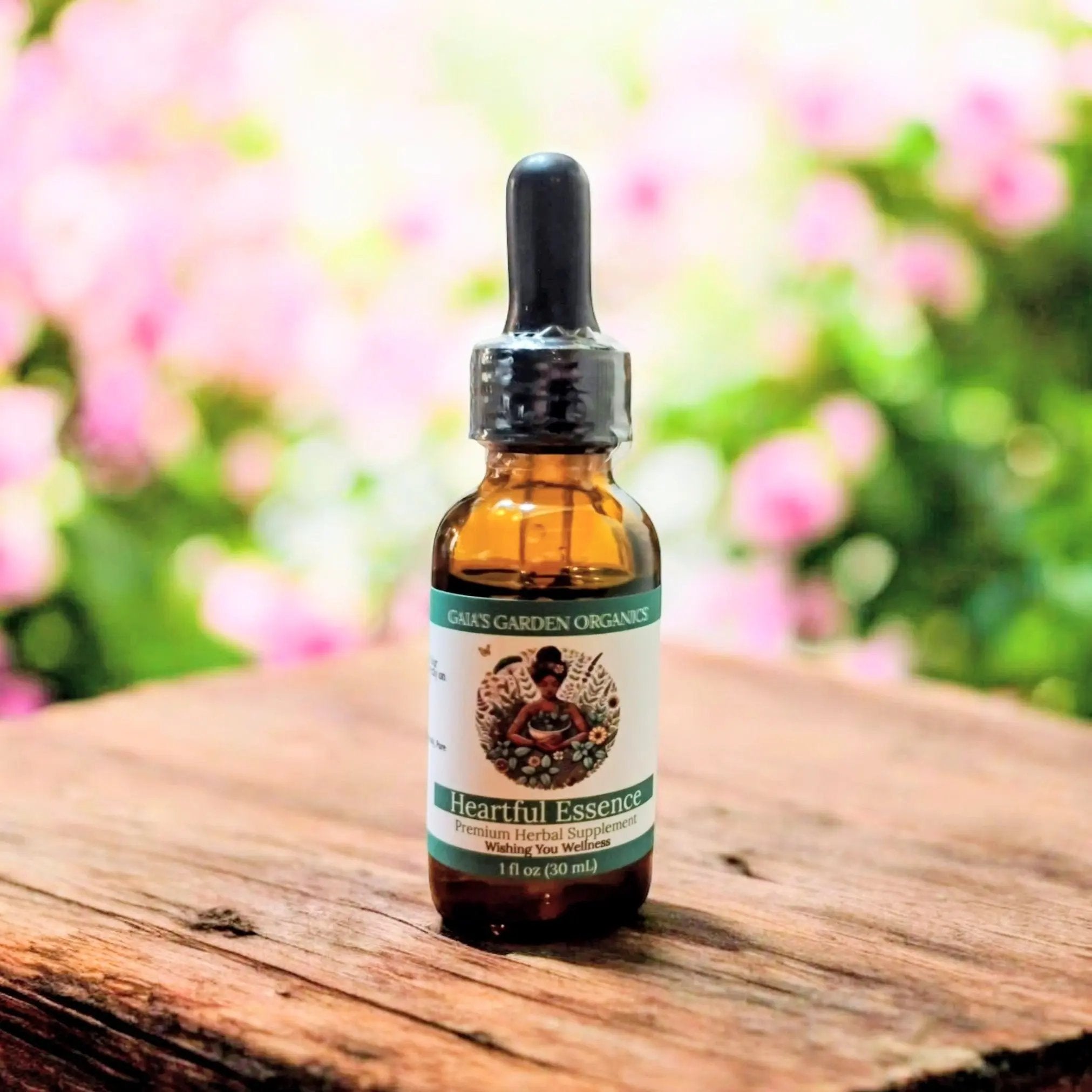
Heartful Essence - Organic Rose Flower Essence
for grief & heart-opening
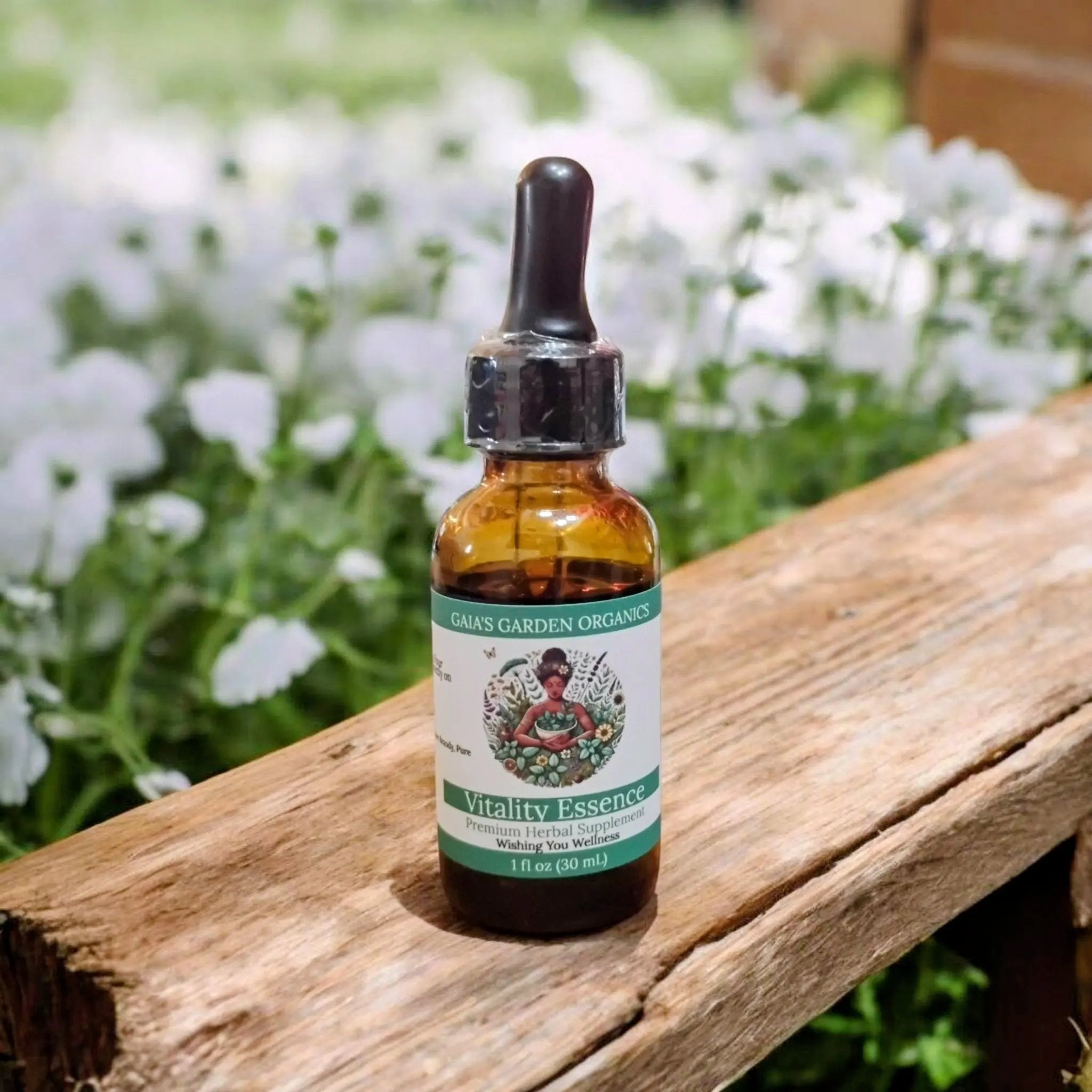
Vitality Essence - Organic Spearmint Flower Essence
for energy & renewed lightness
Explore our apothecary
Learn more
Flower Essences 101
A clinical herbalist's plain-English guide to what flower essences are and how to take them.
Find your match
Browse the Free Practice Library
8 pattern-matched archetype entry points (sleep, anxiety, tension, heart, inner quiet, clarity, boundary, spark), each as a 5-question quiz, a 3-day mini-course, or a one-tap interactive tool.
Shop the apothecary
The 5-Essence Starter Cabinet
All 5 essences bundled at 20% off, the full emotional toolkit.
Sources & further reading
Authoritative references consulted in writing this article. Open in a new tab.
- The Bach CentreWhat are the sun and boiling methods?
- Bach FlowerAn Overview of the Bach Flower Essences
- PubMed (2022)Effects of flower essences on nursing students' stress symptoms: a randomized clinical trial
- PubMed (Thaler et al., 2009)Bach Flower Remedies for psychological problems and pain: a systematic review
- Chestnut School of Herbal MedicineFlowering Herbs (article archive)