In this article (6)▾
If you have read about flower essences online, you have probably seen two opposite framings. The pro-essence framing calls them "vibrational medicine" with confident assertions about energy fields. The anti-essence framing calls them "expensive water" and points at the modest published research base.
Both framings miss what is actually interesting. This is the honest article I wish someone had written when I started using flower essences clinically.
If you are brand new to this and want the plain-language version first, start with my guide to what flower essences are and how they work.
What the published research says
The most-cited skeptical review is Ernst's 2010 systematic review in Swiss Medical Weekly, which concluded that "the hypothesis that flower remedies are associated with effects beyond a placebo response is not supported by data from rigorous clinical trials." The review identified seven trials that met inclusion criteria; none demonstrated effects clearly beyond placebo.
This is a fair summary of the trial-base evidence. Most of the trials had methodological limitations (small samples, short durations, unclear outcome measures), but the most rigorous ones did not show statistically significant effects.
If you stop reading the evidence base at the RCT layer, the honest conclusion is "the research is unsupportive." But the RCT layer is not the only relevant evidence.
What clinical observation says
Bach himself, and the practitioners trained in his tradition, have observed consistent emotional pattern shifts in clients across nearly a century of clinical use. The observations are not single-trial measurements; they are pattern observations across thousands of clients across decades.
What clinical herbalists, including me, observe consistently:
- The pattern shifts that occur with daily essence use across 4-8 weeks are not characteristic of typical placebo response (which usually has fast onset, large initial effect, then regression to mean).
- The shifts cluster around the specific emotional pattern the essence is matched to, not generic improvement.
- People who use the "wrong" essence for their pattern do not experience the same shift, even though they expected to.
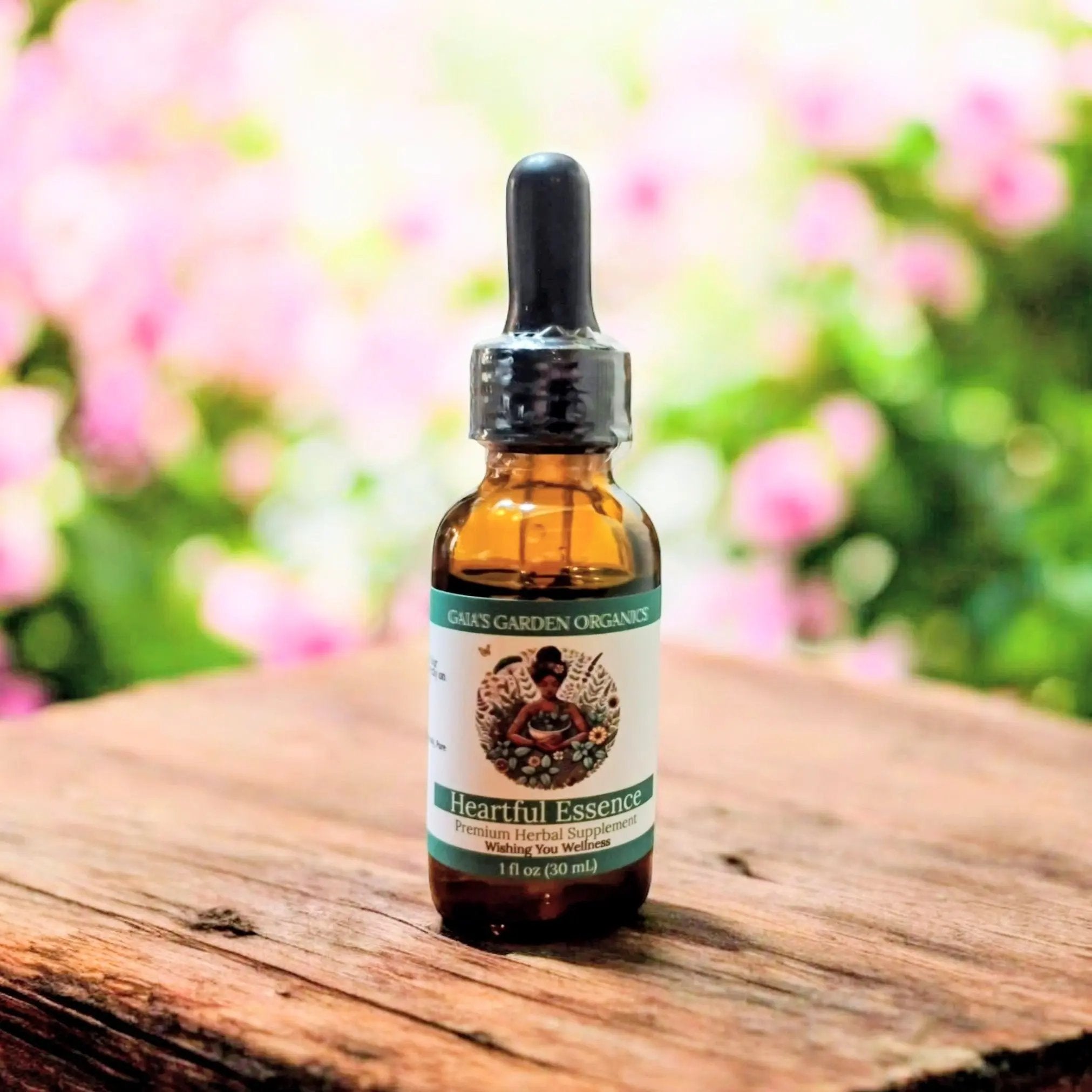
- Animals and infants, who do not carry expectation effects in the same way adults do, respond to essences in observable ways (especially Heartful for grief in pets).
Clinical observation is not RCT-grade evidence. It is what experienced practitioners actually see. It has its own validity and its own limitations.
The honest gap
The gap between "the RCT base doesn't support effects beyond placebo" and "clinical herbalists consistently observe meaningful shifts" is interesting, not contradictory. Several possibilities can be true at once:
- The current RCT designs may not capture the effects essences actually produce. (Most trials measure scoring on standardized anxiety or depression scales, which may not be the right outcome measure for emotional pattern shift.)
- Placebo response may explain some of what clinicians observe, while energetic mechanism may explain the rest. The two are not mutually exclusive.
- The methodological limitations of existing trials may obscure real but modest effects.
- What we currently understand about "placebo" may itself be a more interesting category than we have given it credit for; meaning-and-context-driven responses can produce real physiological changes.
None of this resolves the question. It does mean the question is more interesting than the loud framings on either side suggest.
How to think about it for yourself
If you are deciding whether to try flower essences, here is the honest framework:
- The safety profile is excellent. Trying an essence for 4-8 weeks costs you the price of one small bottle and zero physical risk.
- The mechanism is unsettled. The brand and clinical case is "energetic medicine"; the published evidence base does not support that confidently.
- If you try it, watch for the specific pattern the essence is matched to (track the kind of shifts described in our other posts), not generic improvement.
- If you experience shifts, fine; you are not obligated to have a theoretical explanation.
- If you do not, fine; the format may not be for you, or the pattern match was wrong.
What I tell clinic clients
"I cannot promise you the mechanism. I can tell you what I have consistently observed in clinic and what the research currently supports. The safety is excellent and the cost is low. Try one for 30 days and see what your own experience tells you."
That is the honest stance. It does not require believing or disbelieving anything in advance.
Where to go from here
- Step 1 (free): Match your essence in 7 questions. Take the essence quiz.
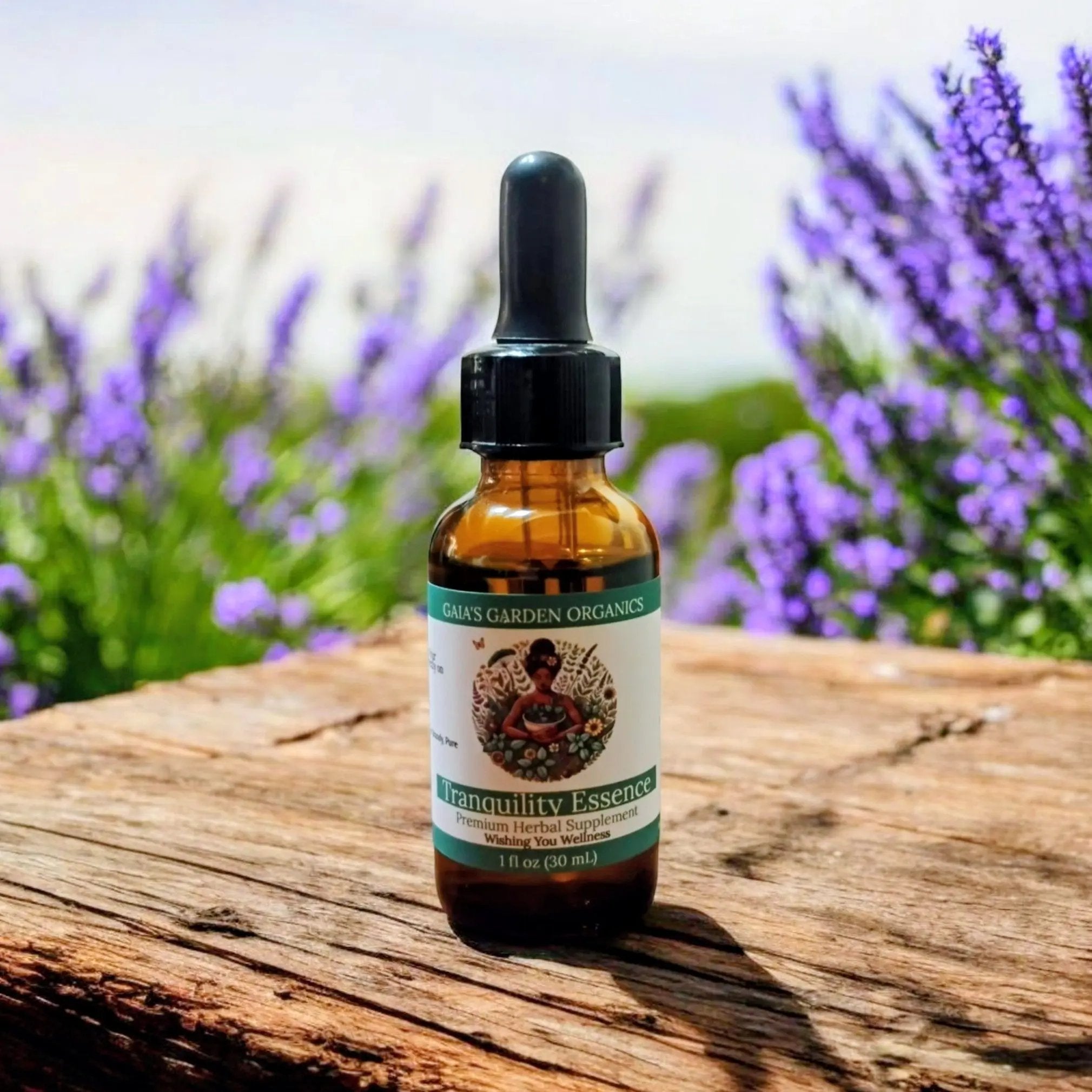
- Step 2 (30-night guarantee): Try one for 30 days, with the 30-night money-back guarantee in case it does not work for you. Browse all five essences or start with Tranquility for the broadest starting pattern.
- Step 3 (coming soon): Harmony Within, my Yoga Nidra book.
This guide is general background on flower essence work. Severe emotional symptoms need professional support; the essence is a complementary tool, not a replacement.
Frequently asked
If flower essences contain no plant compounds, are they just placebo?
Possibly, partially, or not entirely; the honest answer is that it depends on what you mean by placebo and what you're using the essence for. Placebo effects in emotional and subjective domains can be substantial, durable, and clinically meaningful. Whether there's a non-placebo component to flower essence action is genuinely contested, and most of the clinical research is methodologically weak. The intellectually honest framing is that flower essences are emotional-body tools that work for many people through some combination of placebo, ritual, intentional attention, and possibly something more. The mechanism remains unclear; the experience for many people is real.
Does any clinical research support flower essences?
A small body, mostly weak. Several studies on Bach's Rescue Remedy formula have shown effect sizes that are not statistically distinguishable from placebo, and a few that have shown small effects. The evidence base does not currently support claims that flower essences outperform placebo for measurable clinical conditions. What it does support, modestly, is that flower essence rituals appear safe and well-tolerated, and that some users report meaningful subjective improvements in emotional states. Whether those reports reflect intrinsic effect, ritual effect, or something else is unresolved.
Why do you sell flower essences if the science is weak?
Because the framing matters. We don't sell flower essences as biochemical medicine, we sell them as emotional-body and ritual tools that have helped many people, including practitioners and clients in our own clinical work. The Bach tradition has 90+ years of accumulated traditional use, the safety record is exceptionally clean, and people who find them helpful generally describe a kind of help that pharmaceutical and even biochemical-herbal approaches don't reach. We frame essences honestly: low-cost, low-risk, possibly meaningful tools for emotional patterns where the more aggressive pharmacological options aren't appropriate.
Is taking a flower essence the same as taking nothing?
Not exactly, but the difference is mostly in the ritual rather than the chemistry. The act of choosing an essence based on an emotional pattern, taking it deliberately, and pausing to notice your state is itself a meaningful practice. Cognitive behavioral therapy and mindfulness research both demonstrate that structured attention to emotional states can shift them. Flower essences are, in part, structured attention with a ritual frame. Whether they are also more than that remains open.
How should a science-minded person use flower essences?
With the same approach you'd take to any low-risk, possibly-effective intervention. Don't substitute flower essences for treatment of significant mental health conditions (depression, severe anxiety, trauma) that benefit from evidence-based therapy or medication. Do consider them as adjunctive support for emotional patterns, ritual practice, or moments of acute emotional intensity where their gentle and predictable effect, plus the deliberateness of taking them, may be more useful than nothing. Track your experience honestly. Notice what shifts and what doesn't.
Products from this article
Handcrafted in Umpire, Arkansas by Gaia Devi, clinical herbalist.
Explore our apothecary
Learn more
Flower Essences 101
A clinical herbalist's plain-English guide to what flower essences are and how to take them.
Find your match
Browse the Free Practice Library
8 pattern-matched archetype entry points (sleep, anxiety, tension, heart, inner quiet, clarity, boundary, spark), each as a 5-question quiz, a 3-day mini-course, or a one-tap interactive tool.
Shop the apothecary
The 5-Essence Starter Cabinet
All 5 essences bundled at 20% off, the full emotional toolkit.
Sources & further reading
Authoritative references consulted in writing this article. Open in a new tab.
- PubMed (Ernst, 2010)Bach flower remedies: a systematic review of randomised clinical trials
- PubMed (Thaler et al., 2009)Bach Flower Remedies for psychological problems and pain: a systematic review
- PubMed (2022)Effects of flower essences on nursing students' stress symptoms: a randomized clinical trial
- NCCIHComplementary, Alternative, or Integrative Health: What's In a Name?
- The Bach CentreWhat are the sun and boiling methods?