In this article (8)▾
A client in her mid-forties tells me she does not recognize herself. She is sleeping four hours a night. The chest racing wakes her at 2am. Her doctor says her labs are "normal range" for her age and offers an antidepressant. She does not want an antidepressant. She wants to know what is actually happening and which herbs help.
What is happening is perimenopause. The seven to ten years before menopause where estrogen and progesterone fluctuate dramatically. The hormonal turbulence destabilizes the autonomic nervous system, the sleep architecture, and the temperature regulation system at once. This guide is about the herbal framework that supports the body through that turbulence.
What perimenopause actually does
Three nervous-system effects layer with the hormone shifts:
- Anxiety amplification: Falling estrogen reduces GABA tone (the brain's main inhibitory neurotransmitter system). The same stressors that used to register as background now register as foreground.
- Sleep architecture disruption: Progesterone is naturally calming; its decline disrupts deep sleep and the wake-up architecture. The 2am wake is the most common symptom.
- Thermoregulation instability: Hot flashes are an autonomic dysregulation, not a hormonal one directly. The hypothalamus over-corrects to small temperature changes.
The herbal framework supports each layer.
These four herbs are easiest to combine and dose as a tincture, and my guide to how herbal tinctures work explains why.
The four-herb framework
Motherwort: the perimenopausal palpitations herb
Motherwort (Leonurus cardiaca) is the cardiac nervine. Its traditional indication is "the racing heart of the anxious mother," which maps directly onto perimenopausal anxiety and palpitations. Acute relief in 20-30 minutes, used as-needed during episodes.
Ashwagandha: the adaptogenic baseline
The Chandrasekhar 2012 RCT demonstrated significant cortisol reduction with ashwagandha. For the wired-and-tired perimenopausal pattern, ashwagandha is grounding without sedating. Use daily for 8-12 weeks to land the baseline shift. Note: ashwagandha can raise thyroid hormone levels; if you take thyroid medication, work with your prescriber on dose.
Skullcap, Passionflower, and Lavender: the 2am wake-up tincture
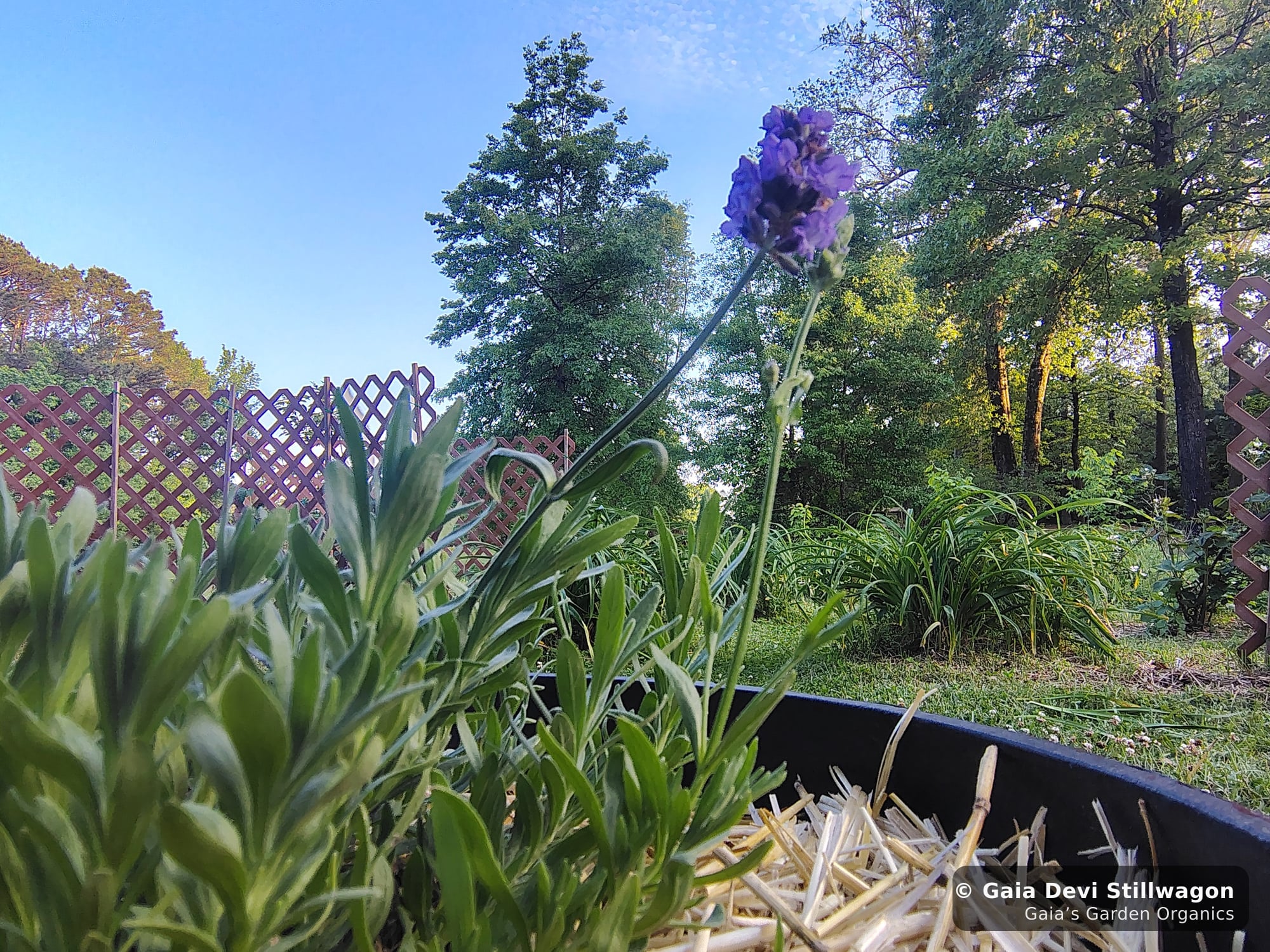
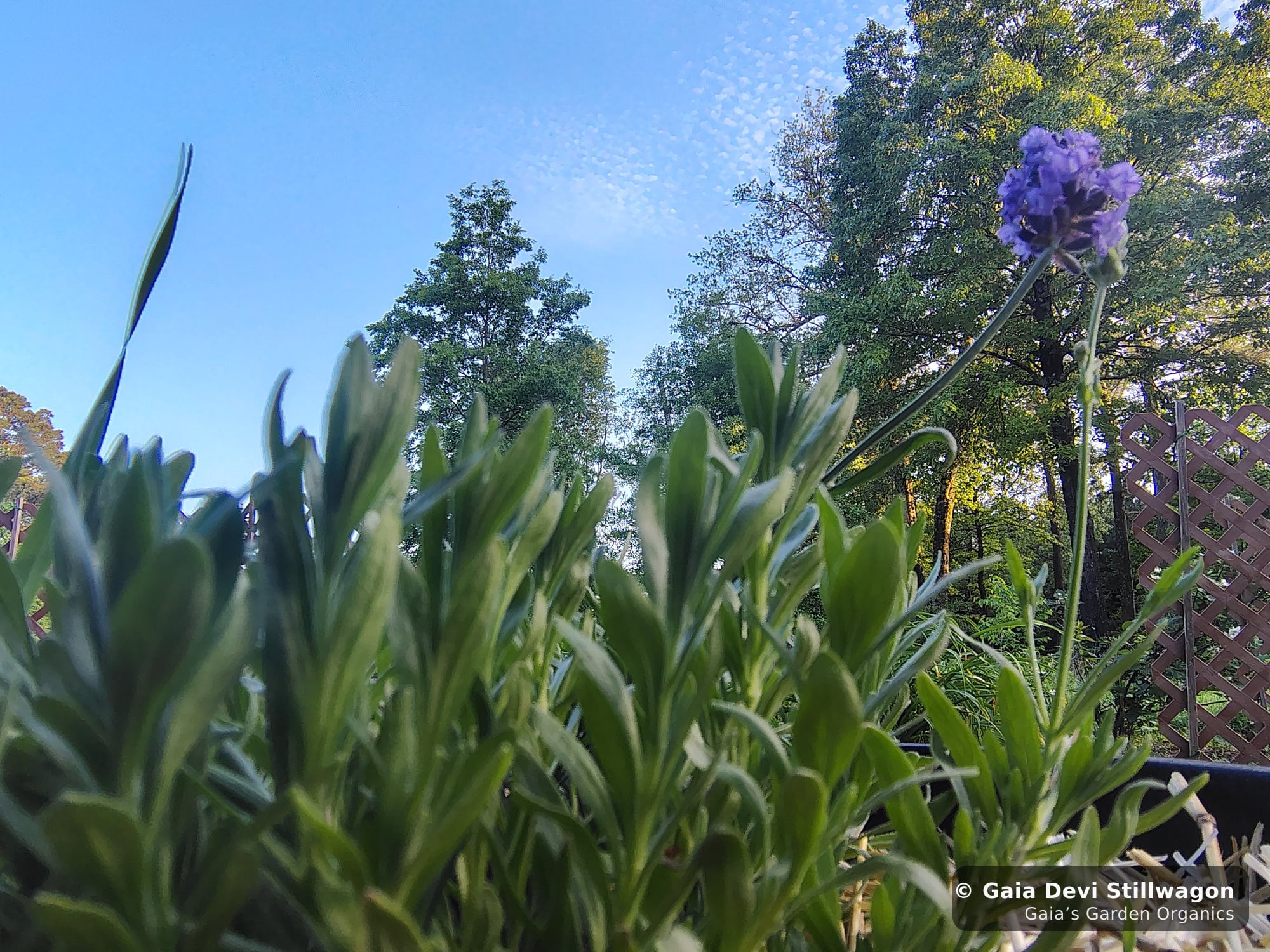
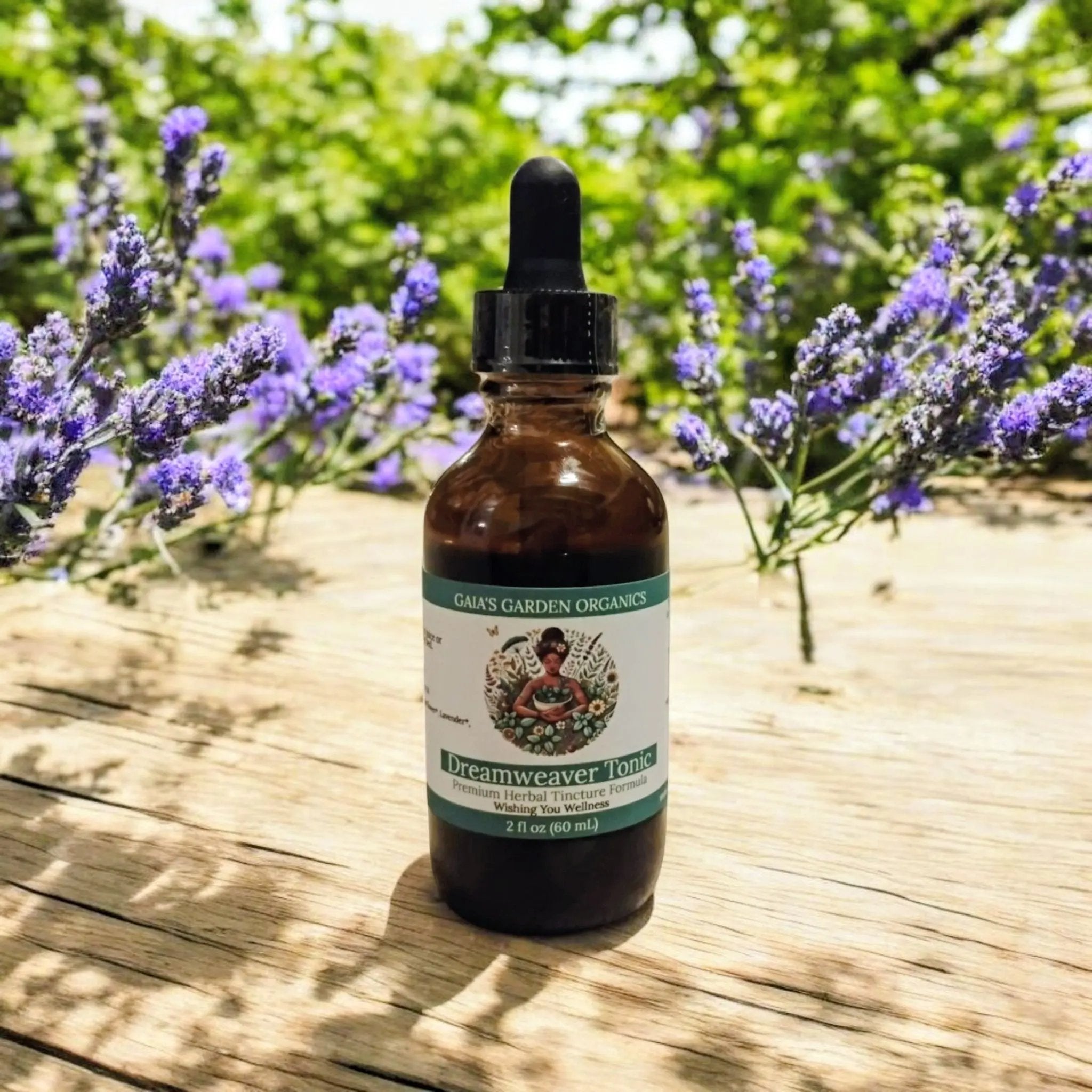
For perimenopausal sleep disruption, Dreamweaver Tonic (skullcap + passionflower + lavender) handles the racing-mind 2am wake. The 2014 Brock et al. RCT on skullcap demonstrated measurable mood improvement with no side effects; passionflower adds the racing-thought-narration layer skullcap doesn't reach. Take 60 minutes before bed; if the 2am wake still happens, one dropperful with sips of water usually returns sleep within 15-20 minutes.
Hibiscus: the autonomic cooling agent
Hibiscus has the strongest evidence for blood pressure reduction (McKay 2010 RCT). For perimenopausal autonomic instability that often shows up as BP fluctuation alongside hot flashes, daily hibiscus tea provides a steady downward modulation. Hibiscus is one of the five herbs in Magical Marvel Tea, where it sits alongside calendula, lemon balm, spearmint, and marshmallow root; that blend is formulated as a daily anti-inflammatory and cooling cup rather than as a cardiovascular formula, so treat it as the gentle version of this layer rather than the pointed one. If blood pressure is the specific thing you are working on, a simple hibiscus tea at daily strength is the more direct route, and it belongs in a conversation with your prescriber.
What this is not
This framework supports the nervous-system layer of perimenopause. It is not hormone replacement therapy, it is not a primary treatment for severe symptoms (heavy bleeding, debilitating hot flashes, severe mood changes), and it does not address bone-density or cardiovascular protection on the timescale HRT does.
If your symptoms are severe, please work with a gynecologist or menopause specialist. The herbal framework runs well alongside HRT and is sometimes used during a slow taper from HRT under medical supervision.
Where to go from here
- Step 1 (free): The 7-Day Nervous System Reset PDF. Most perimenopausal anxiety is layered on top of years of accumulated stress; this protocol addresses the underneath layer. Get the protocol.
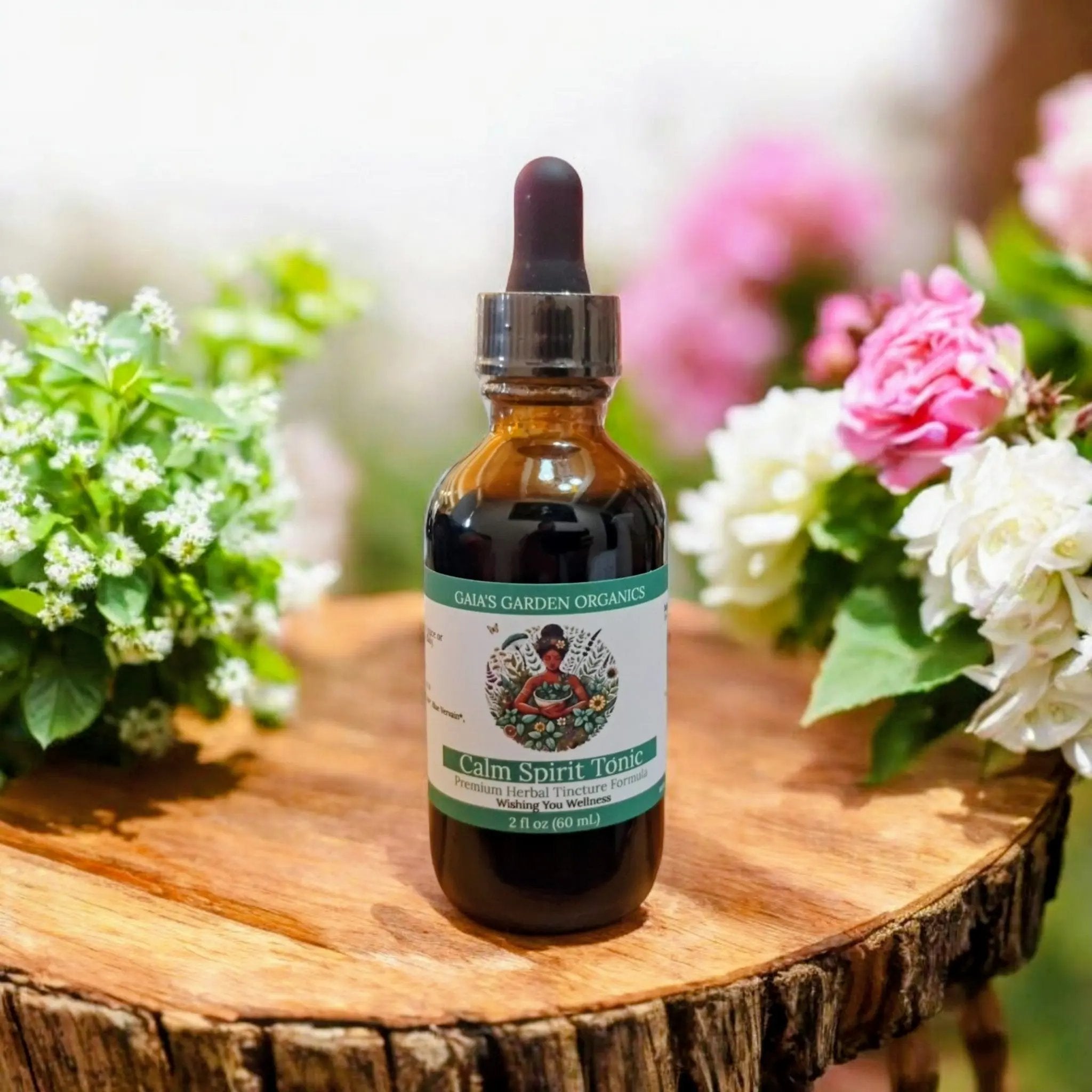
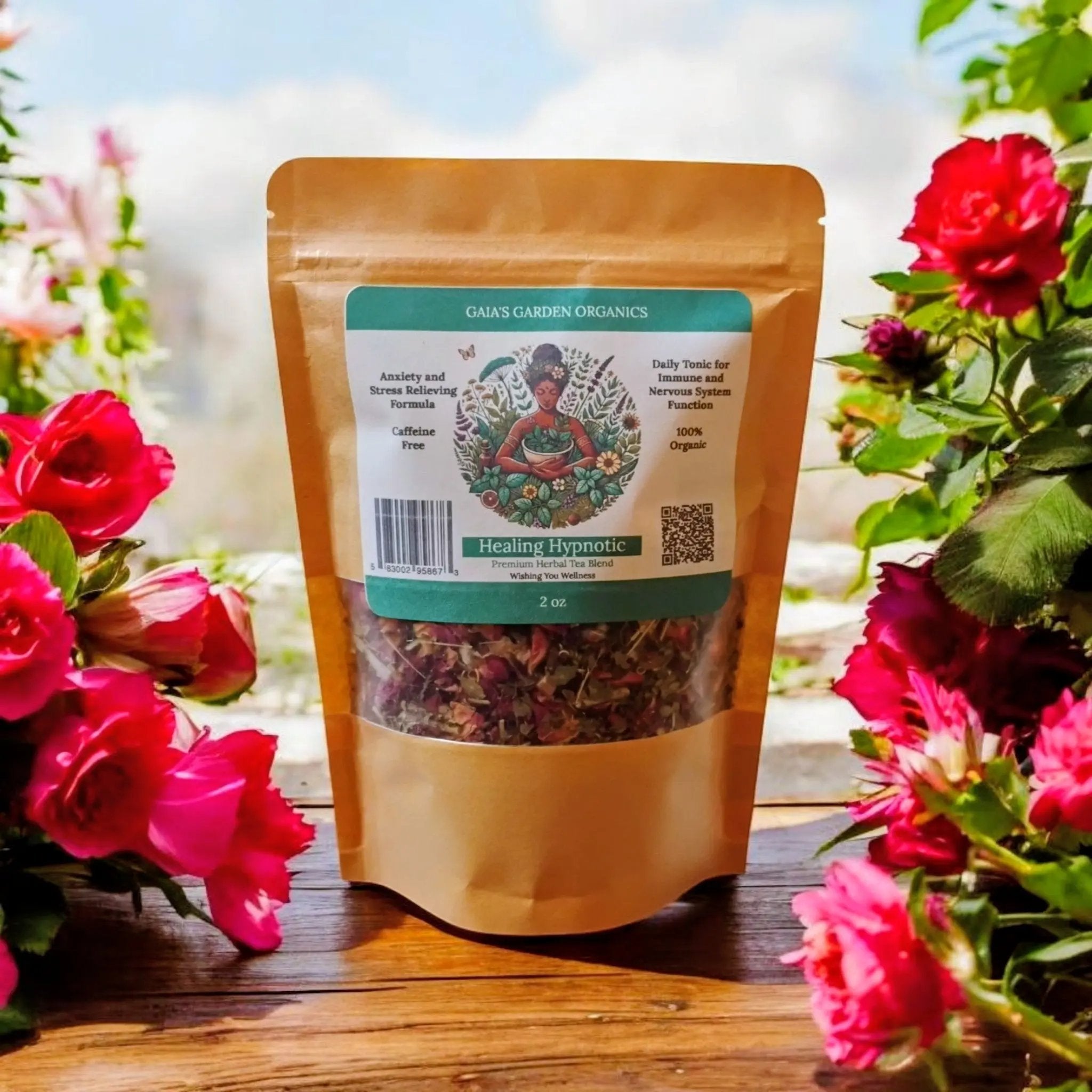
- Step 2 (30-night guarantee): Calm Spirit Tonic (motherwort + tulsi + rose + blue vervain) for daily anxiety and acute spike support. Dreamweaver Tonic for the 2am wake. Magical Marvel Tea as the daily cooling cup for the hot-flash-and-inflammation layer. The 30-Day Calm Reset Kit bundles Dreamweaver with Tranquility Essence and Healing Hypnotic Tea.
- Step 3 (coming soon): Harmony Within, my Yoga Nidra book.
This guide is general nervous-system support during perimenopause and is not a substitute for medical care.
Frequently asked
Will herbal support replace HRT for me?
For mild-to-moderate perimenopausal nervous-system symptoms, often yes, the herbal framework provides meaningful daily relief without replacement hormones. For severe symptoms (debilitating hot flashes, severe sleep loss, significant mood shifts, heavy bleeding), HRT is often the more effective primary treatment, and the herbs can run alongside as adjunct support. The choice depends on symptom severity, your medical history, and a conversation with a gynecologist or menopause specialist. Many women run herbs solo for a season, then add HRT, or run both together during the most turbulent year of the transition.
Can I take these herbs with HRT or birth control?
Generally yes, but consult your prescriber. Motherwort and ashwagandha have no known major interactions with hormonal therapies. Hibiscus can compound antihypertensive effects if you are on BP medication. Ashwagandha can interact with thyroid medication. The herbs are complementary rather than competitive with hormonal treatment.
How long until I notice the difference?
Acute relief from motherwort during palpitations: 20-30 minutes. Sleep onset improvement from Dreamweaver: 1-2 weeks. The deeper baseline shift from ashwagandha: 8-12 weeks of daily use. Hibiscus blood pressure modulation: 4-6 weeks. The full framework is a multi-month protocol, not a quick fix.
Is ashwagandha safe for me?
For most adults, yes. The main contraindications: hyperthyroidism or autoimmune thyroid disease (ashwagandha can raise thyroid hormone levels), pregnancy, and a few autoimmune conditions where adaptogens can amplify immune activity. If you take thyroid medication or have an autoimmune condition, work with your prescriber before starting.
I'm having severe hot flashes. Will these herbs handle it?
For mild hot flashes, the framework helps modestly. For severe hot flashes (multiple per hour, drenching night sweats, affecting daily function), herbs alone are usually insufficient. Black cohosh is the most-studied herb specifically for severe hot flashes; it is not in our standard formulas and should be used under herbalist or gynecologist guidance. For severe symptoms, HRT is often the more effective primary treatment.
Products from this article
Handcrafted in Umpire, Arkansas by Gaia Devi, clinical herbalist.
Explore our apothecary
Learn more
Flower Essences 101
A clinical herbalist's plain-English guide to what flower essences are and how to take them.
Find your match
The Anxiety-Type Quiz
5-question clinical-herbalist diagnostic that names your anxiety pattern and matches a practice + plant pairing.
Shop the apothecary
Medicinal Herbal Teas
Loose-leaf, clinical-herbalist-blended teas, each built around a specific job.
Sources & further reading
Authoritative references consulted in writing this article. Open in a new tab.
- PubMed (Chandrasekhar et al., 2012)A prospective, randomized double-blind, placebo-controlled study of safety and efficacy of a high-concentration full-spectrum extract of ashwagandha root in reducing stress and anxiety in adults
- PubMed (Salve et al., 2019)Adaptogenic and Anxiolytic Effects of Ashwagandha Root Extract in Healthy Adults: A Double-blind, Randomized, Placebo-controlled Clinical Study
- PubMed (Amsterdam et al., 2009)A randomized, double-blind, placebo-controlled trial of oral Matricaria recutita (chamomile) extract therapy for generalized anxiety disorder
- PubMed (Akhondzadeh et al., 2001)Passionflower in the treatment of generalized anxiety: a pilot double-blind randomized controlled trial with oxazepam
- NCCIHHerbs at a Glance (per-herb safety and evidence)