Herb glossary · for the depleted caretaker
Milky Oat
Avena sativa
Family: Poaceae · Parts used: Tops harvested at the milky stage
Milky oat (Avena sativa, milky oat tops) is the deeply restorative nervine of Western clinical herbalism, a slow-acting trophorestorative that gently rebuilds the nervous system over months in a way no acutely-calming herb can match.
Traditional uses
Milky oat (Avena sativa) is the same plant that produces oatmeal, but the medicinal preparation uses only the brief window when the green seed-heads, freshly forming, exude a milky white sap when squeezed. This window lasts roughly a week per planting, somewhere between June and August depending on climate. The fresh-tincture or freshly-dried preparation captures something the mature oat grain doesn't carry, a class of compounds that make milky oat one of the most distinctive nervines in the Western pharmacopoeia. (Mature oats themselves, the "oat straw" or "oat kernel," are also nourishing but considerably gentler.)1
Primary therapeutic territory
Western clinical herbalism uses the term "nervous system trophorestorative" for a small group of herbs that don't sedate, don't stimulate, and don't acutely calm, they slowly rebuild the structural integrity of an exhausted nervous system over weeks and months. Milky oat is the most widely-cited example. It is the herb for the chronically depleted nervous system: the picture where someone has been running on willpower for too long, their stress tolerance has shrunk, their reactivity to small stimuli has gone up, and their capacity to feel emotion has flattened. This is the burnout-and-can't-feel-anything state, the why-do-I-cry-at-everything state, the my-fuse-is-too-short-now state. Milky oat doesn't fix it in a week; it rebuilds it over a season.2
Other traditional uses
- Recovery from chronic illness. Often used as part of long protocols for post-viral fatigue, chronic Lyme, fibromyalgia, and other slow-healing conditions where the nervous system has become dysregulated.
- ADHD and attention support. A growing clinical-herbalist application, particularly in adults; the slow-rebuilding action seems to support sustained attention better than acute nervines.
- Withdrawal from sedatives, stimulants, or recreational substances. Used by some clinical herbalists, under medical supervision, as part of nervous-system rebuilding during taper from benzodiazepines, opioids, alcohol, or nicotine.
- Postpartum depletion. A traditional ally during the months-long nervous-system rebuilding after birth, particularly for the touched-too-many-times pattern of new motherhood.
- Convalescence from grief. Where the active acute grief has settled but the nervous system feels permanently changed; milky oat is a slow rebuilder of that ground-floor capacity.
- Skin and bone tonic. A secondary traditional use; oats themselves are mineral-rich and connective-tissue supportive.
The key qualifier: it doesn't work fast
The single most important piece of patient education for milky oat is that it isn't a fast-acting herb. Most acutely-calming nervines (passionflower, skullcap, lavender) produce noticeable shifts within minutes to hours. Milky oat works on a different timescale entirely, most clinical herbalists describe meaningful shifts in nervous-system resilience emerging at 6-8 weeks of consistent daily use, and continuing to deepen over 3-6 months. Patients who try it for a week and stop, expecting a visible effect, miss what milky oat is actually for.
How we use milky oat at Gaia’s Garden
At Gaia's Garden Organics, milky oat (Avena sativa) grows in our medicine garden in Umpire, Arkansas. We harvest it ourselves, by hand, at the moment its medicine is at peak.
In our formulas
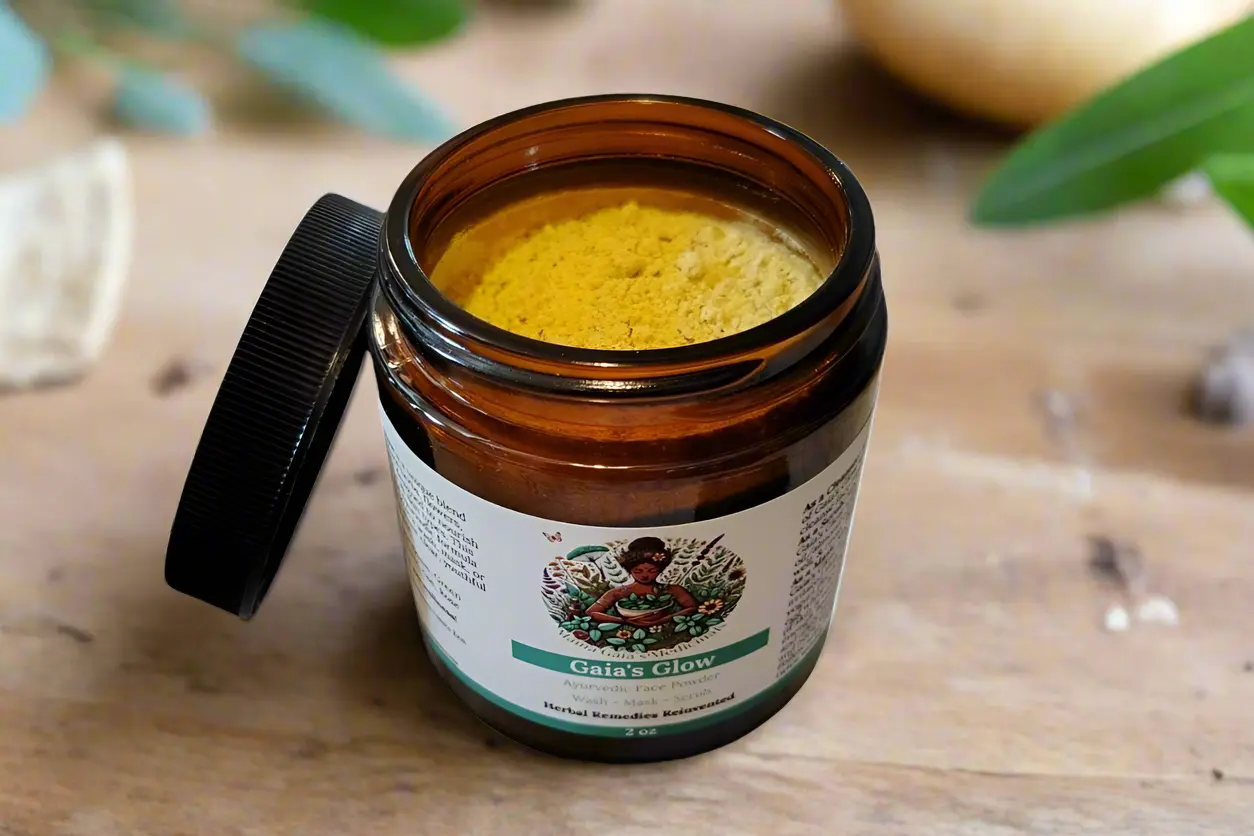
Gaia's Glow Ayurvedic Facial Powder: Soothes and softens skin while gently cleansing, the classic sensitive-skin ally.
Safety & considerations
Milky oat has one of the cleanest safety profiles of any herb in our garden, it is essentially the medicinal expression of a food crop and shares the food's general tolerability.
Celiac disease and gluten sensitivity
Pure oats do not contain gluten, but most commercial oat products are processed in facilities that handle wheat, barley, and rye, leading to cross-contamination. People with celiac disease or significant gluten sensitivity should source milky oat only from suppliers who certify gluten-free processing. Whole-plant tincture is generally lower-risk than oat-based supplements.
Drug interactions
Limited documented drug interactions. The oat plant has very mild blood-sugar-lowering effects, relevant for diabetes medication interaction only at unusually high consumption levels.
Pregnancy and lactation
Mature oats and oat straw are widely used during pregnancy and breastfeeding as a nourishing daily tea. Milky oat tincture has more limited modern research but no specific contraindications in pregnancy or lactation in traditional practice. Consult your midwife.
Children and pets
Mild oat preparations are among the most pediatric-friendly nervines in Western herbalism, oat straw tea is a long-standing children's tonic for nervous-system support, particularly for sensitive or wound-up children. For pets, oat-based preparations are generally well-tolerated by dogs and cats. Always consult your veterinarian for pets on medication.
Sourcing matters
The medicinal value of milky oat depends almost entirely on harvest timing, outside the milky window, the plant is much gentler and more food-like. Reputable suppliers should be able to confirm the harvest window. The fresh-tincture preparation tends to be stronger than dried, since some active compounds are unstable in drying.
Frequently asked
What's the difference between milky oat tops and oat straw?
Both come from the same plant (Avena sativa) but at different harvest stages. Milky oat is the green seed head harvested during the brief week when squeezing it produces a milky white sap, this is the strongest medicinal preparation. Oat straw is the dried stem and leaf harvested later, after the milky stage; it's gentler, more mineral-tonic in personality, and used for general nervous-system nourishment. Oat groats are the mature grain we eat as oatmeal, food rather than concentrated medicine.
How long until milky oat works?
Slower than most herbs. Most acutely-calming nervines work in minutes to hours; milky oat works on a timeline of weeks to months. Most clinical herbalists describe meaningful nervous-system shifts emerging around 6-8 weeks of consistent daily use, with continuing deepening over 3-6 months. Patience is part of the protocol.
Can I take milky oat with my anxiety medication?
Generally yes, with minimal interaction concerns, milky oat is gentle and works on a different mechanism than benzodiazepines or SSRIs. It's actually one of the herbs sometimes used alongside pharmaceutical anxiety treatment for the long-haul nervous-system rebuilding component. Always inform your prescriber of any herbs you're using, but milky oat is one of the easier conversations.
Milky oat vs ashwagandha for burnout?
Different mechanisms and timescales, often complementary. Ashwagandha is a warming adaptogen that helps the body adapt to stress; milky oat is a nervous-system trophorestorative that rebuilds the structural ground itself. Ashwagandha shifts faster (a few weeks); milky oat shifts more deeply but more slowly. Many burnout-recovery protocols use both, ashwagandha for the daytime resilience layer, milky oat for the long-term rebuilding layer.
Is milky oat safe if I'm gluten-sensitive?
Pure oats don't contain gluten, but most commercial oat products are processed in facilities that also handle wheat, leading to cross-contamination. People with celiac disease or significant gluten sensitivity should source milky oat only from suppliers who certify gluten-free processing. Whole-plant tinctures are generally lower-risk than oat-based foods.
Is milky oat safe for kids and pets?
Yes, oat-based preparations are among the gentlest nervous-system tonics for both children and pets. Oat straw tea is a long-standing pediatric herb for sensitive or wound-up children. For pets, oat preparations are generally well-tolerated by dogs and cats. As always, consult your pediatrician or veterinarian for chronic conditions or for those on medication.
What is milky oats good for?
Milky oat is a nervous-system trophorestorative, a small class of herbs that don't sedate or stimulate but slowly rebuild the structural integrity of an exhausted nervous system over weeks and months. It's the herb for the chronically depleted picture, running on willpower too long, shrinking stress tolerance, rising reactivity to small things, and it's used for burnout recovery and frayed nerves. It works as long-term nourishment rather than acute calm, so it pairs well with faster-acting calming herbs when both are needed.
References
- Kennedy DO et al. Acute effects of a wild green-oat (Avena sativa) extract on cognitive function in middle-aged adults: a double-blind, placebo-controlled, within-subjects trial. Nutr Neurosci. 2017;20(2):135-151
- Wong RH et al. Chronic consumption of a wild green oat extract (Neuravena) improves brachial flow-mediated dilatation. J Hypertens. 2013;31(1):192-200
- Memorial Sloan Kettering About Herbs: Oats
- American Botanical Council / HerbalGram
- Mountain Rose Herbs: Milky Oat Tops monograph