Herb glossary · for the 2 a.m. wide-awake adult
Skullcap
Scutellaria lateriflora
Family: Lamiaceae · Parts used: Aerial parts in bloom
American skullcap (Scutellaria lateriflora) is one of the most prized nervines in Western clinical herbalism, a deeply relaxing, non-sedating ally for the busy mind, jaw-and-shoulder tension, and the kind of restless sleep that comes from physical-and-mental wind-up.
Traditional uses
American skullcap (Scutellaria lateriflora) is a delicate North American mint-family perennial named for the curious helmet-shaped calyx that holds each tiny purple-blue flower. Native peoples across the eastern half of the continent used it long before European settlement; it entered Western herbal medicine through the Eclectic physicians of the 19th century, who considered it one of the great nervines of the materia medica. It remains so in contemporary clinical herbalism.1
Primary therapeutic territory
Where many calming herbs work primarily on either the mind or the body, skullcap reaches both at once. It is one of the most versatile nervines in the Western pharmacopoeia, used for racing thoughts, the buzzing-under-the-skin restlessness of nervous exhaustion, jaw-and-neck-and-shoulder tension that comes from chronic vigilance, and the kind of insomnia that combines physical wakefulness with mental activity. Unlike valerian, skullcap rarely produces morning grogginess; unlike passionflower, it has a stronger somatic effect on muscle tension. Many clinical herbalists consider it among the first-line nervines for the over-stimulated, "wired and tired" presentation.
Other traditional uses
- Tension headaches. Particularly the headaches that come from clenched jaw, hunched shoulders, and the physical signature of long stress. Often paired with lavender or rose.
- Sleep onset and maintenance. A foundational ingredient in many bedtime tinctures and teas, including our Dreamweaver Tonic and Healing Hypnotic Tea. Particularly useful when sleep is disturbed by physical restlessness as much as mental chatter.
- Muscle tension and twitching. The classic herb for the eyelid-twitch, jaw-clench, calf-spasm pattern that comes with prolonged stress.
- Tapering off pharmaceutical sedatives. Sometimes used by clinical herbalists, under medical supervision, as part of a slow taper from benzodiazepines or sleep medications.
- Anxiety with somatic intensity. The chest-tight, can't-take-a-deep-breath presentation that a purely mental nervine can't reach.
American vs Chinese skullcap
An important distinction. Scutellaria lateriflora (American skullcap) is the nervine described above. Scutellaria baicalensis (Chinese skullcap, "Huang Qin") is a different species with very different applications, primarily anti-inflammatory and antimicrobial, used in Traditional Chinese Medicine for conditions ranging from upper respiratory infection to liver inflammation. Reputable suppliers always specify which species they sell. We use American skullcap exclusively.
Adulteration history
In the 1980s and 1990s, several poor-quality commercial skullcap products were found to be adulterated with germander (Teucrium spp.), an unrelated plant with hepatotoxic potential, the source of the historical reputation that "skullcap can damage the liver." Properly sourced, single-species American skullcap has no such reputation in either traditional use or modern toxicology. Always source from suppliers who can verify species identity.2
How we use skullcap at Gaia’s Garden
At Gaia's Garden Organics, skullcap (Scutellaria lateriflora) grows in our medicine garden in Umpire, Arkansas. We harvest it ourselves, by hand, at the moment its medicine is at peak.
In our formulas
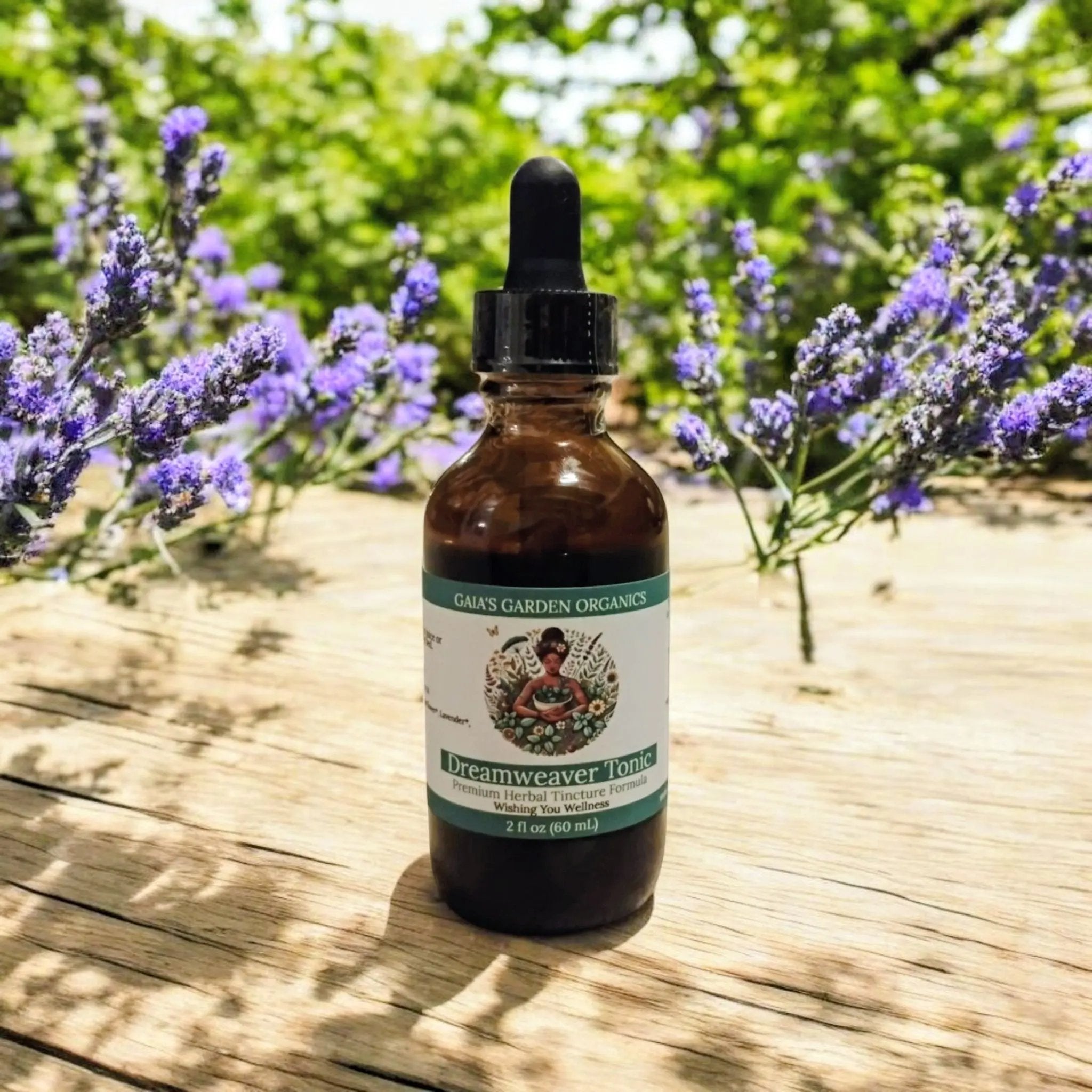
Gaia's Dreamweaver Tonic: Traditional sleep-and-nervous-system ally, specifically works on the bedtime mind that will not stop reviewing the day.
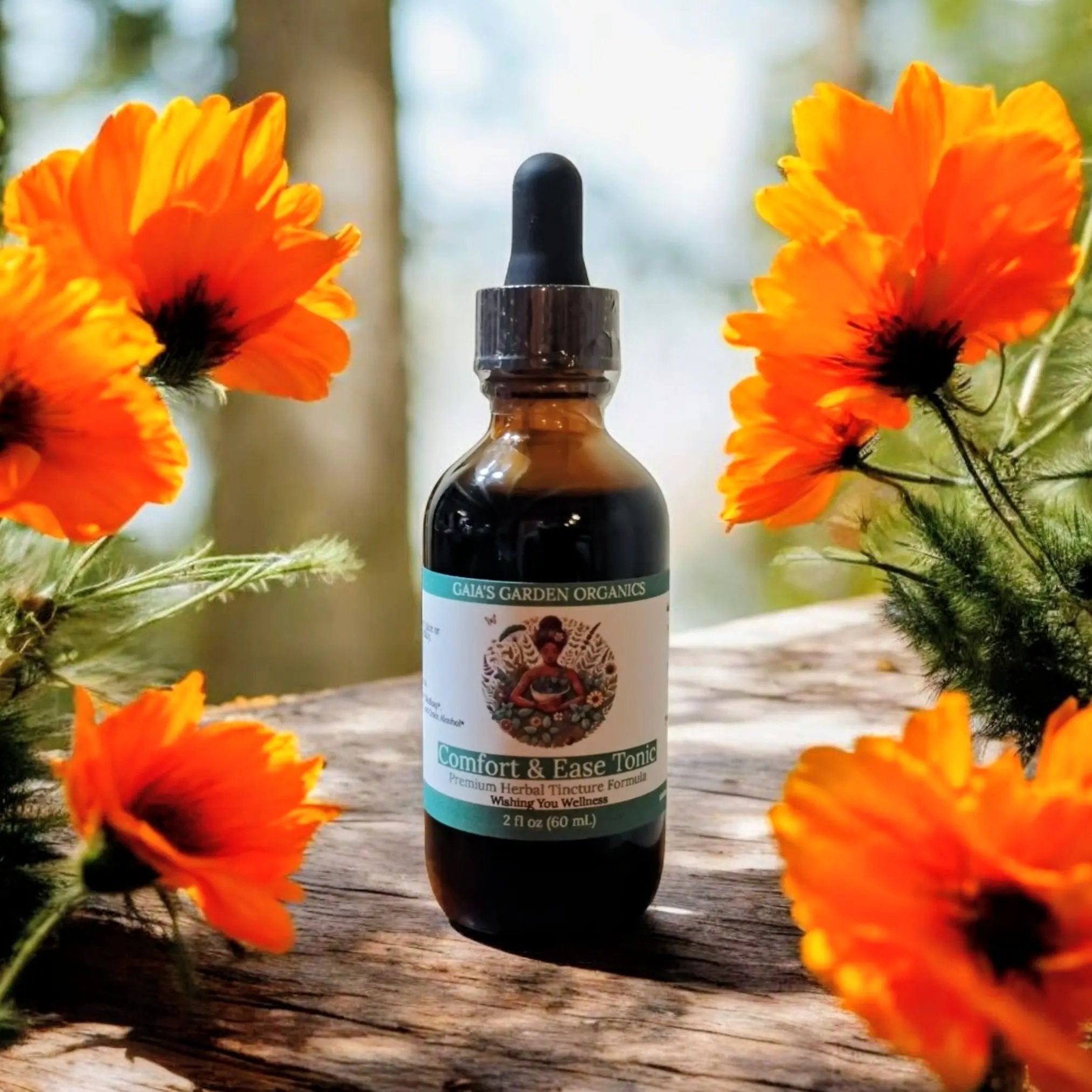
Gaia's Comfort & Ease Tonic: Classic nervine specific to twitchy, tension-filled nervous systems. Traditionally used for the kind of muscle tension that lives alongside mental stress.
Safety & considerations
Properly identified American skullcap has a generally favorable safety record. The most important safety consideration is sourcing, see the adulteration note above.
Sedative interactions
Skullcap may compound the effect of pharmaceutical sedatives, sleep medications, anti-anxiety drugs, and alcohol. If you take any of these, consult your prescribing clinician before adding skullcap to a daily routine.
Pregnancy and lactation
Most modern herbal references recommend avoiding skullcap during pregnancy due to a traditional reputation as an emmenagogue (uterine-stimulant). Lactation use is less restricted but consult your midwife or clinician.
Liver function
The historical adulteration with germander created a reputation for liver toxicity that does not appear to apply to genuine American skullcap. Still, anyone with active liver disease or who takes hepatotoxic medications should consult their physician before regular use, and source skullcap only from suppliers who verify species identity.
Driving and machinery
Skullcap can produce mild drowsiness, particularly at higher doses. Until you know how it affects you, avoid driving or operating heavy machinery for an hour after use.
Children and pets
Mild skullcap tea has limited but established traditional pediatric use for restlessness and nervous tension. For pets, skullcap has been used by holistic veterinarians for anxious dogs; research is limited and dosing varies by species. Consult your pediatrician or veterinarian.
Frequently asked
American skullcap vs Chinese skullcap, what's the difference?
Two completely different species with different uses. American skullcap (Scutellaria lateriflora) is the nervine, used for anxiety, racing thoughts, and muscle tension. Chinese skullcap (Scutellaria baicalensis, "Huang Qin") is anti-inflammatory and antimicrobial, used in Traditional Chinese Medicine for very different conditions. Reputable suppliers always specify which species. We use American skullcap exclusively.
Skullcap vs valerian for sleep?
Different personalities. Valerian is more strongly sedating but produces vivid dreams and morning grogginess for many users (and is paradoxically stimulating for ~10%). Skullcap is gentler, less prone to morning hangover, and better for the somatic-tension component of insomnia (clenched jaw, restless legs, can't-physically-settle). Often combined with passionflower in bedtime formulas.
Is skullcap actually safe for the liver?
Properly sourced single-species American skullcap (Scutellaria lateriflora) has no documented hepatotoxicity in modern toxicology. The historical concern stems from 1980s-90s commercial products that were adulterated with germander (Teucrium), an unrelated and genuinely hepatotoxic plant. Always source from suppliers who verify species identity, and consult your physician if you have active liver disease.
Can I take skullcap every day?
Most healthy adults tolerate daily skullcap tea or low-dose tincture indefinitely. If you're using it nightly for chronic insomnia, periodic check-ins with a healthcare provider are wise to make sure underlying causes (sleep apnea, thyroid issues, depression) aren't being masked.
Will skullcap make me drowsy during the day?
Daytime doses are generally non-impairing for most people, though sensitive individuals report mild drowsiness. Until you know how it affects you, avoid driving for an hour after the first dose. The relaxing-not-sedating quality is part of why clinical herbalists favor skullcap for anxiety that needs daytime function.
Is skullcap safe for pets?
Holistic veterinarians sometimes work with skullcap for anxious dogs, but research is limited and dosing varies considerably by species and weight. We don't sell a pet-specific skullcap product. Consult your veterinarian, especially for pets on medication or with liver concerns.
References
- Brock C et al. American Skullcap (Scutellaria lateriflora): a randomised, double-blind placebo-controlled crossover study of its effects on mood. Phytother Res. 2014;28(5):692-8
- Health Canada, Skullcap monograph (with adulteration history)
- Memorial Sloan Kettering About Herbs: Skullcap
- American Botanical Council / HerbalGram
- Mountain Rose Herbs: Skullcap monograph