Herb glossary · for the overstimulated knowledge worker
Peppermint
Mentha × piperita
Family: Lamiaceae · Parts used: Leaf
Peppermint (Mentha × piperita) is one of the most universally familiar medicinal herbs in Western culture, a sharply aromatic carminative, mild stimulant, and circulatory tonic with research-backed support for digestion, headaches, and respiratory openness.
Traditional uses
Peppermint (Mentha × piperita) is a hybrid of watermint and spearmint, the "×" in its botanical name marks it as a cross. It does not appear in the wild as a stable species; every peppermint plant in the world descends, by clone or layering, from cultivars first selected in 17th-century England. Despite its relatively recent emergence, peppermint has become one of the most-studied medicinal herbs in modern phytotherapy, with substantial clinical-trial evidence for digestive applications.1,2
Primary therapeutic territory
Peppermint's clinical strength is in the digestive system. The volatile oils, primarily menthol and menthone, relax the smooth muscle of the gastrointestinal tract, ease cramping, reduce gas, and cool inflammation in irritated mucous membranes. Enteric-coated peppermint oil capsules have substantial randomized-controlled-trial support for irritable bowel syndrome, with effects comparable to some pharmaceutical interventions.1 The simpler tea preparation shares these qualities at gentler intensity.
Other traditional uses
- Digestive cramping and gas. The classic post-meal carminative tea. Particularly useful for bloating, distension, and the gut-tightness component of stress-driven digestive upset.
- Tension and stress-driven headaches. Topical peppermint oil applied to the temples has clinical-trial support for tension headache. The aromatic vapors are also useful inhaled at headache onset.
- Mental focus without the buzz of caffeine. A mild aromatic stimulant; useful for the afternoon mental fog without the heart-racing edge of coffee.
- Cold and flu support. Peppermint's mild diaphoretic and decongestant qualities round out the classic European cold-flu trinity with yarrow and elderflower. This is a blend worth learning to make at home; it is not currently one of ours.
- Nausea, including pregnancy nausea and motion sickness. Peppermint tea is one of the few digestive herbs generally considered safe and effective during early pregnancy nausea (consult your midwife).
- Cooling support during hot flashes. The menthol creates a felt-cooling sensation that pairs well with hibiscus and rose for perimenopausal hot flashes.
The flower essence connection
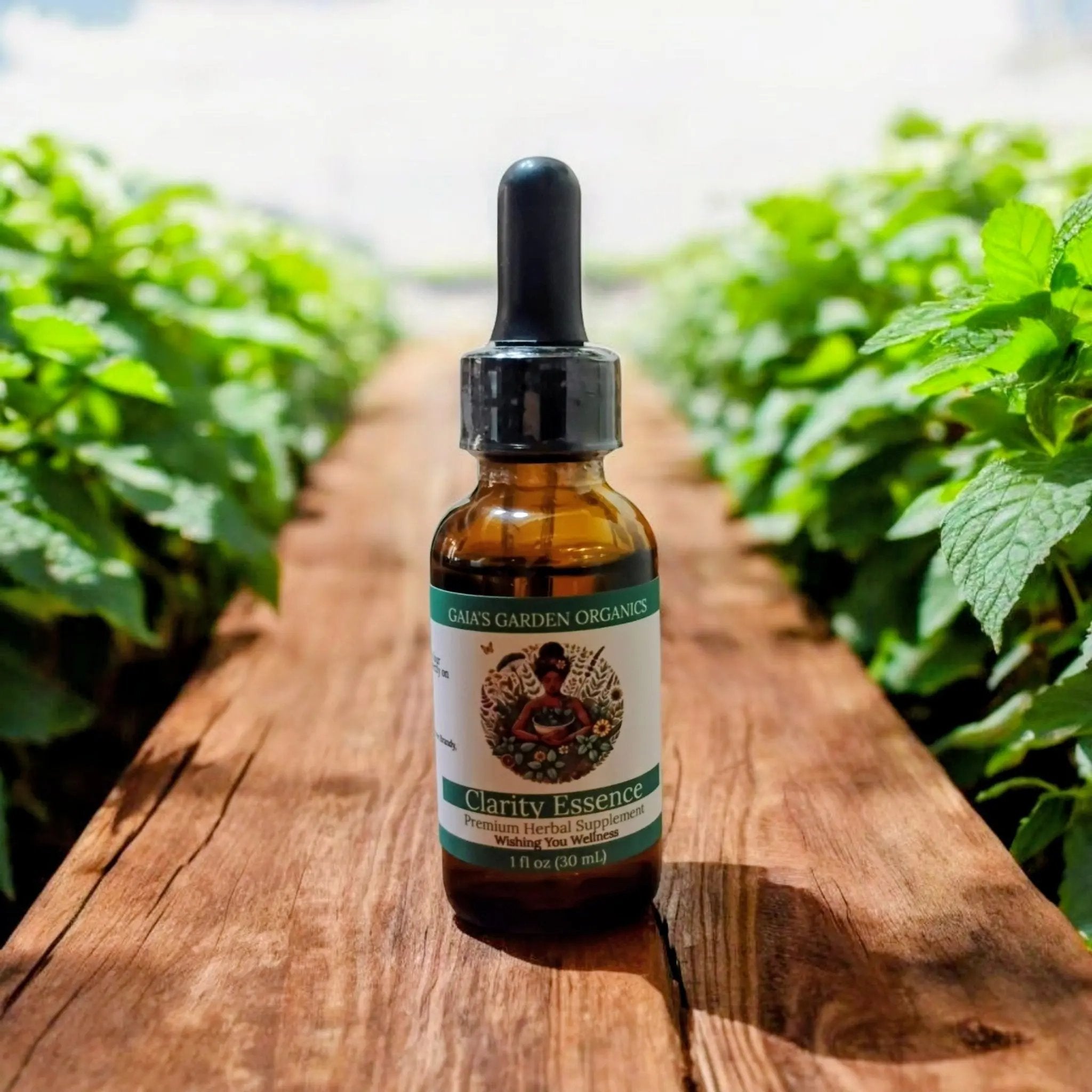
Peppermint is also the flower used to prepare our Clarity Essence. The herbal-tea preparation works through peppermint's chemical constituents (menthol, menthone, rosmarinic acid); the flower essence operates on the emotional level around mental fog, scattered focus, and decision fatigue. The two preparations share a clarifying personality but reach the body and psyche by different pathways.
How we use peppermint at Gaia’s Garden
At Gaia's Garden Organics, peppermint (Mentha × piperita) grows in our medicine garden in Umpire, Arkansas. We harvest it ourselves, by hand, at the moment its medicine is at peak.
In our formulas
Gaia's Clarity Essence - Organic Peppermint Flower Essence: Traditionally used to support focus, mental alertness, and a clear-headed state during fatigue or distraction. Peppermint has a long history in clinical herbalism as a gentle mental-stimulant ally.
Safety & considerations
Peppermint has an excellent traditional and modern safety record. The cautions are about specific situations and concentrated preparations.
Acid reflux and hiatal hernia
Peppermint relaxes the lower esophageal sphincter, useful for digestive cramping in the stomach and below, but counterproductive for people with acid reflux (GERD) or hiatal hernia, where it can worsen the upward leakage of stomach acid. People with these conditions should generally avoid peppermint internally.3
Gallstones
Peppermint's bile-stimulating effect can occasionally provoke pain in people with gallstones. Consult your physician if you have known gallstones or chronic cholecystitis.
Pregnancy and lactation
Mild peppermint tea is generally considered safe during pregnancy and breastfeeding. Concentrated peppermint oil internally is more controversial; consult your midwife. Peppermint may slightly reduce milk supply in some nursing mothers, discontinue if you notice supply changes.
Children
Mild peppermint tea is well-tolerated by most older children. Concentrated peppermint oil should never be applied to or inhaled near the face of infants and very young children due to risk of laryngospasm.
Pets
Peppermint tea in small amounts is generally tolerated by dogs. Concentrated peppermint essential oil is potentially toxic to cats and small dogs and should be kept well away from them. Always consult your veterinarian.
Frequently asked
Peppermint vs spearmint, what's the difference?
Peppermint (Mentha × piperita) is a sharper, cooler hybrid with much higher menthol content. Spearmint (Mentha spicata) is gentler, sweeter, and contains carvone instead of menthol, a different therapeutic personality with hormonal applications peppermint doesn't share. Both are useful; they aren't interchangeable in clinical formulas.
Does peppermint actually help with IBS?
Yes, with strong clinical-trial support, particularly enteric-coated peppermint oil capsules, which have shown effects comparable to some pharmaceutical interventions in randomized trials. The simple tea preparation is gentler but works through the same pathway. If you have IBS, peppermint is one of the first herbs most clinical herbalists reach for.
Can I take peppermint if I have heartburn?
Generally no. Peppermint relaxes the lower esophageal sphincter, which is useful for cramping below the stomach but counterproductive for acid reflux, it lets stomach acid leak upward more easily. People with GERD or hiatal hernia should generally avoid peppermint internally and choose chamomile, lemon balm, or fennel for digestive support instead.
Peppermint tea vs Clarity Essence, which one for focus?
Different mechanisms, both useful, often used together. Peppermint tea works through aromatic and circulatory chemistry, a mild physiological stimulant. The flower essence (Clarity) works on the emotional level around mental fog and scattered focus. Many people use both: tea as needed during the workday, essence as a steady-state daily ritual.
Is peppermint safe during pregnancy?
Mild peppermint tea is generally considered safe during pregnancy and is one of the few digestive herbs traditionally used for early-pregnancy nausea. Concentrated peppermint oil internally is more controversial. As always, consult your midwife or obstetrician for any regular herbal use during pregnancy.
Is peppermint safe for pets?
Peppermint tea in small amounts is generally tolerated by dogs. Concentrated peppermint essential oil is a different matter, it can be toxic to cats (whose livers can't metabolize it) and to small dogs. Keep all concentrated essential oils well away from pets, and consult your veterinarian before regular peppermint use even in tea form.
References
- Khanna R et al. Peppermint oil for the treatment of irritable bowel syndrome: a systematic review. J Clin Gastroenterol. 2014;48(6):505-12
- European Medicines Agency: Menthae piperitae folium assessment report
- Memorial Sloan Kettering About Herbs: Peppermint
- American Botanical Council / HerbalGram
- Mountain Rose Herbs: Peppermint Leaf monograph