Herb glossary · for the closed-heart phase of grief
Hibiscus
Hibiscus sabdariffa
Family: Malvaceae · Parts used: Calyces (the dried red 'petals')
Hibiscus (Hibiscus sabdariffa) is the bright tart-tasting calyx behind agua de jamaica, karkade, and red-zinger teas, a traditional cooling tonic with substantial modern research support for mild blood pressure regulation and cardiovascular wellness.
Traditional uses
Hibiscus (Hibiscus sabdariffa), also known as roselle, jamaica flower, or karkade, is a tropical mallow-family plant whose deep-red, tart calyces (the protective sheaths around the flower buds) are the medicinal and culinary part. The plant is native to Africa and has spread across the global tropics; cold or hot hibiscus tea is a daily beverage across Egypt, Sudan, Mexico, the Caribbean, and much of West Africa. In the past two decades it has become one of the most clinically-studied cardiovascular herbs in Western phytotherapy.1,2
Primary therapeutic territory
Modern clinical research has produced unusually strong support for hibiscus tea as a mild antihypertensive, a reasonable adjunctive measure for people with stage-1 hypertension or pre-hypertension. Multiple randomized controlled trials and a meta-analysis have shown average systolic reductions of 5-7 mmHg with daily hibiscus tea, comparable to some pharmaceutical interventions for mild hypertension. The mechanism appears to involve mild diuretic action plus angiotensin-converting-enzyme (ACE) inhibition, the same pathway as ACE-inhibitor blood pressure medications, though far gentler.1
Other traditional uses
- Cooling support during heat and hot flashes. The traditional Mexican agua de jamaica and Egyptian iced karkade are summertime hydration drinks for very practical reasons, hibiscus is one of the more cooling herbs in the materia medica.
- Cardiovascular support more broadly. Beyond blood pressure, hibiscus has shown mild improvements in cholesterol profiles in several studies.
- Vitamin C and antioxidant content. One of the highest plant sources of vitamin C and anthocyanin antioxidants, useful as part of a long-term immune-supportive diet.
- Mild liver and digestive tonification. The mild diuretic and antioxidant qualities make hibiscus a traditional everyday tonic across cultures.
- Pediatric heart-emotional support. Combined with rose petals, hibiscus appears in some traditional formulas for grief and emotional tenderness in children.
In our garden and formulas
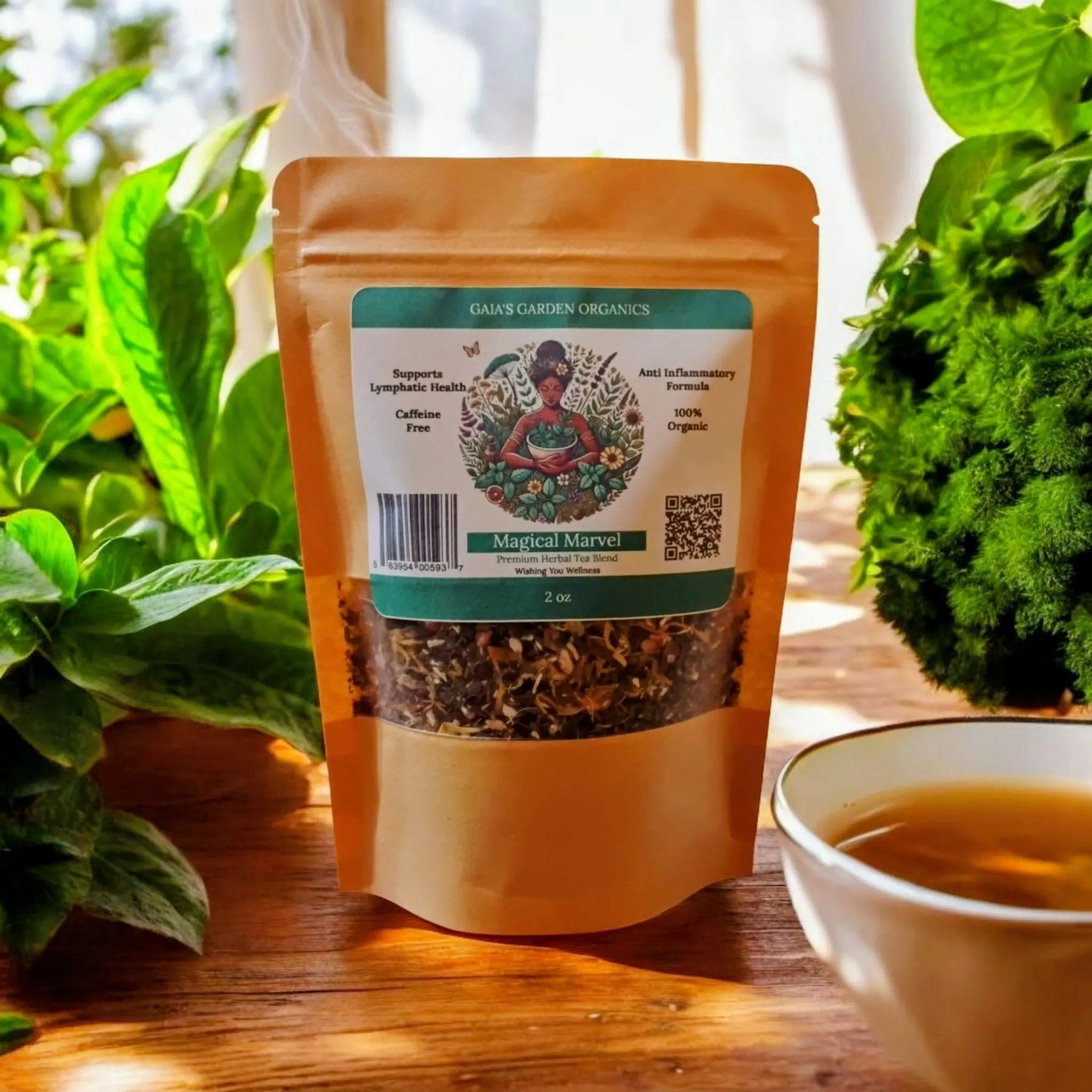
Hibiscus appears in our Magical Marvel Tea as part of the gentle daily cooling-and-tonifying blend, alongside lemon balm, calendula, spearmint, and marshmallow root. That blend is formulated as an everyday anti-inflammatory and cooling cup rather than as a cardiovascular preparation. If blood pressure is the specific thing you are working on, a simple daily hibiscus tea is the more direct route, and it belongs in a conversation with whoever manages your prescriptions.
How we use hibiscus at Gaia’s Garden
At Gaia's Garden Organics, hibiscus (Hibiscus sabdariffa) grows in our medicine garden in Umpire, Arkansas. We harvest it ourselves, by hand, at the moment its medicine is at peak.
In our formulas
Gaia's Magical Marvel Herbal Tea: Tart, ruby petals rich in antioxidants, gives the blend its refreshing flavor and visual lift.
Safety & considerations
Hibiscus has an excellent safety profile for most adults at culinary and traditional medicinal doses. A few specific situations call for caution.
Blood pressure medications
Because hibiscus has measurable blood-pressure-lowering effects through ACE-inhibition-like activity, it can compound the effect of antihypertensive medications, particularly ACE inhibitors (lisinopril, enalapril) and angiotensin receptor blockers (losartan, valsartan). The interaction is usually mild but additive. Anyone on these medications should monitor blood pressure if introducing daily hibiscus tea and discuss with their prescribing clinician.3
Pregnancy
Most modern herbal references recommend avoiding daily medicinal-strength hibiscus tea during pregnancy due to a traditional emmenagogue reputation and limited safety research. Occasional culinary amounts are generally considered fine. Consult your midwife or obstetrician.
Acetaminophen and chloroquine interactions
Some research suggests hibiscus may slow the clearance of acetaminophen and chloroquine, theoretically affecting their efficacy. The clinical relevance is unclear; if you take either daily, separate by at least an hour as a precaution.
Hypotension
People with naturally low blood pressure should monitor for dizziness or lightheadedness if introducing daily hibiscus tea. Reduce or discontinue if symptoms occur.
Children and pets
Mild hibiscus tea is well-tolerated by older children and is widely used as a refreshing cold drink in many cultures. For pets, hibiscus is generally safe for dogs in small amounts but there have been reports of toxicity in horses; consult your veterinarian, especially for pets on cardiovascular medication.
Frequently asked
Does hibiscus tea actually lower blood pressure?
Yes, with substantial clinical-trial support. Multiple randomized controlled trials have shown average systolic reductions of 5-7 mmHg with daily hibiscus tea, meaningful for stage-1 hypertension or pre-hypertension. The effect works through the same pathway as ACE-inhibitor medications but far more gently. Hibiscus is reasonable adjunctive support, not a replacement for prescribed antihypertensive therapy.
How much hibiscus tea for blood pressure?
The clinical trials typically used 2-3 cups per day of strong hibiscus tea (about 240ml each, with 1.5g of dried hibiscus per cup) for 4-6 weeks before measuring effects. Improvements were apparent at 4 weeks, deeper at 6. This works alongside, not instead of, lifestyle changes and any prescribed treatment.
Can I drink hibiscus tea with my blood pressure medication?
Talk to your prescribing clinician first. Hibiscus and ACE inhibitors / ARBs work through similar pathways, so the combined effect is additive, usually mild but worth flagging. Some people on borderline-controlled hypertension may find adjusting medication useful when adding daily hibiscus; some may not need any adjustment. This should be a conversation with your prescriber.
Is hibiscus tea safe for daily long-term use?
For most healthy adults, yes, daily hibiscus tea is a centuries-old practice across many cultures (Egypt, Sudan, Mexico, Caribbean, West Africa). The drug-interaction caveats above are the main exceptions. The cooling quality makes it particularly suited to summer daily use; some traditions use it more sparingly in colder months.
Hibiscus vs hawthorn for cardiovascular support?
Different angles, often combined. Hibiscus is more about acute blood pressure and cooling; hawthorn is more about long-term heart muscle strength and rhythm regulation.
Is hibiscus safe for pets?
Generally safe for dogs in small amounts (a saucer of cooled hibiscus tea has been used by holistic vets for older dogs needing mild cardiovascular support). There have been reports of hibiscus toxicity in horses, avoid for equines. Always consult your veterinarian, especially for pets on cardiovascular medication.
References
- Hopkins AL et al. Hibiscus sabdariffa L. in the treatment of hypertension and hyperlipidemia: a comprehensive review. Fitoterapia. 2013;85:84-94
- McKay DL et al. Hibiscus sabdariffa L. tea lowers blood pressure in pre- and mildly hypertensive adults. J Nutr. 2010;140(2):298-303
- Memorial Sloan Kettering About Herbs: Hibiscus
- American Botanical Council / HerbalGram
- Mountain Rose Herbs: Hibiscus monograph