Herb glossary · for the wound-up nervous system
Lemon Balm
Melissa officinalis
Family: Lamiaceae · Parts used: Aerial parts, fresh whenever possible
Lemon balm (Melissa officinalis) is a bright, citrus-aromatic nervine traditionally used for the kind of anxiety that comes with mental fatigue, mood unsteadiness, and a tense gut, a gladdening herb that lifts and softens at the same time.
Traditional uses
Lemon balm (Melissa officinalis), a Mediterranean-native member of the mint family, has been called "the gladdening herb" since at least Roman antiquity. The 17th-century herbalist John Gerard wrote that it "maketh the heart merry and joyful", and centuries later, modern clinical research has begun to substantiate that long folk reputation, with measurable effects on mood, anxiety, and cognitive performance under stress.1,2
Primary therapeutic territory
Where some nervines (passionflower, valerian) are clearly sedating, lemon balm sits in the unusual category of a calming herb that also brightens. Western clinical herbalism reaches for it when the anxiety pattern includes mental fatigue, mood unsteadiness, or the flat-but-still-anxious presentation that purely sedating herbs don't fit. Lemon balm is also a carminative, meaning it calms the gut at the same time it calms the mind, a useful pairing when stress shows up as a knotted stomach.
Other traditional uses
- Mental fatigue with anxious overlay. The "tired and wired" presentation that calls for both lift and softening, lemon balm's signature territory.
- Stress-driven digestive upset. The classic herb for the "I get butterflies before every meeting" stomach. Often paired with chamomile, peppermint, or fennel in carminative tea blends.
- Sleep onset with restless mind. Lighter than valerian or passionflower, but useful when the issue is mental chatter rather than physical wakefulness. Frequently combined with passionflower or chamomile.
- Mild cognitive support. Several human studies have shown lemon balm improves attention and working memory in mildly stressed adults, likely a downstream effect of nervous-system regulation rather than a direct nootropic action.2
- Cold sores. Topical lemon balm preparations have research support for shortening the duration and severity of herpes simplex outbreaks. Internal use does not appear to share this effect.
- Pediatric anxious tummy. One of the gentlest nervines for children with worry-driven stomach upset.
How it works
Lemon balm contains rosmarinic acid (also abundant in rosemary and tulsi) and a complex of citral-rich volatile oils. Research suggests interaction with GABA receptors, similar to passionflower but more gently, plus modulation of acetylcholine pathways involved in attention and memory.2
How we use lemon balm at Gaia’s Garden
At Gaia's Garden Organics, lemon balm (Melissa officinalis) grows in our medicine garden in Umpire, Arkansas. We harvest it ourselves, by hand, at the moment its medicine is at peak.
In our formulas
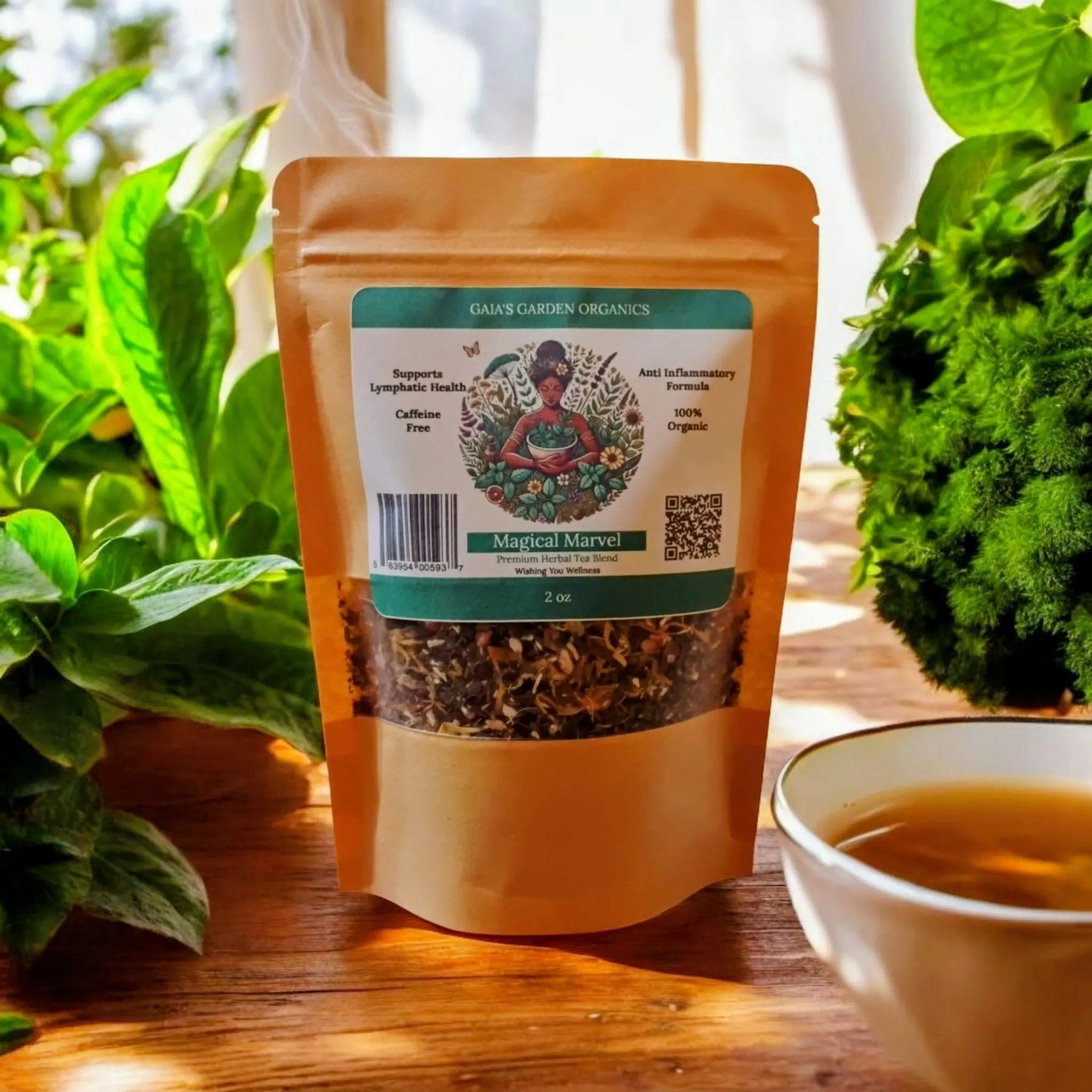
Gaia's Magical Marvel Herbal Tea: Gentle mood-lifting nervine, traditionally used to support a bright, clear mental state on heavy days.
Safety & considerations
Lemon balm has a generally excellent safety profile and a long history of culinary as well as medicinal use. A few considerations:
Thyroid function
Several in-vitro and animal studies have suggested lemon balm may have mild thyroid-modulating effects (specifically, reducing the binding of TSH to thyroid receptors). The clinical relevance in humans is unclear, but anyone with hypothyroidism, Hashimoto's, or who takes thyroid medication should discuss daily lemon balm use with their endocrinologist.3
Sedative interactions
Lemon balm is gentler than most nervines but may still mildly compound the effect of pharmaceutical sedatives, sleep medications, or anxiolytics. Worth flagging if you take prescription medications in those categories.
Pregnancy and lactation
Mild lemon balm tea is generally considered safe during pregnancy and breastfeeding. Concentrated extracts are less well-studied; consult your midwife or obstetrician before using tinctures regularly during pregnancy.
Children and pets
Lemon balm is among the gentlest pediatric nervines and a long tradition exists for using it with anxious or restless children. For pets, lemon balm is generally well-tolerated by dogs in small tea amounts; consult your veterinarian, especially for pets on thyroid or anti-anxiety medication.
Frequently asked
What does lemon balm taste like?
Bright, lemony, slightly minty, it's in the mint family, so the leaf has that familiar coolness, but the dominant note is fresh citrus. Lemon balm tea is one of the most universally well-received herbal teas, even by people who generally dislike herbal tea.
Lemon balm vs chamomile for anxiety?
Different fingerprints. Chamomile is softer, more digestive-leaning, slightly sedating, best for the worried-stomach or wound-up pattern. Lemon balm is brighter, more cognition-supporting, useful when anxiety comes with mental fatigue or low mood. Many calming tea blends combine both.
Does lemon balm help with sleep?
Indirectly, it doesn't sedate the way valerian or passionflower do, but by quieting an overactive mind earlier in the evening it makes sleep onset easier. Useful as a 7pm tea rather than a 10pm tea. Frequently combined with passionflower or chamomile in bedtime blends.
Can I take lemon balm with my thyroid medication?
Talk to your endocrinologist first. Lemon balm has shown mild thyroid-modulating effects in lab studies, the human relevance is unclear, but if you take levothyroxine or other thyroid medication, this is a conversation rather than a self-decision. The interaction may matter more for daily, long-term use than for occasional tea.
Is lemon balm safe for daily use?
Yes, for most healthy adults, it has a long tradition of daily culinary and medicinal use. The thyroid caveat above is the main exception. If you've been using it daily for many months for chronic anxiety, periodic check-ins with a healthcare provider are wise to make sure underlying causes aren't being masked.
Is lemon balm safe for kids and pets?
For children, yes, it's one of the most pediatric-friendly nervines, traditionally given as mild tea for anxious tummies and bedtime restlessness. For pets, lemon balm tea in small amounts is generally well-tolerated by dogs; less research on cats. Avoid if your pet is on thyroid medication, and consult your veterinarian for pets on any prescribed treatment.
Does lemon balm help with anxiety and sleep?
Lemon balm sits in the unusual category of a calming herb that also brightens, so it's traditionally reached for when the anxiety pattern includes mental fatigue, mood unsteadiness, or the tired-but-still-anxious presentation, and modern research has begun to substantiate that long folk reputation for mood and calm. For sleep it works indirectly, it doesn't sedate the way valerian or passionflower do, but by quieting an overactive mind earlier in the evening it makes sleep onset easier, which is why it's better as an early-evening tea than a last-minute one. It's also a carminative, calming the gut at the same time it calms the mind.
References
- Cases J et al. Pilot trial of Melissa officinalis L. leaf extract in the treatment of mild-to-moderate anxiety. Mediterr J Nutr Metab. 2011;4(3):211-218
- Kennedy DO et al. Attenuation of laboratory-induced stress in humans after acute administration of Melissa officinalis. Psychosom Med. 2004;66(4):607-13
- Memorial Sloan Kettering About Herbs: Lemon Balm
- American Botanical Council / HerbalGram
- Mountain Rose Herbs: Lemon Balm monograph