Herb glossary · for the always-on body
Tulsi (Holy Basil)
Ocimum tenuiflorum
Family: Lamiaceae · Parts used: Aerial parts
Tulsi (Holy Basil) is the queen herb of Ayurveda, a sacred, mildly aromatic adaptogen revered for over 3,000 years for its capacity to ease the wear of chronic stress, support immune resilience, and steady the mind during overwhelm.
Traditional uses
Known in Sanskrit as tulasi, "the incomparable one", Tulsi is among the most revered plants in Ayurveda, traditionally cultivated near the threshold of the home and tended as a daily devotional practice. Its botanical name Ocimum tenuiflorum places it in the mint family alongside basil, lavender, and rosemary, but its medicinal personality stands apart from its culinary cousins.
Three varieties of Tulsi
Tulsi appears across South Asia in three primary forms, each with a slightly different therapeutic personality:
- Rama Tulsi (O. tenuiflorum): green leaves, the cooling and clarifying variety often used for stress accompanied by heat or irritability.
- Krishna Tulsi (O. tenuiflorum): purple-tinged leaves, the warming and grounding variety, typically chosen for the depleted nervous system rather than the agitated one.
- Vana Tulsi (O. gratissimum): a related but distinct species, more wild and sharply aromatic, with traditional respiratory and immune emphasis.
Adaptogen for the long arc of stress
Modern Western herbalism classifies Tulsi as an adaptogen, a category of plants that, with consistent use, appear to help the body modulate its response to physical and emotional stressors rather than blunting symptoms in the moment. The clinical-research literature, while still emerging, suggests Tulsi may support the regulation of cortisol, the body's primary stress hormone, and may aid in maintaining mental clarity during prolonged demand.1,2
This is the herb traditionally chosen for the person who has been carrying too much for too long, the chronic burnout pattern more than the acute panic moment. It works gradually; weeks of consistent use are typical before the shift becomes apparent.
Other traditional uses
- Immune resilience. Tulsi has a long traditional reputation for supporting the body's natural defenses, particularly during seasonal transitions and respiratory challenges. It is often paired with ginger, black pepper, or honey in classical Ayurvedic formulas.
- Respiratory wellness. The aromatic oils make Tulsi a traditional ally for the lungs and sinuses, especially during damp or cold seasons.
- Mental clarity and focus. Considered to clear the mind without the agitation of caffeine, Tulsi has historical use as a daily morning tea for sustained alertness and emotional steadiness.
- Heart-centered support. Ayurveda associates Tulsi with the heart chakra; traditional formulas often combine it with rose, motherwort, or hawthorn for emotional softening alongside cardiovascular tonification.
- Sacred and ritual use. In Hindu tradition, Tulsi is considered a manifestation of the goddess Lakshmi; the plant is offered in temple worship and worn as prayer beads (tulsi mala) by devotees.
Tulsi in the Western herbalist's toolkit
While its roots are Ayurvedic, Tulsi has been thoroughly absorbed into Western clinical herbalism over the past three decades. Contemporary herbalists work with it for the same constellation of complaints traditional practitioners did, the hypervigilant, depleted, immune-vulnerable, mentally-foggy nervous system that long stress produces, and pair it freely with non-Ayurvedic adaptogens like ashwagandha, rhodiola, and milky oat.
How we use tulsi (holy basil) at Gaia’s Garden
At Gaia's Garden Organics, Tulsi grows in our medicine garden in Umpire, Arkansas, where the long Ouachita summers give it the heat and sun it loves. We harvest it ourselves, by hand, at the moment its aromatic oils peak, usually on warm mornings just before flowering. Tulsi is one of the few herbs in our garden whose presence we can feel in the air before we see it; the scent alone settles something in the chest.
In our formulas
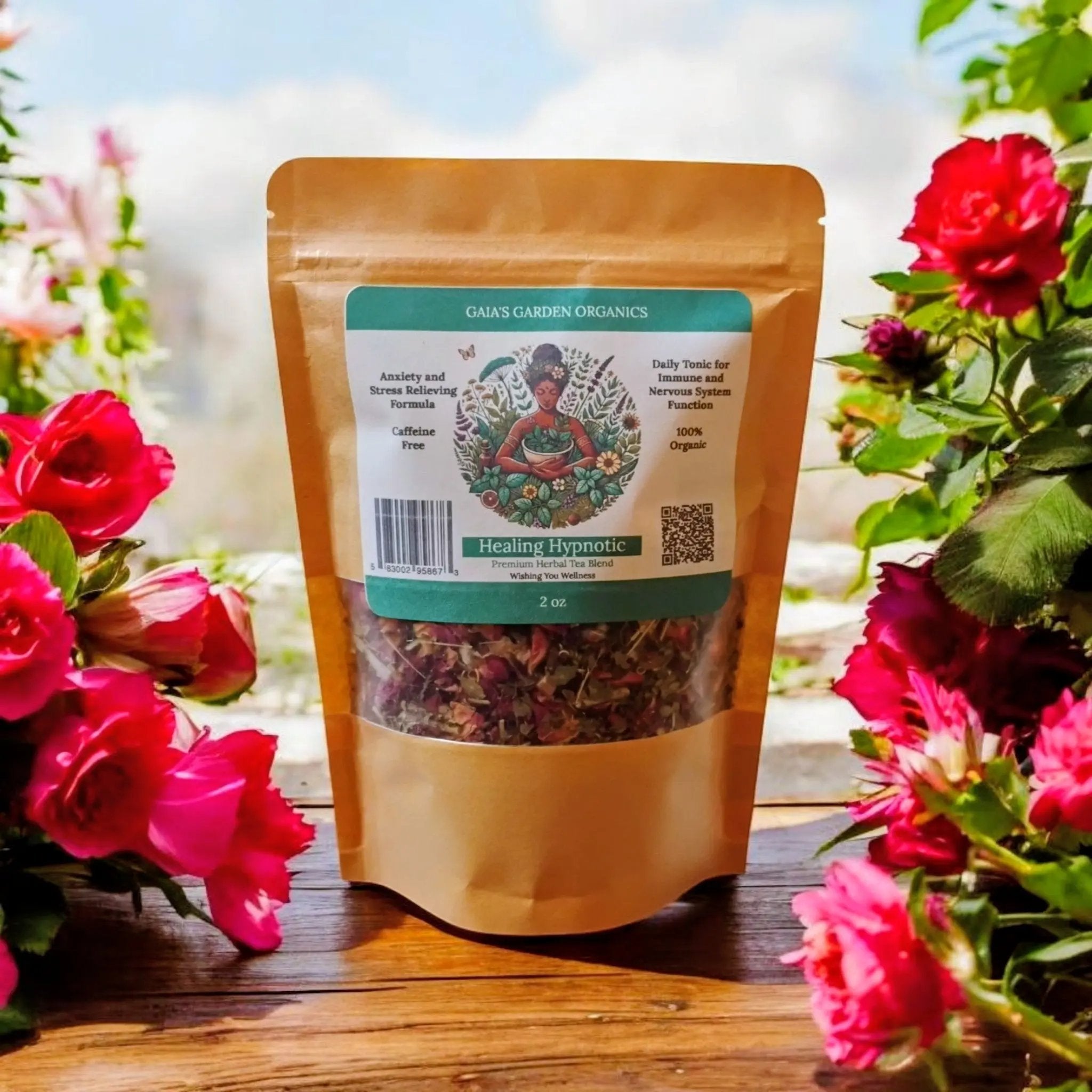
Gaia's Healing Hypnotic Herbal Tea: Tulsi anchors this nighttime blend as the adaptogenic groundwork beneath the nervines. Traditionally used to support a grounded, centered response to the kind of stress that follows you to bed.
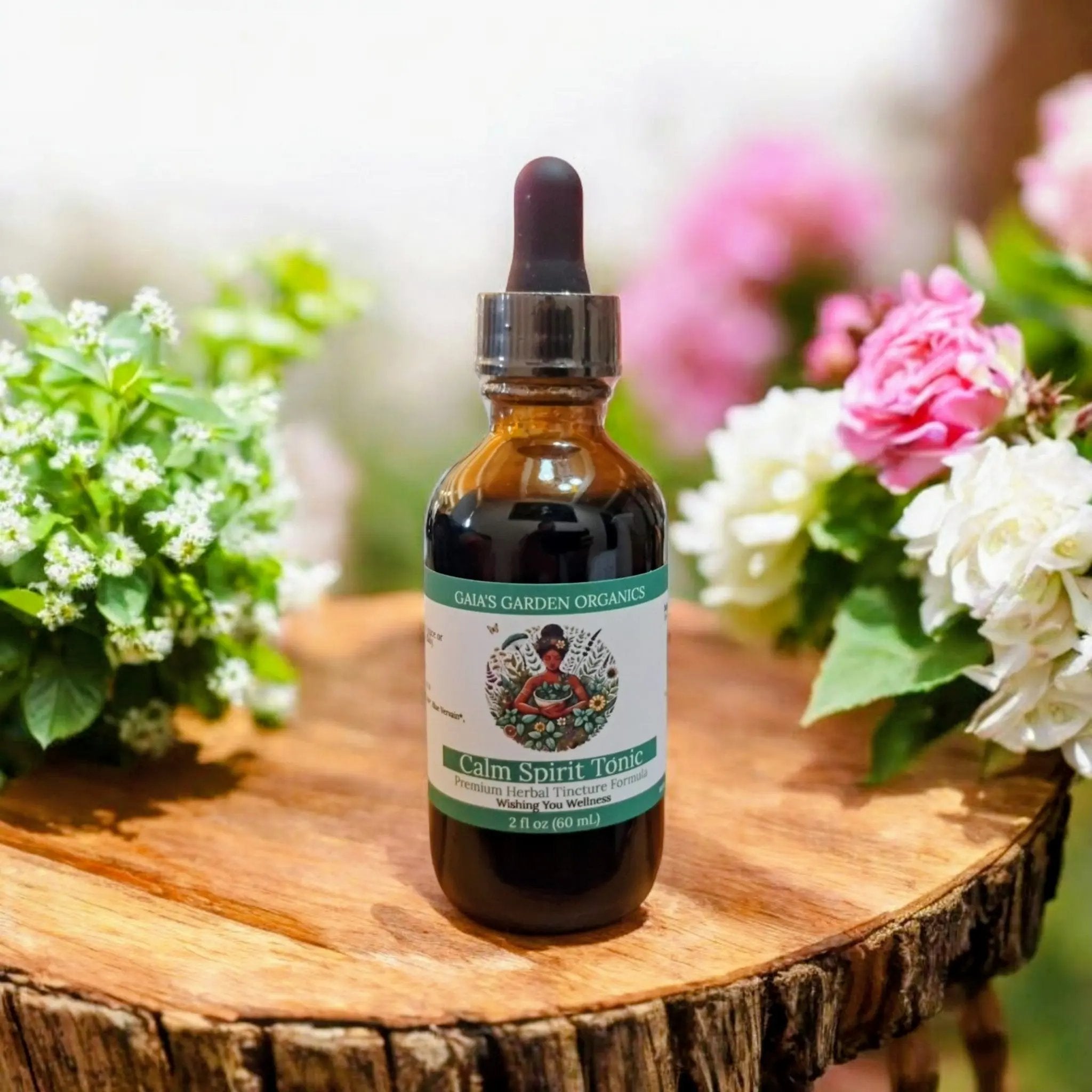
Gaia's Calm Spirit Tonic: Adaptogenic ally, traditionally used to build baseline capacity to meet stress without becoming depleted. The herb to reach for when "anxious" has become a baseline state rather than an episode.
Safety & considerations
Tulsi has a long history of daily use across millions of households and a generally favorable safety profile. As with any herb that has measurable physiological activity, a few considerations deserve attention.
Blood sugar
Some clinical research suggests Tulsi may modestly lower blood glucose. Anyone taking medication for diabetes (insulin, metformin, sulfonylureas, etc.) should consult their prescribing clinician before adding Tulsi as a daily ritual, not because it's incompatible, but because the combined effect may require dose adjustment of the medication.3
Blood clotting and surgery
Tulsi may slow blood clotting in some individuals. Discontinue at least two weeks before a planned surgical procedure, and consult your physician if you take an anticoagulant such as warfarin, apixaban, or daily aspirin.3
Pregnancy and lactation
Traditional Ayurvedic use of Tulsi during pregnancy exists but is contested even within the tradition. Modern clinical research is sparse. Pregnant or nursing individuals should consult a midwife, herbalist, or obstetrician familiar with botanical medicine before daily use.
Children
Tulsi has traditional use across childhood in Indian households, generally as a mild tea or in honey. Western pediatric herbal references typically consider it well-tolerated at small doses. Consult your pediatrician for children with chronic conditions or on medication.
Pets
Research on Tulsi for companion animals is limited. Anecdotal use exists in holistic veterinary practice, particularly for adaptogenic support in stressed dogs. Consult your veterinarian, especially for pets on medication or with chronic illness.
A note on the names
Some sources we cite use Ocimum sanctum rather than Ocimum tenuiflorum; these are the same plant. O. tenuiflorum is the currently accepted scientific name (the older name is treated as a synonym in modern botanical taxonomy).
Frequently asked
What's the difference between Tulsi and Holy Basil?
They're the same plant. "Tulsi" is the Sanskrit name still used in Ayurveda and across South Asia; "Holy Basil" is the English common name. Botanically: Ocimum tenuiflorum.
Is Tulsi a true adaptogen?
By the clinical definition, a plant that helps the body modulate its stress response with consistent use, is non-toxic at therapeutic doses, and supports overall homeostasis, yes. Western clinical herbalism considers Tulsi alongside ashwagandha, rhodiola, eleuthero, and reishi as a foundational adaptogen.
Tulsi vs ashwagandha, which one for stress?
Both are adaptogens but with different personalities. Tulsi is slightly cooling, clarifying, and lung-and-immune-leaning, better for stress that comes with mental fog or seasonal vulnerability. Ashwagandha is warming and grounding, better for stress that comes with depletion, sleep disturbance, and burned-out adrenals. Many traditional formulas use both together.
Is Tulsi safe to take every day, long term?
It has been taken daily as a household ritual across India for millennia. For most healthy adults, daily use is considered well-tolerated. Anyone on medication for diabetes, blood thinners, or with surgery scheduled should consult their physician (see the safety section above).
Can pets take Tulsi?
Some holistic veterinarians work with Tulsi for stressed companion animals, but research is limited and we don't sell a pet-specific Tulsi product. Always consult your veterinarian, especially for pets on medication or with chronic illness.
Why are there two scientific names, Ocimum sanctum and Ocimum tenuiflorum?
They refer to the same plant. Ocimum tenuiflorum is the currently accepted name in modern botanical taxonomy; Ocimum sanctum is treated as a synonym and still appears throughout older clinical literature.