In this article (6)▾
One of the more interesting findings to come out of the past two decades of women's-health herbal research is that a culinary herb most people associate with toothpaste has measurable clinical evidence for hormonal modulation in women with PCOS. Specifically, daily spearmint tea has been shown to reduce free testosterone and hirsutism scores in multiple randomized trials.
This guide is what the research actually says, the protocol that matches the trial design, and how spearmint fits into the broader herbal approach to polycystic ovary syndrome.
What the research found
The most-cited studies are the Akdoğan et al. 2007 trial (Turkish, 21 women with PCOS or idiopathic hirsutism, 5 days of spearmint tea reduced free testosterone) and the Grant 2010 RCT (UK, 42 women with PCOS, 30 days of spearmint tea twice daily significantly reduced free testosterone and modestly improved hirsutism scores). Both studies used the same protocol: a strong infusion of dried spearmint leaf, twice daily.
The effect size is moderate (not transformative), and the changes are most relevant for women with mild-to-moderate hirsutism (excess facial or body hair driven by elevated androgens). For severe PCOS with significant insulin resistance, fertility concerns, or metabolic issues, spearmint is a supportive layer rather than primary treatment.
The mechanism (briefly)
Spearmint appears to have anti-androgenic activity at the receptor level and may modestly affect the hypothalamic-pituitary-gonadal axis. The active compounds are not fully characterized; the volatile oils and flavonoid content together produce the effect. The mechanism is closer to gentle hormonal modulation than to suppression; it works with the body's own regulation rather than overriding it.
Since the research is built around a daily cup, it is worth knowing how to brew herbal tea for a real therapeutic effect.
The protocol that matches the trials
- Dose: One teaspoon of dried spearmint leaf in 8 ounces of just-boiled water, steeped covered for 5-10 minutes. Twice daily, morning and evening.
- Duration: Minimum 30 days before evaluating effect on testosterone or hirsutism. Most clinical benefit builds over 60-90 days.
- Consistency: Daily, not as-needed. The hormonal effect requires consistent exposure.
- Pair with broader PCOS protocol: Inositol, lifestyle (low-glycemic diet, regular exercise, sleep), and any prescribed medication. The herbal layer is one piece.
Spearmint in formula vs. solo
The trials used solo spearmint tea. In clinical practice, spearmint often runs alongside other herbs that support the PCOS picture: chasteberry (Vitex agnus-castus) for progesterone support, licorice and white peony for androgen reduction, cinnamon for insulin sensitivity. The combination work is more nuanced than the spearmint-alone studies cover.
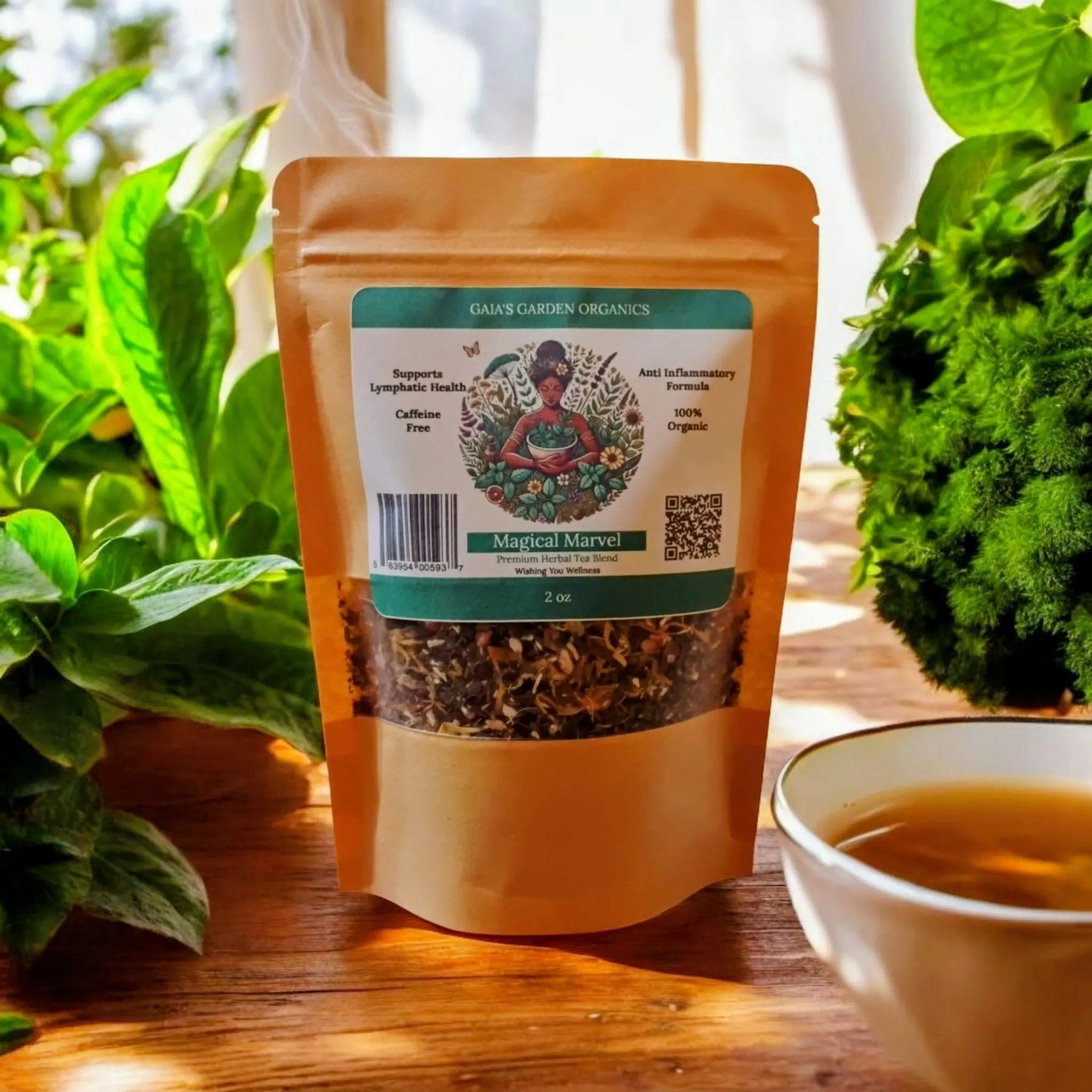
Our Magical Marvel Tea contains spearmint along with calendula, hibiscus, lemon balm, and marshmallow root. The daily cup provides the spearmint exposure plus broader anti-inflammatory and adaptogenic support. For PCOS-focused use, a stronger solo spearmint tea (or addition of spearmint to the Magical Marvel blend) is more pointed.
What this is not for
- Severe PCOS with significant metabolic syndrome, infertility, or insulin resistance. Spearmint is supportive; primary treatment is medical.
- Pregnancy. Spearmint at higher doses has some estrogenic activity that is not appropriate in pregnancy.
- Hypothyroidism. Spearmint may modestly affect thyroid hormone levels; if you take thyroid medication, work with your prescriber on dose and timing.
Where to go from here
- Step 1 (free): Match your essence in 7 questions. Take the essence quiz.
- Step 2 (30-night guarantee): Magical Marvel Herbal Tea contains spearmint plus broader hormonal-and-anti-inflammatory support. For PCOS-pointed daily use, drink twice daily strongly steeped.
- Step 3 (coming soon): Harmony Within, my Yoga Nidra book.
This guide is general women's-health support and is not a substitute for endocrinologist or gynecologist care. PCOS is a complex syndrome with metabolic, hormonal, and fertility dimensions; please work with a clinician as primary.
Frequently asked
Does spearmint tea actually work for PCOS?
There's real clinical-trial evidence for one specific PCOS application: hirsutism (unwanted facial and body hair growth). Two randomized controlled trials in women with PCOS-related hirsutism found statistically significant reductions in free and total testosterone levels and subjective improvements in hirsutism after 30 days of twice-daily spearmint tea. The evidence for other PCOS symptoms (cycle irregularity, weight, insulin resistance) is much weaker. Spearmint tea is one tool, not a complete PCOS protocol.
How much spearmint tea for PCOS hirsutism?
The clinical trials used twice-daily strong spearmint tea (one cup morning, one cup evening) over 30 days. About 1.5 grams of dried spearmint per cup, steeped covered for 10 minutes. Improvements in hormone levels and self-reported hirsutism were measured at the 30-day mark. Continuing the protocol typically deepens the effect; stopping reverses it within weeks.
Can I drink spearmint tea instead of taking spironolactone?
Probably not as a complete replacement for severe PCOS, and that decision should always involve your prescribing clinician. Spearmint's anti-androgen effect is gentle compared to spironolactone or other PCOS-prescribed medications. For mild-to-moderate hirsutism in someone who can't tolerate or doesn't want pharmaceutical anti-androgens, spearmint is a reasonable adjunctive support. For someone with significant hirsutism plus other PCOS symptoms, it's a complement, not a substitute.
Is spearmint tea safe for daily long-term use?
For most healthy adults, yes. Spearmint has a long tradition of daily culinary and medicinal use. The hormonal sensitivity caveat applies to people with hormone-sensitive cancers, those on anti-androgen medications, or those with certain endocrine disorders, who should discuss daily spearmint use with their physician. Pregnancy and lactation: mild spearmint tea is generally considered safe in moderate amounts, but PCOS-strength dosing should be discussed with a midwife or ob-gyn.
Spearmint vs peppermint, can I use either?
Different chemistry, different uses. Peppermint contains menthol (sharp cooling, better for digestive cramping) and does not have the anti-androgenic action. Spearmint contains carvone instead and is the species the clinical trials studied for PCOS. Peppermint won't reproduce the spearmint effect; if you're working with hirsutism, source spearmint specifically.
Products from this article
Handcrafted in Umpire, Arkansas by Gaia Devi, clinical herbalist.
Explore our apothecary
Learn more
Flower Essences 101
A clinical herbalist's plain-English guide to what flower essences are and how to take them.
Find your match
The Vitality-Type Quiz
5-question clinical-herbalist diagnostic for the depleted caretaker. Matches a daily spark practice + plant pairing.
Shop the apothecary
Medicinal Herbal Teas
Loose-leaf, clinical-herbalist-blended teas, each built around a specific job.
Sources & further reading
Authoritative references consulted in writing this article. Open in a new tab.
- PubMed (Grant, 2010)Spearmint herbal tea has significant anti-androgen effects in polycystic ovarian syndrome: a randomized controlled trial
- PubMed (Akdoğan et al., 2007)Effect of spearmint (Mentha spicata Labiatae) teas on androgen levels in women with hirsutism
- PMC (systematic review, 2022)Effects of Tea Consumption on Anthropometric Parameters, Metabolic Indexes and Hormone Levels of Women with PCOS: a Systematic Review and Meta-Analysis of RCTs
- NCCIHHerbs at a Glance (per-herb safety and evidence)
- Chestnut School of Herbal MedicineFlowering Herbs (article archive)