Herb glossary · for the always-on body
Ashwagandha
Withania somnifera
Family: Solanaceae · Parts used: Root
Ashwagandha (Withania somnifera) is the cornerstone Ayurvedic adaptogen for depletion, the nervous system that has been running on overdrive for too long and needs grounded, warming support to rebuild rather than just calm down.
Traditional uses
Ashwagandha (Withania somnifera), also called Indian ginseng or winter cherry, is a small woody perennial in the nightshade family whose root has been the foundational rasayana ("rejuvenative") of Ayurvedic medicine for at least 3,000 years. The Sanskrit name translates roughly to "smell of horse," referring both to the root's distinctive aroma and to its traditional reputation for imparting the strength and stamina of a horse. In the past two decades it has become one of the most-studied herbs in modern phytotherapy, with substantial clinical-trial support for stress and sleep applications.1,2
Primary therapeutic territory
Ashwagandha is a warming, grounding adaptogen, distinct from cooling adaptogens like tulsi or stimulating adaptogens like rhodiola. Its specific therapeutic territory is the depleted nervous system: the "tired but wired" pattern, the chronic-stress picture where the body has been spending more than it's making for too long, the burned-out adrenals presentation where energy reserves are exhausted but the mind still won't slow down. Where stimulating adaptogens push the system harder, ashwagandha allows it to rebuild. Multiple randomized controlled trials have shown measurable cortisol reductions, improvements in sleep quality, and reductions in self-reported stress over 8-12 weeks of consistent daily use.1
Other traditional uses
- Sleep onset and quality. Particularly the kind of insomnia that comes with depletion, falling asleep is hard because the nervous system is running too hot, and morning waking is exhausting. Ashwagandha's name itself (somnifera = sleep-inducing) reflects this use.
- Recovery from burnout and chronic illness. One of the most consistently-used herbs across clinical herbalism for the long-haul rebuilding phase after major life stress, illness, or surgery.
- Thyroid support (hypothyroid pattern only). Some clinical research suggests ashwagandha may modestly raise low T4 levels. This is useful for hypothyroidism but potentially counterproductive for hyperthyroidism, see safety section.
- Strength and exercise recovery. A traditional use as a tonic for physical strength and stamina; some modern studies have shown improvements in muscle recovery and performance.
- Cognitive support during stress. Improvements in working memory, attention, and information-processing speed in stressed adults across several human trials.2
- Reproductive and hormonal support. Traditional Ayurvedic use as a tonic for both male and female reproductive health.
In our garden and formulas
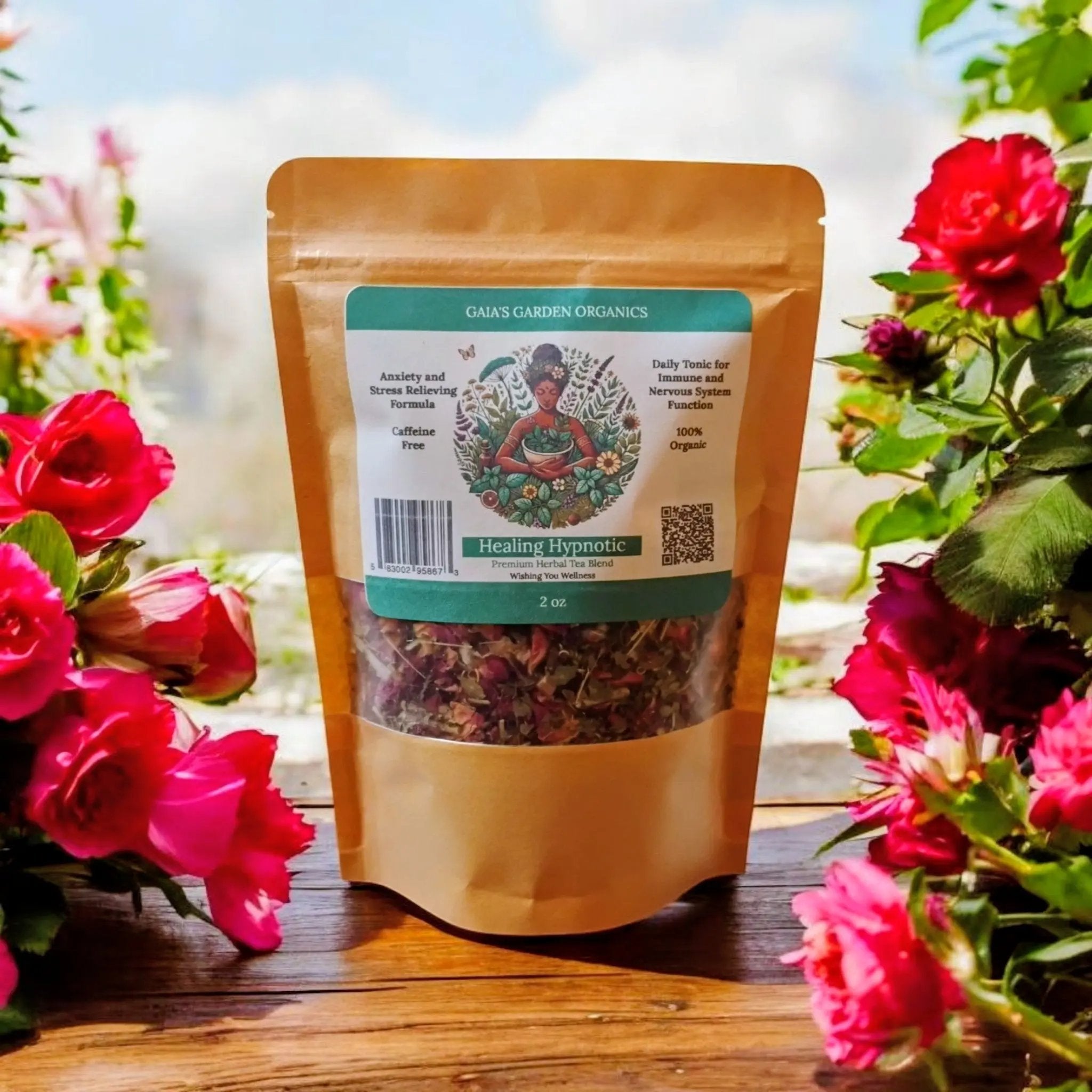
Ashwagandha appears in our Healing Hypnotic Herbal Tea as the deep-grounding adaptogenic layer beneath the bedtime nervines, particularly important for the burned-out, can't-quite-rest pattern of insomnia.
How we use ashwagandha at Gaia’s Garden
At Gaia's Garden Organics, ashwagandha (Withania somnifera) grows in our medicine garden in Umpire, Arkansas. We harvest it ourselves, by hand, at the moment its medicine is at peak.
In our formulas
Gaia's Healing Hypnotic Herbal Tea: Revered Ayurvedic adaptogen, traditionally used to build resilience to everyday stress so the nervous system stops running on overdrive.
Safety & considerations
Ashwagandha has a generally favorable safety profile but several specific situations warrant caution.
Hyperthyroidism
Because ashwagandha may modestly raise thyroid hormone levels, it is contraindicated in hyperthyroidism (overactive thyroid, Graves' disease). It should also be used with caution in people on thyroid medication, the additive effect can require dose adjustment. Consult your endocrinologist.3
Autoimmune conditions
Ashwagandha has mild immune-stimulating effects and is traditionally cautioned against in autoimmune conditions (Hashimoto's, lupus, rheumatoid arthritis, MS). Modern clinical opinion is mixed, some practitioners use it carefully in autoimmune contexts, others avoid it. Consult a clinician familiar with both botanical medicine and your specific condition.
Pregnancy
Ashwagandha is contraindicated during pregnancy due to traditional emmenagogue and uterine-stimulant reputation. Lactation use is more open in some traditions but lacks modern research; consult your midwife or obstetrician.
Sedative interactions
Ashwagandha may compound the effect of pharmaceutical sedatives, sleep medications, and anti-anxiety drugs. The interaction is generally mild but worth flagging if you take prescription medications in those categories.
Liver function
A small number of case reports have associated ashwagandha use with liver enzyme elevation; the mechanism and clinical relevance remain unclear. Anyone with active liver disease should consult their physician before regular use, and discontinue if unusual fatigue, abdominal pain, or jaundice appear.
Children and pets
Ashwagandha has traditional pediatric use in Ayurveda for "failure to thrive" and recovery from illness, but Western pediatric herbalism is more conservative. For pets, holistic veterinarians sometimes use ashwagandha for senior dogs needing adaptogenic support; consult your veterinarian.
Frequently asked
Ashwagandha vs tulsi for stress?
Different fingerprints, often complementary. Tulsi is cooling, clarifying, mentally-clearing, better for stress that comes with mental fog or seasonal vulnerability. Ashwagandha is warming, grounding, deeply nourishing, better for depletion, burnout, and the wired-but-tired pattern. Many traditional formulas use both together; we use both in our Healing Hypnotic Tea.
Can I take ashwagandha during the day or only at night?
Both work; the personality is slightly different. Daytime ashwagandha is grounding and steadying without sedating most people. Evening ashwagandha (or specifically the somnifera-named bedtime use) supports the wind-down for sleep. Some people split the dose: smaller in morning for daytime grounding, larger 1-2 hours before bed.
How long until ashwagandha works?
Subtle effects often emerge in 1-2 weeks (slightly better sleep, slightly less reactivity), but the deeper rebuilding takes 8-12 weeks of consistent daily use. Clinical trials measure outcomes at 8 and 12 weeks for a reason. Ashwagandha is a tonic, not an acute medicine.
Is ashwagandha safe with my thyroid medication?
Talk to your endocrinologist first. Ashwagandha may modestly raise thyroid hormone levels, useful for hypothyroidism but potentially counterproductive for hyperthyroidism. Combined with thyroid medication, the additive effect can sometimes require dose adjustment. This isn't necessarily a problem, but it's a conversation rather than a self-decision.
Why do some people feel worse on ashwagandha?
A small percentage of users report feeling unusually heavy, sluggish, or low after starting ashwagandha, this is more common in people who are constitutionally cold, damp, or already grounded rather than depleted. Ashwagandha is warming and grounding; if you don't need warming or grounding, a lighter adaptogen (tulsi, milky oat) may fit better. Also: hyperthyroid sensitivity can feel like worsened anxiety on ashwagandha, get thyroid tested if symptoms persist.
Is ashwagandha safe for pets?
Holistic veterinarians sometimes work with ashwagandha for senior dogs needing adaptogenic support, particularly for stress and recovery. Research is limited and dosing varies considerably by species and weight. Consult your veterinarian, especially for pets on medication or with thyroid/autoimmune conditions.
References
- Salve J et al. Adaptogenic and anxiolytic effects of ashwagandha root extract in healthy adults: a randomized, double-blind, placebo-controlled clinical study. Cureus. 2019;11(12):e6466
- Pratte MA et al. An alternative treatment for anxiety: a systematic review of human trial results reported for the Ayurvedic herb ashwagandha (Withania somnifera). J Altern Complement Med. 2014;20(12):901-8
- Memorial Sloan Kettering About Herbs: Ashwagandha
- American Botanical Council / HerbalGram
- Mountain Rose Herbs: Ashwagandha Root monograph