In this article (8)▾
A client tells me she has been "fine" for four years. She kept her job through 2020. She did not lose anyone close. She does not have a diagnosable condition. She also has not slept through the night in three years, drinks four cups of coffee a day, and cannot remember the last time she felt rested.
This is the pattern most adults under 50 are walking around with right now: not recovered, just adapted. The nervous system has built tolerance to a level of chronic activation that would have been alarming in 2019. The body forgot what the old baseline felt like.
This guide is the slow herbal protocol I use in clinic for this picture. Not a quick reset. A multi-month rebuild.
The adaptogens in this slow protocol are easiest to keep up as a tincture, and my overview of how herbal tinctures work is good background.
What "burnout we haven't recovered from" actually is
Three biological systems are involved.
- HPA axis dysregulation: Years of low-grade activation has shifted the hypothalamic-pituitary-adrenal axis into a less responsive, more depleted pattern. The body's stress regulation does not return to baseline the way it used to.
- Autonomic imbalance: Sympathetic ("on") tone has become dominant; parasympathetic ("rest and digest") has retreated. Digestion, sleep, and emotional regulation all compromise as a result.
- Chronic inflammation: Prolonged stress drives low-grade systemic inflammation, which feeds back into the fatigue, sleep disruption, and mood patterns. It becomes a self-reinforcing loop.
Each layer needs its own intervention, and each operates on its own timescale.
The three-layer protocol
Layer 1: Adaptogen daily (HPA axis)
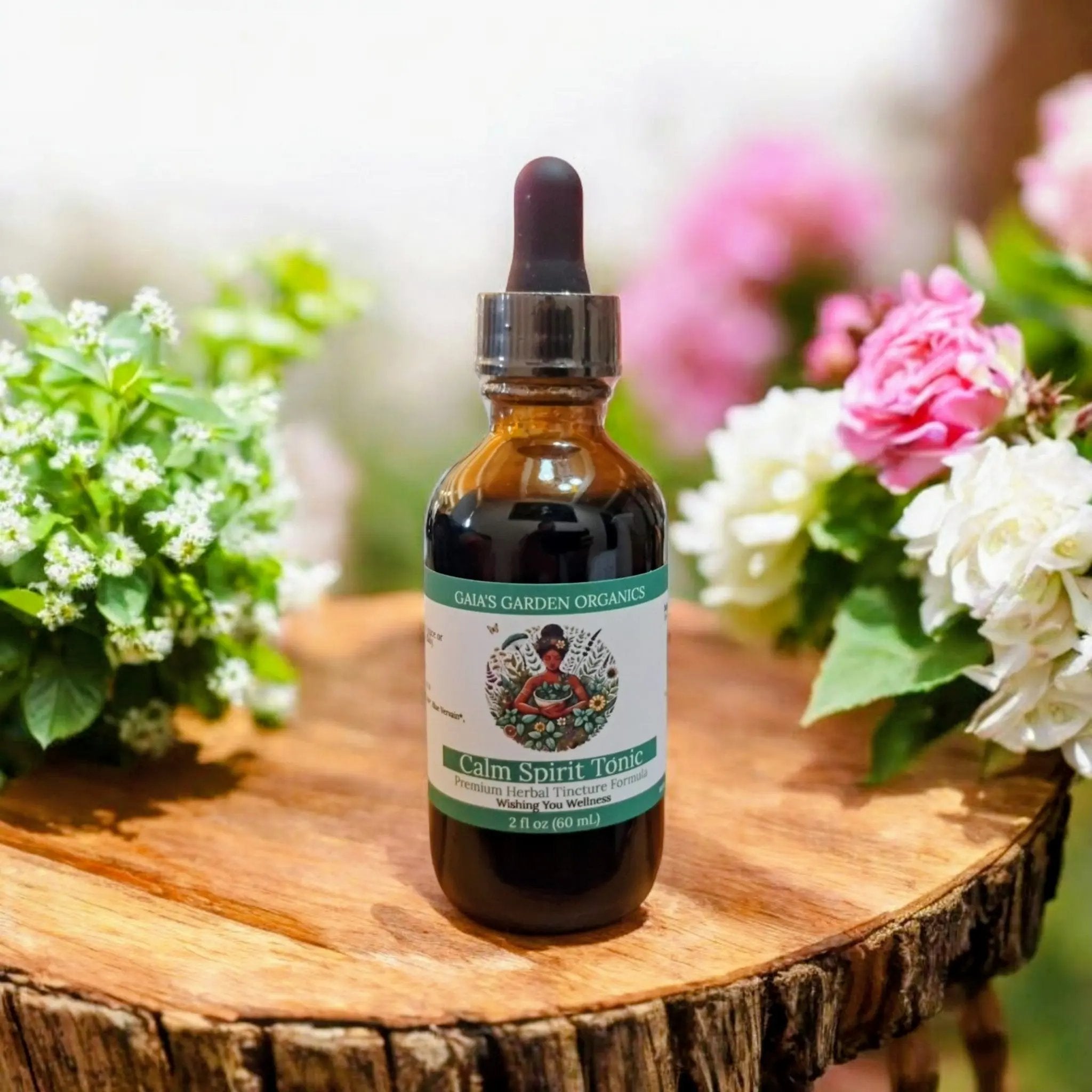
Calm Spirit Tonic contains Tulsi, the foundational adaptogen. 1-2 droppersful in the morning and mid-afternoon, daily for a minimum of 8 weeks. Most clients begin to feel the floor rising in week 3-4. By week 8 the chronic baseline shifts noticeably.
Layer 2: Sleep architecture (autonomic recovery)
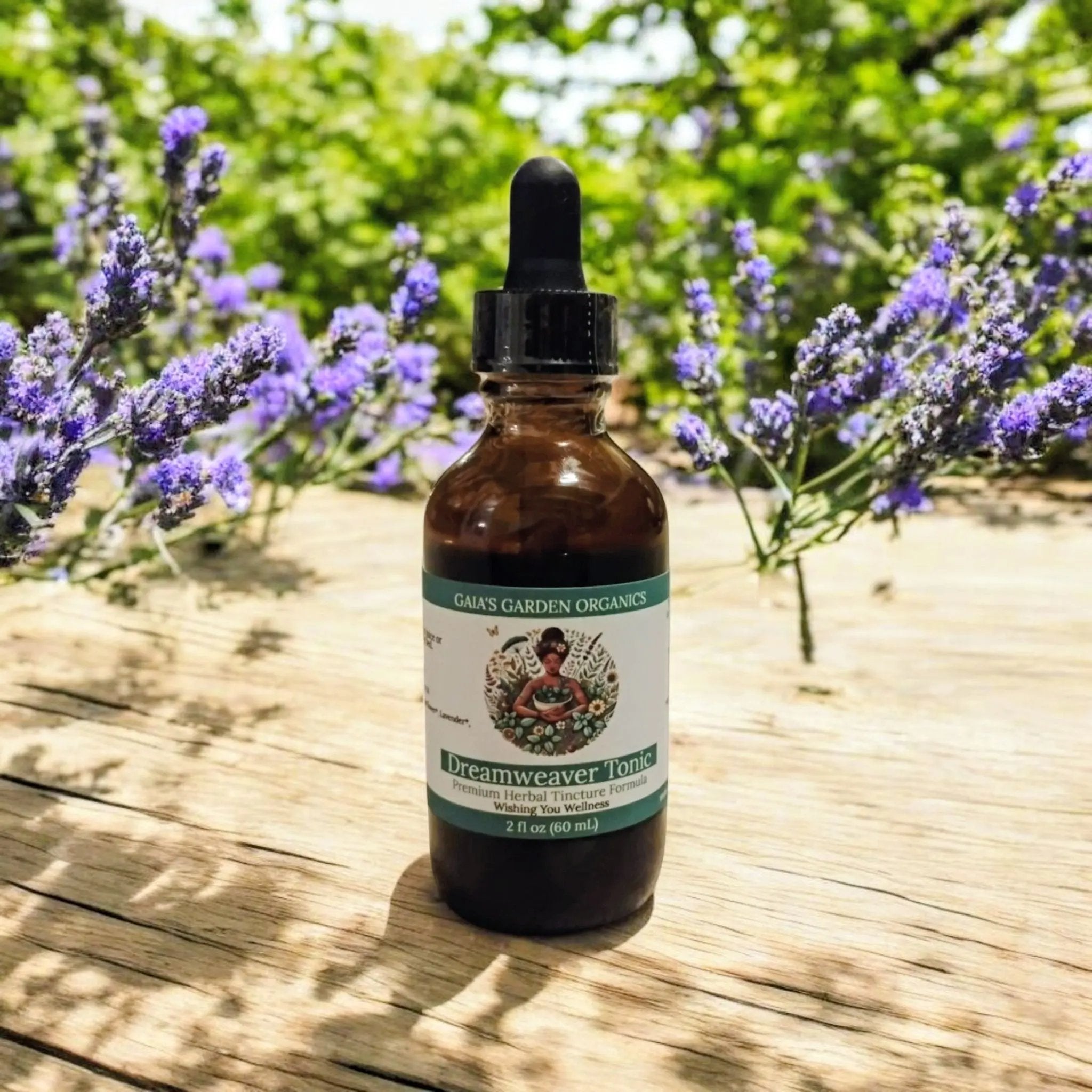
The body cannot rebuild during a sympathetic-dominant sleep. Dreamweaver Tonic 60 minutes before bed nightly. The Skullcap + Lavender combination supports the parasympathetic shift the body needs to drop into deep sleep. 4-6 weeks for the sleep architecture to consistently improve.
Layer 3: Anti-inflammatory baseline (chronic load)
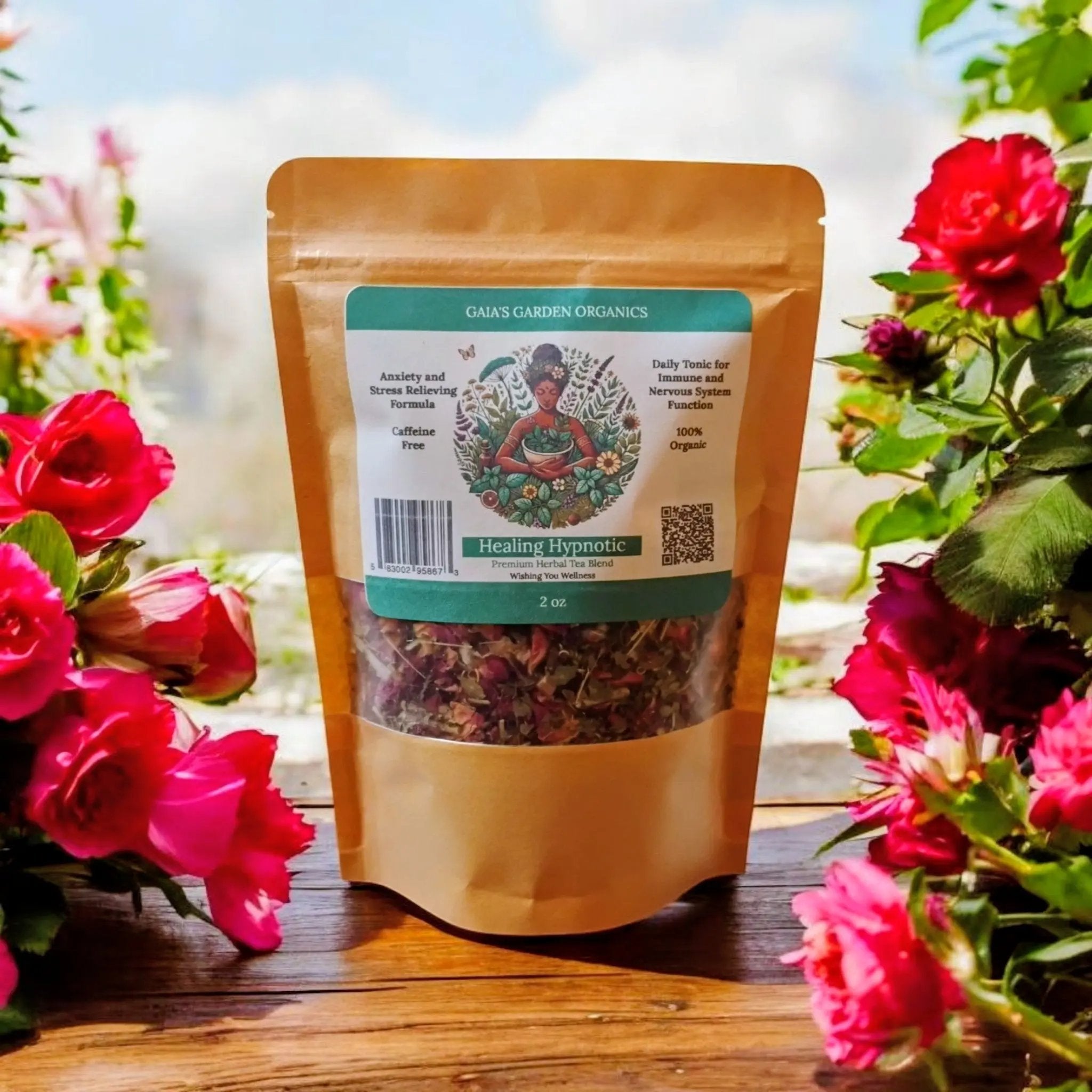
Daily tea works on the inflammation layer slowly. Magical Marvel Tea (calendula + spearmint + hibiscus + lemon balm + marshmallow root) is the daily anti-inflammatory cup. 4-6 weeks of daily use to drop the systemic load enough that fatigue lifts.
What the arc looks like
- Month 1: Sleep onset improves first (Dreamweaver lands fastest). Energy still feels the same.
- Month 2: The afternoon crash softens. Daily anxiety baseline drops. Through-the-night sleep on more nights than not.
- Month 3: The "I do not remember feeling this well" moment. Friends start to comment.
- Month 4-6: The new baseline holds. The protocol stays in rotation but the effort drops.
What makes this protocol different
Most "burnout" advice is a single intervention (a tea, a supplement, a sleep app) on a single timeline. The pattern that drove the burnout is across three systems and took years to build. Treating it on a multi-month, three-layer protocol matches the actual problem.
This is not glamorous medicine. Adaptogens taken consistently for two months are less exciting than a stimulant. But the rebuilt baseline is what makes the difference at month four.
Where to go from here
- Step 1 (free): The 7-Day Nervous System Reset PDF. Get the protocol.
- Step 2 (30-night guarantee): The three-product stack in The 30-Day Calm Reset Kit (Calm Spirit + Dreamweaver + Tranquility Essence + Healing Hypnotic Tea). For the long-arc anti-inflammatory layer, add Magical Marvel Tea.
- Step 3 (coming soon): Harmony Within, my Yoga Nidra book.
This guide is general nervous-system support. Severe burnout with significant mood symptoms, suicidal ideation, or physical illness needs professional support as primary.
Frequently asked
How long does this protocol take?
Plan a four-to-six-month commitment. Sleep onset improves in the first month, the daily anxiety baseline shifts in months 2-3, and the deeper energy and inflammatory baseline lands in months 3-4. After month 4, most clients reduce dose frequency but keep one or two of the products in their daily rhythm as nervous-system insurance.
Can I take this with my antidepressant or anxiety medication?
Generally yes, but consult your prescriber. Adaptogens like Tulsi work alongside SSRIs, SNRIs, and benzodiazepines without major interaction risk. Skullcap, Passionflower, and Lavender can mildly compound benzodiazepine sedation. Never stop psychiatric medication without medical supervision; the herbs work best as adjuncts to a stable clinical baseline.
Will I become dependent on these herbs?
No. None of the herbs in this protocol (tulsi, motherwort, skullcap, passionflower, lavender, rose, blue vervain, the tea herbs) are habit-forming or develop tolerance. You can run the protocol for years or stop tomorrow with no withdrawal.
What if I'm too burnt out to remember to take herbs daily?
Stack the protocol on existing habits. Calm Spirit tincture next to the coffee machine (morning dose with the cup). Magical Marvel Tea next to the kettle (afternoon transition). Dreamweaver on the nightstand (sixty minutes before bed). The herbs work, but only if they get taken; protocol design matters more than herb selection at this point.
Is this safe in pregnancy or while nursing?
Most of this protocol is contraindicated in pregnancy: motherwort, blue vervain, ashwagandha, hibiscus, spearmint, and tulsi all have pregnancy cautions. For pregnant-and-postpartum burnout, please consult a midwife or clinical herbalist; the appropriate protocol differs significantly from the general adult version.
Products from this article
Handcrafted in Umpire, Arkansas by Gaia Devi, clinical herbalist.
Explore our apothecary
Learn more
Flower Essences 101
A clinical herbalist's plain-English guide to what flower essences are and how to take them.
Find your match
The Anxiety-Type Quiz
5-question clinical-herbalist diagnostic that names your anxiety pattern and matches a practice + plant pairing.
Shop the apothecary
Herbal Tinctures
Clinical weight-to-volume tinctures for nervous-system, sleep, and recovery work.
Sources & further reading
Authoritative references consulted in writing this article. Open in a new tab.
- PubMed (Chandrasekhar et al., 2012)A prospective, randomized double-blind, placebo-controlled study of safety and efficacy of a high-concentration full-spectrum extract of ashwagandha root in reducing stress and anxiety in adults
- PubMed (Salve et al., 2019)Adaptogenic and Anxiolytic Effects of Ashwagandha Root Extract in Healthy Adults: A Double-blind, Randomized, Placebo-controlled Clinical Study
- PubMed (Amsterdam et al., 2009)A randomized, double-blind, placebo-controlled trial of oral Matricaria recutita (chamomile) extract therapy for generalized anxiety disorder
- PubMed (Brock et al., 2014)American Skullcap (Scutellaria lateriflora): a randomised, double-blind placebo-controlled crossover study of its effects on mood in healthy volunteers
- NCCIHHerbs at a Glance (per-herb safety and evidence)