In this article (12)▾
One of the most common confusions in new herbal-medicine users is that flower essences and essential oils are the same thing. They are completely different. Different preparation methods. Different mechanisms of action. Different use cases. Different doses. Different safety profiles.
The confusion is understandable. Both come in small dark glass bottles, both are made from flowers, both get shelved in the same aisle, and both are frequently sold by people who have not thought hard about the distinction. But recommending an essential oil to someone who needs a flower essence, or the reverse, is not a near miss. It is the wrong category of medicine.
This guide is the plain-language version of how to tell them apart and when to reach for each.
The short answer
If you only read one paragraph: an essential oil is a concentrated chemical extract that acts on your body through smell and skin, and it needs to be handled with real caution. A flower essence is a sun-infused water preparation containing almost no plant chemistry, taken internally in drops, that acts on the emotional layer over weeks, and it is one of the gentlest preparations in herbal medicine.
One is potent and physical. One is subtle and emotional. Neither substitutes for the other.
What an essential oil is
An essential oil is the concentrated aromatic fraction of a plant, extracted by steam distillation or, for citrus peels, cold pressing. Steam passes through plant material, the volatile aromatic compounds travel with it, the mixture is condensed, and the oil separates from the water.
The result is genuinely concentrated. A 15ml bottle of lavender essential oil represents the volatile-oil yield of several pounds of fresh lavender flowers. That is not a marketing flourish, it is arithmetic, and it is the single most important thing to understand about the category.
Essential oils contain measurable and often pharmacologically active compounds: terpenes, esters, alcohols, ketones, aldehydes. They act primarily through two routes. Inhaled, aromatic molecules reach the olfactory system, which has unusually direct connections into the limbic structures involved in emotion and memory. Applied topically in a carrier oil, some compounds are absorbed through the skin.
Most essential oils are not for internal use. Some are outright toxic taken internally in quantity, and the ones that are not still require guidance most retail buyers do not have.
What a flower essence is
A flower essence is a sun-infused water preparation of fresh blossoms, preserved with high-proof brandy in the traditional Bach method. Fresh flowers float on spring water in a glass bowl in direct sunlight for a few hours. The water is strained and preserved with brandy, then diluted through two further stages before it reaches a bottle you would buy.
The finished essence is water and brandy. There is no concentration step anywhere in the process. There is no measurable plant compound in significant quantity, by design, and any maker claiming otherwise has either made something else or described it inaccurately.
Flower essences act on the emotional and dispositional layer of the person taking them rather than on the body's biochemistry. The mechanism is what Bach called the "vibrational pattern" of the flower, transferred to the water during the infusion. That is a field-consensus framing in energetic medicine, not a clinically validated pharmacological mechanism, and I would rather say so plainly than dress it up.
The scent test
Here is the fastest way to tell what is in your hand, and it takes three seconds.
Open the bottle and smell it. An essential oil will announce itself from arm's length. A flower essence will smell faintly of brandy, or of nothing much at all.
This surprises people, especially with a lavender essence, because they expect lavender to smell like lavender. It does not, and the reason is worth understanding. The Flower Essence Society states it directly: flower essences do not have definite aromas, and any pronounced scent in one comes from the preservative rather than from the flower (Flower Essence Society FAQ). The aromatic molecules that make lavender smell like lavender are precisely the ones an essential oil concentrates and a flower essence never captures.
If a product is sold to you as a flower essence and smells strongly of flowers, something has been added, and you should ask what.
Side-by-side comparison
- How they're made: Essential oil, steam distillation or cold pressing. Flower essence, sun infusion in spring water, then brandy preservation and further dilution.
- Plant material required: Essential oil, pounds of plant per small bottle. Flower essence, a bowl of blossoms that keeps producing.
- What they contain: Essential oil, concentrated volatile plant compounds. Flower essence, water plus brandy preservative, no measurable plant matter.
- Aroma: Essential oil, intense. Flower essence, effectively none.
- How they act: Essential oil, pharmacologically through the olfactory system or the skin. Flower essence, energetically on the emotional layer.
- How to use them: Essential oil, diffused, inhaled, or applied to skin diluted in a carrier oil. Flower essence, taken internally as drops under the tongue or in water.
- Dose: Essential oil, a few drops in a diffuser or carrier oil. Flower essence, a few drops internally, repeated through the day.
- Onset: Essential oil, immediate for the aromatic effect. Flower essence, days to weeks for the pattern shift.
- Safety: Essential oil, many cautions (skin sensitization, photosensitivity, pregnancy contraindications, toxicity if ingested in quantity). Flower essence, one of the cleanest safety profiles in herbal medicine.
- Children and pets: Essential oil, significant cautions for young children and many for animals. Flower essence, generally used across ages and species at appropriate dilution.
- When to use which: Essential oil, aromatic mood support, topical skin care, respiratory steam. Flower essence, chronic emotional patterns, daily dispositional support.
The safety gap is wider than people assume
This is where treating the two as interchangeable causes actual harm.
Essential oils are concentrated enough to burn skin, to sensitize permanently with repeated undiluted use, to cause photosensitivity reactions on sun-exposed skin, and to be genuinely dangerous if a child drinks from the bottle. They require dilution in a carrier oil for topical use, and that is not an optional refinement. Several are contraindicated in pregnancy. Concentrated essential oils are not safe for cats and should never be applied to them or ingested by them.
None of this makes essential oils bad. It makes them potent, which is the same thing that makes them useful. But potency is exactly the property a flower essence does not have, and it is why the two categories cannot share a set of handling rules.
The lavender example
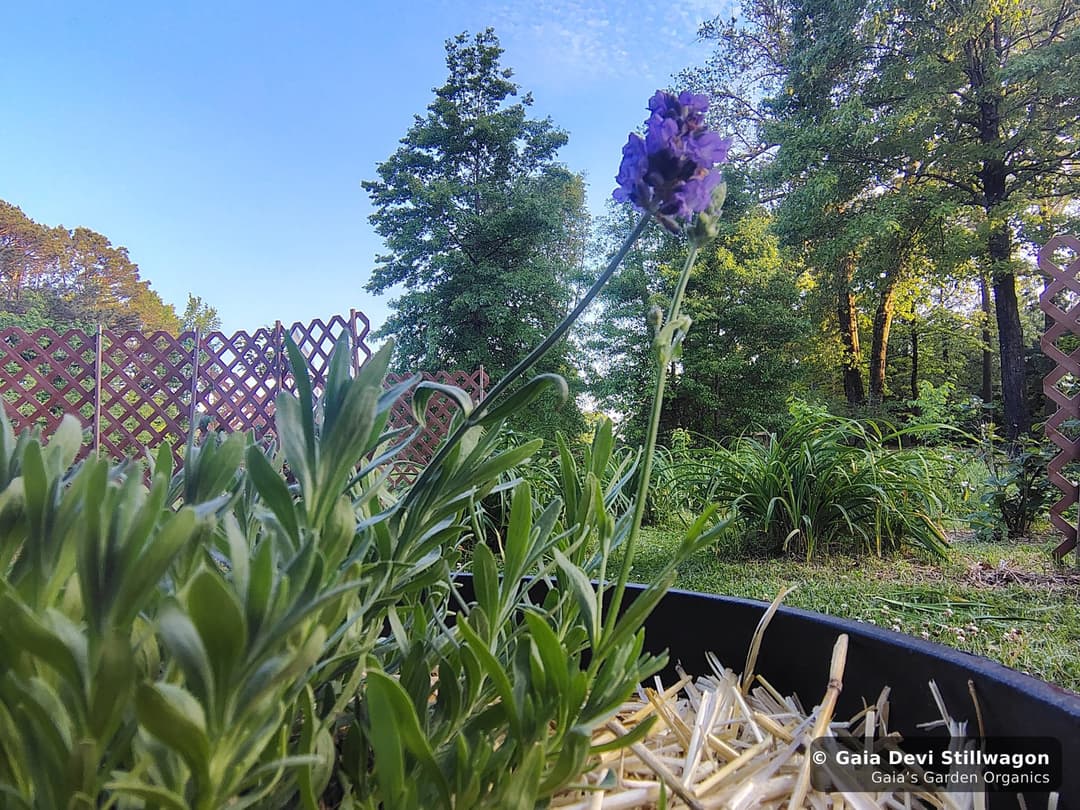
Both lavender essential oil and lavender flower essence exist. Same plant, same garden, in our case the same row. They are not interchangeable.
Lavender essential oil is used aromatically (a diffuser before bed), topically (diluted on the temples for a tension headache, on a bug bite for soothing), and in steam. Its effect is on the nervous system through smell and on the skin through topical absorption. It is strong, fast, and pharmacologically active. You would not take it internally.
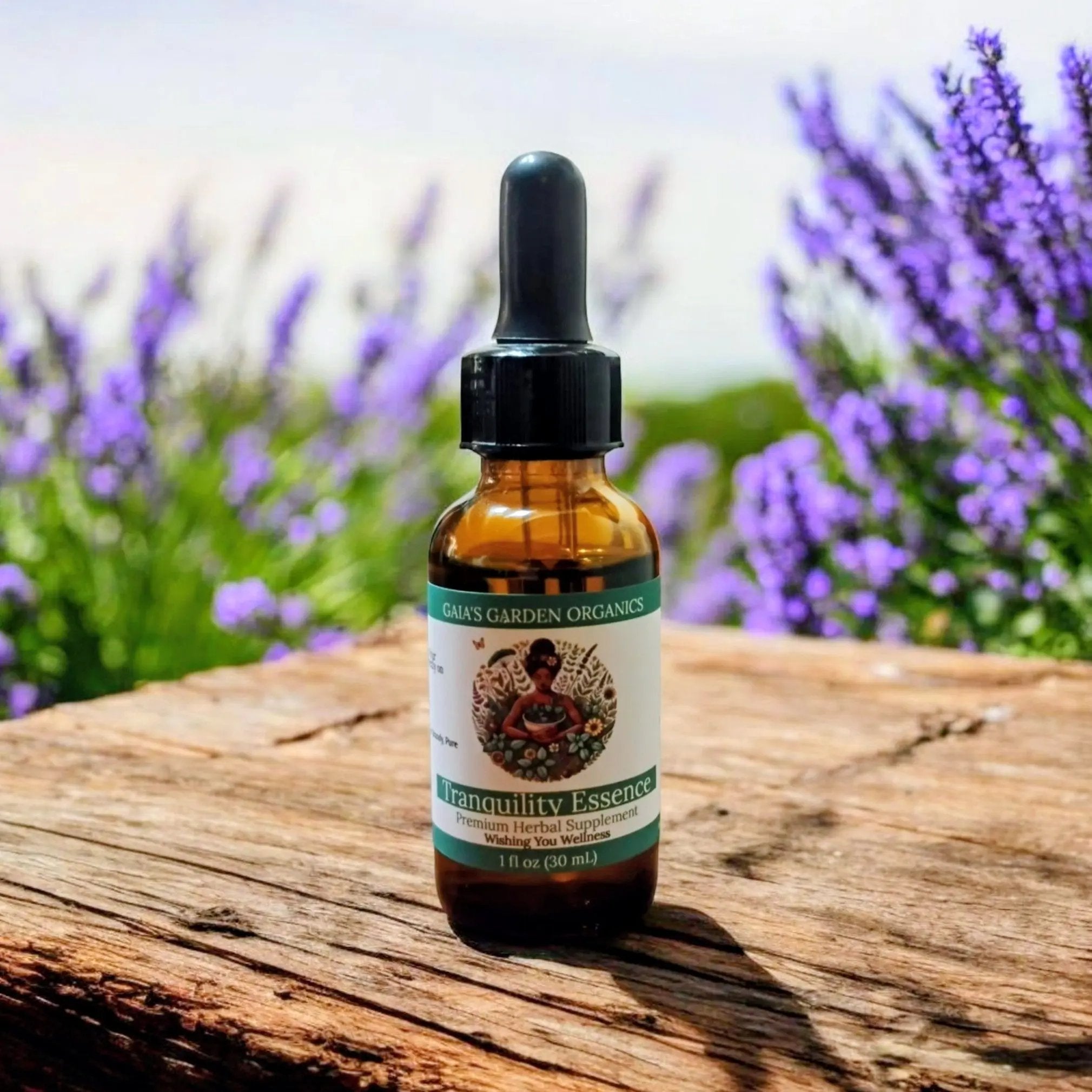
Lavender flower essence, our Tranquility Essence, is taken internally in drops for chronic everyday anxiety, the wound-too-tight emotional pattern that has been running for years rather than the tension you woke up with today. Its effect is on the emotional baseline over weeks. It is gentle, slow, and energetic.
Notice that they are not even aimed at the same timescale. The oil is for tonight. The essence is for the pattern that keeps producing nights like tonight.
You can absolutely use both at once. They work on completely different layers and there is no interaction to worry about.
The environmental math
This is rarely discussed and it matters if you care where your medicine comes from.
Essential oil production consumes plant material at a rate that is hard to appreciate until you have grown the plant. Pounds of flowers for a small bottle means acreage, which for the popular oils means large-scale monocropping somewhere, with everything that implies for soil and pollinators. That is a real cost, and it is worth paying when the oil is the right tool. It is not worth paying casually.
A flower essence sits at the other extreme. The blossoms float in a bowl of water for a few hours. The plant they came from is still standing, still flowering, still feeding bees. A single morning's infusion, diluted through the traditional stages, produces a great deal of finished essence. We make ours from a garden we walk every day in Umpire, Arkansas, and the harvest does not visibly change the garden.
Neither fact makes one category virtuous and the other suspect. It does mean that reaching for an essential oil where a flower essence would do the job is expensive in a way the price tag does not show.
When to reach for each
- Aromatic mood support, room atmosphere, sleep cue: Essential oil in a diffuser.
- Topical, skin or muscle: Essential oil diluted in a carrier oil.
- Steam inhalation for respiratory support: Essential oil in hot water.
- Chronic emotional pattern (anxiety, grief, boundary work, fear): Flower essence.
- Daily emotional baseline support: Flower essence.
- Pets and children's emotional support: Flower essence, given the pediatric and animal cautions on oils.
How long each one keeps
Shelf life is the other place the two categories diverge, and it catches people out.
Essential oils oxidize. They are volatile aromatic compounds, and exposure to air, light, and heat degrades them over time. Citrus oils are the fastest to turn. An oxidized oil is not just weaker; oxidation products are a common cause of skin sensitization, which means an old bottle can irritate skin that a fresh bottle would not have. Keep them capped, dark, and cool, and be willing to throw one out.
Flower essences are shelf-stable for years. This is the whole point of brandy preservation and the reason the traditional method uses it. Unopened and stored properly, a brandy-preserved essence holds for five to ten years. Opened and in daily use, it is reliable for three to five. Store it out of direct sun and away from heat, and that is genuinely all the care it needs.
What neither of them is
Worth naming, because the aisle contains a third and fourth thing that get confused with both.
Neither is a herbal tincture. A tincture is an alcohol extraction of plant material that keeps the plant's chemistry and acts pharmacologically, taken internally, in a similar dropper bottle. It looks like a flower essence and behaves like a medicine.
Neither is a hydrosol, the aromatic water left over from steam distillation, which sits somewhere between an oil and a tea in strength.
And neither is a substitute for medical care. Flower essences work on emotional patterns and their supporting evidence is observational rather than clinical; a systematic review of randomised trials found effects not distinguishable from placebo (Ernst, 2010). I use them daily in practice and I still think you should know that.
Where to go from here
- Step 1 (free): Match your essence in 7 questions. Take the essence quiz.
- Step 2 (30-night guarantee): Browse all five flower essences. Our essences are prepared by the traditional Bach method.
- Step 3 (coming soon): Harmony Within, my Yoga Nidra book.
For broader context, our pillar guide Flower Essences 101 covers preparation, mechanism, and how to choose between essences.
Products from this article
Handcrafted in Umpire, Arkansas by Gaia Devi, clinical herbalist.
Explore our apothecary
Learn more
Flower Essences 101
A clinical herbalist's plain-English guide to what flower essences are and how to take them.
Find your match
Browse the Free Practice Library
8 pattern-matched archetype entry points (sleep, anxiety, tension, heart, inner quiet, clarity, boundary, spark), each as a 5-question quiz, a 3-day mini-course, or a one-tap interactive tool.
Shop the apothecary
The 5-Essence Starter Cabinet
All 5 essences bundled at 20% off, the full emotional toolkit.
Sources & further reading
Authoritative references consulted in writing this article. Open in a new tab.
- The Bach CentreWhat are the sun and boiling methods?
- Bach FlowerAn Overview of the Bach Flower Essences
- PubMed (Ernst, 2010)Bach flower remedies: a systematic review of randomised clinical trials
- NCCIHComplementary, Alternative, or Integrative Health: What's In a Name?
- Chestnut School of Herbal MedicineFlowering Herbs (article archive)