In this article (7)▾
A client walks into my clinic and the first thing I notice is her shoulders. They are up around her ears and she does not know it. She is in her late thirties. She has been to two therapists, tried three sleep apps, and made it through one round of Lexapro before stopping. She is not in crisis. She is just tired of being braced.
This is the pattern most people mean when they say "I have anxiety." Not a panic disorder. Not a clinical diagnosis. A nervous system that is wound a little too tight, every day, for years. The chest stays just slightly clenched. The mind keeps narrating worst-case scenarios. The body forgets how to fully exhale.
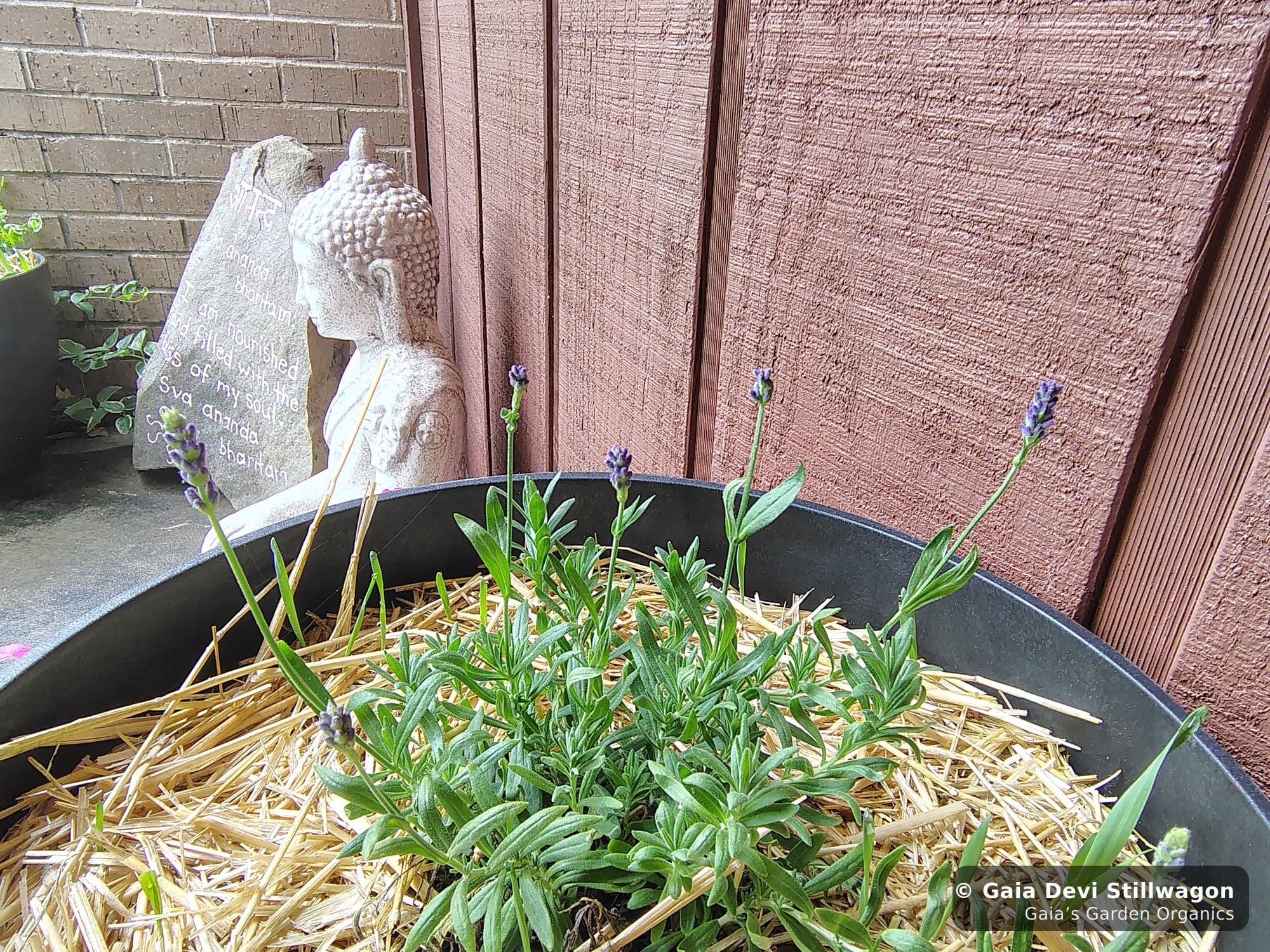
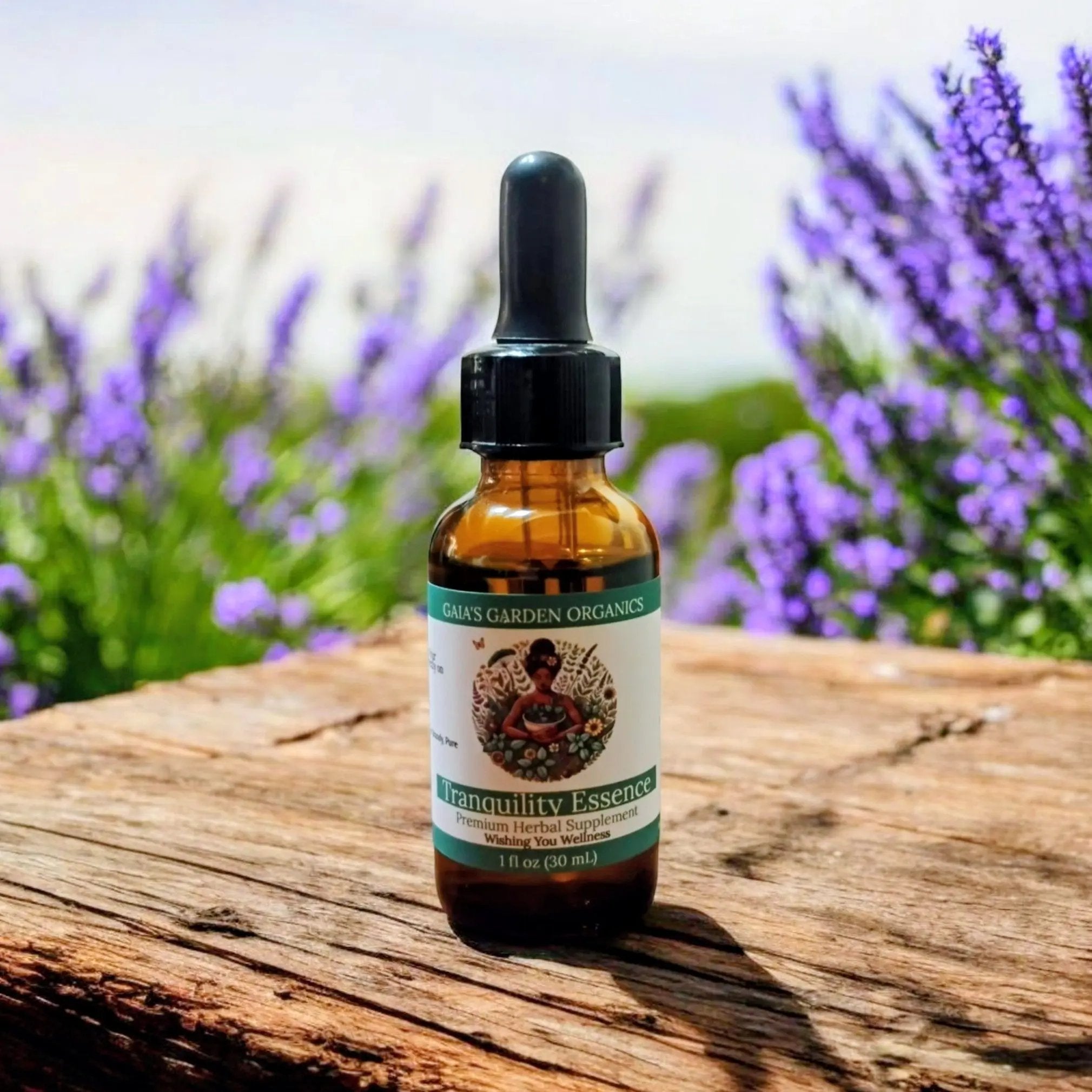
Tranquility Essence is the lavender flower essence I formulate for that exact pattern. Bach method, sun-infused fresh blossoms from our medicine garden in Umpire, Arkansas, preserved in brandy and mountain water. This guide covers what it is, what it does, who it is for, and where it fits in a real anxiety protocol.
What "flower essence for anxiety" actually means
A flower essence is not an essential oil. It is not a tincture. It is the energetic imprint of a flower in water, prepared by sun-infusion. There is no measurable plant matter in the finished bottle, and that is part of how it works.
Flower essences address the emotional layer of a pattern. Tinctures address the physiological layer. Both are real plant medicine; they just work on different tiers. For anxiety specifically, this means a flower essence shifts the underlying mood and disposition, while a tincture acts on the active nervous-system signal.
Most of my anxiety clients end up using both. The essence in the morning sets a baseline. The tincture comes out when a spike hits. The two are not in competition. They run together.
Why lavender specifically
Lavender has been the West's go-to plant for emotional unwinding for over a thousand years. The Romans put it in bathwater. The medieval monastics tucked it under pillows. Modern aromatherapy uses the essential oil for stress, and modern clinical herbalism uses the tincture for nervous tension. The flower essence is the energetic layer of the same plant.
What lavender does to the anxious-heart pattern is soften it. Not numb it. Not override it. Soften it.
- The chest unclenches in the way that lets the breath drop lower.
- The shoulders find their natural resting line below the ears.
- The internal narrator quiets down without disappearing.
- The body relearns that it is safe to put the guard down.
People who match this pattern often describe lavender as the only herbal support that "feels like itself," instead of like a chemical change. That is the essence-layer working.
If you want the plant-led picture rather than the symptom-led one, my guide to lavender flower essence goes deeper into what the plant is doing, how it differs from lavender oil and lavender tea, and what changes over the first eight weeks.
The Bach method, briefly
Dr. Edward Bach developed the flower essence method in 1930s England. The preparation is simple and specific: fresh blossoms float on the surface of a clean glass bowl of mountain water, in direct sunlight, for three to four hours. The infused water is then preserved with high-proof brandy. That preserved liquid is the "mother essence."
Our Tranquility Essence is prepared this way, in our medicine garden in Umpire, Arkansas, with fresh lavender blossoms we grow ourselves. The brandy preservative is not optional; it is what keeps the essence shelf-stable for years and is the traditional menstruum Bach himself used. We do not use glycerin alternatives. We work to the clinical gold standard for flower essences.
Who Tranquility is for, and who it is not for
Tranquility is for the everyday anxious heart. The pattern looks like this:
- Chest stays slightly tight most of the day.
- Mind narrates worst-case scenarios on a loop.
- Difficulty being fully present with people, even people you love.
- Sleep is light or interrupted.
- You can function, but the cost is constant low-grade vigilance.
Tranquility is not for severe clinical anxiety (panic disorder, OCD, PTSD, generalized anxiety disorder requiring medication). Those patterns need a clinician as primary support. The essence can sit alongside prescribed care; it cannot replace it.
How to take it
Four drops in the morning. Four drops at night. Under the tongue, or in a sip of water if that is easier.
You can also add four drops to a glass of water and sip across the day. Some clients keep a small water bottle dosed and drink from it when anxiety surfaces. There is no overdose risk; the essence is energetic, not pharmacological.
Most readers notice a subtle shift within the first week. Not a dramatic change. A softening at the edges. The chest feels one notch less tight. The shoulders sit one inch lower. By week three the new baseline is the default and the old held pattern feels less familiar.
Where the deeper work happens
The essence is the daily anchor. The protocol is where the body actually relearns calm.
The 7-Day Calm Protocol is our free clinical-herbalist guide for the chest-tight, racing-thought pattern. Seven Yoga Therapy practices, one per day, each short enough to do as you read it. Day 1 (the Stairstep Breath, drawn from a thousand-year-old yoga lineage) calms anxiety in five minutes the first time you try it.
Most readers who pair Tranquility Essence with the protocol notice the shift within ten days, not three weeks. The two work together because the essence supports what the body is already trying to do.
Where to go from here
- Step 1 (free): The 7-Day Calm Protocol PDF, a free clinical-herbalist guide. Get the protocol.
- Step 2 (30-night guarantee): Tranquility Essence, four drops twice a day. Tranquility Essence. If chronic anxiety has a physiological edge (racing heart, jaw clenching), pair with Calm Spirit Tonic, the matched herbal tincture. The 30-Day Calm Reset Kit bundles the essence with the tincture and our Healing Hypnotic Tea.
- Step 3 (coming soon): Harmony Within, my Yoga Nidra book. Thirty full guided scripts including three dedicated to anxiety.
This guide is for general nervous-system support and is not a substitute for medical or psychological care. If your anxiety is severe, please work with a clinician as your primary support.
Looking for the broader context on flower essences? Our pillar guide Flower Essences 101 covers the history of the Bach method, how preparation actually works, and how to choose between the five active essences we make.
Frequently asked
How is a flower essence different from an essential oil or tincture?
Essential oils are the concentrated aromatic compounds extracted by steam distillation; they're highly active on the body. Tinctures are alcohol-extracted herbal preparations with measurable plant compounds; they act physiologically. Flower essences are the energetic imprint of a flower preserved in water and brandy; they contain no measurable plant matter and work on the emotional layer. For anxiety, most clients end up using both an essence (daily emotional support) and a tincture (acute physiological support). They run together; they don't compete.
How fast does Tranquility Essence work?
Most readers notice a subtle softening within the first week. The shift is usually not dramatic on day one. It's the kind of change you notice when you realize your shoulders have been lower than usual for several hours, or that you got through a hard conversation without your chest tightening. By week three the new baseline is the default. If you want a faster acute tool, pair the essence with the breath practices in our free 7-Day Calm Protocol.
Why brandy and mountain water? Can I use a glycerin version?
Brandy + mountain water is the traditional Bach-method preparation, dating back to Dr. Edward Bach's original work in 1930s England. The brandy preservative keeps the essence shelf-stable for years and is part of the clinical gold standard for flower essences. We don't use glycerin alternatives because the historical evidence and our clinical experience both favor the original method. The alcohol content per dose is very small (four drops); for those who must avoid all alcohol, please consult before purchasing.
Is Tranquility safe with my prescribed anxiety medication?
Flower essences have no documented pharmacological interactions with prescription medications, including SSRIs, SNRIs, and benzodiazepines. They work on the emotional layer rather than the body's biochemistry. That said, never stop a psychiatric medication without medical supervision. The essence is a complementary daily support, not a replacement for prescribed care. If your anxiety is severe, please work with your physician or therapist as primary.
How does Tranquility fit with the 7-Day Calm Protocol?
The protocol teaches you seven Yoga Therapy practices for everyday anxiety, short, text-based, no audio required. The essence supports those practices on the emotional layer. Practically, you take four drops of Tranquility in the morning, then do whichever practice fits your day. The essence makes the practice land easier; the practice does the active work. Most clients who pair both notice meaningful change within ten days, compared to two-to-three weeks for the essence alone.
Products from this article
Handcrafted in Umpire, Arkansas by Gaia Devi, clinical herbalist.
Explore our apothecary
Learn more
Flower Essences 101
A clinical herbalist's plain-English guide to what flower essences are and how to take them.
Find your match
The Anxiety-Type Quiz
5-question clinical-herbalist diagnostic that names your anxiety pattern and matches a practice + plant pairing.
Shop the apothecary
The 5-Essence Starter Cabinet
All 5 essences bundled at 20% off, the full emotional toolkit.
Sources & further reading
Authoritative references consulted in writing this article. Open in a new tab.
- The Bach CentreWhat are the sun and boiling methods?
- Bach FlowerAn Overview of the Bach Flower Essences
- PubMed (2022)Effects of flower essences on nursing students' stress symptoms: a randomized clinical trial
- PubMed (Thaler et al., 2009)Bach Flower Remedies for psychological problems and pain: a systematic review
- Chestnut School of Herbal MedicineFlowering Herbs (article archive)