In this article (13)▾
Why does a herbal tincture taken under the tongue work in 15 to 30 minutes when the same herb in a capsule takes 60 to 90 minutes or longer? The answer is sublingual absorption, and it is the single biggest reason tinctures remain the format of choice in clinical herbal medicine.
It is also the part of herbalism where the folk explanation and the actual physiology have drifted apart. People are told to hold a tincture under the tongue and they do it, faithfully, without ever being told what is happening in there or why it works for some preparations and barely at all for others.
This guide is the plain-English version of the physiology, what it means for which format you choose, and where it matters most.
The anatomy under your tongue
Lift your tongue and look at the floor of your mouth. That tissue is doing something the rest of your digestive tract cannot.
Most of the surfaces that line your body are built to keep things out. The skin is keratinized, meaning it has a tough protein-hardened outer layer. So is the roof of your mouth and the tissue around your teeth. The mucosa under your tongue is not. It is non-keratinized, and it is thin: on the order of 100 to 200 micrometres, compared with roughly 500 to 600 micrometres for the inside of your cheek. Underneath that thin layer sits a dense network of blood vessels sitting unusually close to the surface.
Thin plus non-keratinized plus richly vascularized is the whole trick. The standard permeability ranking in drug-delivery literature runs sublingual first, then buccal (the cheek), then gingival, then palatal (Sublingual and Buccal Delivery: A Historical and Scientific Prescriptive; see also Squier and Wertz, 1992). The floor of the mouth is the most permeable spot in the entire oral cavity, which is precisely why it is the spot every sublingual medication in conventional medicine targets.
Three routes into the bloodstream
Any herbal medicine taken by mouth has three possible routes into the bloodstream:
- Sublingual (under the tongue): Compounds in solution cross the thin mucosa directly into venous circulation. Onset 5-15 minutes for the fastest-acting compounds; full effect 15-30 minutes.
- Stomach (after swallowing): Compounds must survive stomach acid, then be absorbed across the gut wall. Onset 30-60 minutes for most herbs.
- Small intestine (after gastric emptying): Compounds in capsules or food matrices reach the small intestine, where most absorption happens. Onset 60-120 minutes.
In practice you never get one route cleanly. Some of every sublingual dose gets swallowed. What changes is the proportion, and the proportion is what determines how fast you feel anything.
Where the blood actually goes
This is the part that matters most, and it is a question of plumbing.
Anything absorbed through your stomach or intestine drains into the hepatic portal vein and goes straight to the liver before it reaches the rest of you. The liver is a chemical processing plant, and its job includes breaking down compounds it does not recognize. This is called first-pass metabolism, and for some compounds it destroys the large majority of the dose before a single molecule reaches its target.
Blood leaving the floor of the mouth takes a different road. It drains through the lingual and facial veins into the internal jugular vein, into the superior vena cava, and into the right side of the heart. From there it goes to the lungs and out into general circulation. The liver is not on that route. Whatever crosses the sublingual mucosa arrives in circulation essentially intact.
Conventional medicine has relied on this for over a century. Sublingual nitroglycerin relieves angina within minutes precisely because it is lipid-soluble and bypasses the first-pass effect (StatPearls, First-Pass Effect). Nobody argues about whether sublingual delivery works. The mechanism is settled pharmacology.
One honest nuance most herbal writing omits: first-pass metabolism is not exclusively a liver phenomenon. It can also occur in the gut wall, the lungs, and the vasculature. Sublingual delivery bypasses the hepatic portion, which is the largest portion for most compounds, but it is not a magic exemption from metabolism.
Which compounds actually cross
Here is the caveat that almost no herbal article will give you: sublingual absorption is selective. The membrane is a filter, not a door.
Two properties govern whether a molecule gets through. The first is size. The working figure in the drug-delivery literature is that molecules need to be under roughly 500 daltons to diffuse across the mucosa efficiently. The second is lipophilicity, how readily the compound dissolves in fat rather than water, usually expressed as logP. Sources put the optimum somewhere in the range of about 1.6 to 3.3, with some arguing the window runs wider. Too water-loving and the molecule cannot cross the lipid membrane. Too fat-loving and it will not dissolve in saliva well enough to reach the membrane in the first place.
The practical translation: a tincture is a mixture of dozens of plant compounds, and they do not all cross at the same rate. The small lipophilic constituents arrive first and fast. The larger and more water-soluble ones mostly get swallowed and take the slow road. What you feel at fifteen minutes is not the whole herb. It is the fraction of the herb that fits through the membrane.
The thing working against you
The main limiting factor on sublingual absorption is not the membrane. It is saliva.
Saliva flows constantly, the tongue moves, and you swallow involuntarily whether you mean to or not. That washout carries the dose off the absorption site and down the throat before absorption finishes. This is well documented, and it is the reason the pharmaceutical industry has spent decades developing mucoadhesive films and tablets that physically stick to the tissue. They are not solving an absorption problem. They are solving a residence-time problem.
Does alcohol help?
Possibly, and this is an interesting one. A study in Oral Diseases found that short-term exposure to alcohol increased the permeability of human oral mucosa. It was laboratory work on excised tissue rather than a study in people, and the significant effect appeared at an alcohol concentration well below that of a tincture (Howie et al., 2001). If that holds, an alcohol-based tincture may be doing two things at once: carrying the plant compounds in solution, and briefly making the membrane more receptive to them.
Why this matters for which format you pick
The format follows the use case.
- Acute support (panic moment, sleep onset, pain spike): Tincture. The 15-minute onset is the difference between a working tool and a tool that arrives after the moment has passed.
- Chronic daily baseline (adaptogens, anti-inflammatories, hormonal modulators): Either tea, tincture, or capsules. Onset speed matters less; consistency over weeks is what creates the effect.
- Mucous-membrane-targeted (gut healing, throat soothing): Tea or syrup. The herb needs contact with the membrane it is healing.
- Skin or topical: Salves, oils, compresses. Tinctures and capsules cannot reach the topical layer.
Why a capsule is slower than a liquid
This is worth separating out, because the reason is not what most people assume.
A capsule of dried powdered herb has to disintegrate before it can dissolve, and it has to dissolve before a single molecule can be absorbed. Dissolution is the rate-limiting step for solid oral dosage forms; it is standard biopharmaceutics, not a herbal marketing claim. A liquid extract skips that step entirely, because the compounds are already in solution. That is why onset is both faster and less variable from dose to dose.
You will see specific percentages floating around the herbal internet, claims that tinctures are "98 percent absorbed" against "50 percent" for capsules. I would not repeat those. I could not find a primary source for them, the sites quoting them cite nothing, and the numbers contradict each other from one page to the next. The mechanism is real. The percentages are marketing.
How to take a tincture sublingually for best effect
- Squeeze the dropper to fill it. Follow the dose on your specific product; concentration varies between preparations and between herbs.
- Drop the liquid directly under your tongue, lifting the tongue if that helps you place it on the floor of the mouth rather than on the tongue itself.
- Hold it there before swallowing. Longer is better, within reason, because you are working against saliva washout. Most practitioners suggest something in the range of half a minute to a minute.
- Swallow what is left. The remainder goes through the standard digestive route as a backup, and that is not wasted, just slower.
Timing, food, and spacing from medications
Three practical questions that come up constantly and that most articles skip.
Food. Take an acute-use tincture on a relatively empty mouth, meaning not mid-meal. This is partly about absorption and mostly about the fact that food and drink physically clear the dose off the absorption site. The sublingual nitroglycerin instruction in conventional practice is not to eat, drink, or smoke until the dose has been absorbed, and while that guidance was written for a dissolving tablet rather than a liquid, the underlying logic carries over.
Timing. Acute tinctures go in when you need them. Daily tonics do better anchored to something you already do every day, because the effect depends on you not missing doses. Sleep tinctures generally want to go in somewhere in the half hour to hour before you intend to be asleep, not at the moment you get into bed.
Spacing from prescription medications. If you take prescription medication, leave a gap of a couple of hours between the medication and any herbal preparation unless your prescriber has told you otherwise. This is a general caution about absorption interference, not a claim about any specific interaction, and it does not replace the conversation you should be having with your prescriber about every herb you take.
Adjusting. If you are dialing in a preparation, change one variable at a time and give it a week. Change the herb, the dose, and the timing all at once and you will learn nothing from the result.
Why the taste matters
Sublingual absorption is one of the reasons tinctures taste strong. The full extract sits on your tongue undiluted, without a stomach full of food to buffer it.
Adding a tincture to a glass of water dilutes the sublingual effect and you lose some of the speed advantage. For acute use, take it neat under the tongue. For daily baseline use, water is fine, because the chronic effect does not depend on speed.
There is also a case for the taste itself. Bitter compounds trigger a reflex response the moment they hit the tongue, which is part of why bitter herbs work on digestion. Masking the taste completely means giving up that piece of the medicine.
What sublingual won't do
- It does not change the active compounds themselves. A tincture and a capsule contain the same plant chemistry; sublingual delivery changes the timing and the proportion that arrives intact.
- It does not work for all compounds. Large molecules and strongly water-soluble compounds cross the sublingual membrane poorly, as covered above.
- It does not replace the gut-membrane route for herbs whose target is the gut itself.
- It does not make a badly matched herb work. Delivery is a timing question. Matching the herb to the pattern is the whole rest of the job.
Where to go from here
- Step 1 (free): The 7-Day Nervous System Reset PDF. Get the protocol.
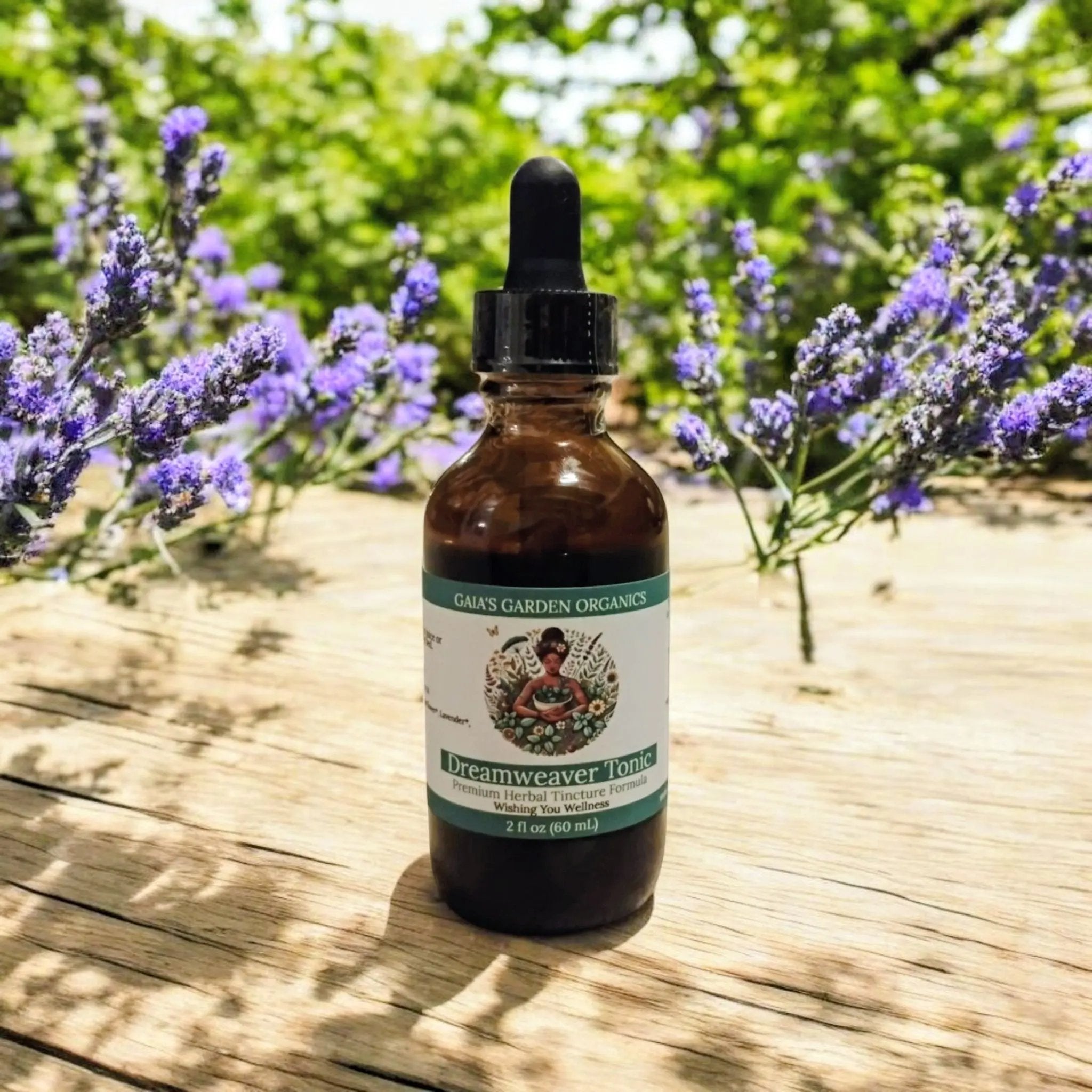
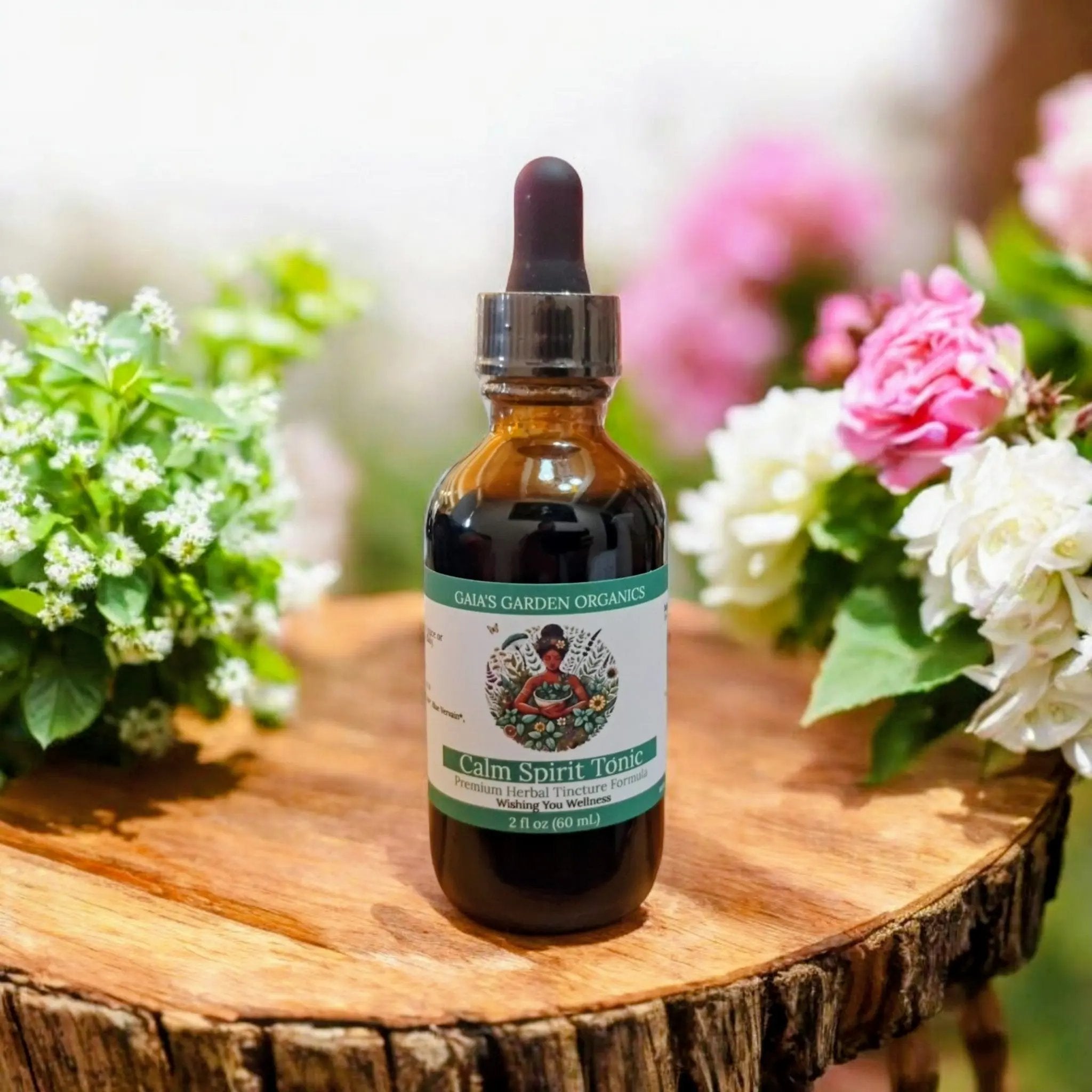
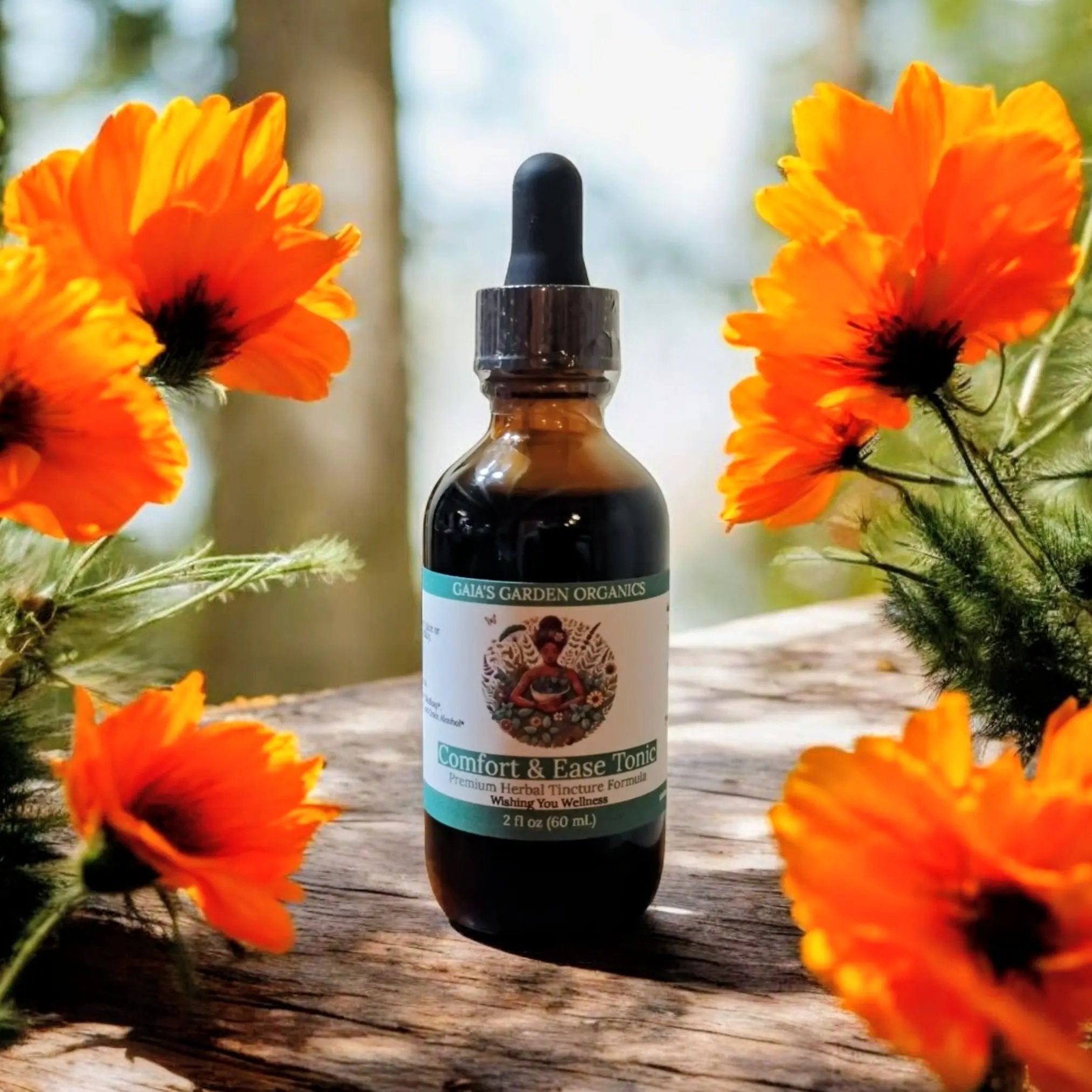
- Step 2 (30-night guarantee): Our three tinctures formulated for sublingual use: Calm Spirit Tonic for anxiety, Dreamweaver Tonic for sleep, Comfort Ease Tonic for tension. All three benefit from the speed advantage of sublingual delivery during acute moments.
- Step 3 (coming soon): Harmony Within, my Yoga Nidra book.
For broader context on tinctures, our pillar guide Herbal Tinctures 101 covers preparation, dosing, and how to choose between tinctures, teas, and essences.
Frequently asked
Will the alcohol in tinctures bother my stomach?
At standard sublingual doses (2-3 droppersful) the alcohol amount is very small. Sublingual delivery also means most of the active compounds enter circulation before reaching the stomach. For most adults the alcohol content is functionally negligible. People with severe alcohol sensitivity, recovery, or specific medical conditions should consult their healthcare provider.
Can I add tinctures to my coffee or tea?
For chronic daily baseline use, yes, the speed advantage matters less. For acute use, no, the dilution reduces the sublingual absorption that makes acute dosing work. The rule of thumb: if you need speed (panic spike, sleep onset, pain), take it sublingually neat. If you just want the daily dose, water or tea is fine.
How long should I hold the tincture under my tongue?
Most practitioners suggest somewhere between thirty and sixty seconds. That range is clinical convention rather than a measured optimum; no pharmacokinetic study has established an ideal hold time for herbal tinctures. What is well established is that saliva steadily washes the dose toward the stomach, so holding it there does help. The taste can be strong, so some people use a stopwatch the first few times to build the habit.
Why are tinctures more expensive than capsules of the same herb?
Tinctures preserve a wider range of plant compounds than dried encapsulated herb (the alcohol extracts compounds that water and grinding don't fully capture). The bioavailability is also higher per dose, so smaller doses deliver more active compound. Per active dose delivered, tinctures are often competitive or cheaper than capsules; the per-bottle price obscures this.
Is there an alcohol-free tincture option?
Yes, glycerites are the most common alcohol-free alternative. The trade-off is that glycerites don't extract the full spectrum of plant compounds that alcohol does, particularly the lipid-soluble compounds. For most use cases, alcohol-based tinctures provide stronger effect per dose. Glycerites are reasonable for children and for adults who must strictly avoid alcohol.
Products from this article
Handcrafted in Umpire, Arkansas by Gaia Devi, clinical herbalist.
Explore our apothecary
Learn more
Flower Essences 101
A clinical herbalist's plain-English guide to what flower essences are and how to take them.
Find your match
The Sleep-Type Quiz
5-question clinical-herbalist diagnostic that names your sleep archetype and matches an evening practice + plant pairing.
Shop the apothecary
Herbal Tinctures
Clinical weight-to-volume tinctures for nervous-system, sleep, and recovery work.
Sources & further reading
Authoritative references consulted in writing this article. Open in a new tab.
- PMC (review, 2024)Sublingual and Buccal Delivery: A Historical and Scientific Prescriptive
- PMC (review, 2025)Bioavailability Enhancement and Formulation Technologies of Oral Mucosal Dosage Forms: A Review
- NCBI Bookshelf (StatPearls)Medication Routes of Administration
- PubMed (Squier & Wertz, 1992)Drug delivery via the mucous membranes of the oral cavity
- NCCIHDietary and Herbal Supplements