In this article (9)▾
If you have tried a herbal tincture and it did not work, the most common reason is not the herb. It is the dose, the timing, or the consistency. The right tincture taken wrong is worse than no tincture at all because it leaves you thinking the herb does not work for you.
This guide is the practical dosing framework I walk every new client through in clinic.
How much is a "dose"
Most adult tincture doses are 1-3 droppersful. A "dropperful" is the amount drawn into the glass dropper, usually about 1 milliliter (or 30-40 drops). For most herbs at standard concentration:
- Gentle daily baseline: 1 dropperful, 2-3 times daily.
- Standard adult dose: 2 droppersful, 2-3 times daily.
- Acute single-dose: 2-3 droppersful at once, then assess.
- Strong therapeutic dose: 3 droppersful, 3-4 times daily (under herbalist guidance).
The label on a quality tincture will specify the dose. Start at the lower end of the recommended range; you can always increase. Few herbs require maximum dose for effect.
When to take it
Timing matters more than people realize. Three different timing strategies for three different goals:
Acute (in-the-moment effect)
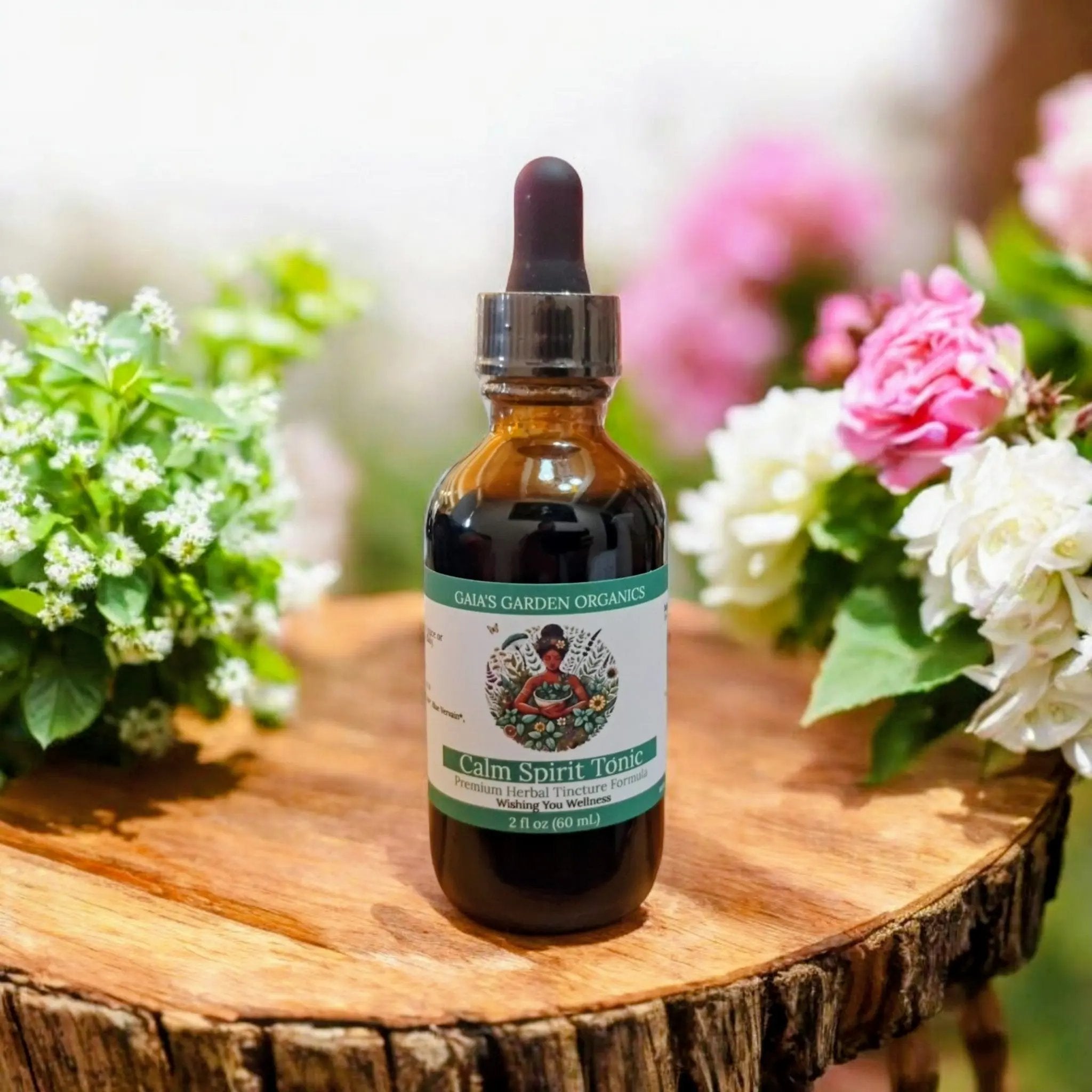
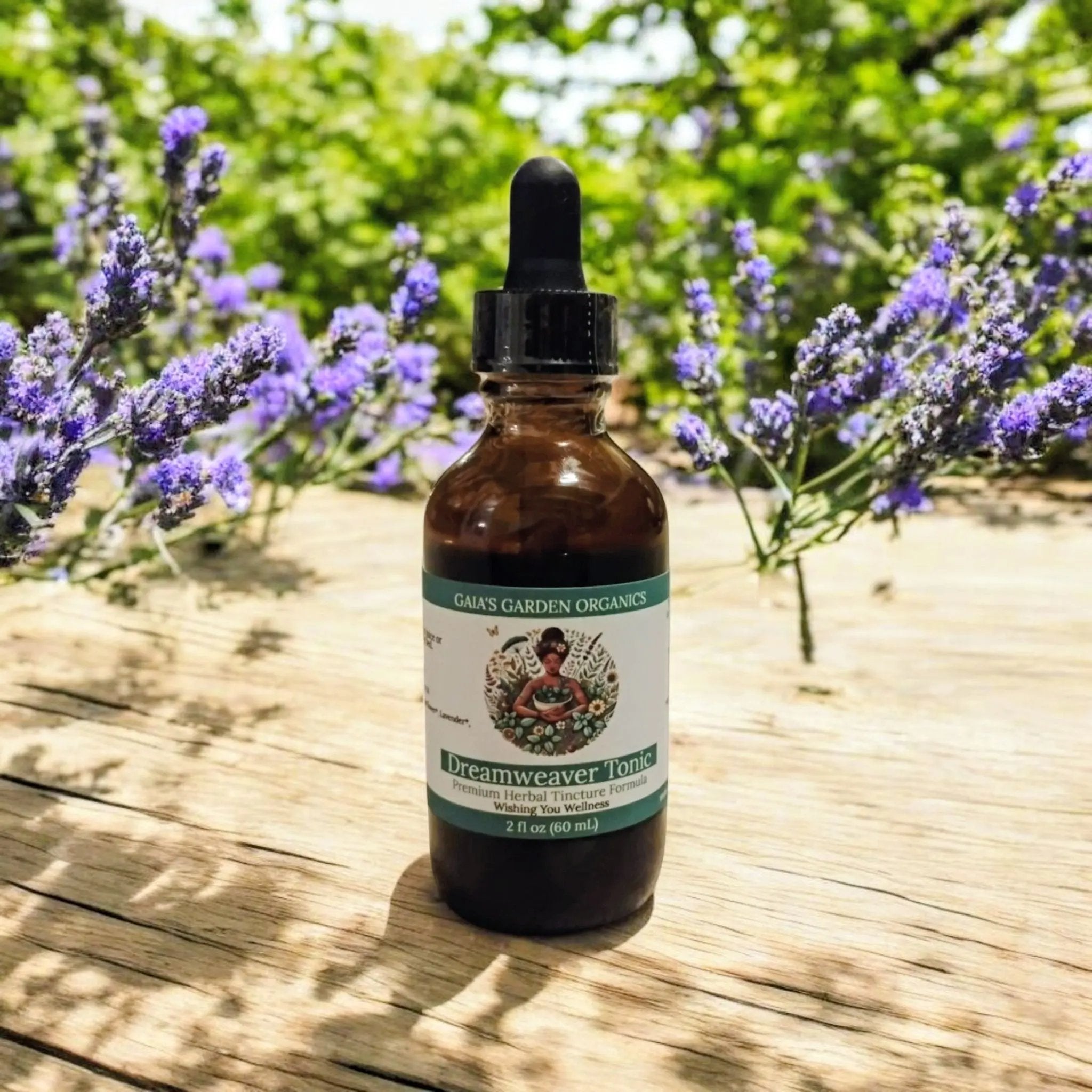
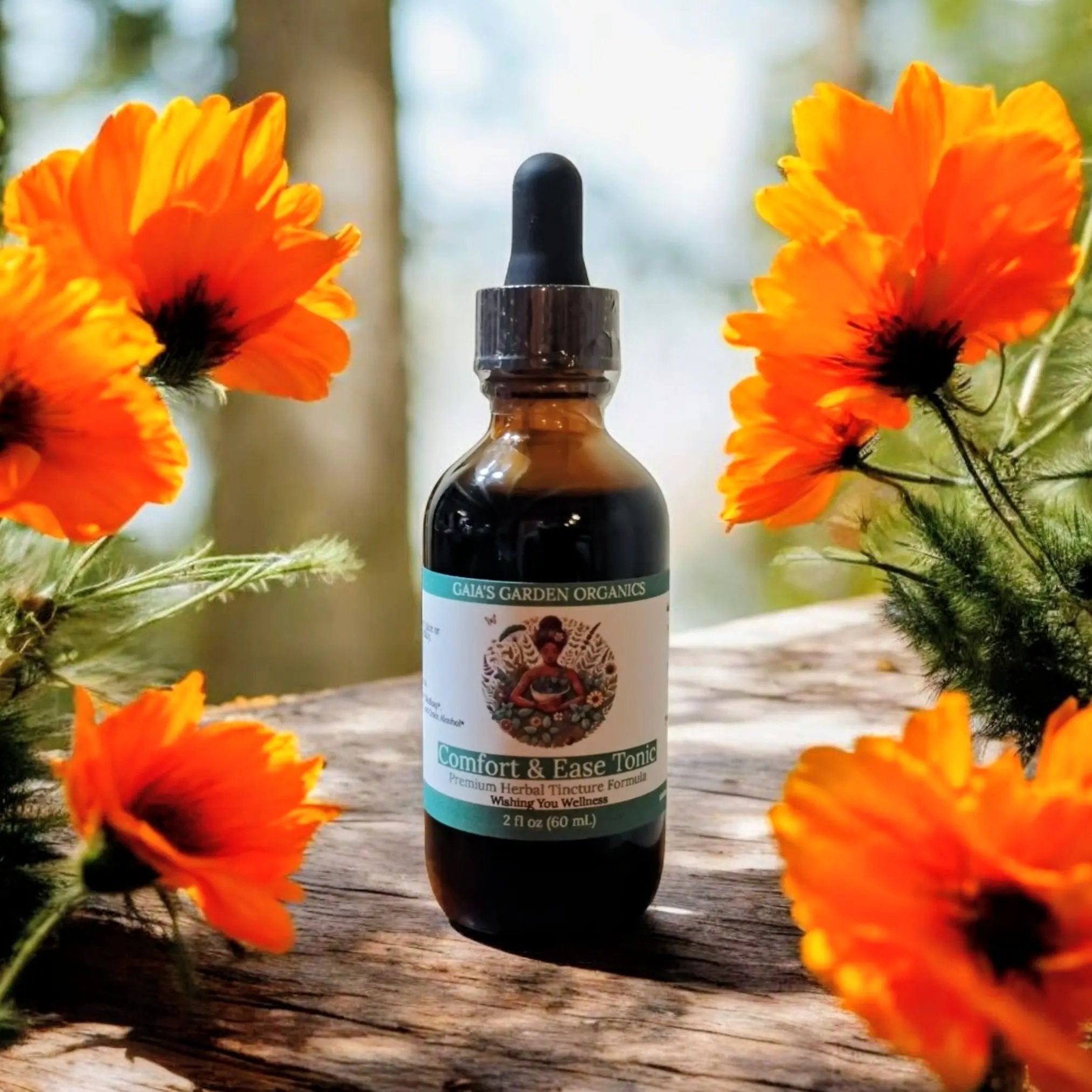
Take when symptoms are loud. Sublingual, neat, hold 30-60 seconds. Effects begin within 15-30 minutes. Examples: Calm Spirit during a panic spike, Comfort Ease during muscle clench, Dreamweaver one dropper at 3am wake.
Chronic daily baseline
Take at consistent times daily. Two to three doses spaced through the day. Effects build over 2-4 weeks for nervines and 6-8 weeks for adaptogens. Examples: Calm Spirit morning + afternoon for chronic anxiety, ashwagandha morning for burnout recovery.
Targeted timing (specific use)
Take 30-60 minutes before the relevant trigger or event. Examples: Dreamweaver 60 minutes before bed (not at bedtime; the herbs need time to land), Comfort Ease 30 minutes post-workout (catches the bracing pattern early).
How to take it for best absorption
- Sublingual: Drops under the tongue. Hold 30-60 seconds. Swallow what remains.
- Diluted in a small amount of water: A half-shot glass of water with the drops, sip slowly. Lower sublingual benefit but more palatable.
- In a small amount of food: Drops on a teaspoon of honey or yogurt. Loses the sublingual speed advantage entirely; use only for daily baseline, not acute moments.
- Never: In a hot drink (boiling off the alcohol degrades the extract), or chasing immediately with food (washes the sublingual layer away).
How long until it works
- Acute nervines (skullcap, passionflower, motherwort, lavender): 15-30 minutes.
- Anti-spasm and anti-inflammatory (chamomile, california poppy): 20-40 minutes.
- Adaptogens (tulsi, ashwagandha, rhodiola, eleuthero): 3-6 weeks for the baseline shift.
- Hormonal modulators (spearmint, chasteberry): 4-12 weeks.
The most common dosing mistakes
- Underdosing: Half a dropperful, once a day, for "trying it out." This is below therapeutic dose for most herbs. Start at the labeled standard dose for at least 14 days before evaluating.
- Inconsistency: Three doses on Monday, none on Tuesday, two on Wednesday. The body cannot establish the response pattern.
- Quitting in week 2: Most adaptogens build over weeks. Quitting in week 2 because you do not feel something is the most common reason adaptogens "do not work."
- Mixing too many tinctures: A different tincture for every symptom dilutes the protocol. Start with one or two for 4-6 weeks; layer more only if needed.
Where to go from here
- Step 1 (free): The 7-Day Nervous System Reset PDF. Get the protocol.
- Step 2 (30-night guarantee): Our three primary tinctures with full dosing on each label: Calm Spirit Tonic, Dreamweaver Tonic, Comfort Ease Tonic.
- Step 3 (coming soon): Harmony Within, my Yoga Nidra book.
For broader context, our pillar guide Herbal Tinctures 101 covers preparation, format choice, and how to build a protocol.
Frequently asked
What if I take too much?
Most herbal tinctures have wide safety margins; taking 4 droppersful instead of 2 is usually inconsequential. The exception is herbs with narrower therapeutic windows (some adaptogens at high dose can be too activating; some nervines at high dose can over-sedate). Start at labeled dose, increase incrementally if needed, and back off if you notice unwanted effects. Severe symptoms after overdose are rare with culinary-strength herbs; if concerned, contact Poison Control.
Can I take multiple tinctures together?
Yes, with caveats. Compatible: nervines plus adaptogens (Calm Spirit plus daily ashwagandha), different-target tinctures (Dreamweaver evening, Comfort Ease post-workout). Avoid: stacking multiple sedating tinctures (Calm Spirit plus Dreamweaver plus Comfort Ease all at the same time) which compounds CNS depression. Avoid: stacking multiple tinctures with prescription medications without consulting your prescriber.
Should I take with food or empty stomach?
Either, with one caveat. For acute sublingual effect, take neat without water or food (let it land under your tongue, swallow what remains). For chronic daily baseline use, either timing is fine. Some sensitive stomachs prefer taking with food. If a tincture makes you nauseous, taking with a small snack usually solves it.
What if a tincture isn't working for me after 4 weeks?
Three things to check. First, dose: are you taking the labeled standard dose, consistently? Second, timing: are you taking it daily, not skipping? Third, pattern match: does the herb actually fit your pattern? Many anxiety patterns need a different herb than the one you started with. Reply to any of our emails if you want help troubleshooting; we will route you to the right pattern match.
Do tinctures expire?
Properly stored tinctures (cool, dark, sealed) keep for years. The alcohol preserves the plant medicine. You may see the herb compounds settle to the bottom over time; shake before use. If the tincture has been opened repeatedly for years and you see any visible mold or unusual cloudiness, discard it.
Products from this article
Handcrafted in Umpire, Arkansas by Gaia Devi, clinical herbalist.
Explore our apothecary
Learn more
Flower Essences 101
A clinical herbalist's plain-English guide to what flower essences are and how to take them.
Find your match
Browse the Free Practice Library
8 pattern-matched archetype entry points (sleep, anxiety, tension, heart, inner quiet, clarity, boundary, spark), each as a 5-question quiz, a 3-day mini-course, or a one-tap interactive tool.
Shop the apothecary
Herbal Tinctures
Clinical weight-to-volume tinctures for nervous-system, sleep, and recovery work.
Sources & further reading
Authoritative references consulted in writing this article. Open in a new tab.
- PMC (review, 2024)Sublingual and Buccal Delivery: A Historical and Scientific Prescriptive
- NCBI Bookshelf (StatPearls)Medication Routes of Administration
- NCCIHDietary and Herbal Supplements
- NCCIHHerbs at a Glance (per-herb safety and evidence)
- Chestnut School of Herbal MedicineThe Best Home Herbal Apothecary Books