In this article (12)▾
If you have ever found a bottle of flower essence in a wellness store and wondered whether the little dropper of water and brandy was real medicine or expensive placebo, this is the guide for you. I am a clinical herbalist; I use flower essences with anxiety clients every week. They are not a sedative, they are not an essential oil, and they are not placebo. Here is what they actually do.
If this is your first time considering essences for anxiety, my guide to how flower essences work for stress is the gentlest entry point.
What a flower essence is
A flower essence is a sun-infused water preparation of fresh blossoms, preserved with high-proof brandy. The preparation method, developed by Dr. Edward Bach in 1930s England, captures what Bach called the "vibrational pattern" of the flower. The finished essence contains no measurable plant matter. The active component is something more like an energetic imprint.
What this means practically: a flower essence is not pharmacological. It does not bind to receptors. It does not modulate neurotransmitters in the way a tincture does. It works on a different layer entirely, the emotional or dispositional baseline of the person taking it.
How essences work for anxiety
Anxiety is not just a chemistry problem. It is also a chronic emotional posture: a closed-down heart, a watchful nervous system, a long-running defensive bracing. A flower essence addresses that posture directly.
- The chronic emotional defensiveness softens.
- The "I am bracing for something" baseline shifts to "I am here, in this moment."
- The chest unclenches in a way that's emotional first and physical second.
- The capacity to receive care, kindness, and rest returns.
Pharmaceuticals act on the body's biochemistry. Therapy acts on the mind. A flower essence acts on the emotional layer that sits underneath both. For chronic anxiety with a strong emotional thread, that layer often is the limiting factor.
Which essence for which pattern
There are five essences I work with for the anxiety spectrum. They are not interchangeable; each addresses a distinct emotional posture.
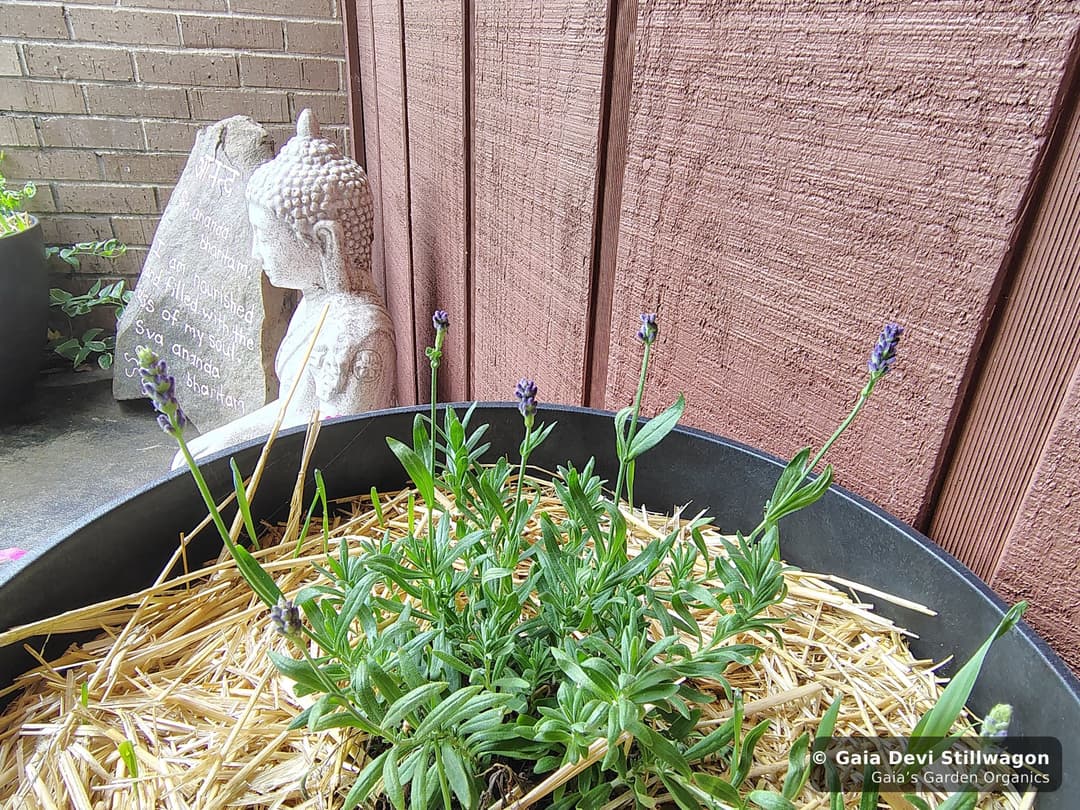
Tranquility Essence (lavender)
The everyday anxious-heart essence. For the chest-tight, racing-thought, "wound too tight" pattern. The most common anxiety essence for the general population. Pairs well with Calm Spirit Tonic for the body layer.
Heartful Essence (rose)
The closed-heart essence. For anxiety layered with grief, heartbreak, postpartum mood, or chronic emotional defendedness. The pattern is often described as "I cannot feel anything anymore" or "my heart has put up a wall."
Confidence Essence (goldenrod)
The boundary-erosion essence. For the over-accommodating, "I lose myself in groups" anxiety pattern. The anxiety often presents as social anxiety, people-pleasing, or chronic exhaustion from being a caretaker.
Clarity Essence (peppermint)
The mental-fog anxiety essence. For anxiety that lives mostly in the head as decision paralysis, mental looping, or the felt sense of "I cannot think clearly anymore." Helpful for chronic-stress fog and post-illness mental clearing.
Vitality Essence (spearmint)
The depleted-spark essence. For the burned-out anxiety pattern where the person has been anxious for so long they have lost their own life force. The felt sense is closer to flatness than to fear.
How to use a flower essence daily
- Morning: Four drops under the tongue or in a small sip of water.
- Evening: Four drops, same way. The two doses together anchor the day.
- During acute moments: A few extra drops, generously. No overdose risk; the essence is energetic.
- Daily consistency: The essence rewards consistency more than dose. Most clients notice the first shift in week 2-3 and the deeper baseline by week 6-8.
What to expect
Most readers describe the shift as quiet rather than dramatic. The first week often passes without noticeable change at the surface. By week 2-3 you might notice you handled a hard conversation with less bracing. By week 4-6 people around you mention you seem softer or more grounded. By month 2-3 the new baseline is the default, and the old held pattern feels less familiar.
This is slow medicine. It is not slow because it does not work. It is slow because the emotional baseline of an adult nervous system has been built over decades, and it takes weeks of daily counter-signal to teach it a new pattern.
What essences are not for
Severe clinical anxiety (panic disorder, OCD, PTSD, generalized anxiety disorder requiring medication) needs professional support as primary care. The essence can sit alongside that work; it cannot replace it. If anxiety is severely impairing your function, please see a physician or therapist first and let the essence be an adjunct.
Where to go from here
- Step 1 (free): The 7-Day Calm Protocol PDF, a free clinical-herbalist guide. Get the protocol.
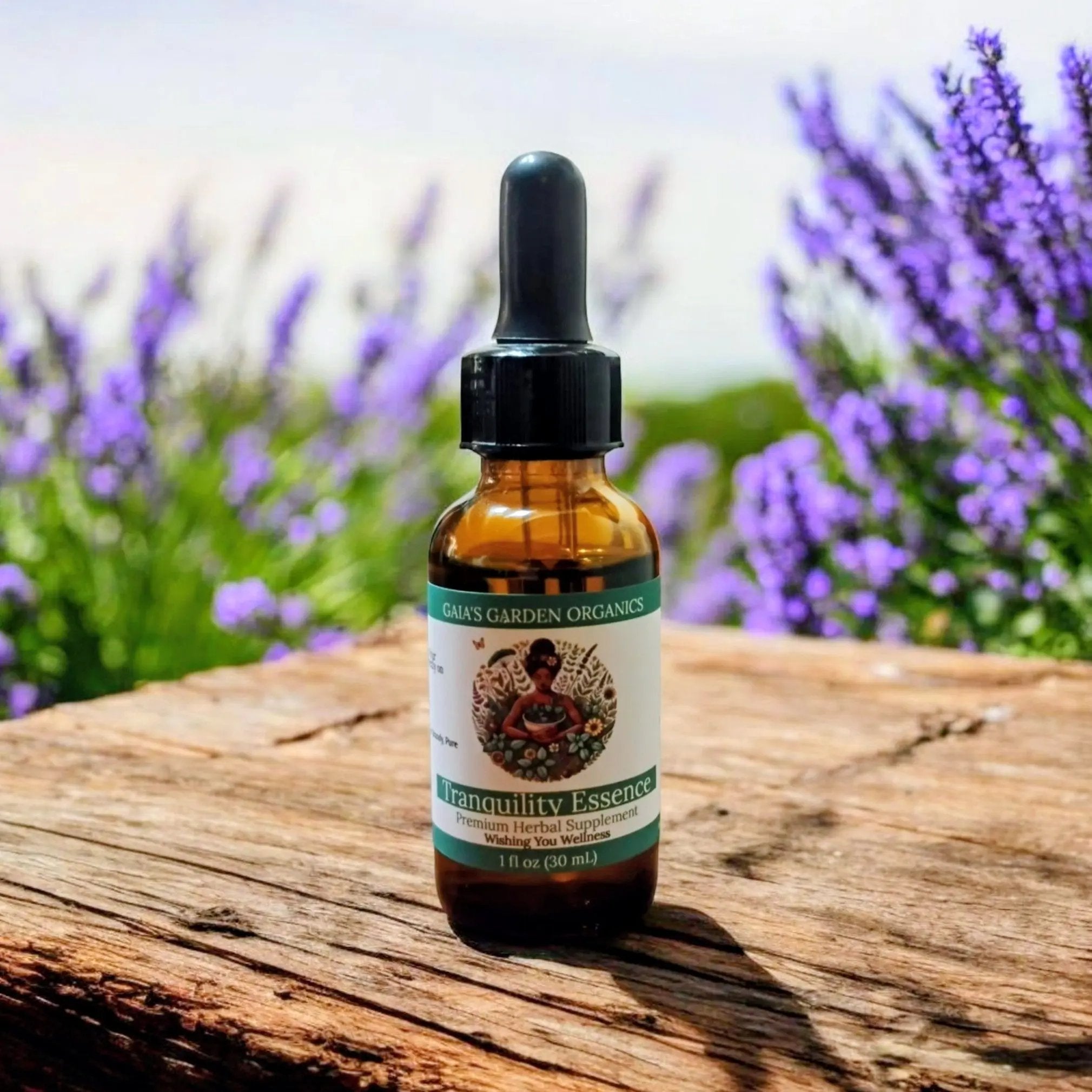
- Step 2 (30-night guarantee): Start with the essence that matches your pattern. Tranquility Essence for the most common anxious-heart pattern. Take the essence quiz if you're unsure which essence fits.
- Step 3 (coming soon): Harmony Within, my Yoga Nidra book.
This guide is general nervous-system education and is not a substitute for medical or psychological care.
Products from this article
Handcrafted in Umpire, Arkansas by Gaia Devi, clinical herbalist.
Explore our apothecary
Learn more
Flower Essences 101
A clinical herbalist's plain-English guide to what flower essences are and how to take them.
Find your match
The Anxiety-Type Quiz
5-question clinical-herbalist diagnostic that names your anxiety pattern and matches a practice + plant pairing.
Shop the apothecary
The 5-Essence Starter Cabinet
All 5 essences bundled at 20% off, the full emotional toolkit.
Sources & further reading
Authoritative references consulted in writing this article. Open in a new tab.
- The Bach CentreHistory of the Bach Flower Remedies
- Bach FlowerAn Overview of the Bach Flower Essences
- PubMed (2022)Effects of flower essences on nursing students' stress symptoms: a randomized clinical trial
- PubMed (Amsterdam et al., 2009)A randomized, double-blind, placebo-controlled trial of oral Matricaria recutita (chamomile) extract therapy for generalized anxiety disorder
- Chestnut School of Herbal MedicineFlowering Herbs (article archive)