In this article (6)▾
A client comes into my clinic at 41 years old, married, two kids, mid-career. She tells me she has been tired for seven years. Her doctor checked her thyroid, her iron, her vitamin D. Everything normal. She sleeps eight hours and wakes exhausted. She drinks four cups of coffee and crashes at 2pm. She is not depressed in the clinical sense. She is depleted.
This is chronic stress in its mature form: not the acute spikes of a hard week, but the long-arc cumulative effect of years of low-grade activation that the body forgot how to come back from. The technical term is HPA-axis dysregulation. The everyday term is burnout. The herbs that address it are adaptogens.
Tulsi is at its gentlest as a daily cup, so my guide to drinking herbal tea for stress pairs naturally with this.
What an adaptogen actually is
An adaptogen is a class of herb that modulates the body's stress response over weeks and months. Not a sedative. Not a stimulant. A modulator. The body's stress regulation runs through the hypothalamic-pituitary-adrenal (HPA) axis, and chronic stress pushes that system into a less responsive, more depleted state. Adaptogens are the herbs that help rebuild that responsiveness.
- Acute spikes (hours-to-days): Nervines and gentle sedatives handle this layer. Skullcap, passionflower, lavender.
- Chronic baseline (weeks-to-months): Adaptogens handle this layer. Tulsi, ashwagandha, rhodiola, eleuthero.
- Both at once: Most clients need both layers, the acute and the chronic.
Tulsi (Holy Basil) is the foundational adaptogen
Of all the adaptogens, Tulsi (Ocimum tenuiflorum) is the one I reach for first for the burned-out, depleted, "tired but wired" picture. Used in Ayurveda for over 3,000 years and called "the queen of herbs." Studied in modern research for cortisol modulation, neuroprotection, and stress-tolerance baseline.
What Tulsi does for the chronic stress pattern: it raises the floor. Over 3-4 weeks of daily use, the baseline anxiety drops, not just the peaks. The mid-afternoon crash softens. The body relearns what calm feels like as a default rather than as an occasional state.
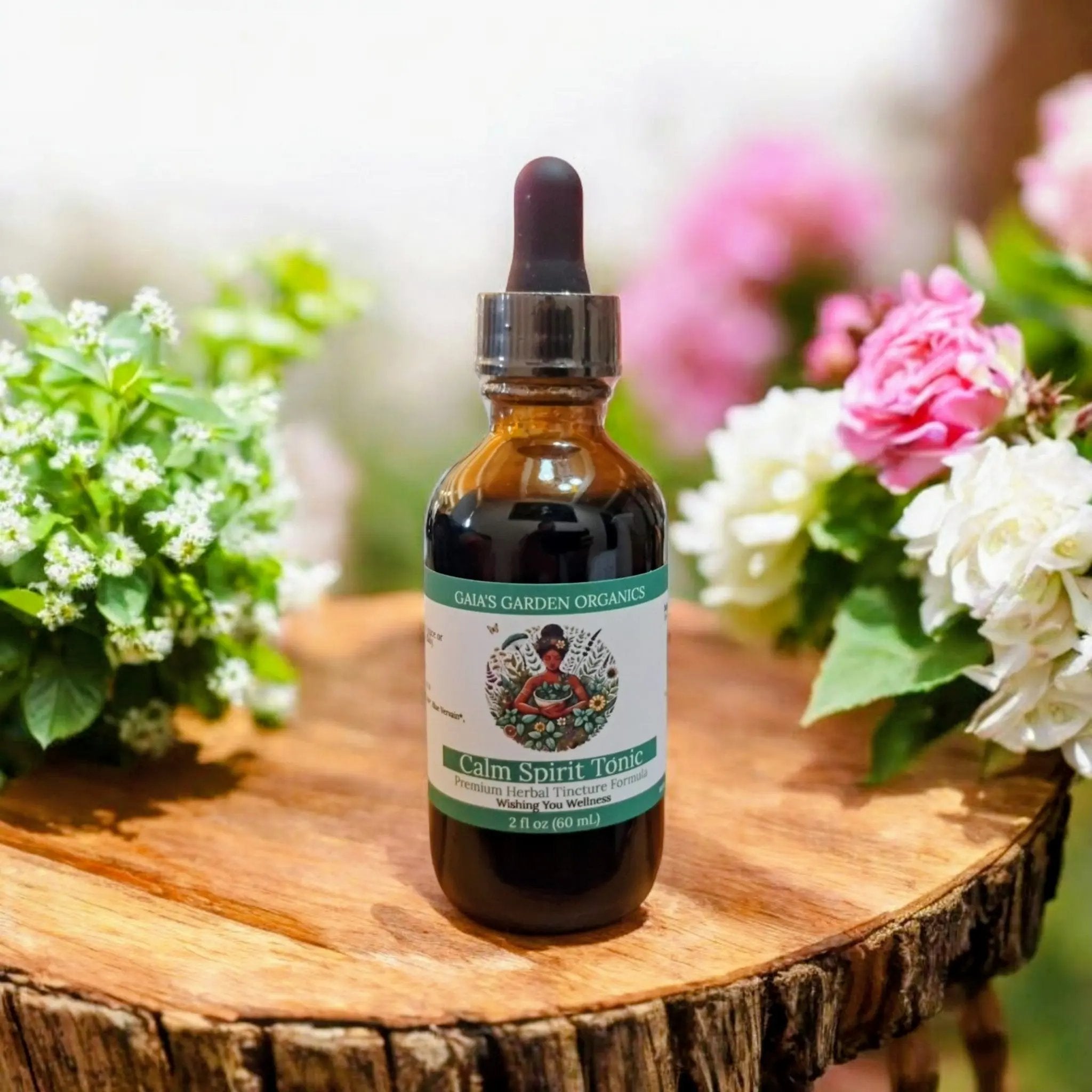
Tulsi is the adaptogenic layer of Calm Spirit Tonic. The formula pairs it with Rose (emotional layer), Blue Vervain (somatic tension), and Motherwort (acute spikes), so one tincture covers chronic baseline plus acute relief.
Other adaptogens worth knowing
- Ashwagandha (Withania somnifera): Strong evidence base for stress and anxiety reduction. The Chandrasekhar 2012 RCT demonstrated a significant cortisol reduction with full-spectrum ashwagandha extract. Better for the wired-and-tired adult who needs grounding; can be too heating for hot-natured constitutions.
- Rhodiola (Rhodiola rosea): The cognitive-fatigue adaptogen. Useful when chronic stress shows up primarily as mental exhaustion, can't-think-clearly, or work-burnout. Can be too activating taken in the evening.
- Eleuthero (Eleutherococcus senticosus): The endurance adaptogen. Used historically for physical fatigue and long-arc recovery from major illness.
These four are the well-evidenced core. Most "adaptogen blends" on the market layer five or six together at sub-therapeutic doses. A single adaptogen at a clinical dose taken daily for 4-6 weeks usually outperforms a complex blend taken inconsistently.
What the daily ritual looks like
- Morning: Adaptogen (Tulsi as tincture or tea) with breakfast. The body's cortisol rhythm wants the adaptogen support during the natural morning cortisol rise.
- Mid-afternoon (2-3pm): A second dose to walk back the afternoon crash. This is the part of the day where the cortisol-driven energy collapses for stressed adults.
- Evening: Optional third dose if you are doing intensive recovery work. Skip this dose if Tulsi feels too activating in the evening for you.
- Across 6 weeks: The baseline shifts. Many clients tell me they did not realize they were less stressed until someone else pointed it out.
Why this takes weeks, not days
Adaptogens do not work like caffeine or like benzodiazepines. They do not flip a switch. They retrain the HPA axis through repeated daily signaling. Your nervous system has spent years learning to be over-activated; it takes weeks of daily counter-signal to teach it the new pattern.
The most common reason adaptogens "do not work" is people stop in week two, between when acute relief plateaus and when the deeper baseline shift begins. Hold the rhythm through weeks three and four. That is when the shift lands.
Where to go from here
- Step 1 (free): The 7-Day Nervous System Reset PDF. Get the protocol.
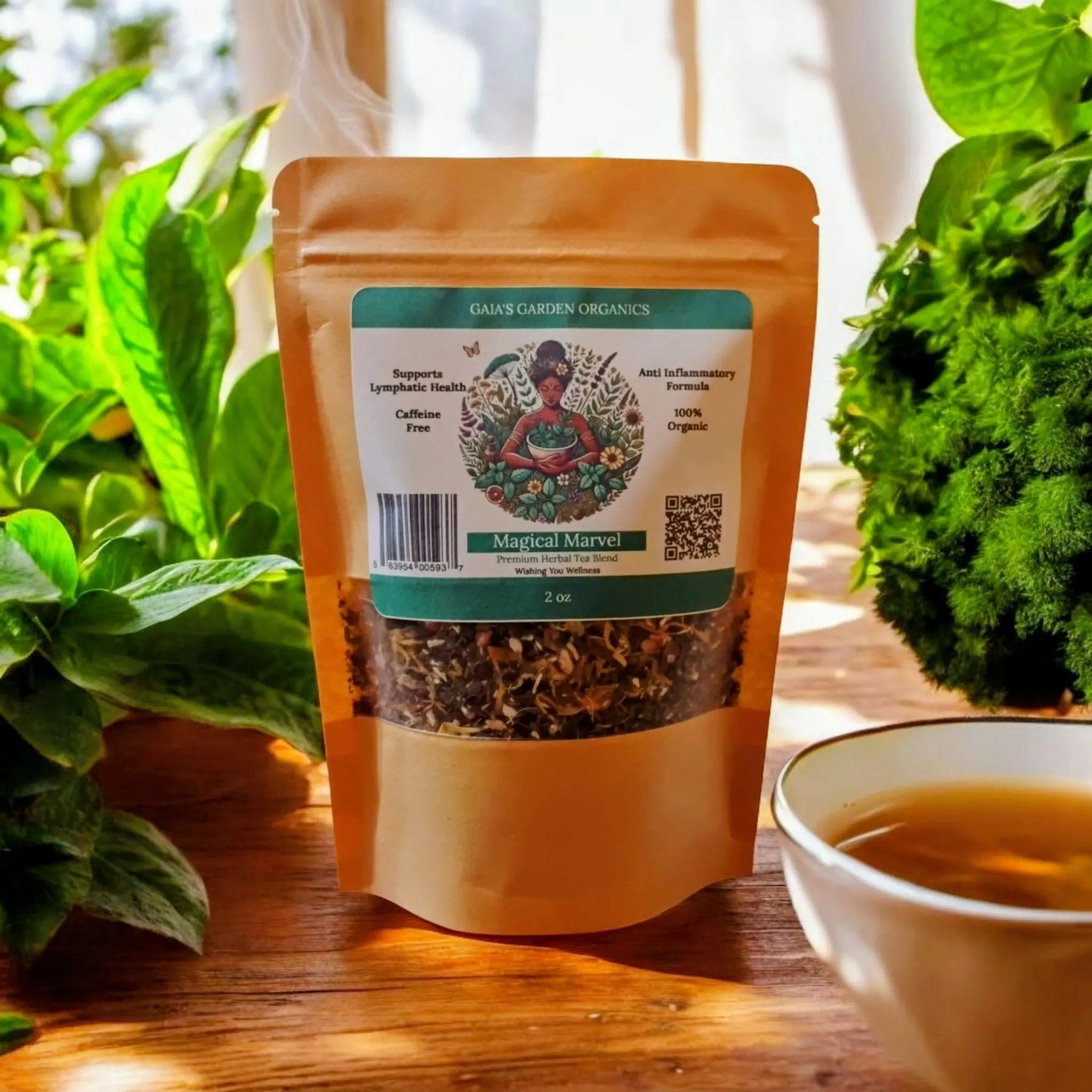
- Step 2 (30-night guarantee): Calm Spirit Tonic (Tulsi + Rose + Blue Vervain + Motherwort), one tincture covers chronic baseline plus acute relief. The matched bundle 30-Day Calm Reset Kit adds Tranquility Essence and Healing Hypnotic Tea.
- Step 3 (coming soon): Harmony Within, my Yoga Nidra book. Practices for HPA-axis recovery built into a 30-night protocol.
This guide is for general nervous-system support and is not a substitute for medical or psychological care. Chronic stress with significant mood symptoms, sleep loss, or physical symptoms benefits from a physician workup alongside herbal support.
Products from this article
Handcrafted in Umpire, Arkansas by Gaia Devi, clinical herbalist.
Explore our apothecary
Learn more
Flower Essences 101
A clinical herbalist's plain-English guide to what flower essences are and how to take them.
Find your match
The Anxiety-Type Quiz
5-question clinical-herbalist diagnostic that names your anxiety pattern and matches a practice + plant pairing.
Shop the apothecary
Herbal Tinctures
Clinical weight-to-volume tinctures for nervous-system, sleep, and recovery work.
Sources & further reading
Authoritative references consulted in writing this article. Open in a new tab.
- PubMed (Chandrasekhar et al., 2012)A prospective, randomized double-blind, placebo-controlled study of safety and efficacy of a high-concentration full-spectrum extract of ashwagandha root in reducing stress and anxiety in adults
- PubMed (Salve et al., 2019)Adaptogenic and Anxiolytic Effects of Ashwagandha Root Extract in Healthy Adults: A Double-blind, Randomized, Placebo-controlled Clinical Study
- PubMed (cognitive RCT, 2021)Efficacy and Safety of Ashwagandha Root Extract on Cognitive Functions in Healthy, Stressed Adults: A Randomized, Double-Blind, Placebo-Controlled Study
- NCCIHHerbs at a Glance (per-herb safety and evidence)
- Chestnut School of Herbal MedicineFlowering Herbs (article archive)