In this article (13)▾
It is 6 PM. The person you care for is content, for twenty minutes, asleep or watching something. You usually spend that window doing laundry. Today you sat down in the chair instead, and the moment your body landed in it you almost cried. Not from sadness. From a recognition: this is what it is supposed to feel like to sit down.
You are the caregiver. The aging parent, the child with extra needs, the partner with chronic illness. Sometimes all three. The day is built around someone else's schedule. Your own appointments keep slipping. You eat standing up. By 6 PM you are tired in a way sleep does not fully repair, because the load resumes at 6 AM and the night is interrupted anyway.
What you have already tried
You have tried the obvious things. More coffee. Multivitamin. A self-care book your sister sent. A meditation app you opened twice. You have tried promising yourself you will go to bed earlier, and you do, but the parent has a bad night and you are up at 2 AM and 4 AM and the early bedtime did not matter. You tried scheduling an exercise class, and it lasted three weeks before the schedule conflict made it impossible.
You have probably tried, at some point, talking to your doctor about how tired you are. They ran bloodwork. The bloodwork was mostly fine. They said you needed more rest. You did not laugh in the office but you laughed in the car.
And the part you do not really say out loud is the small spike of resentment when the person you care for needs something at the moment you finally sat down. The resentment makes you feel like a bad person. You push it down. It adds itself to the load.
The Frame Shift
Most people think caregiver fatigue is just ordinary tiredness, amplified. More of the same thing rest would fix.
It is not. The caregiver pattern has its own physiology, and the research is fairly definitive on this. The Vitaliano et al. studies on family caregiving health effects (the 2009 review is the most-cited) document a specific pattern: altered cortisol rhythms (the wake-up spike that should fall through the day does not fall the way it does in non-caregivers), elevated inflammatory markers, accelerated cellular aging markers, and a measurable shift in HPA-axis function. This is not "tired." This is a body recalibrated to chronic high-vigilance, low-control, unpredictable load.
The reason rest alone does not fix it is that the body is no longer organized to recover during rest. The HPA axis is set to "the load could resume at any moment." Even on a quiet afternoon, the parasympathetic state does not fully engage. You can be in the chair and not actually be in the chair.
The work, then, is two-fold. The body's substrate has to be rebuilt (the depleted nervous system needs to be re-fed), and the practices that produce real parasympathetic recovery have to fit inside the actual caregiver life (twenty-minute windows, interruptible, no monthly retreat). The protocol that works is the one that meets both of those.
The clinical-herbalist read
Three herbs form the spine of the protocol for the depleted caregiver, plus a fourth for the grief layer that often runs underneath. Gaia calls this the caregiver triangle in clinic: milky oat plus spearmint plus Vitality Essence, with rose for the holder's grief.
Milky Oat, the nervous-system rebuild
Milky Oat (the fresh milky-stage tops of Avena sativa) is the defining nervine trophorestorative in Western clinical herbal medicine. The Eclectic physicians of the late 1800s used it for "frayed, overtaxed nerves," which is exactly the modern caregiver presentation. Unlike most nervines that calm acutely, milky oat rebuilds the substrate; you take it daily for months, food-grade, and the depleted nervous system has the raw material it needs to actually recover during the windows when recovery is possible. Ravensong Herbals' clinical monograph describes it as the slow medicine of nourishment for chronically-overtaxed nervous systems.
Standard use: a daily infusion of milky oat tops (one ounce dried herb per quart of water, steeped four to eight hours, drunk through the day), or the tincture two droppersful three times daily. There is no acute "felt shift"; the work is cumulative.
Spearmint (Vitality Essence + Magical Marvel Tea), the cognitive layer
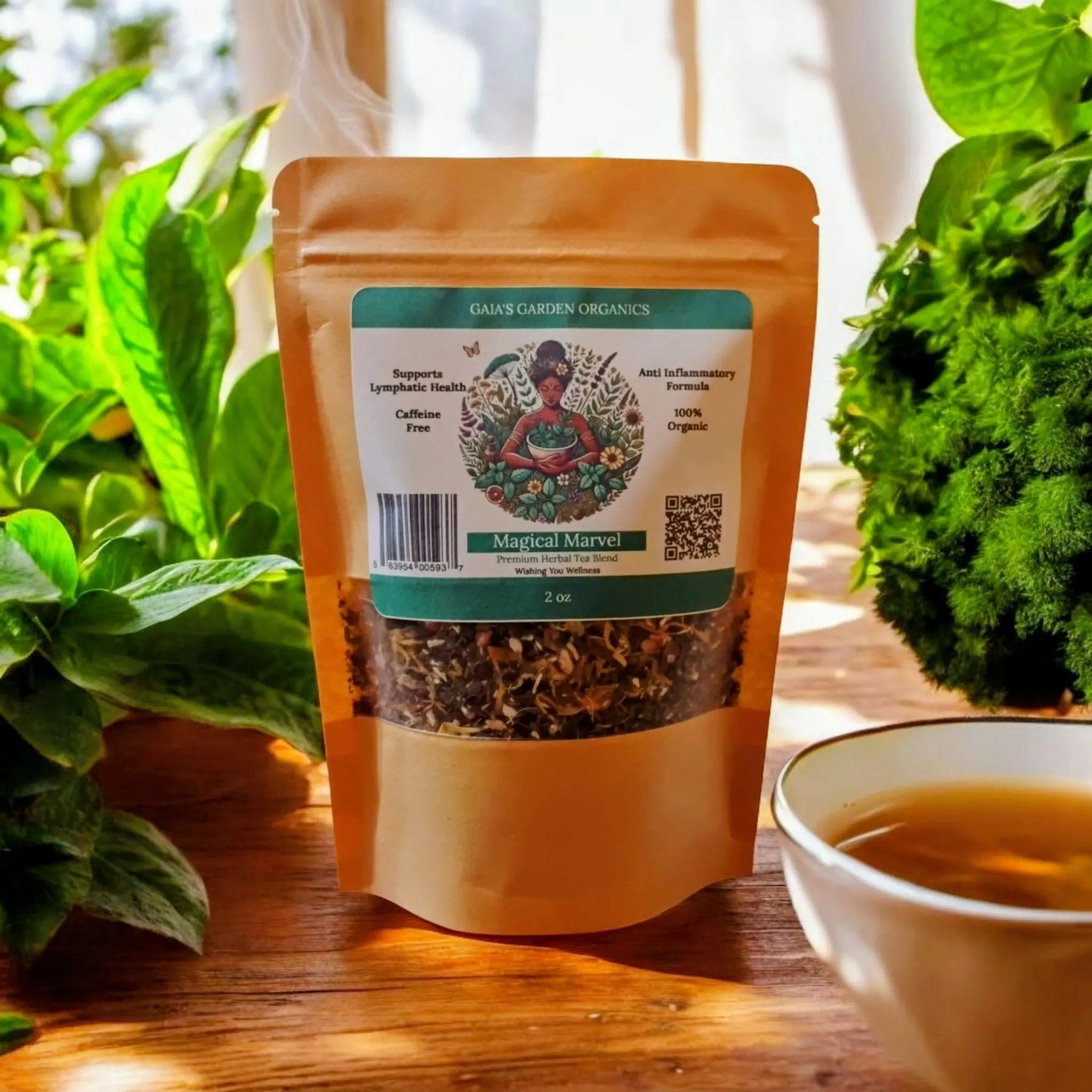
Spearmint (Mentha spicata) has trial evidence for working memory and attention support; a 2018 RCT and several follow-ups have shown measurable improvement in cognitive function in older adults with everyday memory issues. The caregiver's most-eroded cognitive functions (working memory, attention, the ability to hold the next three things in mind) are exactly the ones spearmint has evidence for. The Vitality Essence is the energetic-layer support for depleted spark; the Magical Marvel Tea includes spearmint as the cognitive-edge herb.
For the caregiver pattern specifically, Vitality Essence is the primary product call. Four drops in the morning and four at night. The spark that has dimmed comes back gradually, usually over three to four weeks.
Ashwagandha (in Healing Hypnotic Tea), the HPA-axis herb
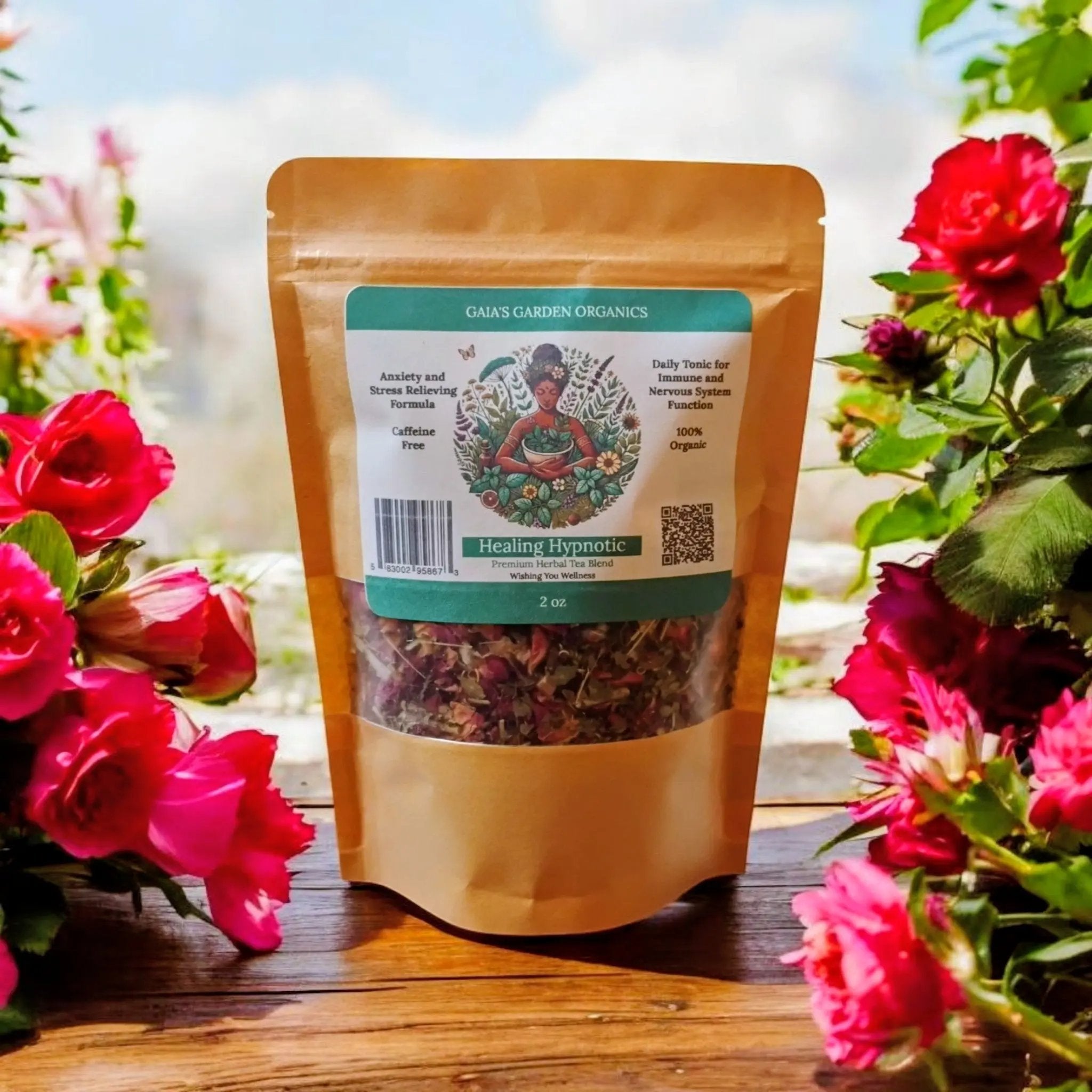
Ashwagandha (Withania somnifera) has the strongest human-trial evidence among the adaptogens for HPA-axis recalibration. A 2021 meta-analysis (Lopresti et al.) found significant reductions in perceived stress and serum cortisol over 60 to 90 days of daily use. For the caregiver whose cortisol rhythm has flattened or inverted, this is the herb that does the recalibration work. It is in our Healing Hypnotic Tea, paired with passionflower, tulsi, and rose, so the evening cup of tea does double duty: it supports sleep onset and feeds the HPA-axis rebuild.
Important caution: Ashwagandha is in the nightshade family and can stimulate immune activity. It is contraindicated in autoimmune conditions (Hashimoto's, lupus, rheumatoid arthritis, MS) and during pregnancy. If you have any of these or are unsure, skip the Healing Hypnotic Tea and use the milky-oat infusion as your evening support instead.
Rose (Heartful Essence), for the holder's grief
The grief layer that often runs underneath caregiving is not always grief for the person you are caring for. It is sometimes grief for the version of your life that is on hold, the friendships that drifted, the trips you did not take, the work you did not do. Rose has been the heart's medicine across every major herbal tradition. A 2022 trial (Mahdood et al.) on Rosa damascena aromatherapy in healthcare workers showed consistent anxiety reduction. The flower essence form (Heartful Essence) is the energetic-layer support for the closed-off holder's heart, the part that armored up to keep functioning and now needs help softening back.
The protocol, in three steps
Step 1: The Yoga Nidra Body Scan, in any twenty-minute window
The primary Yoga Therapy practice for the depleted caregiver is the Annamaya Kosha (ah-nah-MAH-yah KOH-shah) body scan, drawn from the Yoga Nidra tradition. Annamaya Kosha is the Sanskrit term for the body's outermost layer, the physical sheath. The practice is a finger-by-finger somatic awareness, twenty minutes long, lying down. The systematic review evidence on Yoga Nidra for stress and sleep is strong (Ghai et al., 2024 SR); the practice produces measurable parasympathetic activation and a depth of rest that approaches REM sleep in less than half the time.
Practically, this means a twenty-minute body scan substitutes partially for an hour of missing sleep. The window when the person you care for is content and asleep, the one you usually spend on laundry, is the window for this practice. The laundry can wait. The body scan is the actual medicine.
You can do it from a Yoga Nidra audio (Gaia has Script #19 from Harmony Within in the lead-magnet bonus) or from the written prompts in the Spark Renewal PDF. Day 2 of the protocol walks you through it the first time.
Step 2: The Sankalpa (SAHN-kahl-pah), as the daily anchor
One present-tense sentence, in your own handwriting, that names what you are moving toward. For the caregiver: not "I will get through this" (survival framing) and not "I will be a better caregiver" (more performance). Instead: "I am whole even as I hold" or "My care goes both ways" or "I am here and so am I." Find the sentence that is true and easy. Read it in the morning, before the day starts.
The Sankalpa is the felt-sense anchor that keeps you reachable to yourself during the day. The caregiver life produces a slow disappearing-into-the-role. The Sankalpa is the small daily reminder that the role is something you do, not who you are.
Step 3: The Long-Exhale Breath (Vishama Vritti (vee-SHAH-mah VRIH-tee)), as the emergency tool
When the load spikes (the parent has a fall, the kid has a meltdown, the partner needs the ER), the body can begin to dissociate. The Long-Exhale Breath (Vishama Vritti, vih-SHAH-mah VRIH-tee) is the classical Sanskrit name for an intentionally uneven breath where the exhale runs twice as long as the inhale. Inhale through the nose, quiet and easy, to a count of 4. Exhale through the nose, quiet and easy, to a count of 8. That is one round. Do ten rounds. The whole practice takes about 90 seconds. The chest softens by round five and the body comes back into the room.
You do not need privacy for this. You can do it standing in the hospital hallway, sitting in the car in the school parking lot, or while the person you care for is in the bathroom. The breath is discreet (no one will notice) and the mechanism is direct vagal-tone stimulation, which is what the body needs the moment the load spikes (Komori 2018; Steffen et al., 2017). It is the field tool the caregiver's life actually allows.
Why this works
The caregiver-physiology research is consistent. Family caregivers show altered cortisol rhythms, elevated inflammatory markers, and HPA-axis dysregulation across multiple studies (Vitaliano et al., 2009 review and follow-ups). The mechanism that produces this is chronic high-vigilance with low control and unpredictable load. The interventions that shift it are the ones that target the same axis from the other direction: HPA-axis support (ashwagandha), nervous-system substrate rebuilding (milky oat), and reliable daily parasympathetic activation (the body scan, the Sankalpa).
The Yoga Nidra evidence base is among the strongest in the contemplative-practice literature; the Ghai et al. 2024 systematic review consolidated trials on Yoga Nidra for stress, anxiety, and depression and found significant effects across all three. The aromatherapy literature on rose (Mahdood et al., 2022 on healthcare workers) is the closest population match we have to caregiver studies and shows consistent anxiety reduction.
So the protocol is not folk. It is the convergence of caregiver-physiology research, adaptogen-trial research, the Yoga Nidra literature, and Gaia's clinical practice with caregiver clients over fifteen years.
Where to go from here
- Step 1 (free): The 5-Day Spark Renewal PDF, a clinical-herbalist guide for the depleted caregiver. Get the protocol.
- Step 2 (30-night guarantee): Vitality Essence, the spearmint flower essence matched to the depleted-spark pattern. Vitality Essence. If the grief layer is loud, pair with Heartful Essence (rose, the holder's-heart essence). For evening HPA-axis support, Healing Hypnotic Tea (passionflower, ashwagandha, tulsi, rose) is the daily cup; or use Magical Marvel Tea for the cognitive-edge spearmint layer.
- Step 3 (coming soon): Harmony Within, Gaia's Yoga Nidra book. Thirty full guided scripts including Script #19, a 22-minute Annamaya Kosha body scan written specifically for the depleted caregiver.
This guide is for general nervous-system and caregiver-fatigue support and is not a substitute for medical care, respite services, or mental-health support. If you are experiencing thoughts of harming yourself or the person you care for, please call your local crisis line or 988 (in the US). Caregiver burnout at the severe end is a medical condition and deserves real help, not just a protocol.
Looking for the deeper context? Our pillar guide Flower Essences 101 covers the Bach method, the energetic layer essences work on, and how to choose between Vitality, Heartful, and the other three active essences.
PS: This protocol is not a replacement for respite care. If you can take a real break, take it. The protocol is for the long stretches between breaks, when you are still the holder and your own appointment slipped again. The twenty-minute body scan is not the answer to "I need a vacation." It is the answer to "I have twenty minutes today and the laundry can wait." Both things are true at the same time.
Frequently asked
How fast does this actually work? I have been in this for years.
The Yoga Nidra body scan produces a felt shift the first time you do it; a single twenty-minute practice typically lands like a fragment of a much longer nap. The Sankalpa and the 5-4-3-2-1 are present-moment tools, immediate. The herbal layer works on a longer arc: Vitality Essence usually produces a felt shift over three to four weeks; ashwagandha's HPA-axis effect builds over 60 to 90 days; milky oat's nervous-system rebuild is the slowest piece, four to twelve weeks. Most caregivers feel the body-scan and Sankalpa shifts in week one, the essence shift around weeks three to four, and the deeper HPA recalibration over months.
I have an autoimmune condition. Can I still use this protocol?
Most of it, yes. Skip the Healing Hypnotic Tea (ashwagandha is contraindicated in autoimmune conditions because it can stimulate immune activity) and use Magical Marvel Tea or a daily milky-oat infusion as your evening support instead. Vitality Essence, Heartful Essence, the Yoga Nidra body scan, the Sankalpa, and the 5-4-3-2-1 are all safe in autoimmune conditions. The flower essences contain no measurable plant matter and have no immune effect; the milky-oat infusion is food-grade and well-tolerated. If you are on biologic medications or immunosuppressants, consult your prescriber before adding any new herbal support.
How is this different from just doing self-care or seeing a therapist?
Self-care framing usually fails caregivers because it assumes a level of time-and-energy autonomy the caregiver life does not have. The protocol is built for twenty-minute windows, interruptible, no monthly retreat. A therapist is excellent and many caregivers benefit from one; the protocol works alongside therapy, not instead of it. What the protocol adds that therapy alone does not is the body-level work: the HPA-axis support from the herbs, the parasympathetic activation from the Yoga Nidra practice, the substrate rebuild from the milky oat. The body needs its own intervention on its own timeline, alongside whatever cognitive or relational work is happening with a therapist.
Can I give Vitality Essence to the person I care for too?
Yes, often safely. Flower essences have no documented pharmacological interactions with medications and are gentle enough for elderly parents, children with extra needs, and pets. Many of Gaia's clinic clients put Vitality Essence in the morning water of the person they care for as well as their own, and the household pattern softens together. For very young children, very frail elderly people, or people on hospice, the standard four-drops-twice-a-day dose is appropriate. If you have specific concerns about a particular medication or condition, reply to any of our emails and Gaia or her team will look into it.
What if it does not work for me?
If you run Vitality Essence and the 5-Day Spark Renewal protocol for 30 nights and do not feel a meaningful shift in the depletion pattern, write us. The 30-night satisfaction guarantee is unconditional: full refund, no questions, you keep the bottles. The most common reason caregivers see less effect than expected is the load is genuinely beyond what any protocol can offset; if that is true for you, the real intervention is respite care and probably more medical support, not herbs. The protocol is for the workable end of caregiver depletion. If you are past that edge, please reach out for human help.
Products from this article
Handcrafted in Umpire, Arkansas by Gaia Devi, clinical herbalist.
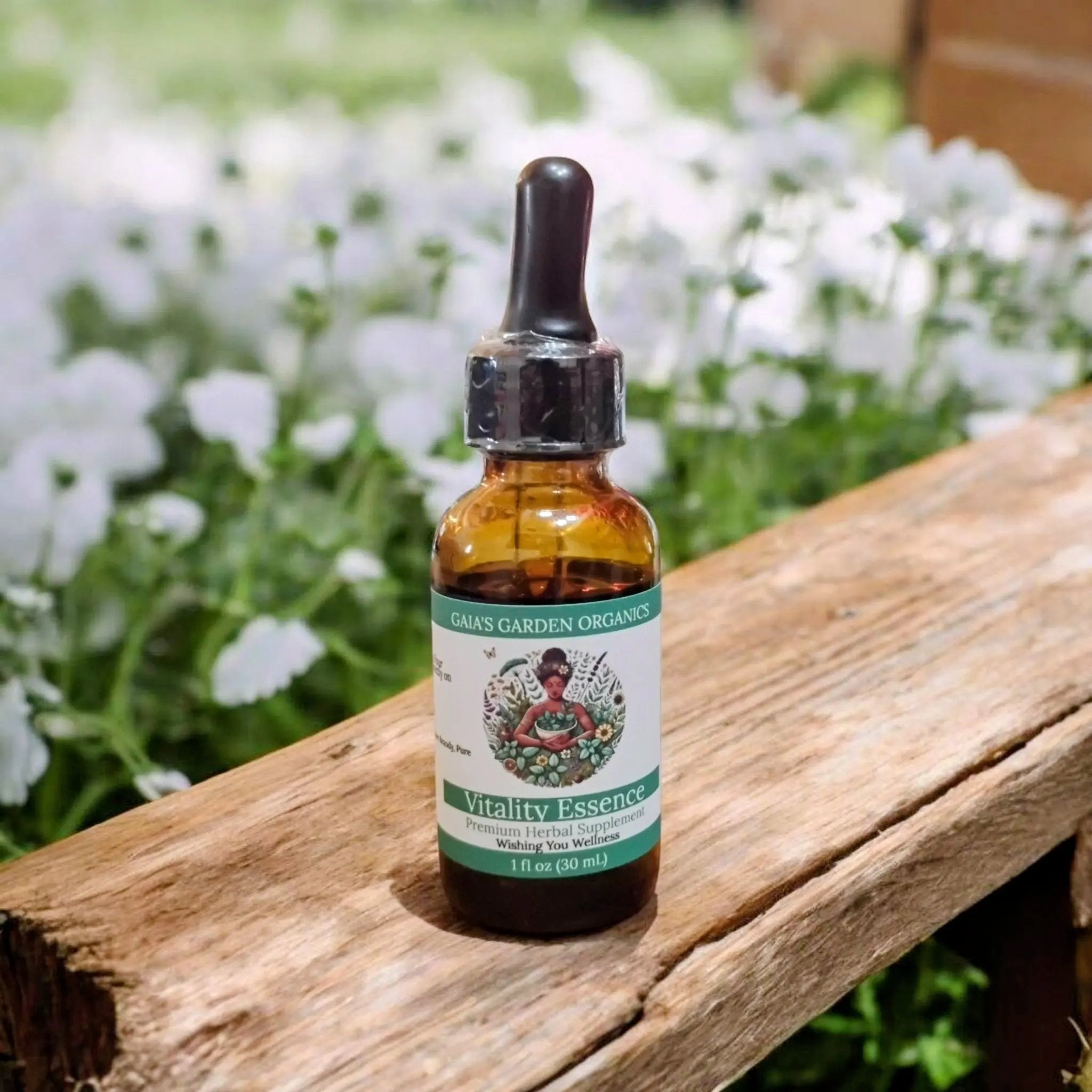
Vitality Essence - Organic Spearmint Flower Essence
for energy & renewed lightness
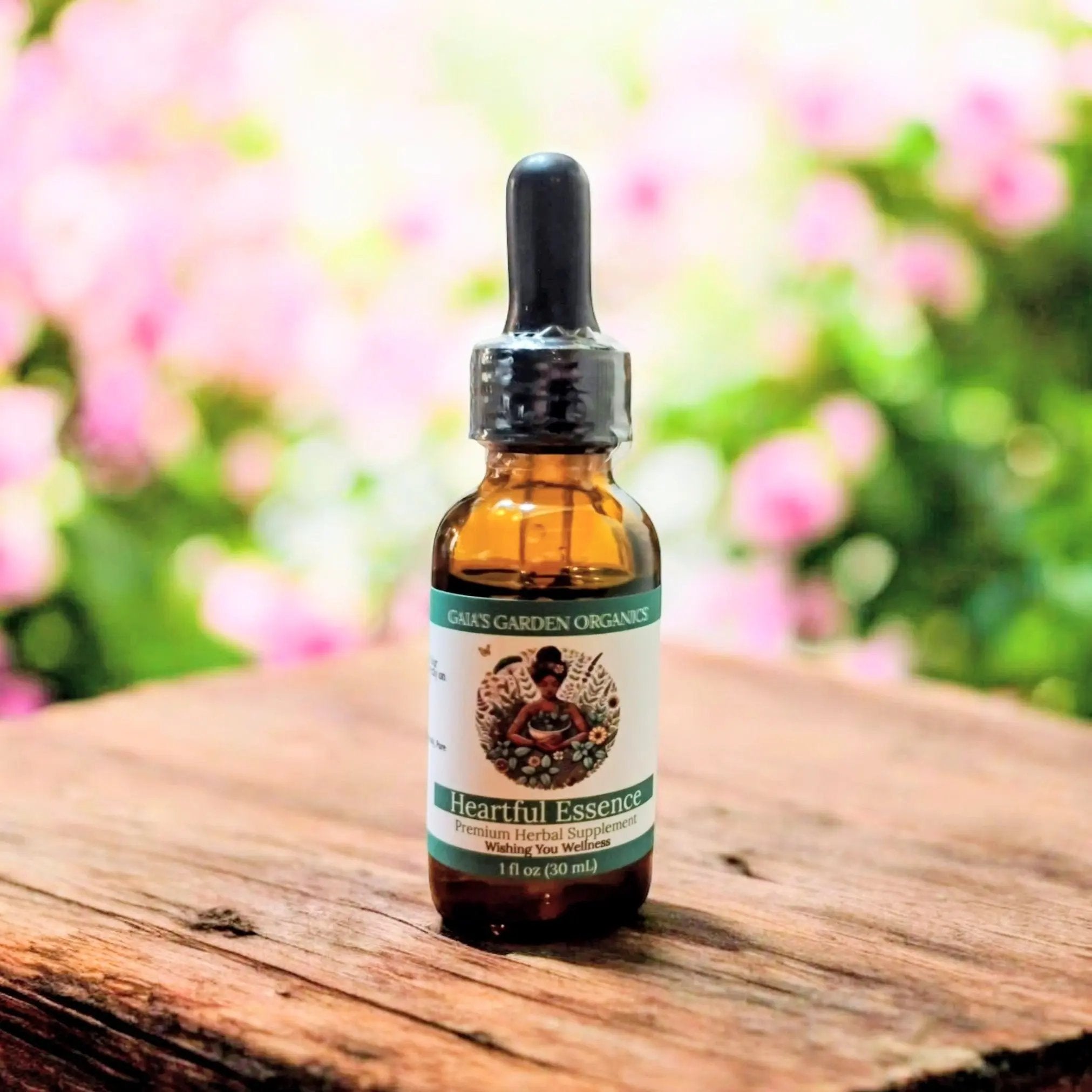
Heartful Essence - Organic Rose Flower Essence
for grief & heart-opening
 Bestseller
Healing Hypnotic Herbal Tea
for the busy-mind bedtime
 Sold out
Magical Marvel Herbal Tea
for everyday vitality
Explore our apothecary
Learn more
Flower Essences 101
A clinical herbalist's plain-English guide to what flower essences are and how to take them.
Find your match
The Vitality-Type Quiz
5-question clinical-herbalist diagnostic for the depleted caretaker. Matches a daily spark practice + plant pairing.
Shop the apothecary
Herbal Tinctures
Clinical weight-to-volume tinctures for nervous-system, sleep, and recovery work.
Sources & further reading
Authoritative references consulted in writing this article. Open in a new tab.
- PubMed CentralVitaliano PP, Zhang J, Scanlan JM. Is Caregiving Hazardous to One's Physical Health? A Meta-Analysis (2009 review)
- Ravensong HerbalsMilky Oat: Nourishment for the Nerves (clinical monograph)
- PubMed CentralLopresti AL et al. An Investigation into the Stress-Relieving and Pharmacological Actions of an Ashwagandha Extract (2021)
- PubMedMahdood B et al. Effects of Inhalation Aromatherapy with Rosa damascena on Anxiety of Healthcare Workers (2022)
- Annals of the New York Academy of SciencesGhai et al. Yoga Nidra for Stress, Anxiety, and Depression: A Systematic Review (2024)