In this article (13)▾
A client in her early forties sits across from me in the clinic. Her hands are shaking very slightly. She tells me her heart has been racing for two months. She has been to a cardiologist; the heart is fine. She has been to her primary care doctor; her bloodwork is fine. She has been to a therapist for three years. The racing has not stopped.
She is in my office because someone told her a clinical herbalist might have something the others didn't. She is right.
What she has is chronic, physiological anxiety. The kind that lives in the body before it lives in the mind. The therapist is doing real work on the mental patterns. But the body needs its own intervention, on its own timeline, with its own tools. That's what this tincture is for.
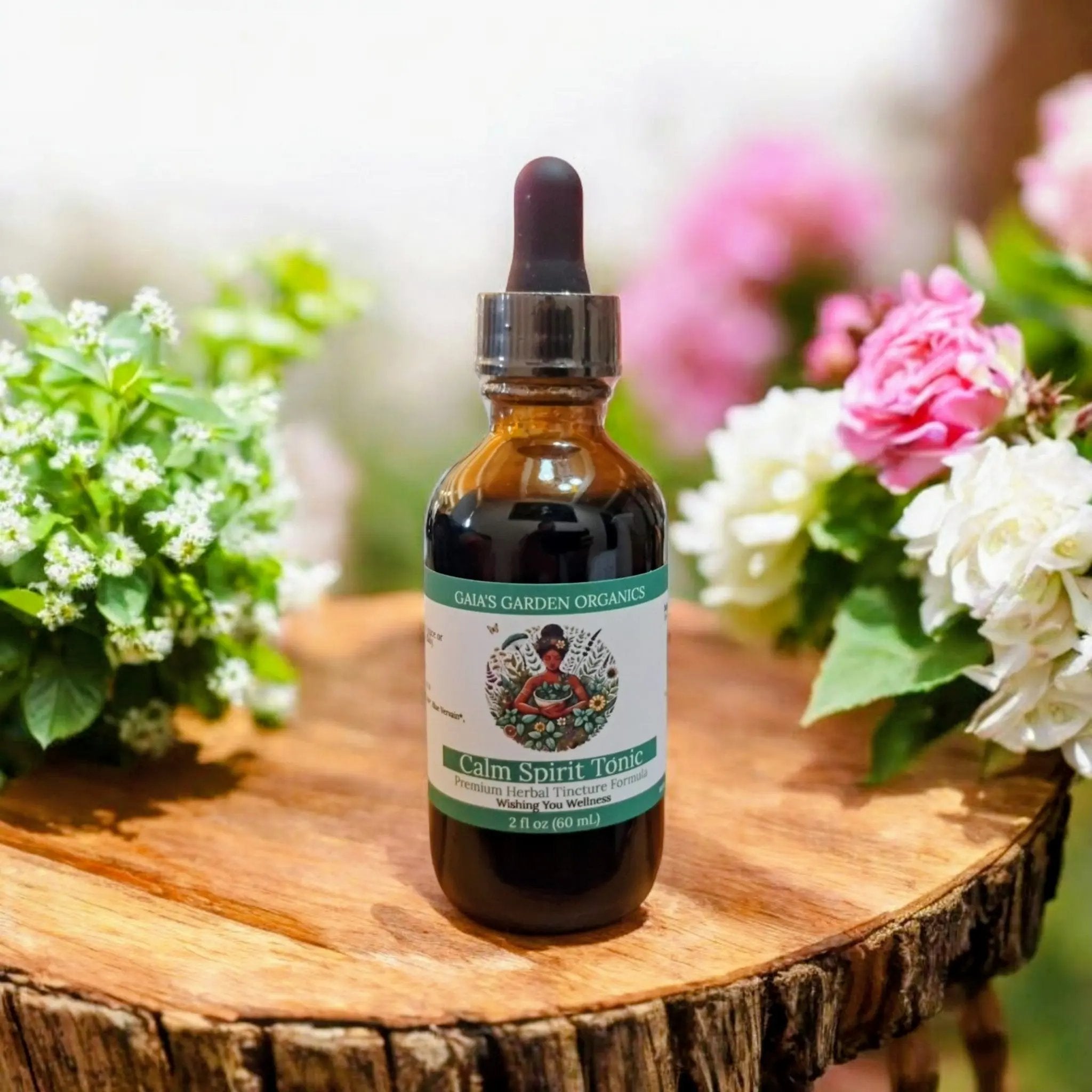
Calm Spirit Tonic is the formula I formulate for that pattern. Four herbs (Rose, Blue Vervain, Tulsi, Motherwort), clinical-grade weight-to-volume extraction in organic alcohol, from our medicine garden in Umpire, Arkansas. This guide explains what each herb does, how the four work together, and where the tincture sits in a real anxiety protocol.
Anxiety lives across three levels, not one
Most anxiety treatment targets one layer at a time and wonders why the relief is partial.
- Physical anxiety: Racing heart, chest tightness, shallow breath, jaw clench, shoulder bracing, digestive upset, tremor.
- Mental anxiety: Looping thoughts, catastrophizing, difficulty focusing, hypervigilance, decision paralysis.
- Emotional anxiety: Sense of impending doom, feeling unsafe in your own body, emotional numbness alongside acute fear, disconnection from your own heart.
Pharmaceuticals usually address the physical layer (benzodiazepines sedate, SSRIs adjust serotonin). Talk therapy usually addresses the mental layer. Both are useful. Both leave the emotional layer essentially untouched. A four-herb clinical tincture can address all three simultaneously, because each herb has its own specialty.
The nervous-system dysregulation pattern
Chronic anxiety is not a character trait. It is autonomic dysregulation. The sympathetic branch (fight-or-flight) gets stuck on. The parasympathetic branch (rest-and-digest) loses its dominance. The body lives in low-grade survival mode for so long that it forgets the way back.
In daily life this looks like:
- Wired but tired. Exhausted by 2pm; unable to fall asleep at 11pm.
- Small stressors trigger disproportionate reactions.
- Chronic muscle holding, especially in the shoulders, jaw, and chest.
- The body cannot downregulate once activated; the spike lasts hours.
The herbs in Calm Spirit Tonic specifically address this dysregulation. They help the nervous system remember the way back to baseline.
The four herbs
Tulsi (Ocimum tenuiflorum), the adaptogenic foundation
Tulsi (also called Holy Basil) is the adaptogenic layer of the formula. An adaptogen modulates the body's stress response over weeks; it does not sedate or stimulate. Tulsi has been used in Ayurvedic medicine for over 3,000 years and is studied in modern research for its effects on cortisol regulation, neuroprotection, and stress-tolerance baseline (Chandrasekhar et al., 2012, on a related adaptogen demonstrated the mechanism class).
What Tulsi does in the formula: it raises the floor. Over 3-4 weeks of daily use, the chronic baseline anxiety drops, not just the peaks. The body relearns what calm feels like as a default rather than as an occasional state.
Blue Vervain (Verbena hastata), the tension releaser
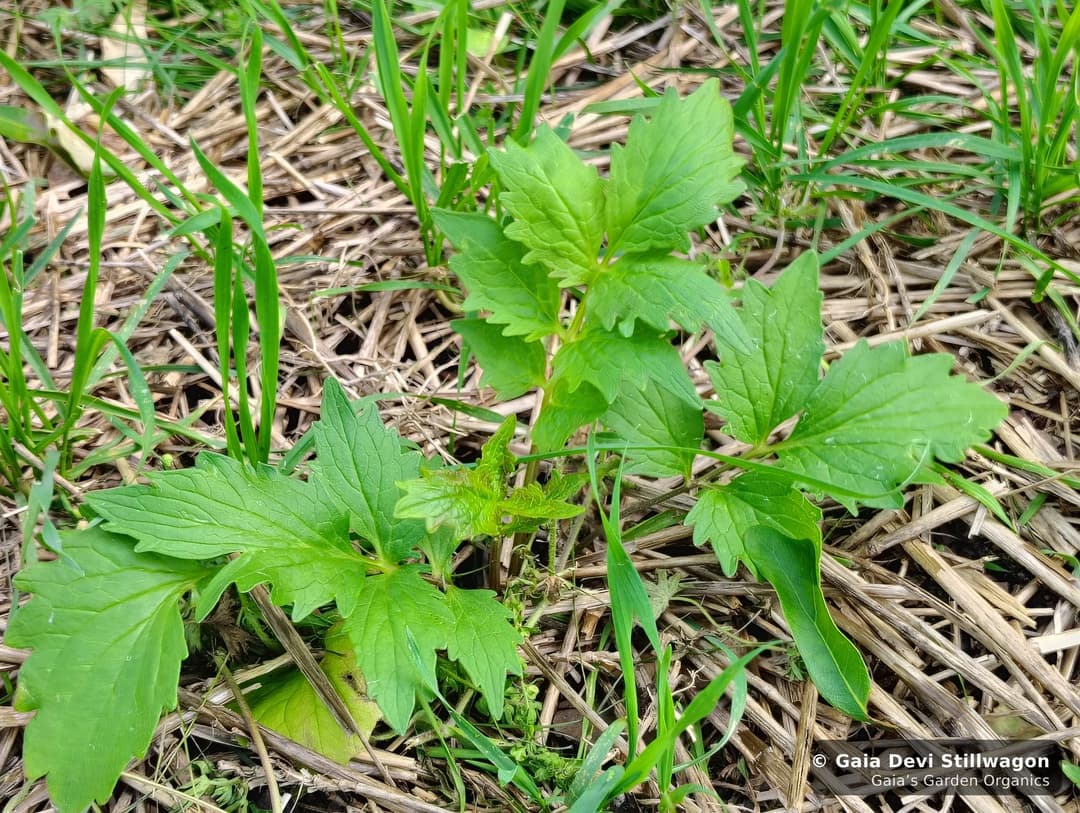
Blue Vervain is the herb for anxiety that lives in the body as rigid muscular tension. American eclectic herbal tradition called it the herb for "the type-A nervous system", the driven, perfectionistic body that cannot stop clenching. It is a nervine and an antispasmodic, which means it acts on both nerve tone and muscle tone simultaneously.
What Blue Vervain does in the formula: it unwinds the clench. The jaw drops. The shoulders find their natural line. The chest opens. Often within an hour of the first dose, clients notice their face is softer.
Rose (Rosa spp.), the heart opener
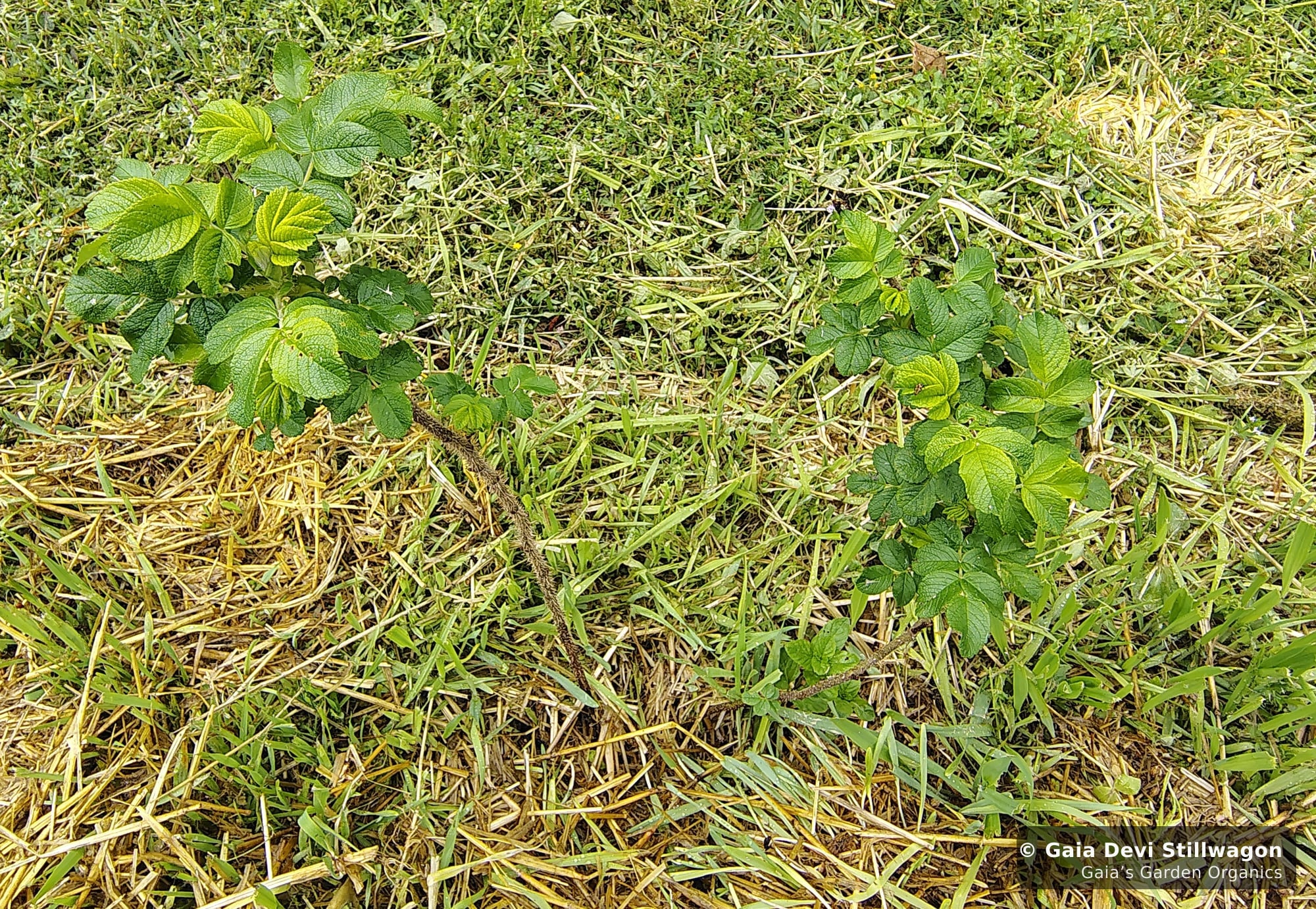
Rose has been used for the heart in every herbal tradition we have records of. The Persians used it for emotional inflammation; Chinese medicine uses it for "stuck liver qi" (emotional stagnation); the European tradition uses it for grief and heartbreak. In Calm Spirit, rose addresses the emotional layer of anxiety: the closed-down, defended, disconnected-from-yourself quality that chronic anxiety creates.
What Rose does in the formula: it softens the emotional armor. People become more able to feel the underlying emotion (often grief, often anger, often loneliness) rather than living in anxious defense against it. The shift is subtle but profound.
Motherwort (Leonurus cardiaca), the cardiac sedative
Motherwort is the immediate-relief layer. It is a cardiac nervine, meaning it acts on the heart and the nervous system in tandem. Its Latin name literally translates as "lion-hearted." Traditional Chinese Medicine calls it "yi mu cao", benefit mother herb, and uses it for anxiety, palpitations, and emotional distress.
What Motherwort does in the formula: it steadies the body during acute spikes. Within 20-30 minutes of a dose during a panic-shaped moment, the chest opens, the breath deepens, and the body downregulates. It is the herb in the formula that handles the crisis.
The four-herb synergy
None of these herbs alone is the formula. Tulsi alone is an adaptogen but lacks acute relief. Motherwort alone is acute relief but lacks long-term resilience. Blue Vervain alone is a body-tension herb but lacks the emotional and adaptogenic layers. Rose alone is heart medicine but lacks the active sedation.
Together they cover the full anxiety pattern:
- Tulsi raises the baseline (weeks).
- Blue Vervain releases the muscular clench (hours).
- Rose softens the emotional armor (subtle, ongoing).
- Motherwort stops the acute spike (minutes).
This is why one tincture works for both the chronic baseline and the crisis moment.
How to take it
- Acute spike (panic-shaped): 2-3 droppersful directly under the tongue. Hold for 30-60 seconds. Effects begin within 15-20 minutes.
- Daily baseline: 1-2 droppersful in a little water, 2-3 times daily. Morning, mid-afternoon, evening. Builds the adaptogenic effect over 3-4 weeks.
- Anticipatory anxiety: 2 droppersful 30-45 minutes before a known trigger (presentation, difficult conversation, medical appointment).
- Bedtime support: 2 droppersful at bedtime for anxiety-driven sleep loss. (For chronic insomnia, see Dreamweaver Tonic, which is the matched bedtime formula.)
The adaptogen window
The most common reason Calm Spirit "stops working" after a week is that people stop taking it. The nervines (Motherwort, Blue Vervain, Rose) act within 15-30 minutes. The adaptogen (Tulsi) acts over 3-4 weeks. Most people give up in week 2, between when the acute relief plateaus and when the deeper baseline shift begins.
If you can hold daily use through the second and third week, you reach the part where the chronic baseline starts dropping. By week 4, many clients tell me they did not realize they were less anxious until someone else pointed it out.
Calm Spirit vs. anti-anxiety medications
This is not an either-or framing. Many of my clinic clients run Calm Spirit alongside prescribed care; some use it during a benzodiazepine taper supervised by their physician. The honest comparison:
- Speed of relief: Calm Spirit lands in 15-20 minutes. Benzodiazepines land in 15-30 minutes. SSRIs take 4-6 weeks.
- Dependency risk: Calm Spirit, none. Benzodiazepines, high (physical dependence within 2-4 weeks). SSRIs, low physical, sometimes psychological.
- Long-term effect on nervous system: Calm Spirit strengthens the system's own regulation capacity. Benzodiazepines weaken it (tolerance, withdrawal anxiety). SSRIs adjust one neurotransmitter; effects vary.
- Side effects: Calm Spirit, minimal (mild sedation at high doses). Benzodiazepines, significant (cognitive impairment, falls risk, memory). SSRIs, variable (sexual dysfunction, weight, emotional blunting).
If you are tapering off a benzodiazepine, work with the physician who prescribed it. Never stop suddenly. Calm Spirit can be a useful adjunct during the taper, but it is not a replacement for medical supervision.
The deeper work
The tincture handles the body. The protocol teaches the body.
The 7-Day Nervous System Reset is our free clinical-herbalist guide for chronic, physiological anxiety. Seven days, seven clinical tools: the 90-second vagus reset, the caffeine audit, the blood-sugar check, the sleep-anxiety loop, the adaptogen window, the pocket tool (tincture plus breath reset), and integration. Most clients who pair the tincture with the protocol notice the chest soften within the first week.
Where to go from here
- Step 1 (free): The 7-Day Nervous System Reset PDF. Get the protocol.
- Step 2 (30-night guarantee): Calm Spirit Tonic, 1-2 droppersful 2-3 times daily for the adaptogen window, plus acute doses during spikes. Calm Spirit Tonic. If your anxiety has a heavy emotional layer too, pair with Tranquility Essence (Bach-method lavender essence). The 30-Day Calm Reset Kit bundles both with our Healing Hypnotic Tea.
- Step 3 (coming soon): Harmony Within, my Yoga Nidra book. Thirty full guided scripts including Script #19 (Easing Anxiety with Stairstep Breathing), expanded into a 22-minute audio-capable session.
This guide is for general nervous-system support and is not a substitute for medical or psychological care. If experiencing severe anxiety, panic disorder, or suicidal thoughts, seek immediate professional help. Those pregnant or nursing should avoid this formula due to Blue Vervain and Motherwort. Never stop psychiatric medications without medical supervision.
Looking for the deeper context on tinctures? Our pillar guide Herbal Tinctures 101 covers what they are, how they're made, dosing, timing, and how to choose between tinctures, teas, and flower essences.
Frequently asked
How quickly will I feel calmer?
On two timescales. Acute effects start within 15-20 minutes of a dose: heart rate slows, chest opens, mental racing softens. Cumulative effects build over 2-4 weeks of consistent daily use: the chronic baseline drops, daily anxiety becomes less reactive, sleep deepens, and emotional resilience increases. Most readers feel the immediate effects on Day 1 and the deeper baseline shift around Day 21-28. The adaptogenic Tulsi is the slow layer; the nervines (Motherwort, Blue Vervain, Rose) handle the acute work.
Will it make me too drowsy to function?
Most readers describe Calm Spirit as 'calming' rather than 'sedating', relaxed and clear, not impaired. At standard daily doses (1-2 droppersful, 2-3 times daily), the effect is anxiety reduction without functional impairment. At higher doses (3+ droppersful at once, or stacking with alcohol or prescription sedatives), Motherwort can produce more pronounced sedation. Start with 1 dropperful during a time you can assess the effect; increase gradually. Do not drive or operate machinery if you feel sedated.
Can I take this long-term, or will I build tolerance like with benzodiazepines?
You can and probably should take Calm Spirit long-term for chronic anxiety. Unlike benzodiazepines, the herbs in this formula don't build tolerance and don't create physical dependence. In fact, the benefits compound with consistent use because the adaptogenic Tulsi rebuilds nervous-system regulation capacity over weeks and months. Many of my long-term clients reduce dosage (not eliminate it) once their baseline anxiety has genuinely lowered. You can stop at any time with no withdrawal.
Am I safe to take this with my prescribed anxiety medication?
Generally yes, but always consult your prescriber. Calm Spirit can be used alongside SSRIs (Prozac, Zoloft, Lexapro), SNRIs, and benzodiazepines (Xanax, Ativan, Klonopin), though the Motherwort can enhance benzodiazepine sedation, so monitor for additive effects. Many of my clinic clients use Calm Spirit during a slow, medically-supervised benzodiazepine taper as the bridge support. Never stop psychiatric medications without medical supervision; sudden benzodiazepine discontinuation can be dangerous.
I'm pregnant or nursing. Is this safe?
Calm Spirit is contraindicated during pregnancy due to Blue Vervain and Motherwort, both of which can stimulate uterine contractions. For nursing mothers, the safety profile is less well-studied; the traditional use of Motherwort is actually supportive of the postpartum period (the herb's name reflects this), but consultation with your healthcare provider is essential. Safer pregnancy-anxiety herbs include chamomile, lemon balm in lower doses, and milky oats. For postpartum anxiety after weaning, Calm Spirit is excellent.
Products from this article
Handcrafted in Umpire, Arkansas by Gaia Devi, clinical herbalist.
Explore our apothecary
Learn more
Flower Essences 101
A clinical herbalist's plain-English guide to what flower essences are and how to take them.
Find your match
The Anxiety-Type Quiz
5-question clinical-herbalist diagnostic that names your anxiety pattern and matches a practice + plant pairing.
Shop the apothecary
Herbal Tinctures
Clinical weight-to-volume tinctures for nervous-system, sleep, and recovery work.
Sources & further reading
Authoritative references consulted in writing this article. Open in a new tab.
- PubMed (Amsterdam et al., 2009)A randomized, double-blind, placebo-controlled trial of oral Matricaria recutita (chamomile) extract therapy for generalized anxiety disorder
- PubMed (Akhondzadeh et al., 2001)Passionflower in the treatment of generalized anxiety: a pilot double-blind randomized controlled trial with oxazepam
- PubMed (Brock et al., 2014)American Skullcap (Scutellaria lateriflora): a randomised, double-blind placebo-controlled crossover study of its effects on mood in healthy volunteers
- PubMed (Chandrasekhar et al., 2012)A prospective, randomized double-blind, placebo-controlled study of safety and efficacy of a high-concentration full-spectrum extract of ashwagandha root in reducing stress and anxiety in adults
- NCCIHHerbs at a Glance (per-herb safety and evidence)