In this article (12)▾
Three of the most-used calming herbs in Western herbalism are passionflower, chamomile, and skullcap. They show up together in bedtime tea blends, anxiety tinctures, and "stress relief" supplements as if they were doing the same job. They are not.
Each one has a specific pattern it fits and patterns it doesn't. Matching the herb to the picture is the difference between "vaguely relaxing" and "the formula actually works." I have watched people conclude that herbs don't work for them when what happened is that they took a gut herb for a jaw-clenching problem for six weeks and got nothing, which is exactly what should have happened. This is the comparison I walk clients through in clinic.
All three of these anxiety herbs work beautifully as a tincture, and my guide to herbal tinctures for anxiety explains why that format is so reliable.
The three patterns
Anxiety is not one thing. The three herbs map onto three distinct pictures.
- Racing-thoughts insomnia (passionflower): Body tired, mind narrating. The thoughts loop, especially at bedtime. The classic "I would sleep if I could just shut my brain off" pattern.
- Worried-stomach restlessness (chamomile): The anxiety lives in the gut as much as the head. Knot in the stomach, low-grade nausea with stress, bedtime restlessness that comes with not feeling settled in your body.
- Somatic clench (skullcap): The chest stays tight, the jaw clenches, the shoulders hold. The pattern is physical first, mental second. The body is wired and the mind takes its cue from the body.
"Strongest" is the wrong frame. The right frame is "which pattern matches your nervous system." A strong skullcap dose will not touch a gut-anxiety pattern; a strong chamomile dose will not touch somatic clench. The herb has to fit the picture.
If you cannot tell which one you are, lie down tonight and notice where the anxiety announces itself first. Not where you think it lives. Where it speaks first. That is your herb.
How to recognize the three plants
This is not botanical trivia. It is a quality check, because two of the three have real adulteration histories on the commercial market.
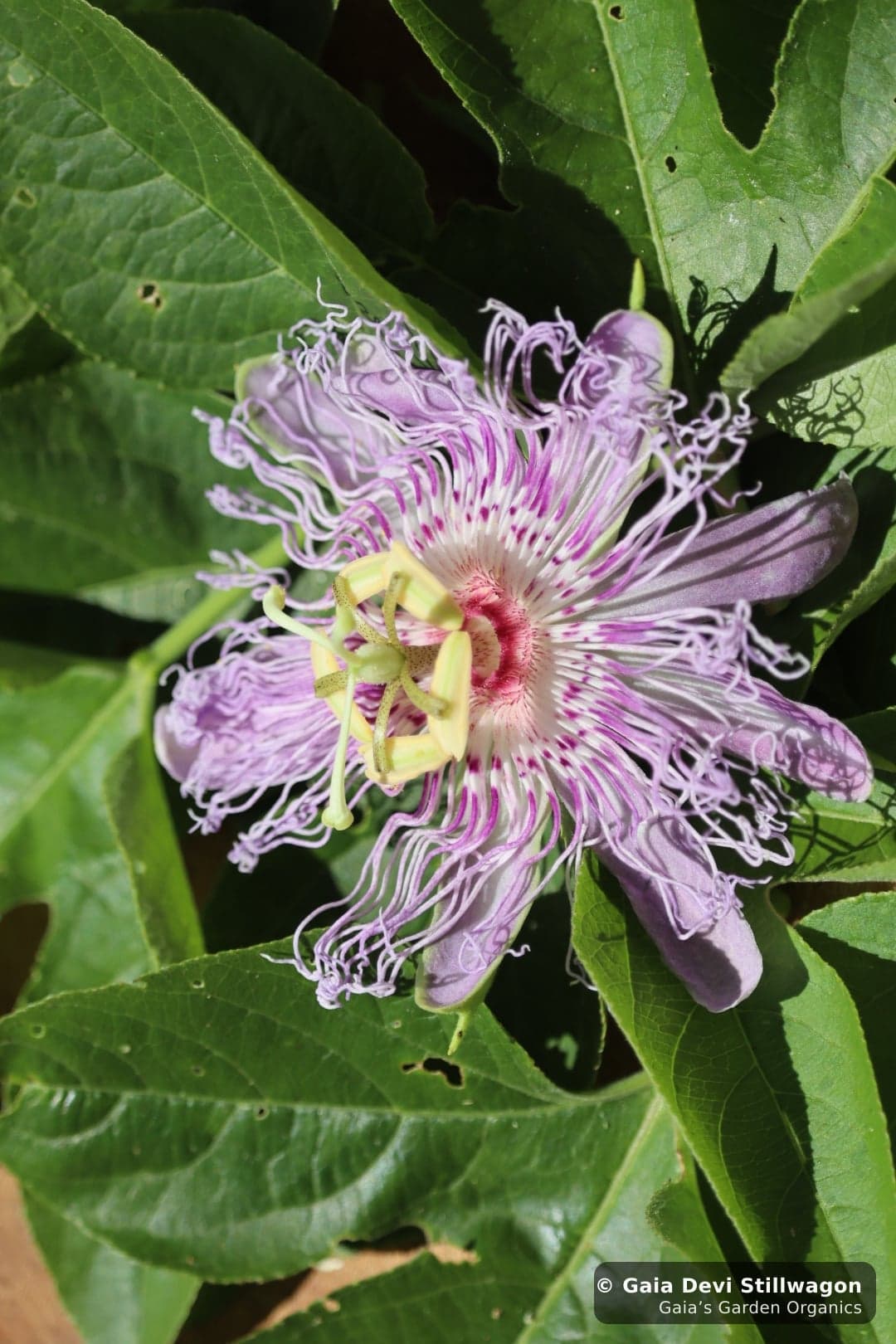
Passionflower (Passiflora incarnata) is a sprawling perennial vine native to the southeastern United States, climbing by tendrils, with deeply lobed leaves and an intricate purple-and-white flower that early Spanish missionaries read as a depiction of the Crucifixion. The aerial parts are used: vine, leaf, and flower together.
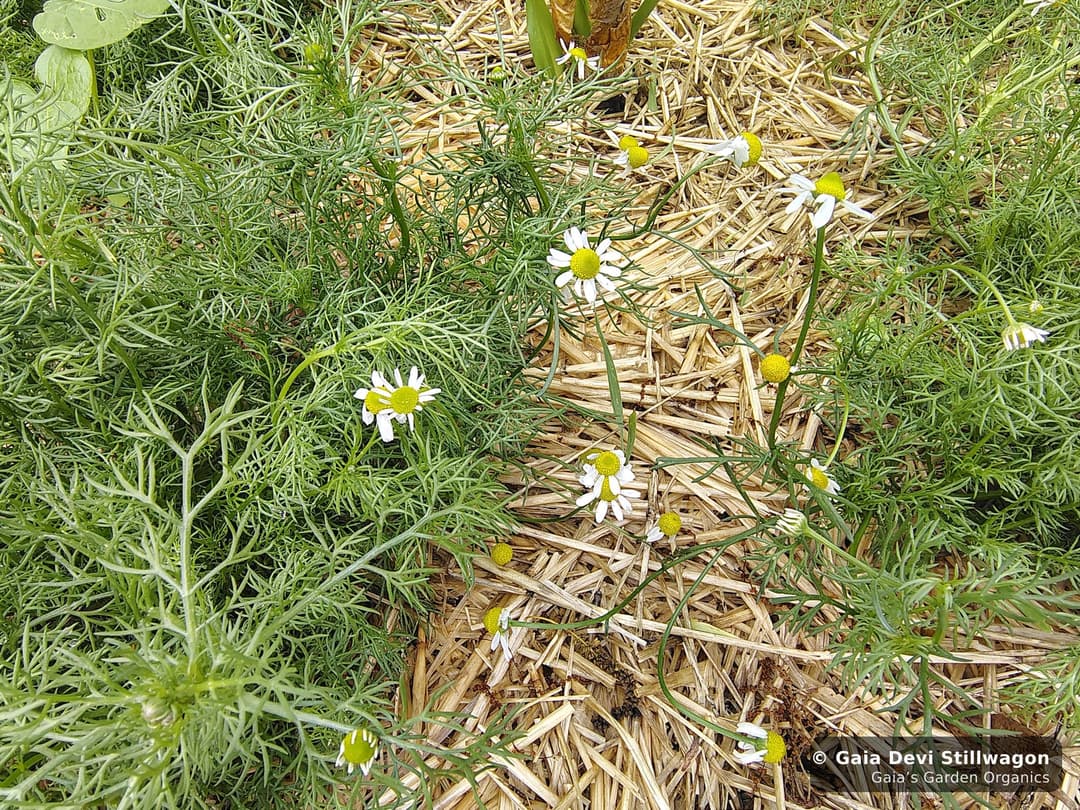
Chamomile (Matricaria recutita) is the small daisy-like annual in the aster family, with feathery foliage and a hollow, domed yellow center. That hollow cone is the field mark. This is German chamomile, not the same plant as Roman chamomile (Chamaemelum nobile), which has a solid receptacle. German chamomile is what the anxiety research used and what most tea uses.
American skullcap (Scutellaria lateriflora) is a delicate North American mint-family perennial, square-stemmed, with tiny blue-purple flowers arranged along one side of the stalk. Its name comes from the helmet-shaped calyx (the scutellum, a little dish or cap) on each flower. That cap is the most reliable identification feature, for reasons I will come to.
Passionflower (Passiflora incarnata)
Passionflower is the herb for racing thoughts. Long before it appeared in European herbals, Cherokee and other indigenous peoples used it as a calming remedy for the nervous system. It entered Western professional medicine through the nineteenth-century Eclectic physicians, who called it "the thinking person's nervine."
What passionflower does: it quiets the looping. Not by sedating, by softening the persistence of the loop. People describe noticing twenty minutes later that the same anxious thought is "still there but does not have hooks in me." The thought passes through instead of camping.
What the evidence says. A 2001 randomized double-blind trial compared passionflower to oxazepam (a benzodiazepine) for generalized anxiety, with comparable anxiety reduction and significantly fewer side effects (Akhondzadeh et al., 2001). NCCIH's summary is deliberately modest: a small amount of research suggests oral passionflower might help reduce symptoms of anxiety. A systematic review reached the same shape of conclusion and added a useful detail, that the effect was less marked in people whose anxiety was mild to begin with (PMC systematic review). Phytochemically the interest is in flavonoids such as vitexin and isovitexin and their apparent interaction with GABA receptors, the system benzodiazepines act on, far more gently and without the dependency profile.
Energetics and growing. Slightly cooling, slightly drying, mildly bitter. Hardy to roughly zone 6, wants full sun, tolerates drought once established, needs something to climb, and spreads by runners with real enthusiasm. Plant it where you would be happy to have more of it.
Pattern match: bedtime mind that will not stop reviewing the day, anticipatory rumination before known stressors, generalized anxiety with strong cognitive looping.
Chamomile (Matricaria recutita)
Chamomile is the herb for the gut-anxiety axis, and it is so familiar that people underrate it. It has more human trial data behind it than most of the herbal cabinet.
The Amsterdam et al. 2009 randomized controlled trial on chamomile extract for generalized anxiety showed measurable improvement (PubMed); a long-term follow-up by Mao et al. in 2016 found sustained tolerability across a year of use (PubMed). A year is a long trial for a herb. That tolerability finding is arguably more useful than the efficacy finding.
What chamomile does: it softens the felt sense of unsettledness in the belly. The gut-brain axis is one of the strongest two-way feedback systems in the body, and calming the gut calms a brain that takes its signals from the gut. The effect is gentle and built over consistent daily use rather than felt in a single dose.
The one real caution. Chamomile is in the aster family, and people allergic to related plants are more likely to react to it. NCCIH names ragweed, chrysanthemums, marigolds, and daisies. The Chestnut School of Herbal Medicine flags the same caution independently. If ragweed season flattens you, introduce chamomile carefully.
Energetics. Bitter and sweet at once, gently warming, relaxing to smooth muscle. That bitterness is why it works on digestion and not only on mood.
Pattern match: worried-stomach anxiety, low-level chronic restlessness, pediatric anxiety, the bedtime fussiness pattern in children and adults alike.
Skullcap (Scutellaria lateriflora)
Skullcap is the herb for somatic clench. Native peoples across the eastern half of the continent used it long before European settlement, and it entered Western medicine through the same Eclectic physicians, who considered it one of the great nervines and used it for two centuries for "nervous exhaustion with rumination." Historically it was also used for chorea, the old term for involuntary spasmodic movement, which tells you where its affinity sits.
The Brock et al. 2014 randomized controlled trial in healthy volunteers demonstrated measurable mood improvement with no reported side effects (PubMed).
What skullcap does: it acts on nerve tone and muscle tone at once. The jaw releases. The shoulders drop. The chest opens. The mental quieting arrives through the body relaxing, not the other way around. Unlike valerian it rarely produces morning grogginess, and unlike passionflower it has a genuinely somatic effect.
Energetics and harvest. Bitter and cooling. Harvested in bloom in late summer, and one of the more frustrating herbs to process, because it dries down to very little and loses quality quickly. Good skullcap is expensive for real reasons.
Pattern match: chest-tight anxiety, jaw clenching, tension headaches, post-workout bracing, the "wired but tired" pattern.
The comparison at a glance
- Onset (tincture form): Passionflower 15-20 min. Chamomile 20-30 min. Skullcap 15-30 min.
- Duration per dose: Passionflower 3-4 hr. Chamomile 2-3 hr. Skullcap 3-5 hr.
- Energetics: Passionflower cooling and drying. Chamomile bitter-sweet and gently warming. Skullcap bitter and cooling.
- Best for acute: Passionflower (panic-shaped moments, pre-sleep mental loops).
- Best for chronic baseline: Chamomile (daily, gentle, builds over weeks).
- Best for somatic: Skullcap (jaw, chest, shoulders, post-workout tension).
- Best format: All three work as tincture. Chamomile is the one that genuinely shines as a daily tea.
- Pediatric safety: Chamomile (most universally recommended). Passionflower and skullcap at smaller doses with herbalist guidance.
- Pregnancy: Chamomile in small culinary amounts is fine; passionflower and skullcap should be avoided during pregnancy.
American skullcap is not Chinese skullcap
This is the most common sourcing mistake in the anxiety-herb aisle. Scutellaria lateriflora, American skullcap, is the nervine described above. Scutellaria baicalensis, Chinese skullcap or Huang Qin, is a different species with substantially different applications: primarily anti-inflammatory and antimicrobial, used in Traditional Chinese Medicine for conditions ranging from upper respiratory infection to liver inflammation. Buying Chinese skullcap for a jaw-clenching anxiety pattern is not a weaker version of the right herb. It is the wrong herb. Reputable suppliers always specify the species. We use American skullcap exclusively.
The germander story, and why it still matters
You may run across a claim that skullcap damages the liver. Here is where that came from.
In the 1980s and 1990s, several poor-quality commercial skullcap products were found to be adulterated with germander (Teucrium spp.), an unrelated plant with genuine hepatotoxic potential. The liver injuries were real. The plant responsible was not skullcap. Properly sourced single-species American skullcap carries no such reputation in traditional use or modern toxicology.
The lesson is not "skullcap is fine, ignore it." It is that a plant you cannot identify is a plant you cannot trust, and the helmet-shaped calyx is how a herbalist tells the difference. Source from suppliers who verify species identity, or grow it yourself.
Safety, side effects, and who should be careful
All three have favorable safety records for daily use in healthy adults. That is not the same as "no cautions."
- Sedative interactions. Passionflower and skullcap may compound the effect of benzodiazepines, prescription sleep medications, anti-anxiety drugs, and alcohol. If you take any of these, talk to your prescriber before adding a nightly nervine.
- Surgery and anesthesia. Passionflower's sedative action can interact with anesthesia. Tell your surgical team about every herb you take and stop well before a scheduled procedure.
- Driving. Passionflower and skullcap can produce mild drowsiness at higher doses. Until you know how a preparation affects you, do not drive for an hour after a dose.
- Duration. One systematic review declined to recommend passionflower for continuous use beyond about four weeks, in pregnancy or lactation, or under age twelve, on grounds of insufficient data rather than evidence of harm. Worth knowing before an indefinite nightly protocol.
- Pregnancy. Passionflower may induce uterine contractions and should not be used. Skullcap has a traditional emmenagogue reputation and most references recommend avoiding it. Chamomile in culinary tea amounts is generally considered fine; consult your midwife or obstetrician for more than that.
- Aster-family allergy. The chamomile caution above. Real, though uncommon.
- Children. Chamomile is the most universally recommended. Passionflower and skullcap have traditional pediatric use at small doses, ideally under a clinician familiar with botanical medicine.
How to combine them
Most adults present with overlap across two or three of these pictures, which is why these herbs are almost always formulated rather than taken alone. The classical pairings worth knowing:
- Passionflower with skullcap. The workhorse pairing. Looping mind plus somatic clench, covered together.
- Passionflower with hops or valerian. For sleep onset specifically, when the issue is falling asleep rather than staying asleep.
- Skullcap with California poppy. For the tension-plus-pain picture.
- Chamomile with either. Chamomile rounds out the gut-axis layer under whichever nervine is doing the primary work.
- Lavender with skullcap. For the tension-headache presentation where the clench has climbed into the head.
One formulating rule from the clinical tradition: three to five herbs, in roughly equal parts, is a formula. Nine herbs is a shopping list. Past about five you are diluting every plant in the blend to buy the feeling of thoroughness.
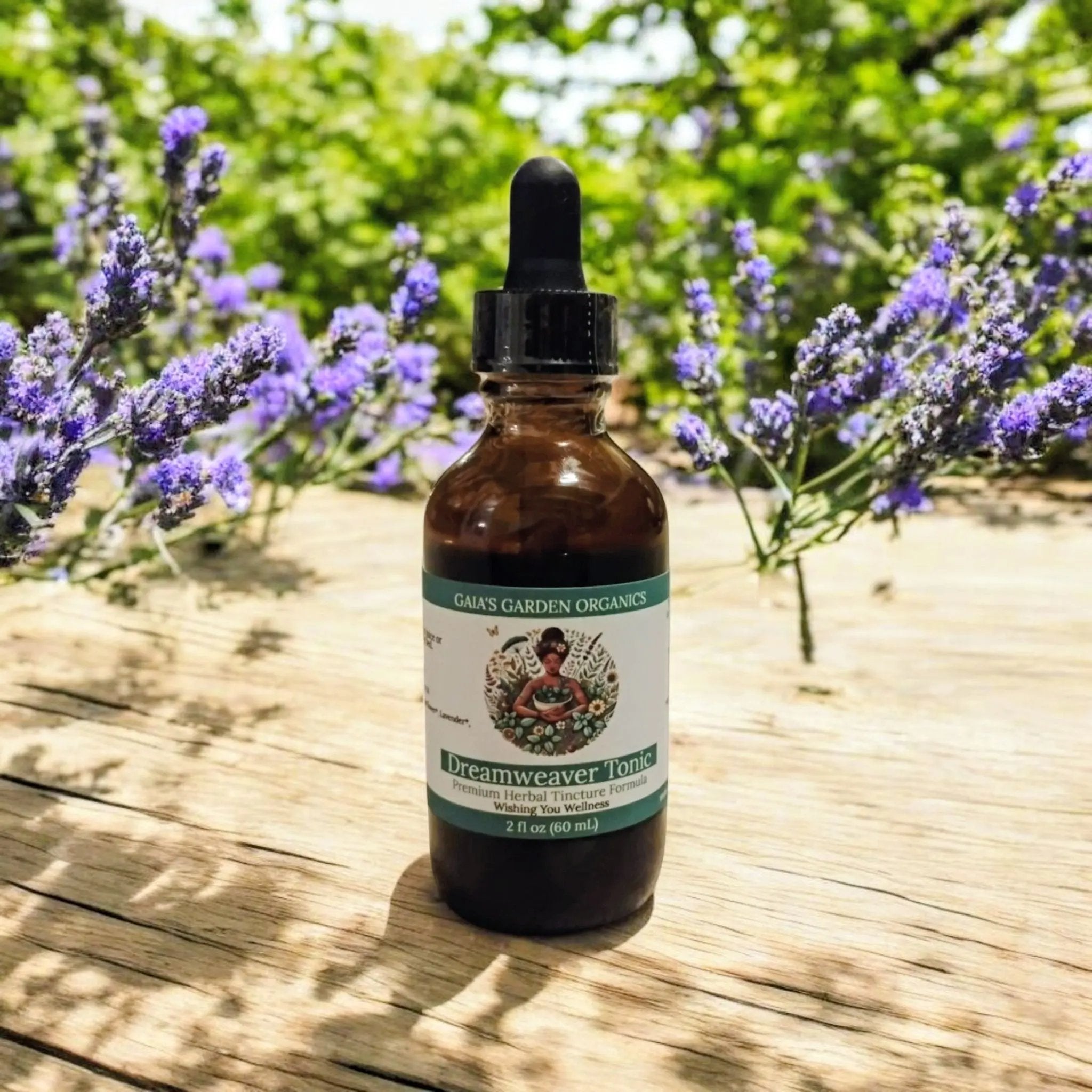
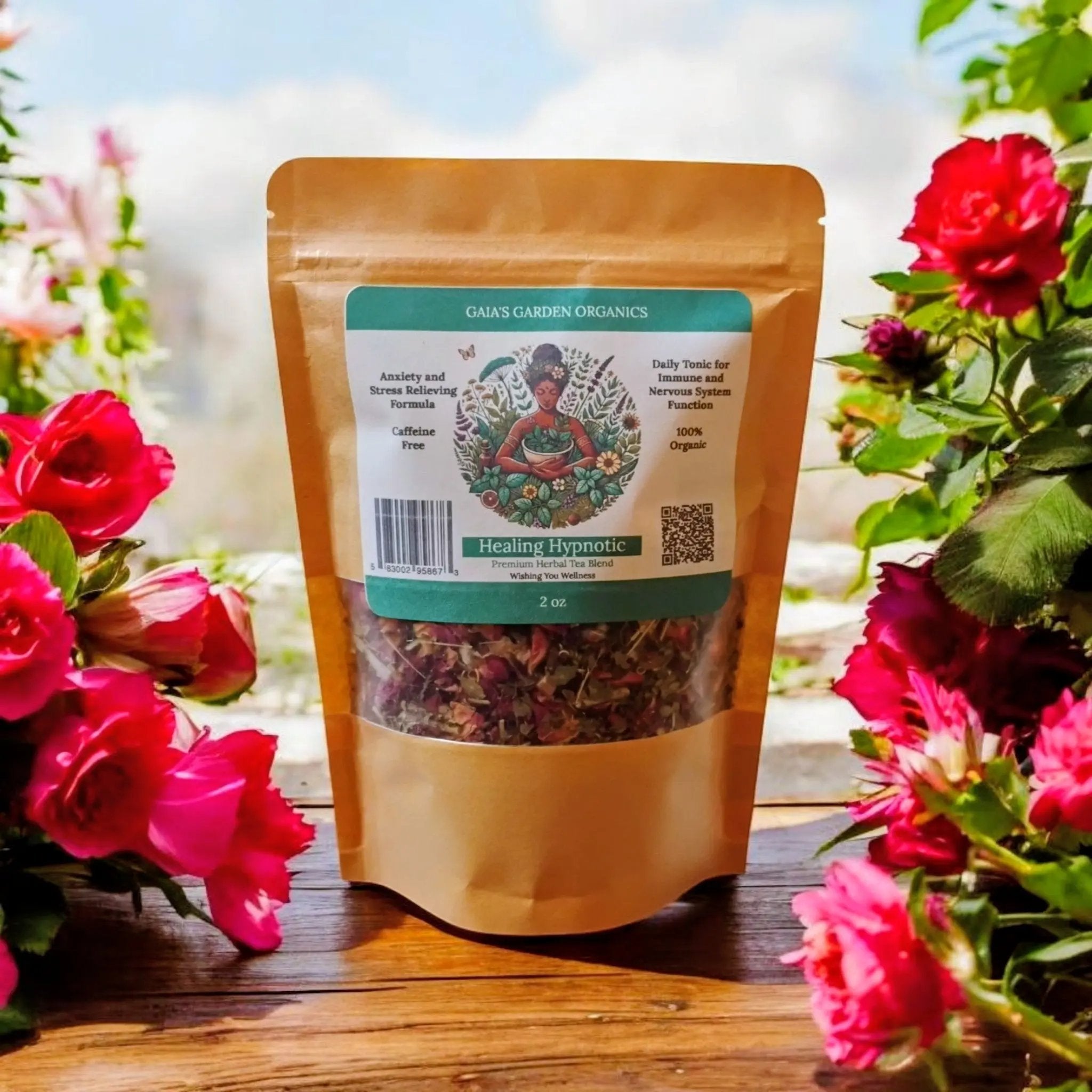
Layering across formats is also classical, and it is how I most often run these. Our Healing Hypnotic Herbal Tea uses passionflower as the primary nervine, with ashwagandha, tulsi, and rose. Our Dreamweaver Tonic combines skullcap, passionflower, and lavender as a tincture, so the somatic clench and the racing-thought loop are both addressed. The tea handles the daily baseline; the tincture handles the evening wind-down.
How to pick yours
Ask: where does your anxiety live first?
- In the looping mind that will not stop reviewing the day, choose passionflower
- In the unsettled stomach that signals nervous-system tension, choose chamomile
- In the chest, jaw, and shoulders that hold even when you have no thoughts, choose skullcap
- In all three layers, start with the one your body says loudest, and layer the others over the first month
Give any of them a fortnight before you judge. One dose tells you whether you tolerate a herb. It does not tell you whether it works.
Where to go from here
- Step 1 (free): The 7-Day Calm Protocol PDF, a clinical-herbalist guide for the chest-tight, racing-thought anxiety pattern. Get the protocol.
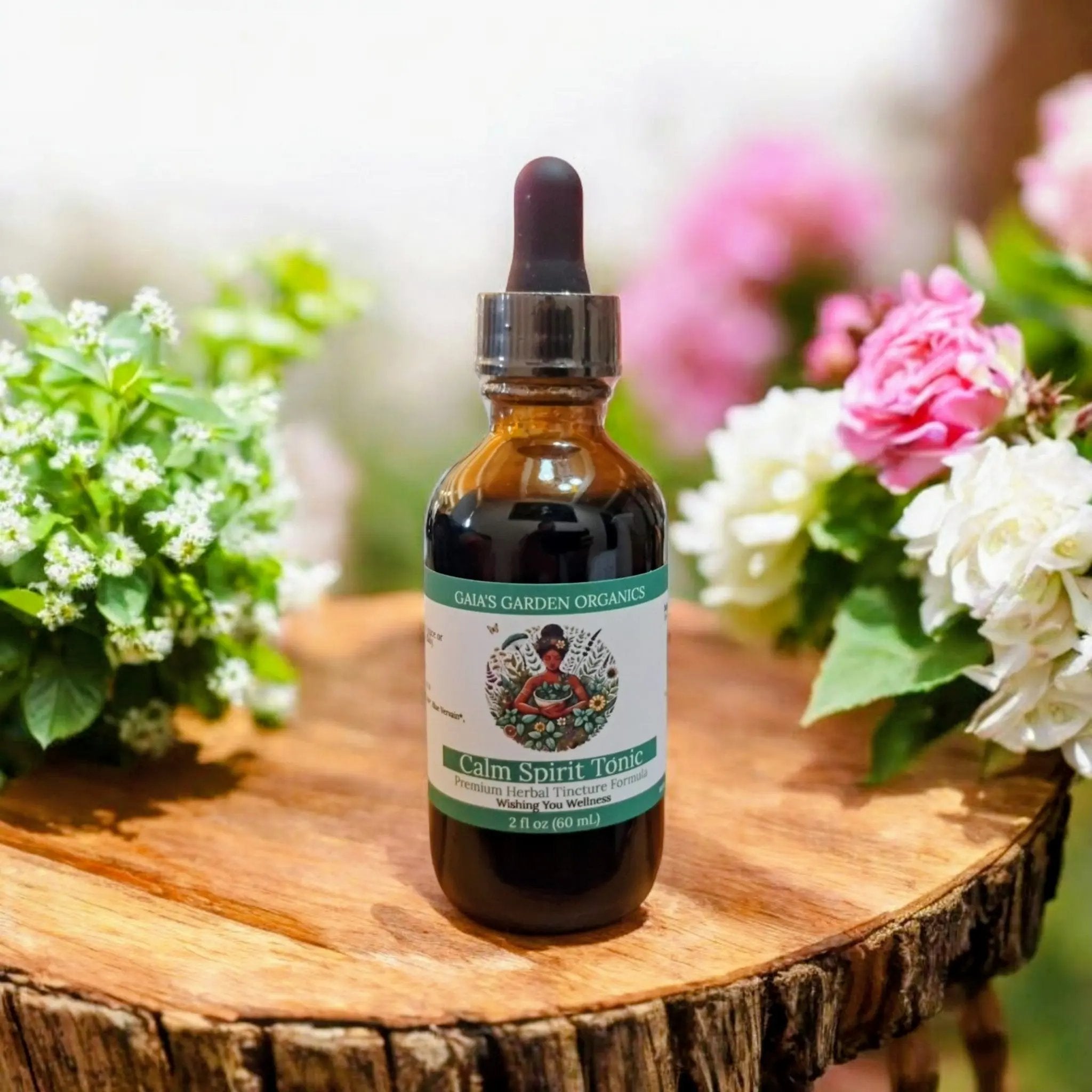
- Step 2 (30-night guarantee): Match the herb to the pattern. Healing Hypnotic Tea (passionflower + ashwagandha + tulsi + rose) for the racing-thoughts bedtime picture. Dreamweaver Tonic (skullcap + passionflower + lavender) for the layered bedtime pattern, addressing the racing thoughts, the somatic clench, and the mind that won't stop reviewing the day. Calm Spirit Tonic (rose, blue vervain, tulsi, motherwort) for the layered chronic anxiety picture.
- Step 3 (coming soon): Harmony Within, my Yoga Nidra book. Three scripts dedicated to the different anxiety presentations.
This guide is general nervous-system education and is not a substitute for medical or psychological care. Severe anxiety, panic disorder, OCD, and PTSD benefit from professional support as the primary anchor.
Frequently asked
Can I take all three at once?
Yes, in fact most clinical formulas combine at least two of them. Passionflower and skullcap pair beautifully (both target racing thoughts plus muscle tension), while chamomile rounds out the gut-brain-axis softening. Our Dreamweaver Tonic combines skullcap, passionflower, and lavender in one bedtime tincture; our Healing Hypnotic Herbal Tea uses passionflower as the primary nervine, layered with ashwagandha, tulsi, and rose. Layering them across formats (tea + tincture) is a classical pattern.
Which one is the strongest?
Skullcap is generally considered the deepest-working of the three for somatic anxiety (the chest-tight, jaw-clenched picture), passionflower is the strongest for racing-thoughts insomnia, and chamomile is the gentlest, best for the worried-stomach and bedtime-restless presentation. 'Strongest' is the wrong frame; the right frame is 'which one matches your pattern.'
Are these safe for daily long-term use?
All three have generally favorable safety records for daily use in healthy adults. Main caveats: passionflower and skullcap may compound the effect of pharmaceutical sedatives and sleep medications; chamomile occasionally causes allergic reactions in people with severe Asteraceae-family allergies (ragweed, daisies, marigolds). All three should be discussed with your prescriber if you take prescription anti-anxiety or sleep medications.
Can children take these?
All three have traditional pediatric use at small doses, with chamomile being the most universally recommended for children's bedtime restlessness and worried tummies. Passionflower and skullcap are also gentle enough for older children under herbalist guidance, but at lower doses and ideally not as nightly long-term protocols without clinician input. As always, consult your pediatrician for children with chronic conditions or on medication.
Which one for chronic anxiety vs acute panic?
For acute panic moments, passionflower has the fastest onset and the strongest in-the-moment effect, particularly as a tincture. Skullcap is also useful acutely for somatic anxiety. Chamomile is gentler and better for chronic baseline restlessness than acute spikes. For chronic anxiety, the best protocol is usually a combination across all three pictures rather than relying on a single herb.
Products from this article
Handcrafted in Umpire, Arkansas by Gaia Devi, clinical herbalist.
Explore our apothecary
Learn more
Flower Essences 101
A clinical herbalist's plain-English guide to what flower essences are and how to take them.
Find your match
The Sleep-Type Quiz
5-question clinical-herbalist diagnostic that names your sleep archetype and matches an evening practice + plant pairing.
Shop the apothecary
Herbal Tinctures
Clinical weight-to-volume tinctures for nervous-system, sleep, and recovery work.
Sources & further reading
Authoritative references consulted in writing this article. Open in a new tab.
- PubMed (Amsterdam et al., 2009)A randomized, double-blind, placebo-controlled trial of oral Matricaria recutita (chamomile) extract therapy for generalized anxiety disorder
- PubMed (Mao et al., 2016)Long-term chamomile (Matricaria chamomilla L.) treatment for generalized anxiety disorder: A randomized clinical trial
- PubMed (Akhondzadeh et al., 2001)Passionflower in the treatment of generalized anxiety: a pilot double-blind randomized controlled trial with oxazepam
- PubMed (Brock et al., 2014)American Skullcap (Scutellaria lateriflora): a randomised, double-blind placebo-controlled crossover study of its effects on mood in healthy volunteers
- PMC (systematic review)Passiflora incarnata in Neuropsychiatric Disorders: A Systematic Review