In this article (12)▾
Dr. Edward Bach was a British physician and bacteriologist who left Harley Street medicine in 1930 to develop what we now call flower essences. He spent the last six years of his life walking the English countryside, observing flowers, and developing the preparation method that bears his name. Ninety years later, it remains the clinical gold standard for flower essence work.
People ask me why we still make essences the slow way. Why a glass bowl and a spring and a morning spent watching a bowl of water, when a laboratory could produce something in an afternoon. The answer is that the method is the medicine. Change the method and you have made something else, and you no longer get to point at a century of clinical observation and say "this is what that does."
This guide is what the Bach method actually is, why brandy and mountain water specifically, and why we work to it.
Who Edward Bach actually was
The biography matters, because it is the reason the method has the standing it has.
Bach was born 24 September 1886 in Moseley, Birmingham. He qualified as a physician and held a stack of credentials that would satisfy any modern licensing board: M.B., B.S., M.R.C.S., L.R.C.P., D.P.H. He worked as a bacteriologist and pathologist, ran a Harley Street practice, and did research at University College Hospital and later the London Homeopathic Hospital. He was, by any measure of his own era, an establishment doctor with a serious research career.
In 1930 he closed the practice, gave up the London income, and went to Wales and then to the English countryside to look for a gentler medicine. Over the following six years he developed his preparation methods and settled on a system of thirty-eight remedies, each matched to an emotional state rather than to a physical diagnosis. He published The Twelve Healers and Other Remedies on 1 October 1936, the last edition he oversaw personally, and died seven weeks later on 27 November 1936 at Mount Vernon in Wallingford, Oxfordshire.
He was fifty. He had been working on flower essences for six years. Everything the field has done since is a footnote on those six years.
The preparation, briefly
The Bach method has two preparation techniques, and which one a plant gets is determined by the plant, not by convenience.
- Sun method: Fresh blossoms float on the surface of a clean glass bowl of spring water, in direct sunlight, for roughly three hours. The infused water is then strained and preserved with an equal volume of brandy. This method is used for flowers that bloom in summer at their peak vitality, when there is reliable sun to do the work.
- Boiling method: Used for woody plants, trees, shrubs, and for flowers that bloom early in spring when sunlight cannot be relied on. Flowering twigs are simmered in spring water for half an hour, then strained, cooled, and preserved with brandy.
Both produce what is called a mother tincture. That is the concentrate, and it is not what you buy.
From mother tincture to the bottle in your hand
This is the part almost nobody explains properly, and it is where most of the confusion about "how much plant is even in there" comes from. There are three stages, and each one is a large dilution.
- Mother tincture. The strained sun-infused or boiled water, preserved with an equal volume of brandy. Half water, half brandy. This stays at the source. It is a working stock, not a product.
- Stock bottle. Two drops of mother tincture into a 30ml bottle topped with brandy. This is the concentration most flower essences are sold at, and it is what a practitioner works from.
- Dosage bottle. The user's own bottle. A few drops from the stock bottle into water, with a small amount of brandy added if the bottle is going to sit for more than a few days.
Three stages of dilution is why the finished essence contains no meaningful quantity of plant chemistry. That is not a defect in the preparation. That is the preparation working as designed. A flower essence is not trying to be a concentrated extract. If you want concentrated plant chemistry, you want a tincture, and that is a different product doing a different job.
Why brandy specifically
Three reasons.
- Preservation. High-proof brandy (typically 40 percent alcohol by volume) keeps the essence shelf-stable for years without refrigeration. No bacterial growth, no fungal growth, no oxidation. It is the reason a properly made essence is still good years after it was bottled, which no water-based preparation can claim.
- Traditional menstruum. Bach used brandy. His successors at the Bach Centre have used brandy continuously since the 1930s. The method has nearly a century of clinical observation under this specific preservation, and that observational record is the single most valuable asset the field owns. It is attached to brandy. It does not transfer.
- Energetic compatibility. Bach's framework, and most clinical flower-essence work since, holds that the brandy preservative is energetically compatible with the essence's vibrational pattern in a way that other preservatives are not.
Brandy is the clinical gold standard for shelf-stable plant medicine of this kind. We use it because it is the best available tool for the job, not because we settled.
Why mountain water specifically
Bach's original work used spring water collected directly from natural sources, particularly mountain springs. The choice was rooted in his understanding that the water itself participates in the essence-making process. Mountain water has different mineral content, different dissolved oxygen, and, in his framework, different energetic qualities than water that has been through a municipal treatment plant and a mile of pipe.
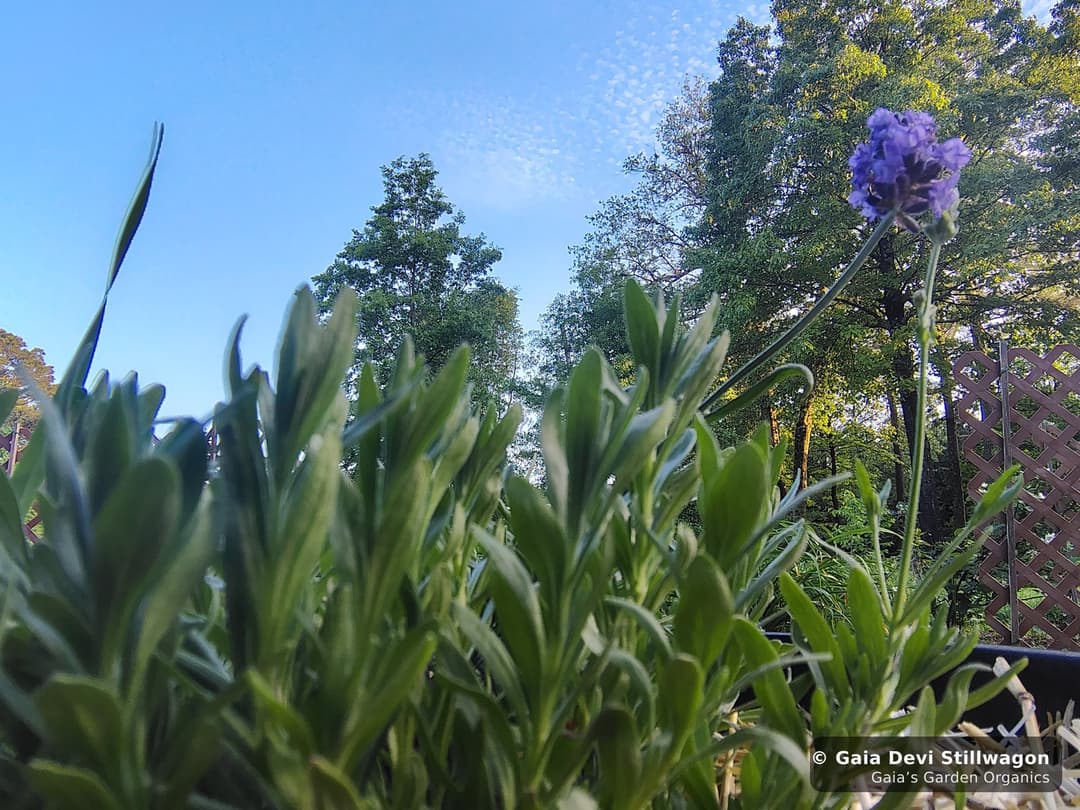
Modern Bach Centre preparations and clinical herbalists continue to use spring or mountain water. We collect ours from a spring on our medicine garden property in Umpire, Arkansas, in the Ouachita foothills. The lavender that goes into the bowl grew fifty feet from the spring that fills it.
What the finished essence contains
Practically: water, brandy, and the sun-infused imprint of the flower. Chemically, the finished essence is water and alcohol. No measurable plant compounds remain in significant quantity, and any essence that claims otherwise has either been made differently or described inaccurately.
The active component is what Bach called the "vibrational pattern" of the flower, transferred to the water during the infusion. Modern energetic medicine calls it a frequency or a signature. Whatever the technical name, the effect in clinic is on the emotional layer of the person taking it, not on the body's biochemistry.
One practical consequence worth knowing: a flower essence has no real aroma. If your essence smells of anything, it smells faintly of brandy. Any pronounced scent in a flower essence comes from the preservative, not from the flower (Flower Essence Society). People who expect a lavender essence to smell like lavender are expecting an essential oil.
What this is not
- Not a herbal tincture. A tincture contains measurable plant compounds and acts pharmacologically. A flower essence contains no measurable plant matter and acts energetically. Same dropper bottle, different medicine entirely.
- Not an essential oil. Essential oils are concentrated aromatic compounds, produced by steam distillation, requiring pounds of plant material per small bottle. Flower essences are sun-infused water with no aroma and no concentration step.
- Not aromatherapy. Aromatherapy works through smell and topical absorption. Essences are taken internally as water.
- Not homeopathy. The two are often confused because both work past the point of measurable plant matter. But homeopathy uses specific serial dilution and succussion protocols and a like-treats-like principle that Bach essence preparation does not use.
What the research says, honestly
I would rather you got this from me than from a skeptic's blog.
The controlled-trial literature on flower essences is thin and largely unsupportive. A systematic review of randomised clinical trials concluded that the effects reported were not distinguishable from placebo (Ernst, 2010), and an earlier review of flower remedies for psychological problems and pain reached a similar conclusion (Thaler et al., 2009). Later work has been more mixed; a 2022 randomized clinical trial found reductions in stress symptoms among nursing students (PubMed, 2022). The overall body of evidence is small, methodologically uneven, and does not meet the standard we would ask of a pharmaceutical.
So here is my actual position, as a clinician who uses these every day. Flower essences are not a drug and I do not present them as one. What I have is a century of careful practitioner observation, a preparation method with an unblemished safety record, and the consistent experience of watching people's emotional baseline shift over weeks. That is worth something. It is not worth a claim I cannot support, and you should be suspicious of anyone in this field who tells you otherwise.
Who should be careful
The safety profile of a Bach-method essence is about as clean as anything in herbal medicine, but "clean" is not "irrelevant to everyone."
- People avoiding alcohol entirely. A four-drop dose contains a trace of brandy, but trace is not zero, and for someone in recovery the number is not the point. The traditional workaround is the dosage-water method: put the drops in a glass of water and sip it over ten minutes.
- Anyone taking disulfiram (Antabuse) or a similar alcohol-sensitising medication. Talk to your prescriber before taking any alcohol-preserved preparation, including this one.
- Children and pets. Many practitioners use the dosage-water method for both, where the alcohol trace becomes negligible. For infants, consult your pediatrician. For animals on medication, consult your veterinarian.
- Pregnancy. Discuss any preparation with your midwife or obstetrician.
How to tell a properly made essence
The market has no meaningful gatekeeping, so the burden falls on you. What I would look for:
- The maker names the method. Sun or boiling, and which one for which plant. Vagueness here usually means the essence was bought in bulk rather than made.
- The maker names the water. Spring or mountain water, ideally with a location. "Purified water" is a different product.
- The maker names the preservative and the concentration stage. Brandy, and whether you are buying stock or dosage strength.
- The maker names the flower and where it grew. A flower essence is a record of a specific plant on a specific morning. If nobody can tell you where the plant was standing, that record does not exist.
- The claims are emotional, not physical. Any flower essence sold to you as a treatment for a diagnosed physical condition is being sold dishonestly.
Why we work to the Bach method
Two reasons. First, the historical evidence: nearly a century of clinical observation has happened under this specific preparation. Switching the preservative or the water source changes the conditions, and we would no longer be entitled to point at that record.
Second, our own clinical experience. The brandy-and-mountain-water preparation produces consistent results we trust, in a garden we walk every morning, from plants we grew. We work to the gold standard because it is the standard we can stand behind.
Where to go from here
- Step 1 (free): Match your essence in 7 questions. Take the essence quiz.
- Step 2 (30-night guarantee): Browse all five essences, all prepared by the traditional Bach method in our medicine garden in Umpire, Arkansas.
- Step 3 (coming soon): Harmony Within, my Yoga Nidra book.
For broader context, our pillar guide Flower Essences 101 covers the full history and practical use of the Bach method.
Frequently asked
Why do flower essences have brandy in them?
Brandy is the traditional Bach method preservative. Dr. Edward Bach chose it because it preserves the sun-infused water cleanly, indefinitely, and without introducing its own strong energetic signature. Nearly a century of clinical use has confirmed it remains the gold standard.
Can I take a flower essence if I don''t drink alcohol?
Yes. The alcohol in a four-drop dose is a trace amount. If you want to minimize it further, place the dose in a small glass of water and sip over ten minutes, the traditional Bach dosage-water method.
Are glycerin-preserved flower essences as effective as brandy ones?
In clinical experience, no. Glycerin carries its own energetic and sensory signature that can muddle the imprint of the flower, and the Bach tradition''s research was built on alcohol-preserved essences. Brandy remains the clinical standard.
How long does a bottle of flower essence last?
Unopened and stored properly, a brandy-preserved essence is shelf-stable for 5 to 10 years. Opened, it is reliable for 3 to 5 years of daily use.
Can I give brandy-preserved flower essences to my child or pet?
Many practitioners do, using the dosage-water method: a few drops in a glass of water or pet bowl, sipped through the day. At that dilution the alcohol trace is negligible. For infants, consult your pediatrician.
What is the difference between a flower essence and a herbal tincture?
They look similar but work on different levels. A herbal tincture is a concentrated chemical extract acting physically on the body. A flower essence is a vibrational preparation containing almost no plant chemistry, acting on the emotional and energetic layer.
Products from this article
Handcrafted in Umpire, Arkansas by Gaia Devi, clinical herbalist.
 Bestseller
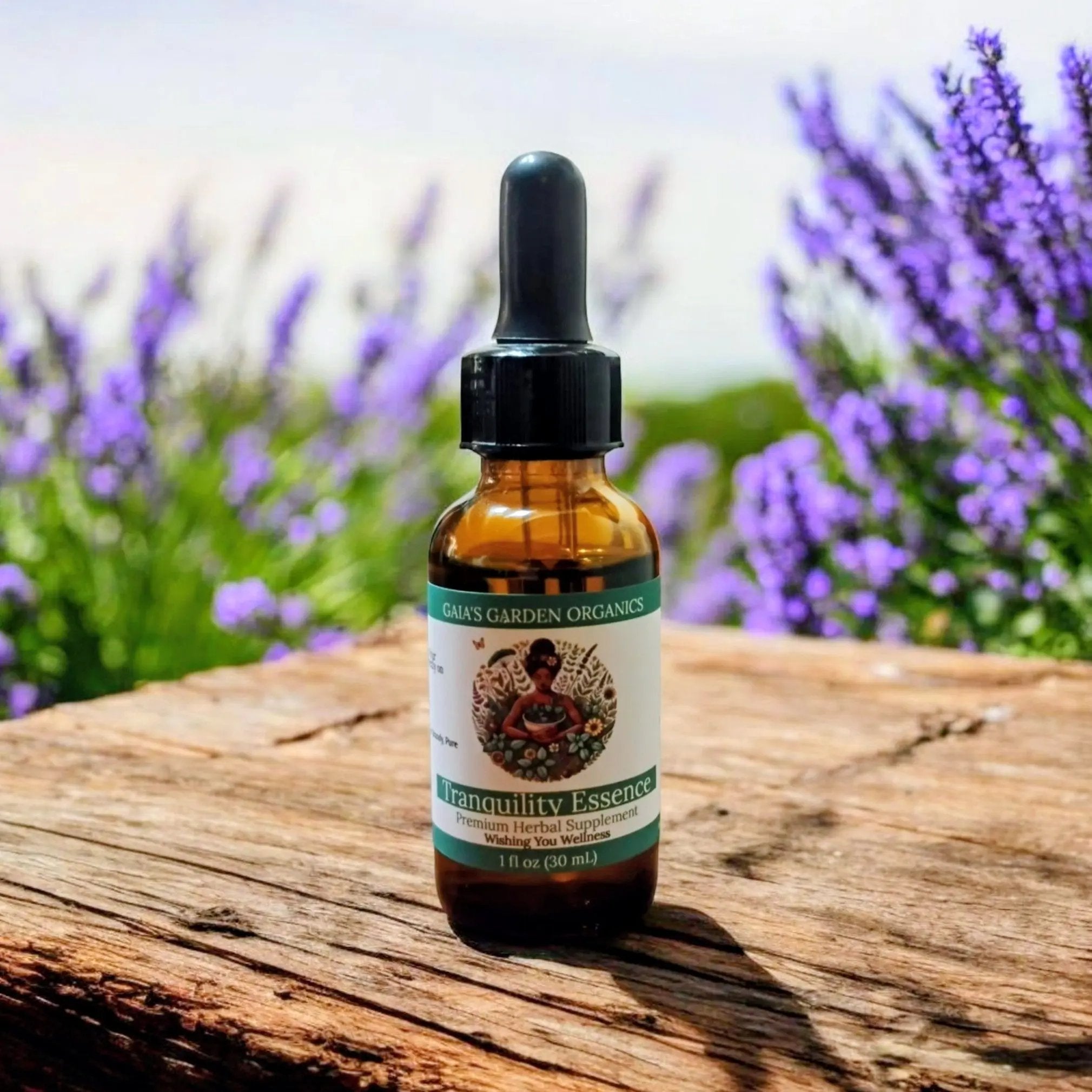
Tranquility Essence - Organic Lavender Flower Essence
for stress & anxious hearts
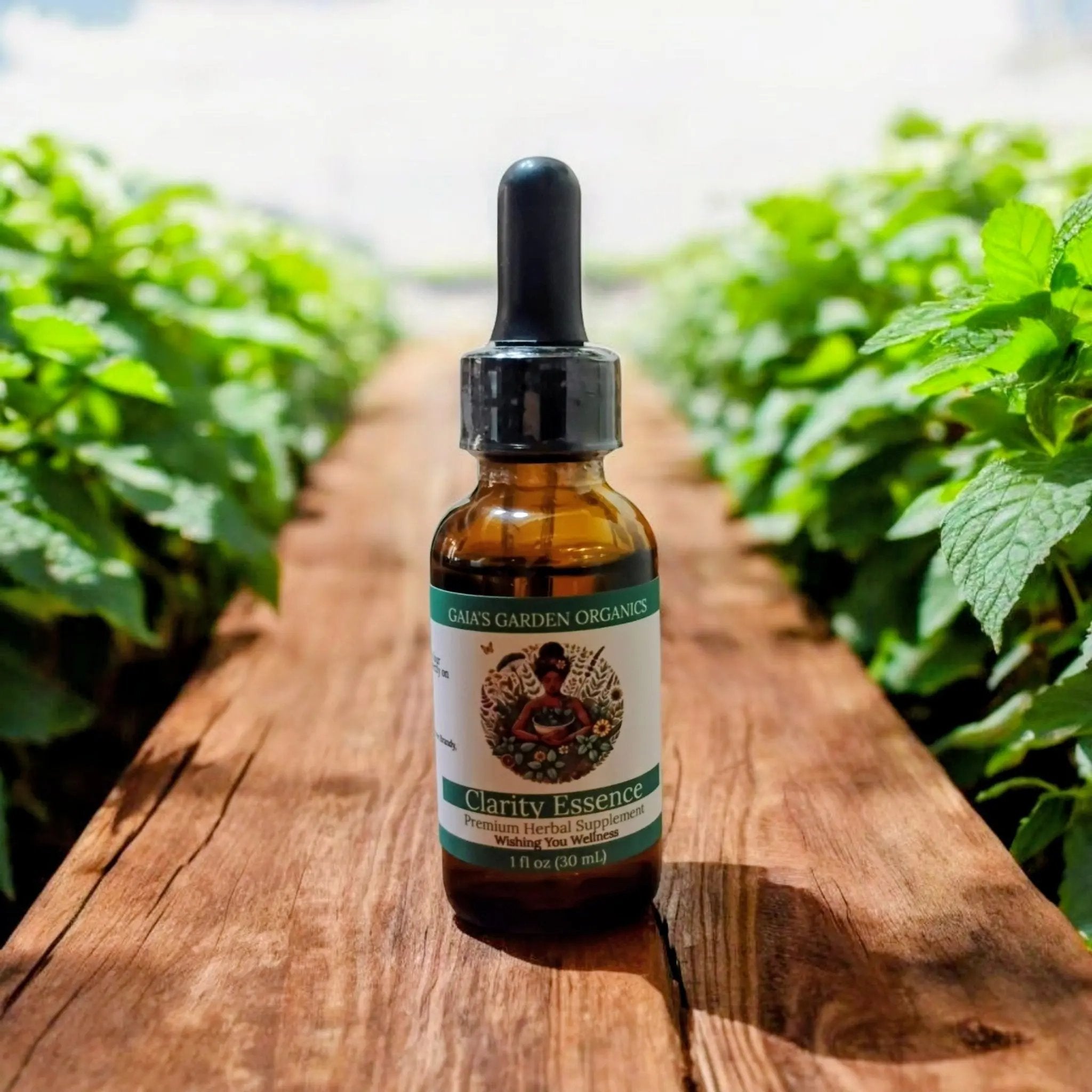
Clarity Essence - Organic Peppermint Flower Essence
for focus & mental alertness
 Bestseller
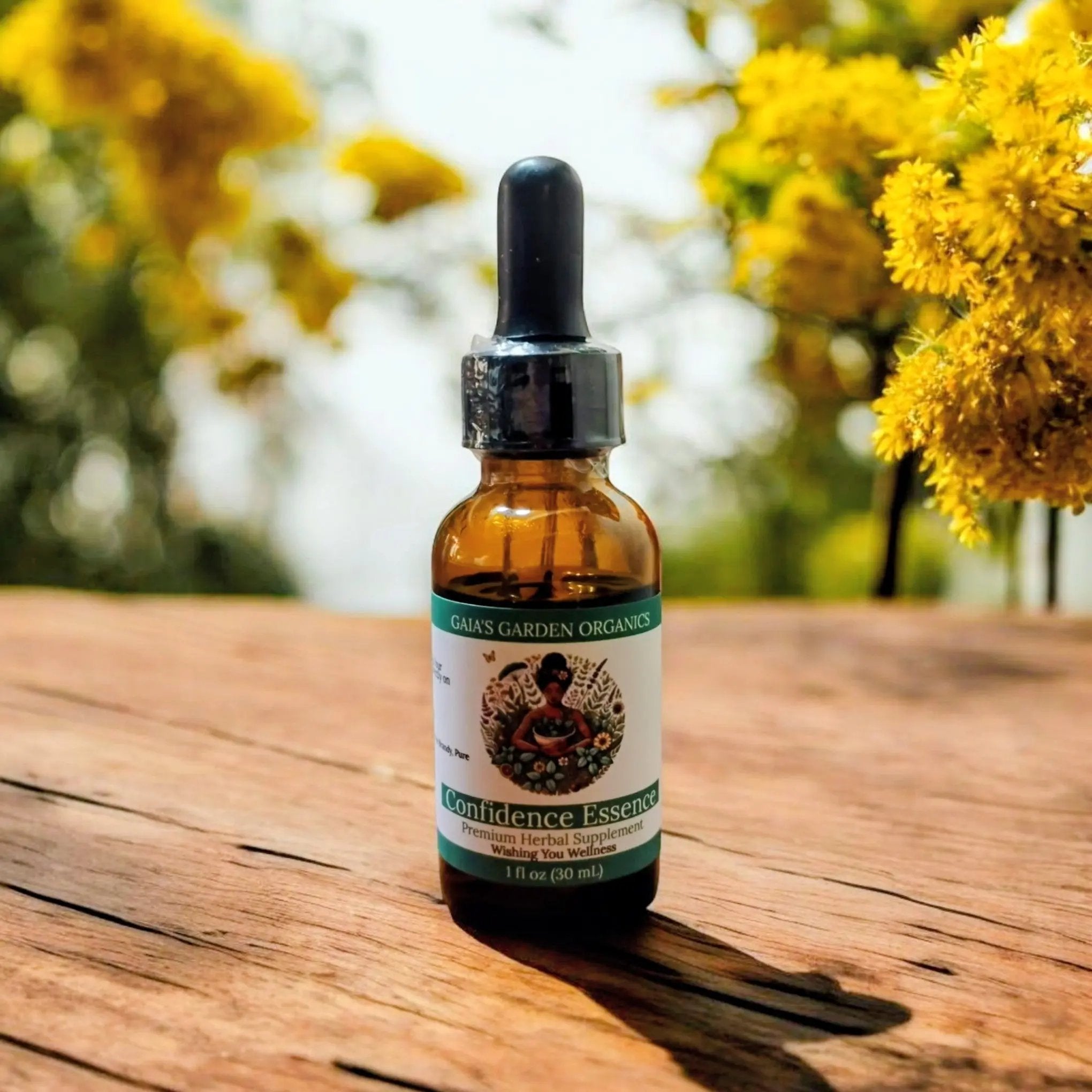
Confidence Essence - Organic Goldenrod Flower Essence
for courage & self-assurance
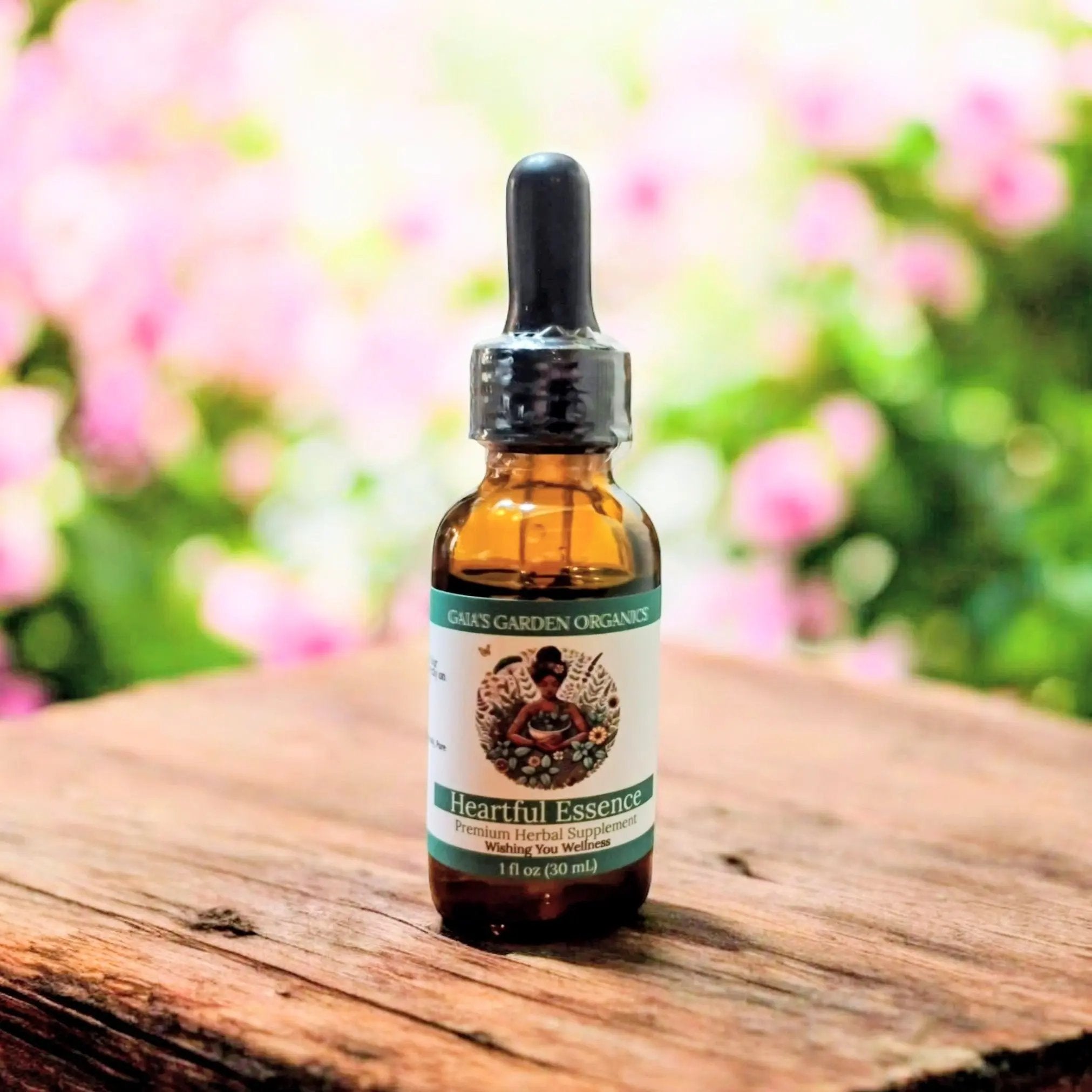
Heartful Essence - Organic Rose Flower Essence
for grief & heart-opening
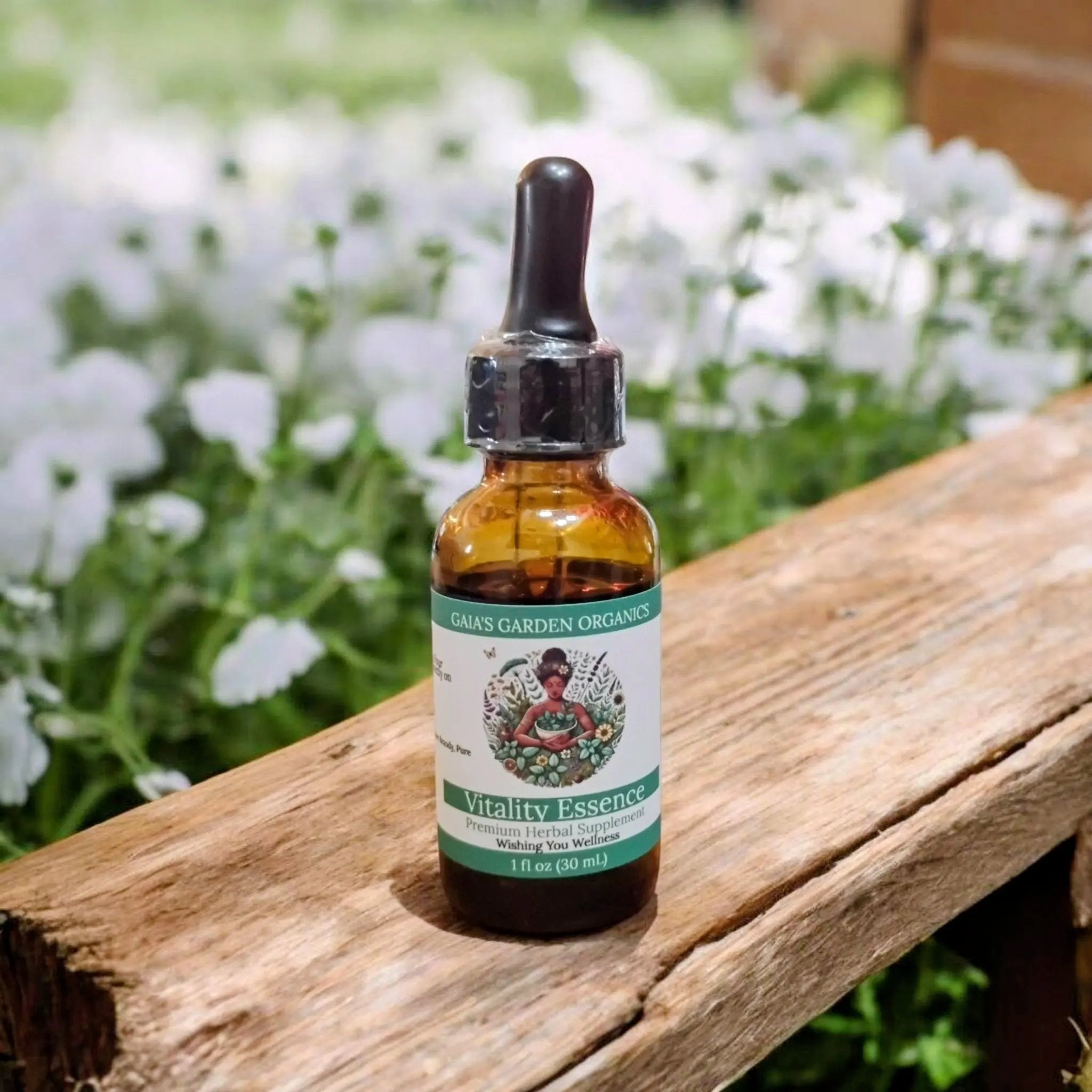
Vitality Essence - Organic Spearmint Flower Essence
for energy & renewed lightness
Explore our apothecary
Learn more
Flower Essences 101
A clinical herbalist's plain-English guide to what flower essences are and how to take them.
Find your match
Browse the Free Practice Library
8 pattern-matched archetype entry points (sleep, anxiety, tension, heart, inner quiet, clarity, boundary, spark), each as a 5-question quiz, a 3-day mini-course, or a one-tap interactive tool.
Shop the apothecary
The 5-Essence Starter Cabinet
All 5 essences bundled at 20% off, the full emotional toolkit.
Sources & further reading
Authoritative references consulted in writing this article. Open in a new tab.
- The Bach CentreWhat are the sun and boiling methods?
- The Bach CentreHistory of the Bach Flower Remedies
- Bach FlowerAn Overview of the Bach Flower Essences
- Chestnut School of Herbal MedicineFlowering Herbs (article archive)
- NCCIHDietary and Herbal Supplements