In this article (11)▾
Most bedtime teas in the wellness aisle are pleasant, gentle, and underdosed. Five or six herbs in a single tea bag at culinary sprinkle amounts adds up to "vaguely relaxing" instead of "the cup actually helps me sleep." For a sleep-anxious adult, that distinction matters.
This guide is about what a clinically dosed bedtime tea actually contains, why these four herbs in particular, and the wind-down ritual that makes the tea work as part of an evening protocol rather than as a single hopeful sip.
If you want the foundation under this bedtime cup, my guide to how herbal tea helps you sleep covers it.
What sleep tea is actually doing
A bedtime tea works in two ways at once. The first is pharmacological: the herbs contain real compounds, including the alkaloids in passionflower that act on the GABA system, the main inhibitory neurotransmitter network. The second is ritual: the act of stopping, brewing, holding a warm cup, and sipping slowly is a parasympathetic-nervous-system cue. Both layers matter.
This is why a strong dose of dried herb in a French press at 8pm with a 5-minute sit-down does more than a tea bag steeped in 90 seconds while standing in front of the dishwasher.
The four herbs that earn the bedtime spot
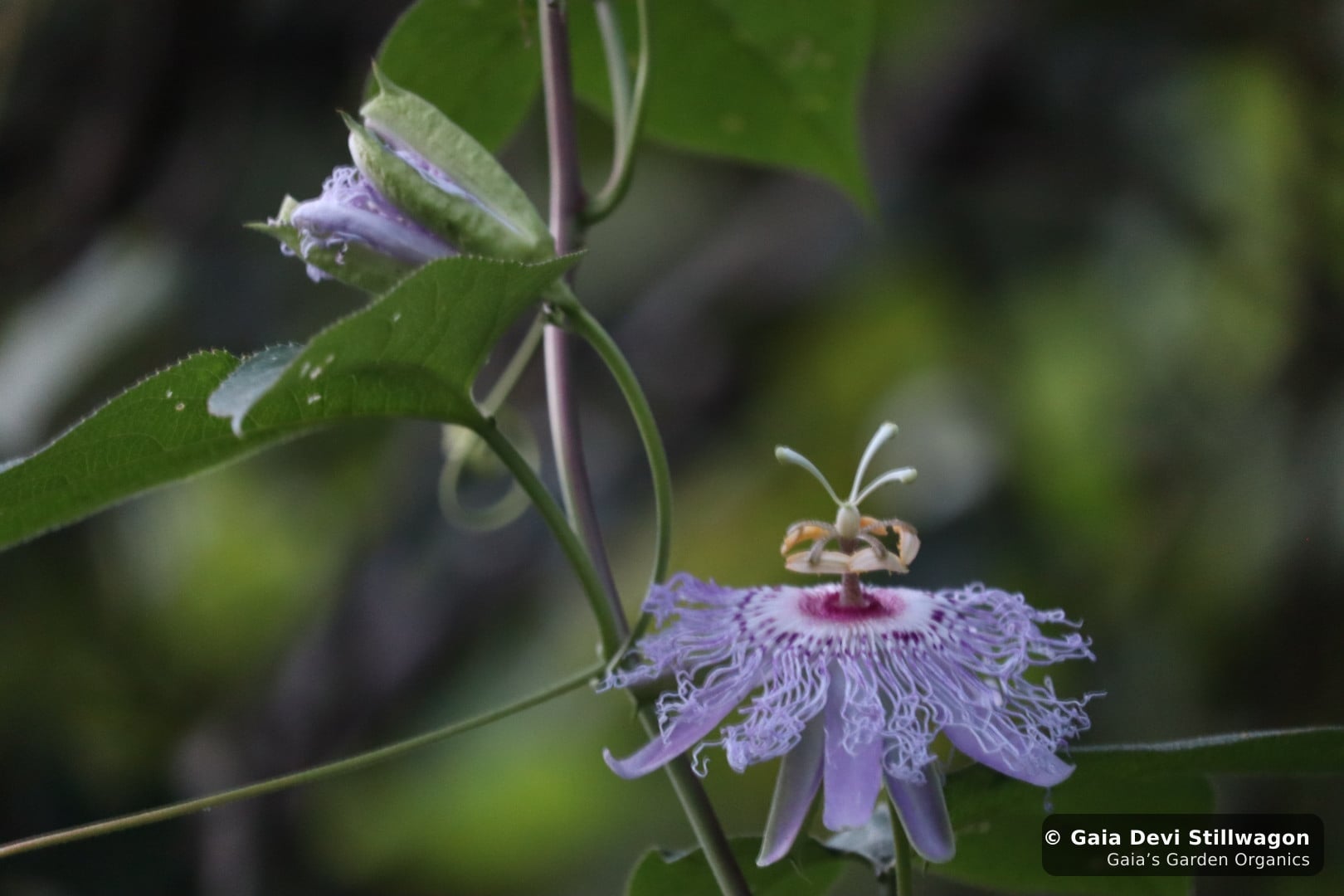
Passionflower (Passiflora incarnata)
The racing-thoughts herb. American eclectic tradition used it for "the thinking person's nervine." A 2001 randomized double-blind trial (Akhondzadeh et al.) compared passionflower to oxazepam (a benzodiazepine) for generalized anxiety; results were comparable for anxiety reduction with significantly fewer side effects.
What passionflower does in sleep tea: quiets the looping commentary that keeps you awake. The thoughts pass through instead of camping.
Ashwagandha (Withania somnifera)
The baseline herb. Ashwagandha is the revered Ayurvedic adaptogen, traditionally used to build resilience to everyday stress so the nervous system stops running on overdrive. A randomized double-blind placebo-controlled study of a full-spectrum ashwagandha root extract found significant reductions in stress and anxiety measures in adults (Chandrasekhar et al., 2012).
What ashwagandha does in sleep tea: it is the only one of the four that works on the underneath rather than the moment. It lowers the activation you arrive at bedtime carrying, which is a different job than helping you fall asleep tonight.
Tulsi (Ocimum tenuiflorum)
Holy Basil, Ayurveda's "queen of herbs." Traditionally used to support a grounded, centered response to stress. It is the second adaptogenic layer alongside ashwagandha, and it carries the faintly clove-like aromatic that makes the cup smell like an evening rather than a medicine.
What tulsi does in sleep tea: steadies rather than sedates. It is why this blend is drinkable in a stressful afternoon as well as at bedtime.
Rose (Rosa spp.)
The heart-opening nervine. Rose adds natural sweetness plus emotional softening for the end of a hard day. In the classical Western record it is the herb for the chest that has been braced, and in this blend it is the layer that meets the feeling underneath the sleeplessness rather than the sleeplessness itself.
What rose does in sleep tea: gentle emotional softening with no morning grogginess, plus the flavor that keeps the blend palatable without sweetener.
Why these four and not the usual ten
Generic sleep blends include valerian, hops, skullcap, magnolia, chamomile, and others in a single tea bag. The result: each herb is dosed at a few hundred milligrams, well below the threshold where it does its specific job. The tea tastes complex and feels gently warming but does not actually move the sleep needle.
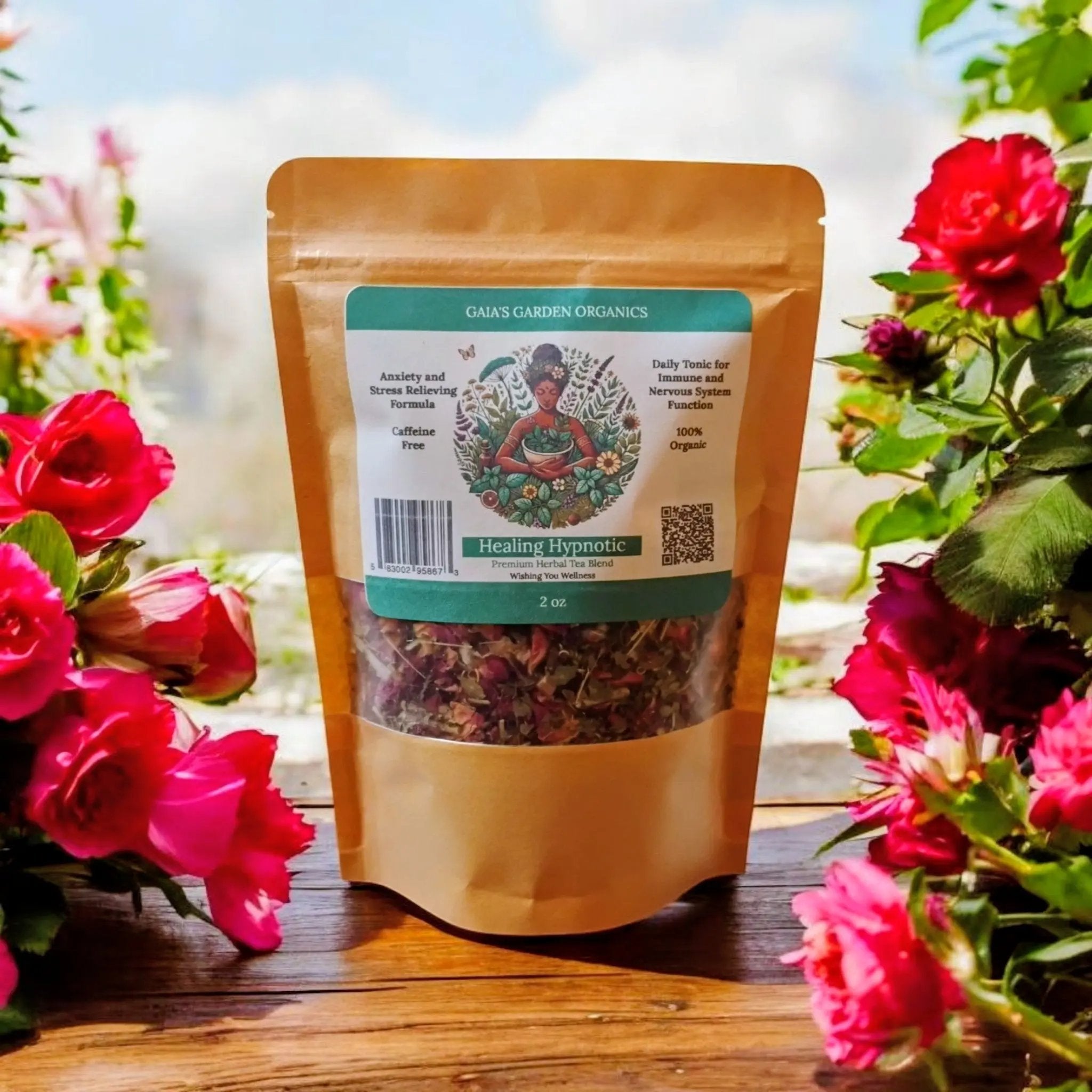
Our Healing Hypnotic Herbal Tea doses passionflower, ashwagandha, tulsi, and rose at clinically meaningful levels. One acute nervine, two adaptogens, one emotional-layer nervine. Four herbs, four jobs, no filler.
The evening tea ritual
- 90 minutes before bed: Lights down to one warm lamp. Phone parked outside the bedroom.
- 60 minutes before bed: Brew the tea. Two teaspoons of blend, hot water just off the boil, covered, 10-minute steep. The cover is not optional; it keeps the volatile oils in.
- 45 minutes before bed: Sit with the cup. Do not multitask. The 10 minutes you spend sipping is part of the medicine.
- 30 minutes before bed: Body in bed. Cool room (65-68 degrees). The cup has lowered the activation, the room temperature does the rest.
What you'll notice across 14 nights
- Night 1-3: The wind-down hour starts feeling different. The mental loop softens around the 20-minute mark after the cup. Sleep onset may or may not improve yet.
- Night 4-7: The body recognizes the rhythm. Onset is faster. 2-3am wake-ups still happen but resolve more quickly.
- Week 2: Through-the-night sleep on more nights than not. The ritual is the anchor; the tea supports the ritual.
Tea vs. tincture for sleep
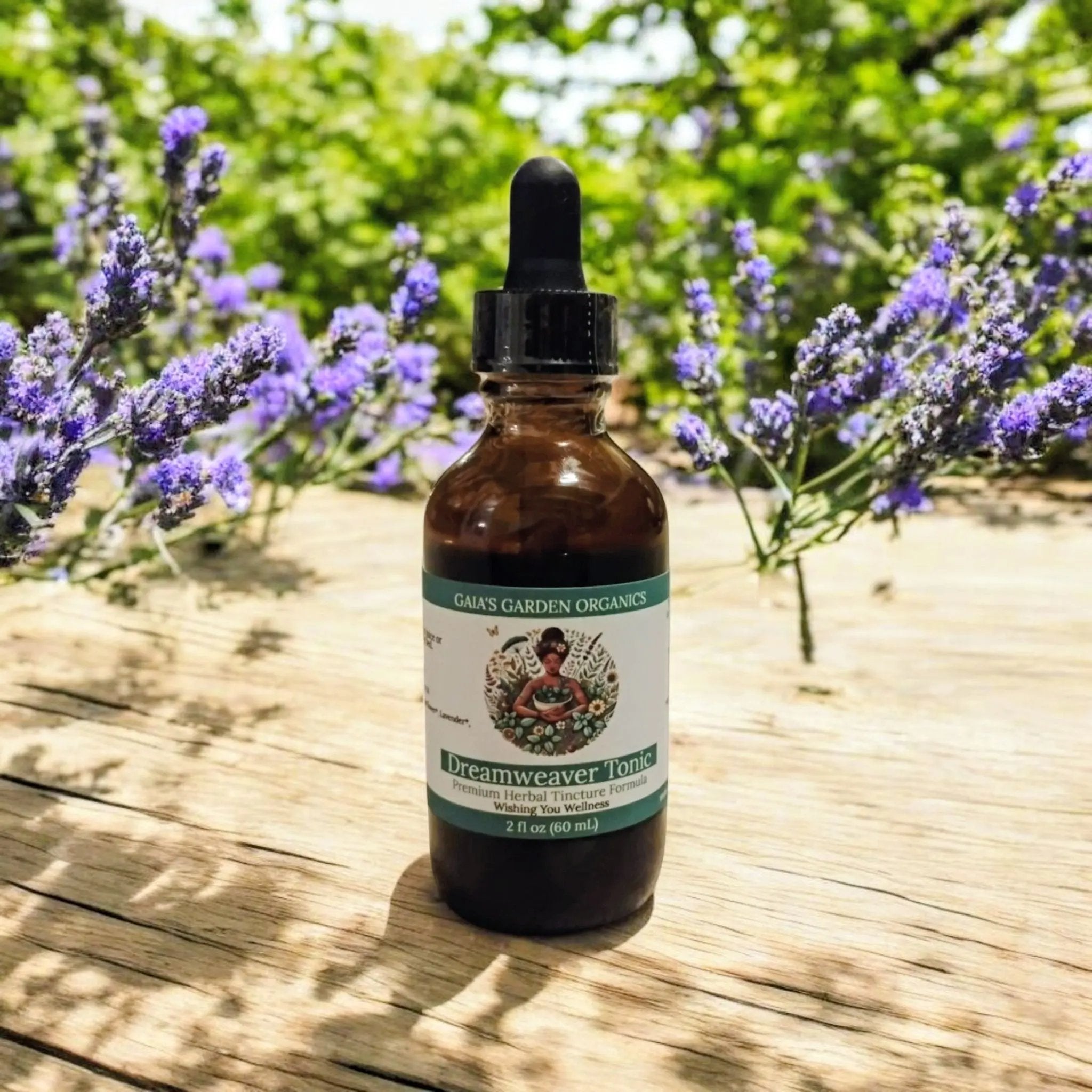
The tea is the daily ritual and gentle baseline support. The tincture (Dreamweaver Tonic, skullcap + passionflower + lavender in organic alcohol) is the stronger acute tool for nights when the racing mind is loud. Most clients use both: the tea every evening as the wind-down cue, the tincture on the harder nights.
Where to go from here
- Step 1 (free): The 7-Night Sleep Reset PDF. Get the protocol.
- Step 2 (30-night guarantee): Healing Hypnotic Herbal Tea as the daily evening cup. Pair with Dreamweaver Tonic for the harder nights, the tincture works on the same pattern with deeper effect. The 30-Day Calm Reset Kit bundles both with Tranquility Essence.
- Step 3 (coming soon): Harmony Within, my Yoga Nidra book.
This guide is general sleep-wellness education and is not a substitute for medical care. If sleep loss is tied to a clinical condition (sleep apnea, restless legs, chronic insomnia, depression, chronic pain), please work with a sleep specialist or physician.
Products from this article
Handcrafted in Umpire, Arkansas by Gaia Devi, clinical herbalist.
Explore our apothecary
Learn more
Flower Essences 101
A clinical herbalist's plain-English guide to what flower essences are and how to take them.
Find your match
The Sleep-Type Quiz
5-question clinical-herbalist diagnostic that names your sleep archetype and matches an evening practice + plant pairing.
Shop the apothecary
Medicinal Herbal Teas
Loose-leaf, clinical-herbalist-blended teas, each built around a specific job.
Sources & further reading
Authoritative references consulted in writing this article. Open in a new tab.
- PubMed (Amsterdam et al., 2009)A randomized, double-blind, placebo-controlled trial of oral Matricaria recutita (chamomile) extract therapy for generalized anxiety disorder
- PubMed (Akhondzadeh et al., 2001)Passionflower in the treatment of generalized anxiety: a pilot double-blind randomized controlled trial with oxazepam
- PubMed (Brock et al., 2014)American Skullcap (Scutellaria lateriflora): a randomised, double-blind placebo-controlled crossover study of its effects on mood in healthy volunteers
- PubMed (Chandrasekhar et al., 2012)A prospective, randomized double-blind, placebo-controlled study of safety and efficacy of a high-concentration full-spectrum extract of ashwagandha root in reducing stress and anxiety in adults
- Chestnut School of Herbal MedicineFlowering Herbs (article archive)