In this article (9)▾
Bloating after meals. Reflux at bedtime. Constipation. Loose stools. Burning, cramping, the diagnoses that come back "irritable bowel" with no specific cause. The gut is one of the most-presented complaints in clinical herbalism, and the herbs that actually help cluster around a small group of well-evidenced allies.
This guide is the four-herb framework I formulate for daily gut support and where each herb earns its place.
If tea is new territory for you, my primer on how herbal teas work for digestion is the best starting point.
The three gut patterns
Most non-medical gut symptoms map onto one of three patterns. Matching the herb to the pattern is the difference between "vaguely soothing" and "the tea actually helps."
- Inflammatory gut: Burning, reflux, gastritis, ulcer-pattern. The mucous membrane lining is inflamed or irritated.
- Functional gut (IBS-pattern): Cramping, alternating bowel patterns, bloating tied to stress. The motor and nervous-system layer is dysregulated.
- Sluggish gut: Constipation, fullness, poor digestion of certain foods. The motility and bile flow is reduced.
The four-herb daily blend
Marshmallow Root (Althaea officinalis)
The mucous-membrane demulcent. Coats and soothes the gut lining, supports gut-wall integrity over weeks. Right for the inflammatory pattern (gastritis, reflux, ulcer-history). Slow herb; effects compound across months.
Lemon Balm (Melissa officinalis)
The gut-brain-axis nervine. Lemon balm addresses the stress component that drives much of functional gut symptoms (IBS-pattern bloating, stress-triggered cramping). Gentle, daily-safe.
Ginger (Zingiber officinale)
The motility and circulation herb. Daily ginger supports gastric emptying, bile flow, and overall digestive movement. Helpful across all three patterns; particularly useful for the sluggish-gut pattern.
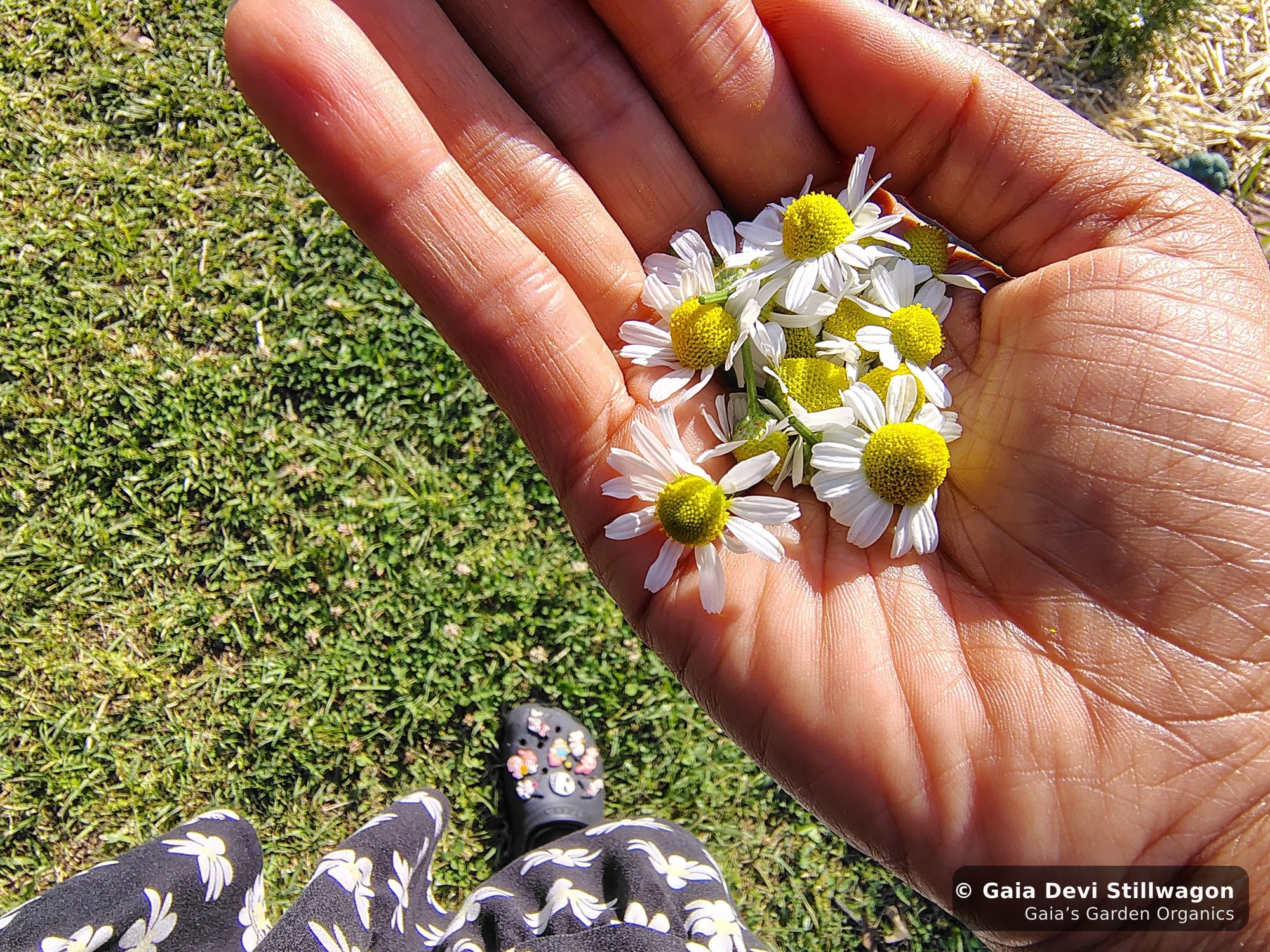
Chamomile (Matricaria recutita)
The anti-inflammatory and gut-spasm herb. The Amsterdam 2009 RCT on chamomile for generalized anxiety also demonstrated digestive benefits in the same population. For the cramping, stress-tied gut symptoms, chamomile is a foundational ally.
The daily ritual
- One mug, ideally between meals (mid-morning or mid-afternoon). Drinking with food can dilute digestive acids; between-meal timing supports without diluting.
- Two teaspoons of blend, hot water just off the boil, covered for 8-10 minutes.
- Daily for 4-6 weeks for the baseline shift; effects build cumulatively.
- For acute reflux: extra cup at bedtime, sipped slowly, with a small amount of honey if you tolerate.
What this is not for
- Inflammatory bowel disease (Crohn's, ulcerative colitis). The tea is supportive only; primary care is gastroenterological.
- Celiac disease or food allergies. Identification and elimination of the trigger is the primary work.
- Severe reflux unresponsive to lifestyle and herbal support. A gastroenterologist workup is appropriate.
- Sudden severe abdominal pain. Seek medical care; do not self-treat with tea.
Where to go from here
- Step 1 (free): Match your essence in 7 questions. Take the essence quiz.
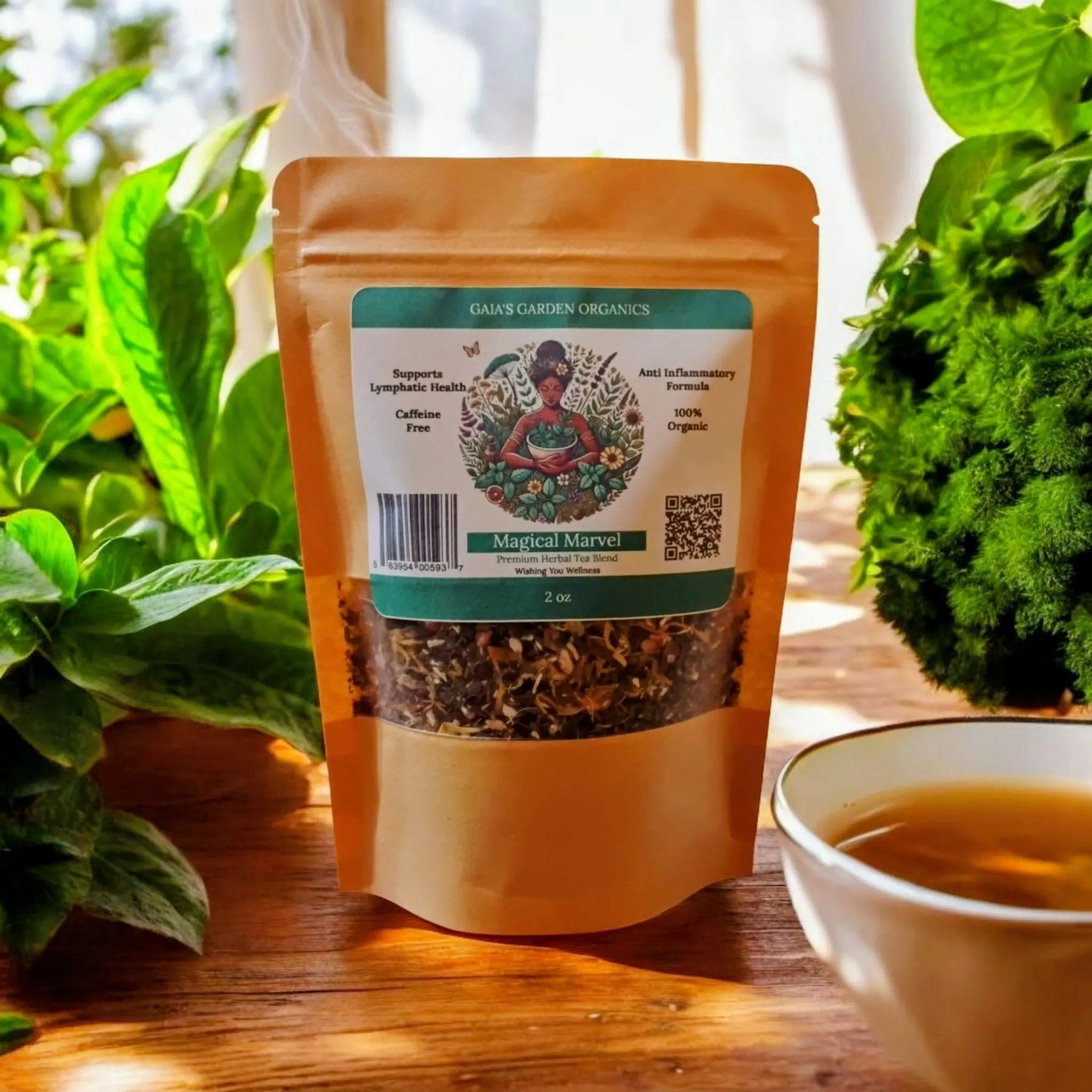
- Step 2 (30-night guarantee): Magical Marvel Tea carries three of the four herbs above: marshmallow root for the demulcent layer, lemon balm for the stress-gut layer, and spearmint for the settling layer, alongside calendula and hibiscus. One cup daily is the practical version of this protocol. If you want the chamomile and ginger layers too, brew them as a simple second cup rather than looking for them in a blend of mine, because they are not in one.
- Step 3 (coming soon): Harmony Within, my Yoga Nidra book.
This guide is general digestive-wellness education. Persistent or severe gut symptoms need medical evaluation.
Products from this article
Handcrafted in Umpire, Arkansas by Gaia Devi, clinical herbalist.
Explore our apothecary
Learn more
Flower Essences 101
A clinical herbalist's plain-English guide to what flower essences are and how to take them.
Find your match
Browse the Free Practice Library
8 pattern-matched archetype entry points (sleep, anxiety, tension, heart, inner quiet, clarity, boundary, spark), each as a 5-question quiz, a 3-day mini-course, or a one-tap interactive tool.
Shop the apothecary
Medicinal Herbal Teas
Loose-leaf, clinical-herbalist-blended teas, each built around a specific job.
Sources & further reading
Authoritative references consulted in writing this article. Open in a new tab.
- PubMed (meta-analysis, 2019)The impact of peppermint oil on the irritable bowel syndrome: a meta-analysis of the pooled clinical data
- PubMed (systematic review, 2022)Systematic review and meta-analysis: efficacy of peppermint oil in irritable bowel syndrome
- NCCIHHerbs at a Glance (per-herb safety and evidence)
- Chestnut School of Herbal MedicineFlowering Herbs (article archive)