In this article (12)▾
You finish a hard workout. The next day your shoulders are around your ears. Your jaw is sore from clenching through deadlifts. Your low back is tight in a way that feels less like injury and more like braced. The standard response is ibuprofen, magnesium, or just pushing through. None of those address what is actually happening.
Most post-workout soreness has two layers. One is genuine muscle fatigue (microscopic tears in the muscle fiber, which adapt and grow back stronger). The other is nervous-system bracing (the body holding on, all day, because it learned to). The fatigue layer self-resolves in 48-72 hours. The bracing layer keeps building. Day after day, week after week, year after year.
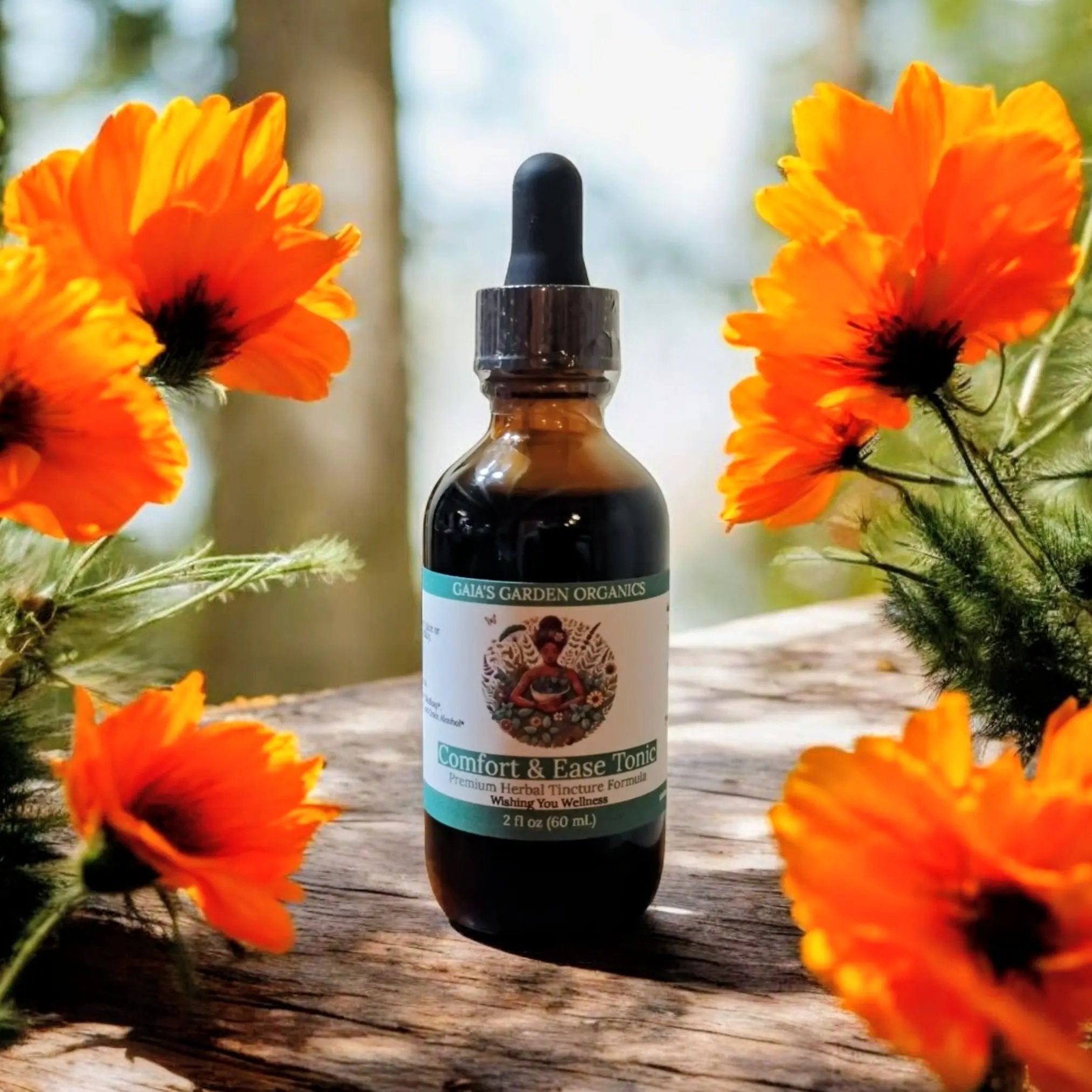
If your soreness pattern is mostly the bracing layer (jaw clench, shoulders-to-ears, tension headaches, low-back stress holding), the herb you actually want is not an anti-inflammatory. It is a nervine. Comfort Ease Tonic is the formula I built for exactly this pattern.
The two kinds of soreness
Knowing which layer your pain is in determines what helps it.
Injury-pattern pain
Localized to the muscle group you trained hardest. Sharp on movement, dull at rest. Resolves on its own in 2-3 days. Responds to ice, gentle stretching, and basic recovery (sleep, hydration, protein). Anti-inflammatories work for this; they just also have a price tag (gut lining, cardiovascular risk on chronic use). Magnesium helps. Cold plunges help.
Tension-pattern pain
Diffuse, not localized to the trained muscle. Worse at rest than during activity. Doesn't resolve in 72 hours; just shifts to a different muscle group. Includes jaw clench, shoulder bracing, low-back holding, tension headaches by 2pm. The pain is real but the cause is not tissue injury; it is the nervous system signaling the muscles to brace, all day, every day.
This is the kind of soreness ibuprofen masks but doesn't fix. The herb that addresses it directly is one that works on the nervous-system signal, not the muscle.
What's in Comfort Ease Tonic
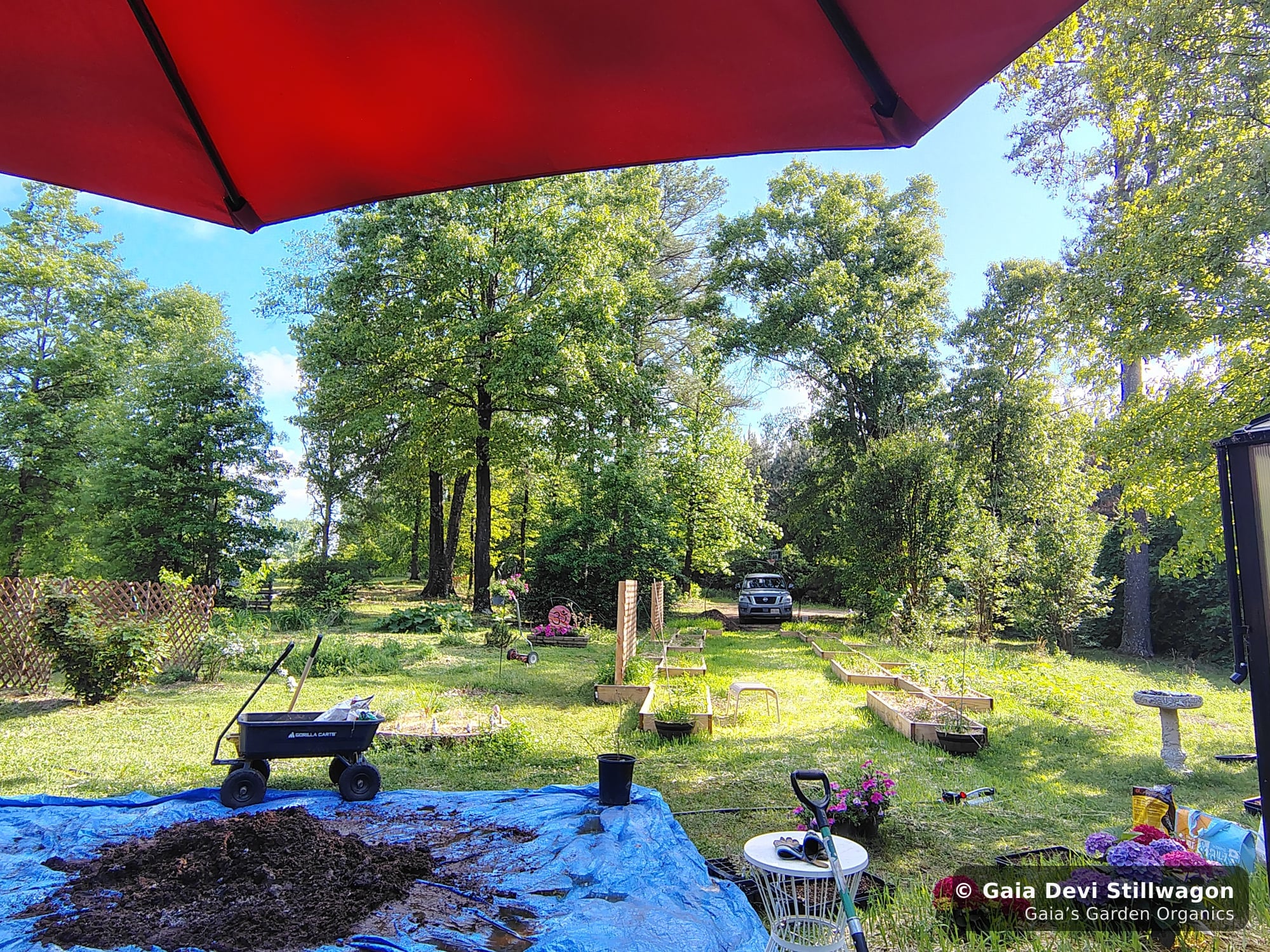
Two herbs. California Poppy and Skullcap. Both clinical-grade weight-to-volume extraction in organic alcohol. Sourced from our medicine garden in Umpire, Arkansas.
California Poppy (Eschscholzia californica)
California Poppy is in the same plant family as the opium poppy but it is non-narcotic and non-habit-forming. Traditional Native American medicine used it for muscle tension and sleep, and modern clinical herbalism uses it for the specific intersection of pain and tension, the kind of holding that lives in muscle but is generated by the nervous system.
What California Poppy does in the formula: it softens the held places. Not by numbing pain (that's what ibuprofen does). By telling the nervous system the held place is allowed to release. The body unclenches because it stopped getting the signal to stay clenched.
Skullcap (Scutellaria lateriflora)
Skullcap is a classic American eclectic nervine, used for over two centuries for "twitchy, tension-filled nervous systems." It is the herb for the muscle tension that lives alongside mental stress. Your shoulders are tight because your nervous system is wired; Skullcap unwires the system, and the shoulders drop on their own.
What Skullcap does in the formula: it removes the nervous-system signal that has the muscles bracing. California Poppy works on the muscle end; Skullcap works on the nervous-system end. Together they handle the full pattern.
Why this pair, and why no anti-inflammatory herbs
The formula intentionally does not include turmeric, ginger, or boswellia. Those are excellent anti-inflammatory herbs, but they target the injury-pattern layer of soreness. For the tension-pattern audience, they don't address the actual problem.
Two herbs at clinical strength, each doing a specific job, work better than five herbs sub-therapeutically dosed in a generic "recovery blend." That is our formulation philosophy across the whole apothecary.
How to use Comfort Ease Tonic
- Post-workout (the classic use): 1-2 droppersful in water within 30 minutes of finishing. The body's bracing pattern kicks in during the cool-down; catching it early prevents the next-day soreness from being mostly tension.
- Before bed: 1-2 droppersful 30 minutes before bed for overnight recovery. The muscles release into the parasympathetic state sleep produces.
- During a flare: 1 dropperful as needed for active tension (jaw locking, shoulder pulled to ear, tension headache). Effects begin in 20-30 minutes.
- Daily for chronic patterns: 1-2 droppersful, 2-3 times daily, for 2-4 weeks. The body unlearns the chronic bracing pattern over weeks.
What to expect
Within 20-30 minutes of a dose: the jaw unclenches, the shoulders drop one notch, the breath deepens on its own. Within a week of consistent daily use: the chronic tension headache that used to hit by 2pm is shorter and milder. Within 30 days: the chronic holding pattern softens noticeably.
This is not pain numbing. You will still feel the genuine muscle fatigue from a hard workout (that's the injury-pattern layer, which is doing useful adaptive work). What softens is the bracing layer, which was holding above and beyond the actual workout demand.
What this is not for
Comfort Ease is built for the tension-pattern body. It is not formulated for:
- Chronic injury pain (rotator cuff tear, herniated disc, plantar fasciitis).
- Arthritis or autoimmune joint pain.
- Acute injury (sprained ankle, pulled hamstring).
- Post-surgical pain.
- Pain from a specific medical diagnosis.
For those patterns, please work with a physical therapist, sports medicine physician, or pain specialist. The wrong formula for the wrong pattern is a waste of money, and our 30-night guarantee covers it (we will refund and recommend a better path).
The deeper work
The tincture supports the body. The protocol teaches the body.
The 7-Day Tension Release is our free clinical-herbalist guide for the tension-pattern body. Seven days, seven small releases: the jaw release (tongue position + shower release), the shoulders (doorframe hang), the low back (psoas release), the directed long-exhale breath, the daily 10-minute walk, the evening bath with Comfort Ease Tonic, and integration. Most clients who pair the tincture with the protocol report measurable change in the chronic tension pattern within 30 days.
Where to go from here
- Step 1 (free): The 7-Day Tension Release PDF. Get the protocol.
- Step 2 (30-night guarantee): Comfort Ease Tonic, 1-2 droppersful post-workout or before bed. Comfort Ease Tonic. If night-time clenching is part of your pattern, pair with Dreamweaver Tonic (Skullcap + Lavender, the matched bedtime formula). They share Skullcap as the base nervine.
- Step 3 (coming soon): Harmony Within, my Yoga Nidra book. Body-scan scripts that go deep on releasing held tension.
This guide is for general body-tension support and is not a substitute for medical care. If your pain is from chronic injury, arthritis, autoimmune disease, post-surgery, or a specific medical diagnosis, please work with a physical therapist or pain specialist.
Looking for the broader context on tinctures? Our pillar guide Herbal Tinctures 101 covers what tinctures are, how they're made, sublingual dosing, and how to choose between tinctures, teas, and flower essences.
Frequently asked
How is this different from ibuprofen?
Ibuprofen is an anti-inflammatory NSAID. It numbs the pain signal at the inflammation level. It works well for genuine injury-pattern pain but it doesn't address tension-pattern pain (the kind generated by nervous-system bracing, which is what most post-workout soreness in stressed-out adults actually is). Comfort Ease works upstream: California Poppy softens the muscle holding; Skullcap quiets the nervous system that's signaling the muscles to brace. The pain releases because the cause releases, not because the signal is masked. Also, no gut-lining or cardiovascular risk from chronic use.
Will I get high or feel sedated from California Poppy?
No. California Poppy is in the same plant family as the opium poppy but it is non-narcotic and non-habit-forming. It does not contain morphine, codeine, or any controlled substance. The gentle relaxation it produces is a nervous-system effect, not an opioid effect. It will not show on a drug test. Most people describe the effect as 'the held places softened,' not 'I feel high.'
Can I use this for chronic pain or arthritis?
Comfort Ease is not formulated for chronic injury pain, arthritis, autoimmune pain, post-surgical pain, or specific medical diagnoses. It is built narrowly for tension-pattern body holding (jaw clench, shoulders-to-ears, tension headaches, post-workout soreness driven by nervous-system bracing). For chronic pain that doesn't match that pattern, please work with a physical therapist, sports medicine physician, or pain specialist. Our 30-night guarantee covers any mismatch, if the formula doesn't fit your pain, we'll refund and help you find a better path.
How long does the effect last?
Acute relief lasts 3-4 hours per dose. Most clients take it 1-2 times daily during high-tension periods or post-workout, and 2-3 times daily for a week or two during chronic flares. The deeper baseline shift (where the body unlearns the chronic bracing pattern entirely) builds over 2-4 weeks of consistent daily use. After the baseline drops, many clients reduce to as-needed use.
Can I take it with prescription muscle relaxers?
Generally yes, but please consult your prescriber. California Poppy and Skullcap are both mild central-nervous-system relaxants, and stacking with prescription muscle relaxers (cyclobenzaprine, methocarbamol, baclofen) can cause additive sedation. Start with one dropperful to assess; if you feel impaired, reduce or skip the herbal dose that day. Many clients use Comfort Ease as a daily support while reducing their prescription muscle relaxer dose under medical supervision.
Products from this article
Handcrafted in Umpire, Arkansas by Gaia Devi, clinical herbalist.
Explore our apothecary
Learn more
Flower Essences 101
A clinical herbalist's plain-English guide to what flower essences are and how to take them.
Find your match
The Tension-Type Quiz
5-question clinical-herbalist diagnostic that names your held-tension archetype and matches a release practice + plant pairing.
Shop the apothecary
Herbal Tinctures
Clinical weight-to-volume tinctures for nervous-system, sleep, and recovery work.