In this article (12)▾
It is Sunday at 4 PM. The light is shifting. The afternoon has taken on that ending quality. You are still in the same sweater you put on at noon, the dishwasher is half-loaded, and the family is fine. Nothing is wrong. And yet your chest is tight. The stomach feels off in a low way. There is a quiet dread you cannot quite name.
The body is responding to Monday as if Monday were already happening. The unfinished email. The meeting with the boss. The school pickup logistics that did not get solved. The body does not know it is Sunday. It only knows the schedule it is bracing for, and it is bracing now.
What you have already tried
By now you have a Sunday-evening routine. A glass of wine while making dinner. A show your husband does not want to watch. Some scrolling. Maybe a walk if the weather is right. Maybe a bath. The routine softens the felt sense of the dread for an hour or two. It does not change what is happening underneath.
You have probably also tried the productive version. Meal-prep Sunday. Calendar review. Lay out the clothes. Pre-plan the lunches. That version sometimes helps with the practical anxiety. It does not touch the autonomic pattern, the body itself bracing. Often it makes it worse, because now Sunday afternoon is also a work shift.
And by Monday morning you are already tired, before you have done anything. The Sunday spend is real. You paid for Monday in advance.
The Frame Shift
Most people think the Sunday scaries are a thinking problem. Negative thoughts about Monday. Catastrophizing about the week. Bad mental habits to be corrected with gratitude journaling or a better mindset.
It is not a thinking problem. It is an autonomic problem with a thinking layer on top.
Here is what is actually happening in the body. The amygdala (the threat-detection part of the brain) is firing on a perceived future threat, the Monday workload, the unresolved conversation, the inbox. The HPA axis (the body's stress-hormone pathway) releases cortisol as if the threat were happening now. The parasympathetic ventral-vagal system, the "rest-and-connect" branch that should own Sunday afternoon, gets crowded out by the sympathetic surge. Your body is in mild fight-or-flight on a couch.
The reason gratitude journaling does not fix it is that the journaling addresses the thinking layer, while the cortisol spike is still happening underneath. The reason wine softens it temporarily is that alcohol blunts the felt sense without changing the autonomic state. You feel less of what is still happening. By 9 PM the wine has worn off and the dread comes back with worse sleep on top.
What actually shifts the cortisol spike
Three things shift it. A longer exhale than inhale. An adaptogen window that runs daily across weeks, not Sunday-only. And a body-level baseline support, not just a mental override.
Tulsi (Holy Basil), the daily adaptogen
Tulsi (Ocimum sanctum) has been used in Ayurvedic medicine for over 3,000 years as the rasayana for stress, the herb you take every day for the long arc. Modern clinical trials, including a 2022 review (Lopresti et al., on Holy Basil for stress and sleep), show measurable reductions in perceived stress and improvements in sleep quality with daily use over 6 to 8 weeks. This is the long-game support. It does not cure the Sunday scaries in one dose. It raises the floor on which Sunday lands, so the spike has less room to climb.
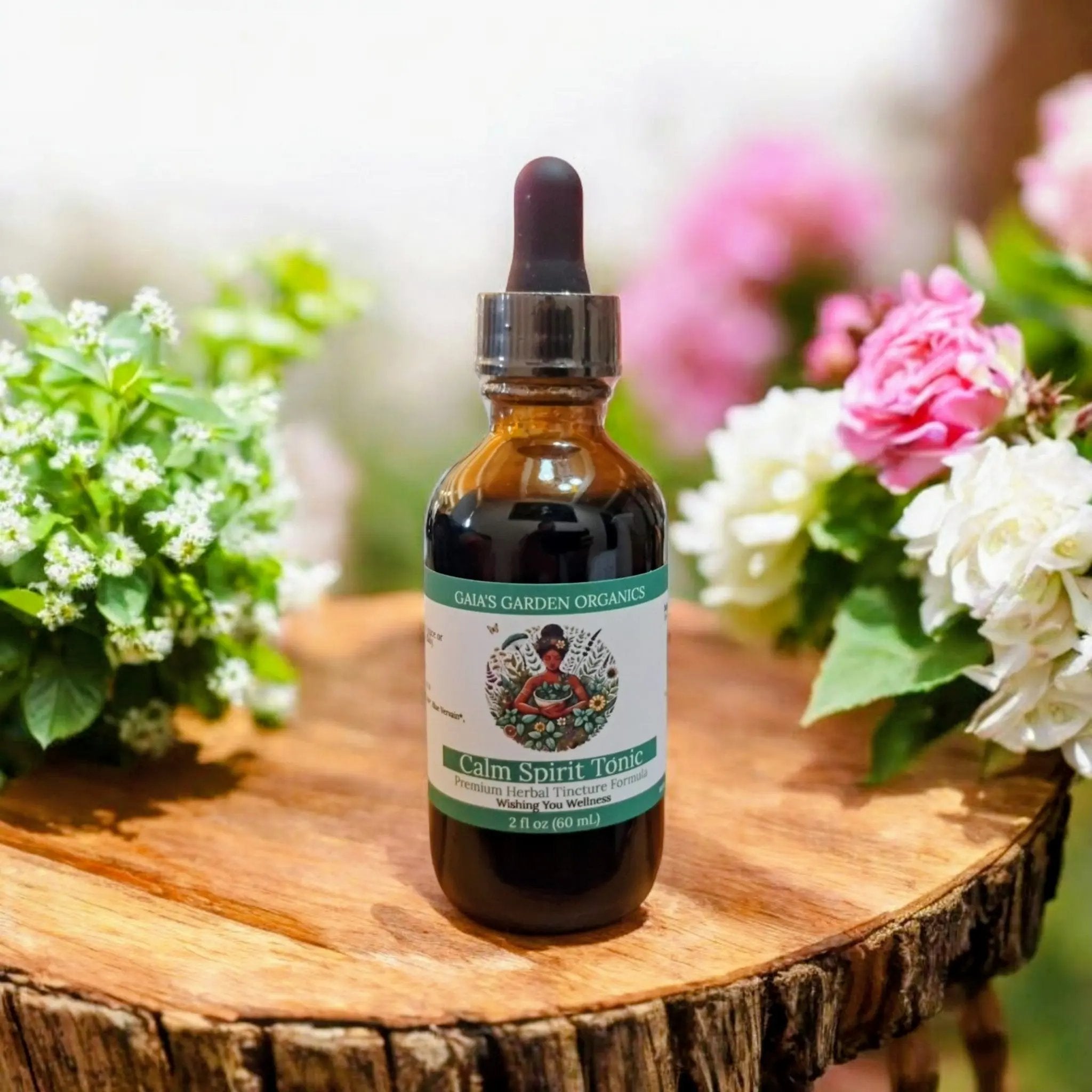
Tulsi is the lead herb in our Calm Spirit Tonic. The other three herbs (motherwort, blue vervain, rose) handle the acute spike layer.
Motherwort, the body-anxiety herb
Motherwort (Leonurus cardiaca) has been used in Western herbal medicine for centuries for the racing-heart, anxious-chest pattern. Restorative Medicine's monograph notes its traditional use for "nervous, anxious, hysterical conditions, especially those with palpitations." The Sunday scaries often live in the body as a tight chest and a low-grade chest flutter the rest of the family does not feel. Motherwort is the herb for that specific physiology.
It is in our Calm Spirit Tonic alongside the tulsi, dosed at clinical-strength weight-to-volume extraction calibrated per herb. Two droppersful 30 to 45 minutes before the dread typically starts is the way to use it. If your Sunday spike starts at 4 PM, the dose goes in at 3:15 PM.
Ashwagandha, the cortisol-curve herb
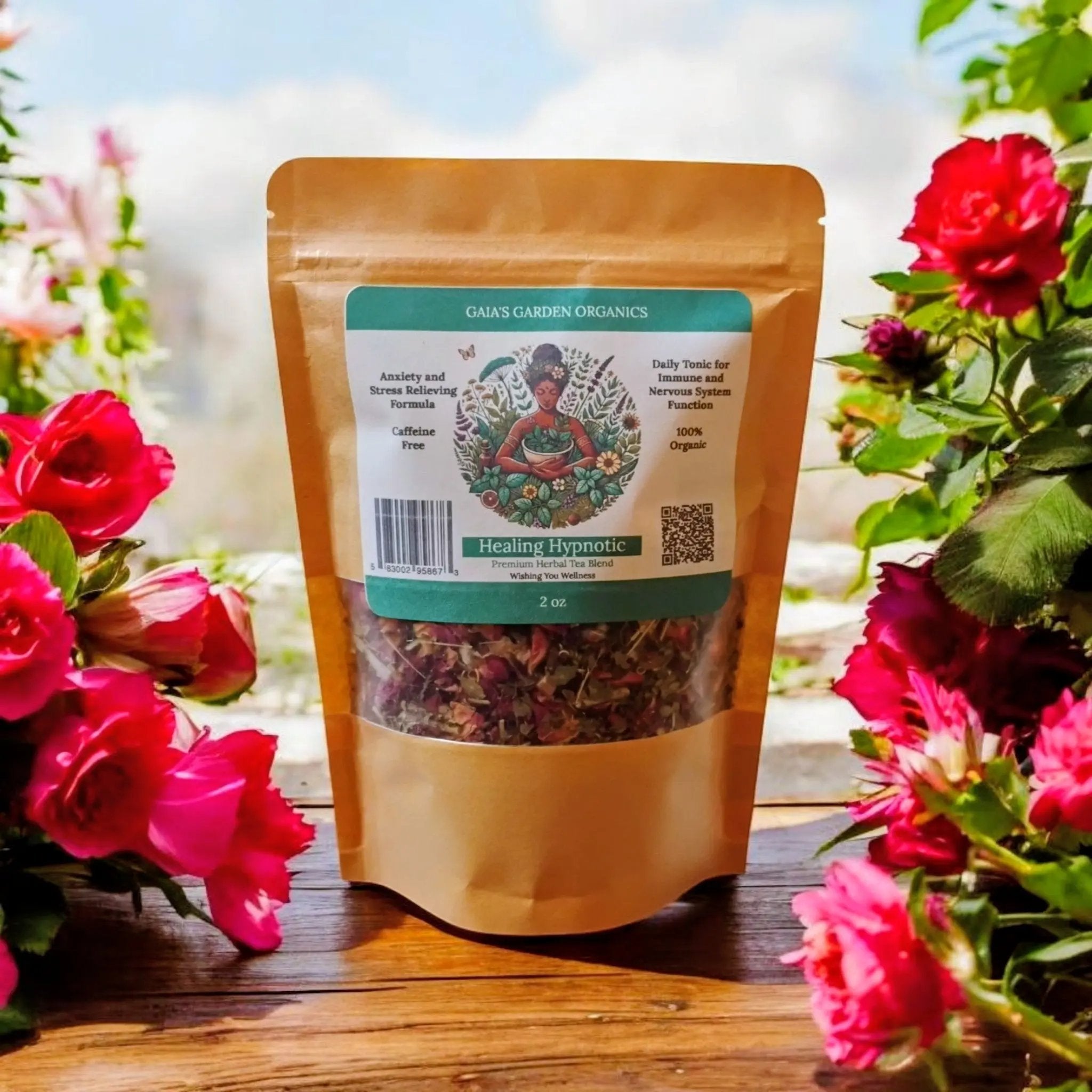
Ashwagandha (Withania somnifera) is the other major adaptogen with strong human trial evidence for stress. A 2021 meta-analysis (Lopresti et al.) found significant reductions in perceived stress and serum cortisol over 60 to 90 days of daily use. It is in our Healing Hypnotic Tea, paired with passionflower, tulsi, and rose, so the same cup of tea that supports your Sunday wind-down also feeds the cortisol-curve work that lowers the next-week scaries baseline.
The Sunday protocol, in three steps
This is the field protocol I give clients in clinic when the Sunday pattern is the presenting complaint. It is not a 7-day reset; it is the Sunday-shaped version of one.
Step 1: The Long-Exhale Breath, at 3 PM on Sunday
The Yoga Therapy practice is called Vishama Vritti (vee-SHAH-mah VRIH-tee), the unequal breath. You breathe in for four counts. You breathe out for eight counts. You do this for two minutes. That is the whole practice.
What it does, mechanistically: a prolonged exhale activates the vagus nerve, which is the body's primary parasympathetic pathway. A 2018 study (Komori et al.) and a 2022 systematic review (Laborde et al.) both show that slow breathing with extended exhales raises heart-rate variability and lowers sympathetic dominance within minutes. By 3:02 PM on Sunday, the autonomic state has shifted. The dread does not necessarily disappear, but the body has stopped bracing.
You can do this in the kitchen while the oven preheats. You can do it sitting in your car after the grocery run. It is portable. It is free. It works on the first try.
Step 2: The Sankalpa (SAHN-kahl-pah), on Sunday evening
Sankalpa is the Yoga Therapy practice of a single present-tense sentence that names what you are moving toward, not what you are bracing against. Not "I will get through this week." That keeps you in survival framing. Instead: "I am steady on Monday morning." Or "My week holds me." Or whatever lands for you, in your own words, written in your own handwriting on a piece of paper you keep near the bed.
You read it before sleep. You read it on Monday morning. The nervous system uses it as the anchor. Hormozi calls this "the flattering mirror": the practice is named for the symptom, and the practice itself is the offer.
Step 3: The daily baseline, Monday through Saturday
The Sunday spike is not really a Sunday problem. It is the felt edge of a weekly cortisol pattern that has been building since Monday. The daily baseline work is what makes Sunday afternoon land softer next week.
Calm Spirit Tonic, 1 to 2 droppersful in a little water, twice a day. Healing Hypnotic Tea, one cup in the evening. The 5-Day Spark Renewal protocol, one practice per day, ascending in commitment. By the second Sunday of running the protocol, most readers tell me the 4 PM dread is noticeably softer. By the fourth Sunday, the pattern starts unwinding itself.
Why this works
The Sunday scaries are a measurable phenomenon. Heart-rate variability data from wearables shows a consistent Sunday-evening dip in millions of users. The cortisol awakening response on Monday morning is elevated in office workers compared to weekend mornings. This is a real autonomic pattern, not a character flaw.
What shifts it is also measurable. The slow-breathing literature is one of the cleanest in herbal-adjacent medicine: extended-exhale breathing raises vagal tone within minutes (Komori et al., 2018; Laborde et al., 2022 SR&MA). The adaptogen literature on tulsi and ashwagandha shows reduced perceived stress and lowered cortisol with daily use over 6 to 12 weeks (Lopresti et al., 2021 and 2022). The motherwort tradition is older than the trial literature but has been the West's specific remedy for the racing-chest anxious heart for several hundred years.
So the protocol is not folk. It is the convergence of the autonomic-physiology research, the adaptogen-trial research, and the Yoga Therapy practice library Gaia teaches from. The pieces fit because they target the same dysregulation from three different angles.
One more thing worth naming. The reason the Sunday pattern is so common in adults right now is not that we are weaker than previous generations. The work environment is more cognitively demanding, the boundary between work and home is thinner, and the recovery time between weeks has shrunk. The body has not changed; the load has. The protocol assumes the load is not going away. The work is making the body able to absorb it on a more sustainable curve.
Where to go from here
- Step 1 (free): The 5-Day Spark Renewal PDF, a clinical-herbalist guide for the depleted, dreading body. Get the protocol.
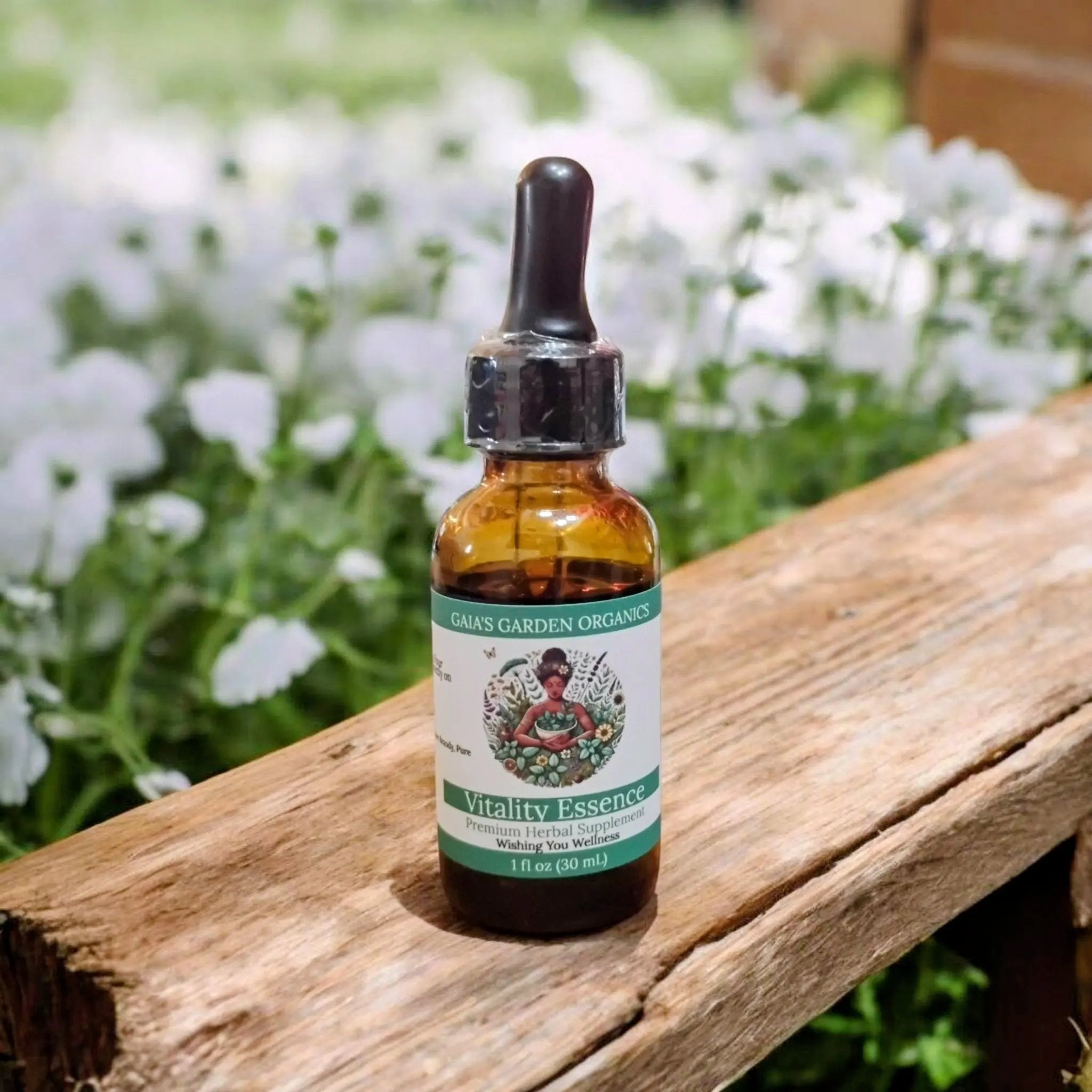
- Step 2 (30-night guarantee): Vitality Essence, the spearmint flower essence matched to the depleted-spark pattern. Vitality Essence. If the Sunday body-anxiety pattern is loud (racing chest, tight stomach), pair with Calm Spirit Tonic for the acute-spike layer, or with Healing Hypnotic Tea as the evening wind-down.
- Step 3 (coming soon): Harmony Within, Gaia's Yoga Nidra book. Thirty full guided scripts including a Sunday-evening reset session built on the Stairstep Breath and Sankalpa practices.
This guide is for general nervous-system support and is not a substitute for medical or psychological care. If your Sunday-evening pattern includes thoughts of self-harm, severe panic, or unmanageable anxiety, please work with a clinician as primary support.
Looking for the deeper context? Our pillar guide Herbal Tinctures 101 covers how tinctures are made, sublingual dosing, and how to choose between tinctures, teas, and flower essences for the everyday anxious pattern.
PS: A glass of wine on Sunday night is not the enemy. It softens the felt sense, and that is real relief. But it does not lower the cortisol spike, and it disrupts the deep sleep that would have set up Monday. The protocol gives you the body version of what the wine is doing for the mind, plus the sleep that follows.
Frequently asked
How fast does this actually work on the Sunday spike?
The breath piece (the Long-Exhale Breath at 3 PM Sunday) shifts the autonomic state in about two minutes the first time you do it; the dread does not disappear but the body stops bracing. The herbal layer works on two timescales. Motherwort and Calm Spirit Tonic, taken 30 to 45 minutes before the spike, soften the acute physiology within an hour. The adaptogen layer (tulsi, ashwagandha) raises the baseline over 6 to 8 weeks of daily use, which is when the Sunday pattern starts unwinding rather than just being managed each week.
What if I cannot do a breath practice on Sunday afternoon because the kids are around?
The Long-Exhale Breath is the most portable practice in the Yoga Therapy library. You do not need to sit cross-legged, close your eyes, or be alone. You can do it standing at the sink, in the car between errands, in the bathroom for two minutes, or on the couch while the show is on. The mechanism (vagal-tone activation through prolonged exhalation) does not require quiet. Many of Gaia's clinic clients do it during a normal conversation, breathing slightly longer on the out-breath, and the family does not notice.
Is Calm Spirit Tonic safe with my SSRI or my anxiety medication?
Generally yes, and many of Gaia's clinic clients run Calm Spirit alongside SSRIs, SNRIs, or benzodiazepines. The herbs in the formula (tulsi, motherwort, blue vervain, rose) do not have documented major drug interactions with psychiatric medications. The motherwort can mildly enhance benzodiazepine sedation, so monitor for additive effects. The tulsi can slightly lower blood glucose, so people on diabetes medications should watch for that. Never stop a prescribed psychiatric medication without medical supervision, and always consult your prescriber before adding herbal supports.
How is this different from just doing a Sunday-evening meditation or a yoga class?
A general meditation or yoga class can absolutely help; they work on the same vagal-tone pathway. The protocol is more specific. The Long-Exhale Breath is dosed (four-in, eight-out for two minutes) so the parasympathetic shift is reliable. The Sankalpa is a Yoga Therapy practice that anchors the nervous system to a present-tense intention, which a generic meditation does not target. And the herbal layer addresses the cortisol-curve baseline, which no breath practice alone can shift. The combination of all three (breath + Sankalpa + adaptogen) is what makes the pattern actually unwind rather than just feel better for an hour.
What if it does not work for me?
If you run Vitality Essence and Calm Spirit Tonic alongside the 5-Day Spark Renewal protocol for 30 nights and do not feel a meaningful shift in the Sunday-afternoon pattern, write us. The 30-night satisfaction guarantee is unconditional: full refund, no questions, you keep the bottles. We would rather lose a sale than have someone on the wrong protocol. If the Sunday pattern is more depression-shaped than dread-shaped (flat affect rather than spike), please work with a clinician; that pattern needs different support and the spark-renewal protocol is for the workable end of depletion, not for clinical depression.
Products from this article
Handcrafted in Umpire, Arkansas by Gaia Devi, clinical herbalist.
Explore our apothecary
Learn more
Flower Essences 101
A clinical herbalist's plain-English guide to what flower essences are and how to take them.
Find your match
The Anxiety-Type Quiz
5-question clinical-herbalist diagnostic that names your anxiety pattern and matches a practice + plant pairing.
Shop the apothecary
Herbal Tinctures
Clinical weight-to-volume tinctures for nervous-system, sleep, and recovery work.
Sources & further reading
Authoritative references consulted in writing this article. Open in a new tab.
- PubMed CentralLopresti AL, Smith SJ. The Effects of a Holy Basil (Ocimum sanctum) Extract on Stress, Sleep and Mood (2022)
- PubMed CentralLopresti AL et al. An Investigation into the Stress-Relieving and Pharmacological Actions of an Ashwagandha Extract (2021)
- Restorative MedicineMotherwort (Leonurus cardiaca) Clinical Monograph
- PubMed CentralKomori T. Extreme prolongation of expiration breathing on autonomic activity (2018)
- PubMedLaborde S et al. Effects of Voluntary Slow Breathing on Heart Rate Variability: A Systematic Review and Meta-Analysis (2022)