In this article (10)▾
You walk into the bathroom. You stand there. You cannot remember why you walked in. This is the fourth time this week. You came in for a thing. The thing is gone. You walk back out. Halfway down the hall you remember: the phone charger. You go back. You forget again on the way.
You are not losing your mind. You are losing your attention. Those are different problems and they have different answers.
What you have probably tried already
More coffee. A nootropic stack. L-theanine plus caffeine. Lion's mane. Ginkgo. A Pomodoro timer. Blocking your inbox. Going off social media for a week. A weekend without your phone. None of those addressed the underlying pattern, because none of them asked the underlying question.
The question that matters is not "what supplement clears brain fog." The question is: which kind of brain fog do you have? Brain fog is not one thing. It is five different patterns that all show up as the same complaint: I cannot think clearly. The herbal answer for each pattern is different. The protocol below walks you through telling them apart.
The Frame Shift: Assess the rhythm, not the moment
Most people assess brain fog at the moment they notice it, which is the 3 p.m. dip or the moment they cannot find a word. They reach for a stimulant or a stack and they get partial relief.
Actually, useful triage is rhythm-based. When did the fog start (this month, postpartum, perimenopause onset, post-COVID, after a job change)? What time of day is it worst (mid-morning, mid-afternoon, evening, on waking)? What pattern of sleep do you have (broken sleep, early waking, can't fall asleep, sleeping fine but tired anyway)? What changed in hormones, caregiving load, training intensity, or workload?
From the rhythm, the pattern usually names itself. The five patterns I see in clinic, in order of frequency:
- The HPA-axis dysregulation pattern. Wired and tired. Foggy mid-morning, second wind at 9 p.m. Years of chronic stress. Adaptogen primary.
- The sleep-architecture pattern. Broken sleep. Foggy on waking, worsens through the day. The 4:48 wake. Nervine plus sleep protocol primary.
- The blood-sugar-swing pattern. Sharp dips at 11 a.m. and 3 p.m. Crash after meals. Foggy until you eat, sharp for 90 minutes, foggy again. Food strategy plus adaptogen.
- The hormonal-transition pattern. Postpartum, perimenopausal, or post-pill. Word-finding lapses. Memory shifts. Adaptive remodeling. Gentle support plus time.
- The chronic-cognitive-load pattern. Knowledge worker with 40 open tabs in the head. Cannot finish a thought. Attention scattered. Cognitive-support herb plus attention training.
Most of you have two of these at once. That is fine. The protocol below addresses the dominant pattern first and the secondary one through the daily ritual.
The three categories of herbal support, and which to use when
Adaptogens, for the HPA-axis pattern
Adaptogens modulate the body's stress response across weeks. They do not stimulate and they do not sedate. They raise the floor. For the chronically wired-tired knowledge worker, this is the foundational layer.
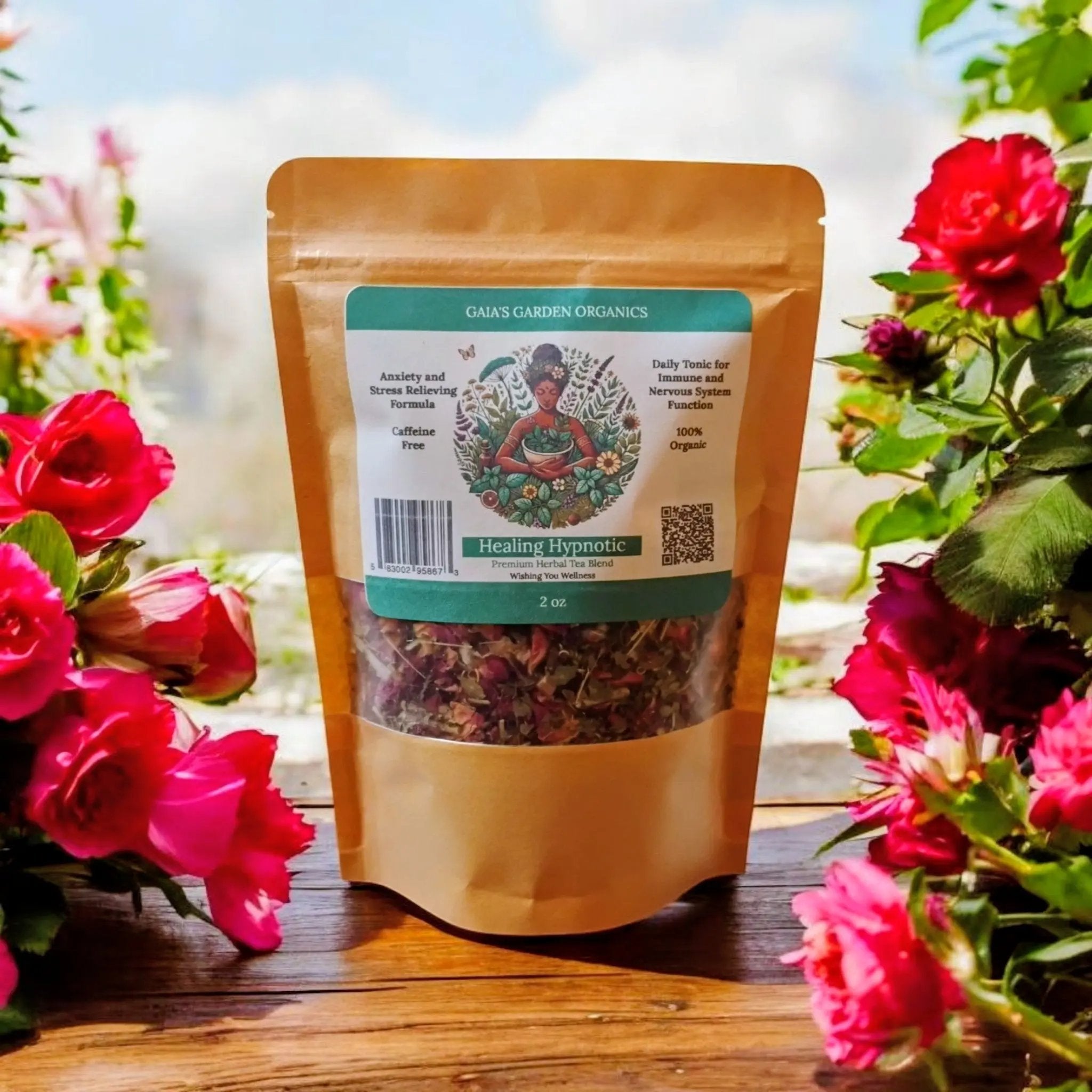
Ashwagandha (in our Healing Hypnotic Tea blend and other formulas) has the strongest cognitive evidence among adaptogens; Lopresti et al.'s 2020 RCT showed measurable improvements in cognitive performance and stress markers at 600 mg daily over 90 days. Tulsi (in Calm Spirit Tonic) is the gentler adaptogen, used in Ayurvedic medicine for over 3,000 years for stress tolerance and clarity of mind. The choice between them is mostly about whether you also want the sleep-supportive side of ashwagandha (yes if you have racing-mind insomnia; less critical if you sleep fine).
Nervines, for the depleted nervous-system pattern
Nervines act directly on nervous-system tone. They are not sedatives in the heavy-handed sense. They soften the chronic on. For the wired body that cannot downregulate, this is the daily reset layer.
Milky Oat is the classic nervine trophorestorative; long-traditional use for depletion. Skullcap (in Dreamweaver Tonic) is the herbalist's specific for the busy, ruminating mind; Brock et al.'s pilot trial showed measurable mood improvement at 1,050 mg per day with no side effects. Blue Vervain (in Calm Spirit Tonic) is the nervine for the rigid, type-A holding pattern. The choice depends on the form of your wired-ness: mental looping (Skullcap), physical clench (Blue Vervain), generalized depletion (Milky Oat).
Cognitive-support herbs, for the working-memory pattern
These are the herbs for the knowledge worker whose attention has gone scattered. They do not stimulate; they support the underlying attention infrastructure.
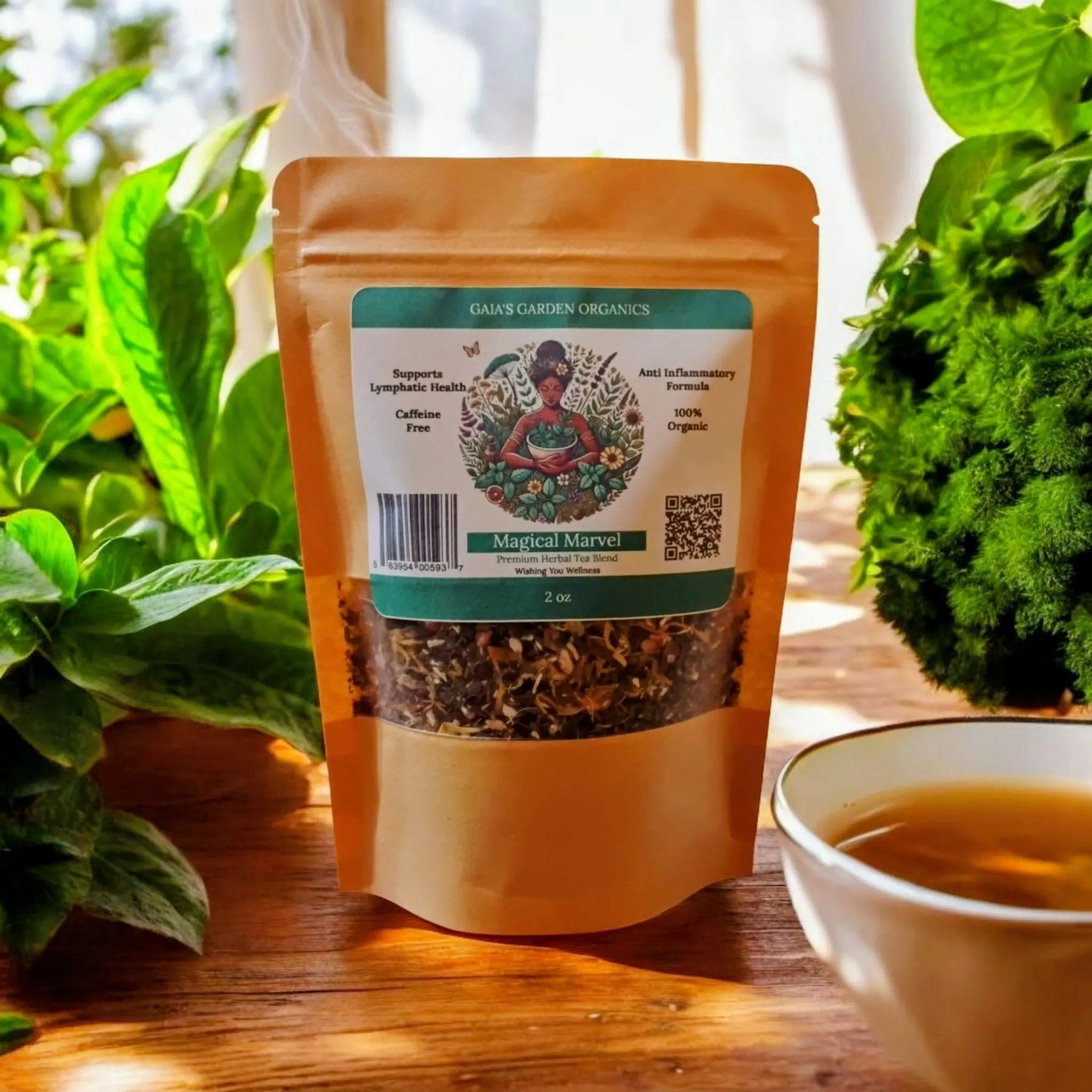
Spearmint (in Vitality Essence and Magical Marvel Tea) has clinical-trial evidence for working memory in adults with subjective memory complaints (Lopez et al.). Peppermint (in Clarity Essence) is the flower essence for the mental clearness pattern. Lemon Balm (in Magical Marvel Tea) has a long traditional use for cognitive support and a clinical signal for anxiety and sleep quality. The three layer well: spearmint and lemon balm as daily tea, peppermint as the morning essence anchor.
The five-day protocol
This is the structure I give clinic clients when they come in for "brain fog." It is short. It is sequenced. Each day teaches one practice; the practices stack.
Day 1, Stairstep Breath, Anuloma Krama (ah-nu-LOH-mah KRAH-mah). Five minutes, morning, before email. Inhale in three or four small steps to full capacity, pausing briefly between each step. Exhale long and steady. Repeat for five minutes. The counted ascent gives the prefrontal cortex something specific to track; the exhale activates parasympathetic tone. This is from Script 19 in Gaia's Harmony Within. By the end of session one, attention is measurably sharper. You can feel it.
Day 2, Backward Breath Counting (Pratyahara Anchor). Ten to fifteen minutes after waking, before phone, before email. Sit in one spot. Count breaths backward from 27 to 1, one count per exhale. If the mind wanders and you lose the count (and it will, often), restart at 27. Pratyahara (prah-tyah-HAH-rah) is the fifth limb of Patanjali's eight-limb path; the plain-English meaning is the deliberate withdrawal of the senses from outward input. The Backward Breath Counting is a concrete finite task for a busy mind: the count is defined (27 to 1), the restart rule is built in (lose it, go back to 27), and the senses settle around the task instead of the day's inbox. By Day 2 or 3 most readers can reach a count somewhere between 14 and 1; that is the baseline this protocol builds on.
Day 3, Sankalpa (SAHN-kahl-pah). Write one sentence. Present tense. Affirmative. Specific to the clarity you want. Examples: "My mind is clear and steady." "I hold one thing to completion." "I finish what I begin." Speak it three times a day silently. The Sankalpa is from Chapter 2 of Harmony Within. It is the daily anchor for the new identity that has clearer cognition built in.
Day 4, the 10-minute walk. Outside. No phone. No podcast. No earbuds. Pay attention to one thing per block: the trees, then the sound of your feet, then the temperature on your face, then the sky. This is a form of focused attention training that resets prefrontal cortex function. By Day 4, in clinic, most clients report a "cleaner 11 a.m.", a stretch of work that does not require a stimulant boost.
Day 5, integration. Pick the two practices that landed. Make them daily. Mental clarity is not a peak state. It is a baseline that holds. The yoga teaching for this is "make it boring": the practice you can do daily for thirty years matters more than the practice you can do brilliantly for one week.
Why this works (the citations)
Lopresti et al.'s ashwagandha trial gives the cognitive-improvement signal at clinical doses. Maki and Henderson's perimenopausal cognition review establishes the hormonal layer of clarity patterns and the windows in which support is most effective. Lopez et al.'s spearmint work shows measurable working-memory improvement in adults with subjective complaints. The NCCIH summary on anxiety and complementary approaches frames the appropriate place of herbal support alongside conventional care. Ghai et al.'s Yoga Nidra systematic review documents the stress, anxiety, and depression effects of the practice that the body-scan and Sankalpa work from.
Two clinical observations worth naming. First, almost everyone who walks into my clinic with "brain fog" has been told by someone that it is age, screen time, or laziness. None of those framings is useful. Each gives the body something to defend against; defense uses attention; attention is the resource you are trying to recover. The triage above is more useful because it gives the body a job: identify the pattern, address the pattern. The fog gets less heavy the moment the pattern is named.
Second, the herbs in the protocol are intentionally not nootropics. Nootropics push the system toward stimulation. The patterns that drive most modern brain fog are already in a stimulated state; the fog is what the body produces when stimulation is the input but rest is what is needed. The protocol works by giving the body rest in the form it can absorb (counted breath, sensory withdrawal, ten minutes outside, a single sentence) and supporting the natural attention infrastructure with herbs that strengthen rather than override it.
What this protocol does not do
The protocol is for the everyday brain-fog rhythm in adults whose cognition was once sharper and is now slower for predictable reasons. It is not a substitute for medical workup and it does not address several specific conditions.
- Dementia or pre-dementia cognitive impairment. If the fog includes getting lost in familiar places, repeating questions you just asked, or family members noticing a step-change in memory, please see a neurologist.
- Post-concussion syndrome. Cognitive complaints after a head injury need a sports-medicine or neurology workup; the protocol can be a useful complement but not a first-line answer.
- Untreated thyroid dysfunction, B12 deficiency, or iron-deficiency anemia. Each of these is a treatable cause of brain fog and each shows on basic bloodwork. Ask your physician for a TSH, free T4, vitamin B12, and ferritin if you have not had them checked in the past year.
- Sleep apnea. Loud snoring, witnessed apneic episodes, or daytime sleepiness despite enough time in bed all warrant a sleep study. Untreated apnea is one of the most under-diagnosed drivers of adult cognitive complaints.
- Long COVID or other post-viral cognitive impairment. The herbal layer here pairs with appropriate post-viral medical care but does not replace it.
Pursue the medical workup first when any of these are part of your picture. The protocol then becomes the everyday support that pairs with whatever treatment you and your physician land on.
None of this is a substitute for medical workup. If your brain fog has a clear medical driver (thyroid dysfunction, B12 deficiency, post-viral cognitive impairment, sleep apnea), pursue that workup first. The protocol pairs with appropriate medical care rather than replacing it.
Where to go from here
- Step 1 (free): The 5-Day Mental Clarity Reset PDF, a clinical-herbalist guide for the brain-fog patterns. Get the protocol.
- Step 2 (30-night guarantee): Clarity Essence (peppermint, the morning anchor) and Vitality Essence (spearmint, the daily cognitive layer). If the fog is layered with chronic anxiety or a wired-tired baseline, add Calm Spirit Tonic (Tulsi as adaptogen plus three nervines). For a daily cognitive-support cup, Magical Marvel Tea brings lemon balm and spearmint into a ritual. For sleep-driven fog, Healing Hypnotic Tea (with ashwagandha) is the matched evening cup.
- Step 3 (coming soon): Harmony Within, my Yoga Nidra book. Thirty full guided scripts including Script 19 (Stairstep Breath) and the dedicated body-scan session this protocol leans on.
This guide is for general cognitive support and is not a substitute for medical care. If your brain fog has a medical driver (thyroid dysfunction, B12 deficiency, post-viral cognitive impairment, sleep apnea, or any new neurological symptom), please pursue medical workup first. The protocol works alongside medical care, not as a replacement.
Looking for the broader pillar context? Flower Essences 101 covers the Bach method and how to choose between the five active essences we make. Herbal Tinctures 101 covers tinctures, dosing, and how to choose between tinctures, teas, and flower essences.
PS: If your brain fog has a clear medical driver (thyroid, B12, sleep apnea, post-viral), pursue that workup first. The protocol below is for the everyday brain-fog rhythm, not for clinical conditions. The two are not mutually exclusive; you can do both.
Frequently asked
How fast does this actually work?
The Stairstep Breath sharpens attention measurably inside the first five-minute session; you can feel it on Day 1. The morning Pratyahara establishes a cleaner baseline by Day 2 or 3. The 10-minute walk produces a noticeably cleaner 11 a.m. by Day 4. The deeper baseline shift (where you stop walking into rooms and forgetting why) builds across the 5 days and into the 30 days after. Adaptogenic support (ashwagandha, Tulsi) takes 3 to 4 weeks of consistent daily use to reach its full effect.
I have already tried lion's mane, ginkgo, and a nootropic stack. Why would this be different?
Most cognitive supplements target stimulation, which works against the wired-tired pattern that drives most modern brain fog. The protocol diagnoses your fog pattern first (HPA-axis, sleep-architecture, blood-sugar, hormonal, cognitive-load) and matches the herbal layer to that pattern. For the chronic-cognitive-load pattern, attention training (the Stairstep Breath, the morning Pratyahara) does the work the supplements were trying to do; the herbal layer supports the training. The two approaches are not in conflict but the order matters.
Is this safe with my prescribed medication?
Generally yes for the essences (Clarity and Vitality have no documented pharmacological interactions; they work on the energetic layer). Calm Spirit Tonic and Magical Marvel Tea are also broadly safe alongside SSRIs, SNRIs, and most cognitive-supportive prescriptions, though Calm Spirit's nervines can be additively sedating with prescription sedatives. Calm Spirit is contraindicated in pregnancy. Always consult your prescriber for your specific situation. Never stop a psychiatric medication without medical supervision.
How is this different from meditation apps or a focus subscription?
Meditation apps generally train relaxation. The clarity protocol trains focused attention specifically, which is the opposite skill and the one that brain fog actually needs. The Stairstep Breath teaches the mind to hold a counted ascent; the Pratyahara teaches sensory withdrawal before the day's inputs flood in; the Sankalpa anchors a single sentence into daily memory. These are Yoga Therapy practices, not generic mindfulness. They have specific, named outcomes you can feel that same day. The herbal layer pairs with the practice rather than replacing it.
What if it does not work for me?
Two paths. First, reply to any of the protocol emails. Brain fog has five common patterns (HPA-axis, sleep-architecture, blood-sugar, hormonal, cognitive-load) and the practice that lands for one does not land for another; Gaia reads every reply and a small tweak often unlocks the right entry point. Second, every product in the matched stack is covered by our 30-night satisfaction guarantee. If the essences and tea do not work for you, full refund, no questions. If your brain fog persists past 60 days with consistent practice, please ask your physician about a thyroid panel, vitamin B12, ferritin, and a sleep workup.
Products from this article
Handcrafted in Umpire, Arkansas by Gaia Devi, clinical herbalist.
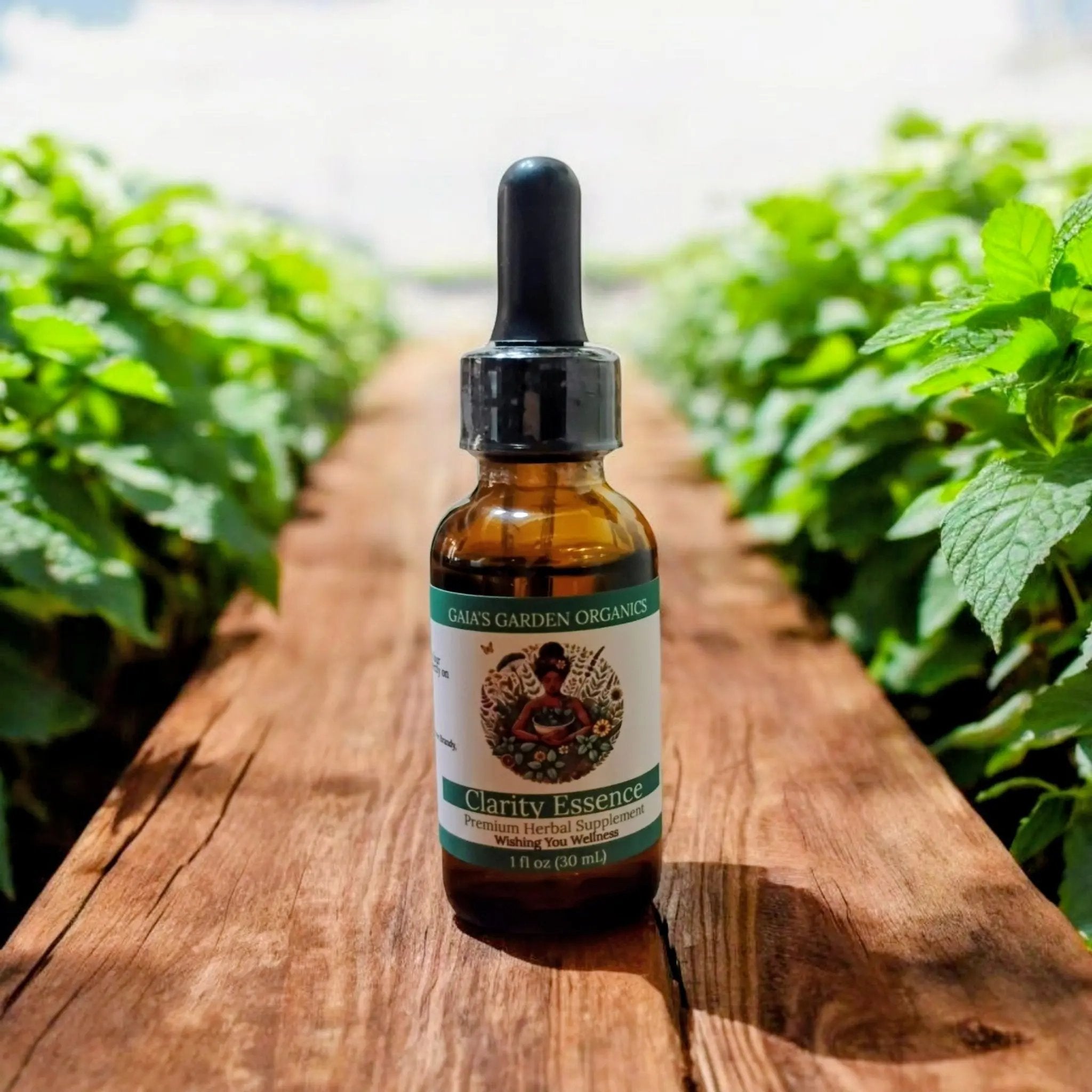
Clarity Essence - Organic Peppermint Flower Essence
for focus & mental alertness
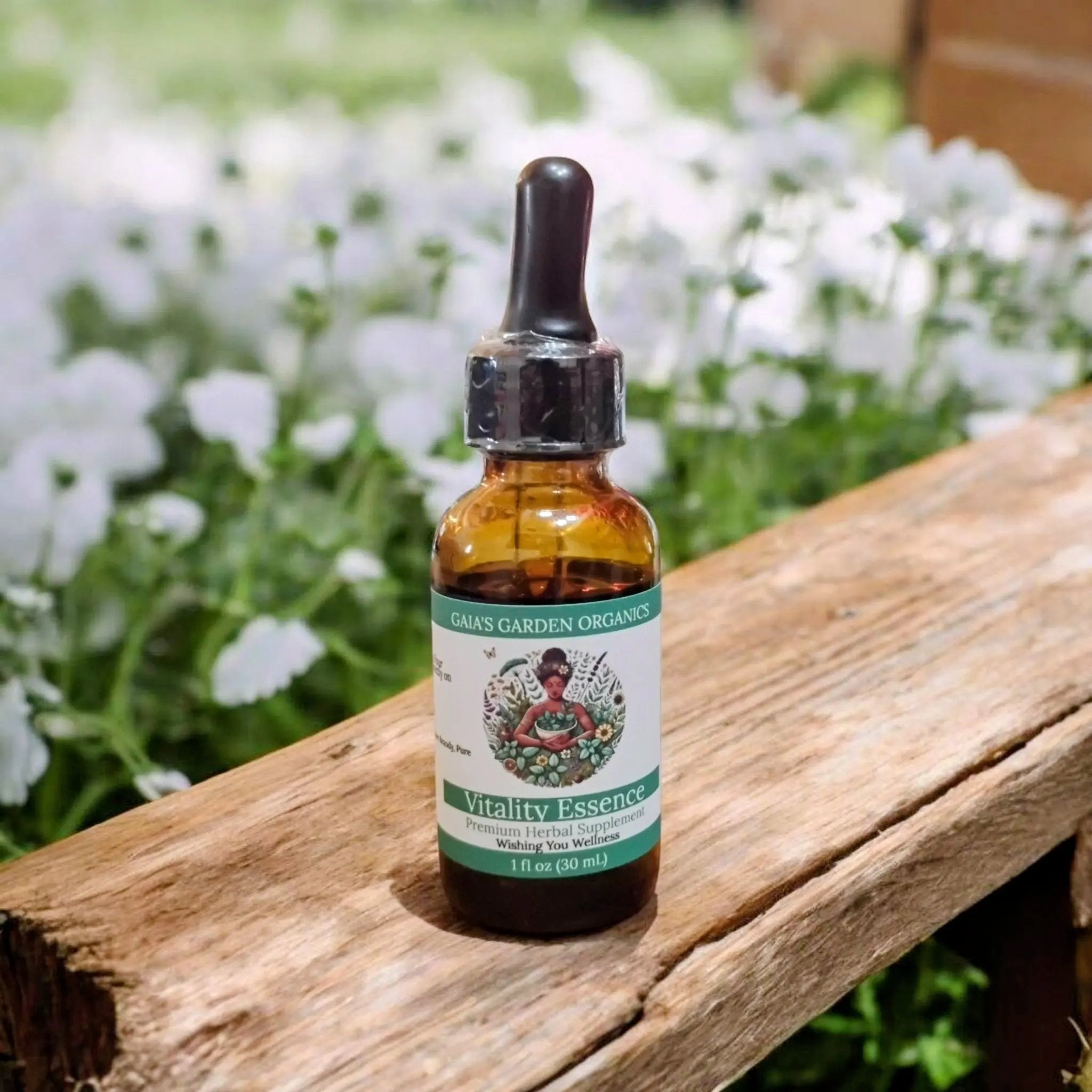
Vitality Essence - Organic Spearmint Flower Essence
for energy & renewed lightness
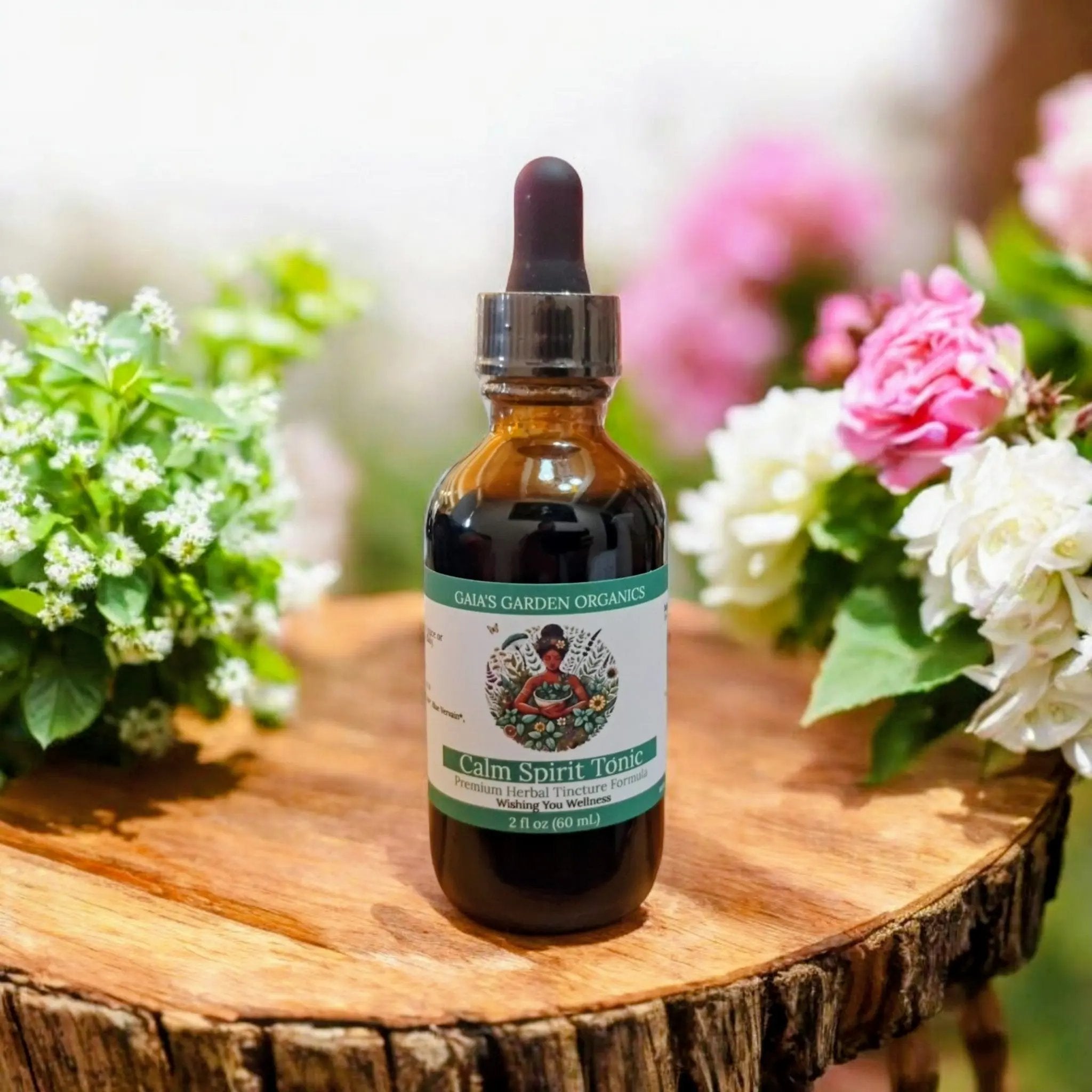
Calm Spirit Tonic
for calm and a quiet mind
 Sold out
Magical Marvel Herbal Tea
for everyday vitality
 Bestseller
Healing Hypnotic Herbal Tea
for the busy-mind bedtime
Explore our apothecary
Learn more
Flower Essences 101
A clinical herbalist's plain-English guide to what flower essences are and how to take them.
Find your match
The Clarity-Type Quiz
5-question clinical-herbalist diagnostic for the overstimulated knowledge worker. Matches a focus practice + plant pairing to your fog pattern.
Shop the apothecary
Herbal Tinctures
Clinical weight-to-volume tinctures for nervous-system, sleep, and recovery work.
Sources & further reading
Authoritative references consulted in writing this article. Open in a new tab.
- PubMed CentralLopresti AL et al., Ashwagandha cognition RCT
- PubMed CentralMaki PM, Henderson VW, Perimenopause and cognition
- PubMed CentralLopez et al., Spearmint extract and working memory
- NCCIHAnxiety and Complementary Health Approaches
- Annals of the New York Academy of SciencesGhai et al., Yoga Nidra for stress, anxiety, and depression (systematic review)