In this article (13)▾
It is 9:30 PM. You are washing the dishes alone in the kitchen. The family is in the living room watching something. You said yes to the school fundraiser this morning. You said yes to covering your coworker's shift on Saturday. You said yes to hosting your in-laws next month, even though you do not have the energy and you knew it when you said yes. Your shoulders ache in a specific way, up by the trapezius, behind the neck, the way they ache after a day of small accommodations that added up.
You are not exhausted in a way a full night of sleep will fix. You have been getting a full night of sleep. The exhaustion lives somewhere else.
What you have already tried
You have tried the assertiveness book. The one with the boundary scripts. You read it on a Tuesday and it made sense and on Wednesday someone asked you for something and you said yes again. You have tried saying you need to "check your calendar" before agreeing, and that helped for a week. You tried the bath, the magnesium, the early bedtime. You tried a wine on the porch, alone, where no one was asking for anything. That worked for forty-five minutes.
You have probably tried the productivity version too. Better time-blocking. A clearer schedule. Color-coded family calendars. Those help with the logistics. They do not help with the fatigue, because the fatigue is not from the load. It is from the asymmetry.
And the part you do not talk about is the resentment. The flicker of it when the kid asks for one more thing. The flicker when your husband sits down on the couch and you are still standing. You do not want to feel resentful, and so you push it down, and it adds itself to the fatigue.
The Frame Shift
Most people think this is a boundary problem. Not enough no. Need to be more assertive. Need to set limits. The framing is right but it is upstream of what is actually depleting you, and starting at "say no more" usually fails for the same reason starting at "be less anxious" fails. You cannot will an autonomic pattern into a different shape.
The actual problem is what the burnout literature calls interpersonal strain. Researchers Maslach and Leiter, who have studied burnout for forty years, distinguish three drivers: workload, control, and reward (which includes reciprocity). The over-accommodator's burnout is the reward driver. The effort goes out. The reciprocity does not come back, or comes back in smaller amounts than the effort costs. A 2014 study by Borgogni and colleagues on interpersonal strain at work links chronic effort-reciprocity mismatch directly to emotional exhaustion.
The body keeps score on this. Every yes that costs more than it returns is a small debit. The debits add up. By 9:30 PM at the sink, you are reading the cumulative balance on the receipt of your body. It is not the dishes that are heavy.
So the question is not "how do I say no better." The question is "how does the body that keeps saying yes recover, while you learn the slower skill of the no." The recovery work has to come first, or the new boundaries get set on top of an already-empty system, and they do not hold.
The clinical-herbalist read
The nervous-system signature of the over-accommodator is specific. Long-arc depletion (not acute stress). A "must do it myself" pattern that lives in the shoulders and the chest. A baseline of mild irritability the person tries not to look at. Sleep is full but unrefreshing. Recovery does not happen between days because the system never gets to fully exhale.
Four herbs do the recovery work for this exact pattern.
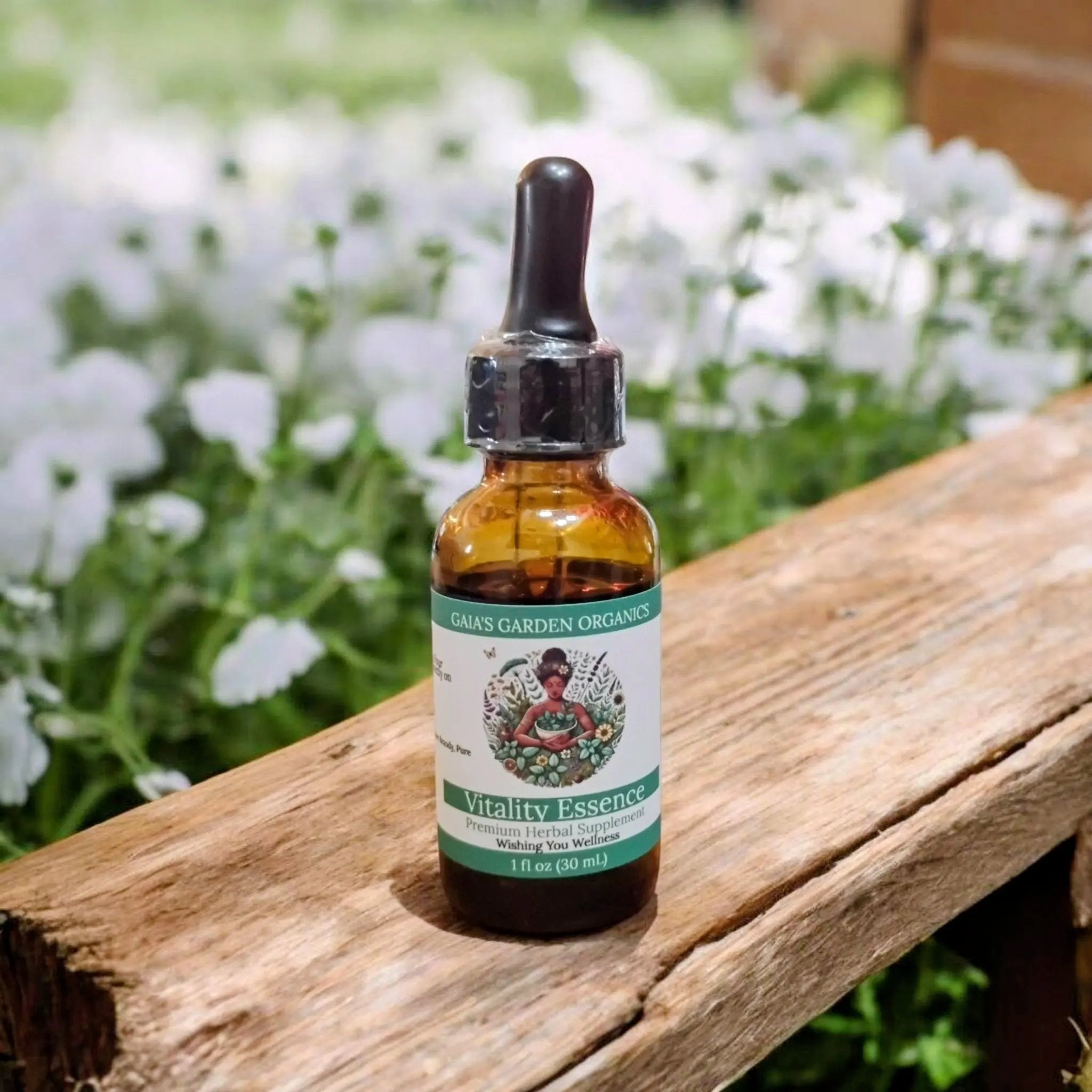
Spearmint (Vitality Essence), the depleted-spark essence
The primary product call. Spearmint flower essence is the matched essence for depleted spark, the felt sense that the spark inside you has dimmed. Bach method, sun-infused fresh spearmint blossoms from our medicine garden in Umpire, Arkansas, preserved in brandy and mountain water. Four drops in the morning, four at night. The mechanism is not pharmacological; it is the energetic layer of the plant working on the felt sense of the depletion. Within two to three weeks most readers describe a return of the small spark that the cumulative yes had dimmed.
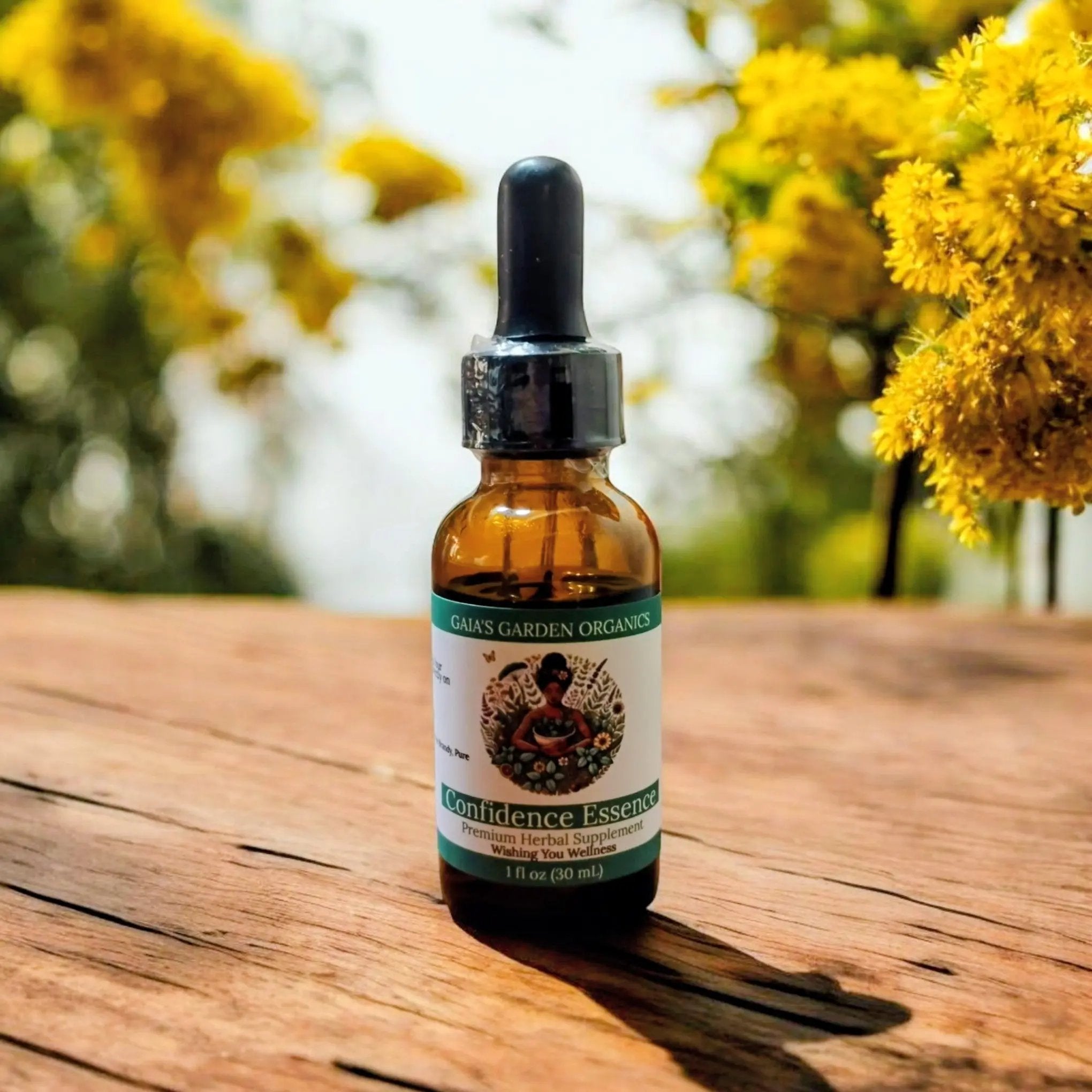
Goldenrod (Confidence Essence), the boundary side
The secondary pair. Goldenrod flower essence has a long traditional energetic use for the strength of identity under social pressure, the felt sense of "I am still me, even when the room wants me to be something else." For the over-accommodator the yes is often automatic because the moment of social pressure is faster than the felt sense of the actual want. Goldenrod supports the felt-sense window where the no becomes possible. Confidence Essence and Vitality Essence are designed to pair; the Spark Renewal is the energy recovery and the Confidence is the boundary skill, and the skill cannot show up until the energy does.
Milky Oat, the trophorestorative
Milky Oat (the fresh milky tops of Avena sativa) is the defining nervine trophorestorative in Western clinical herbal medicine. The Northeast School of Botanical Medicine (7Song) describes it as the herb for "depleted and overtaxed nervous systems," the long-arc depletion that lives in the body of the chronically over-functioning. Unlike most nervines that calm acutely, milky oat rebuilds the substrate; it is the herb you take daily for months for the depleted system that needs to be re-fed.
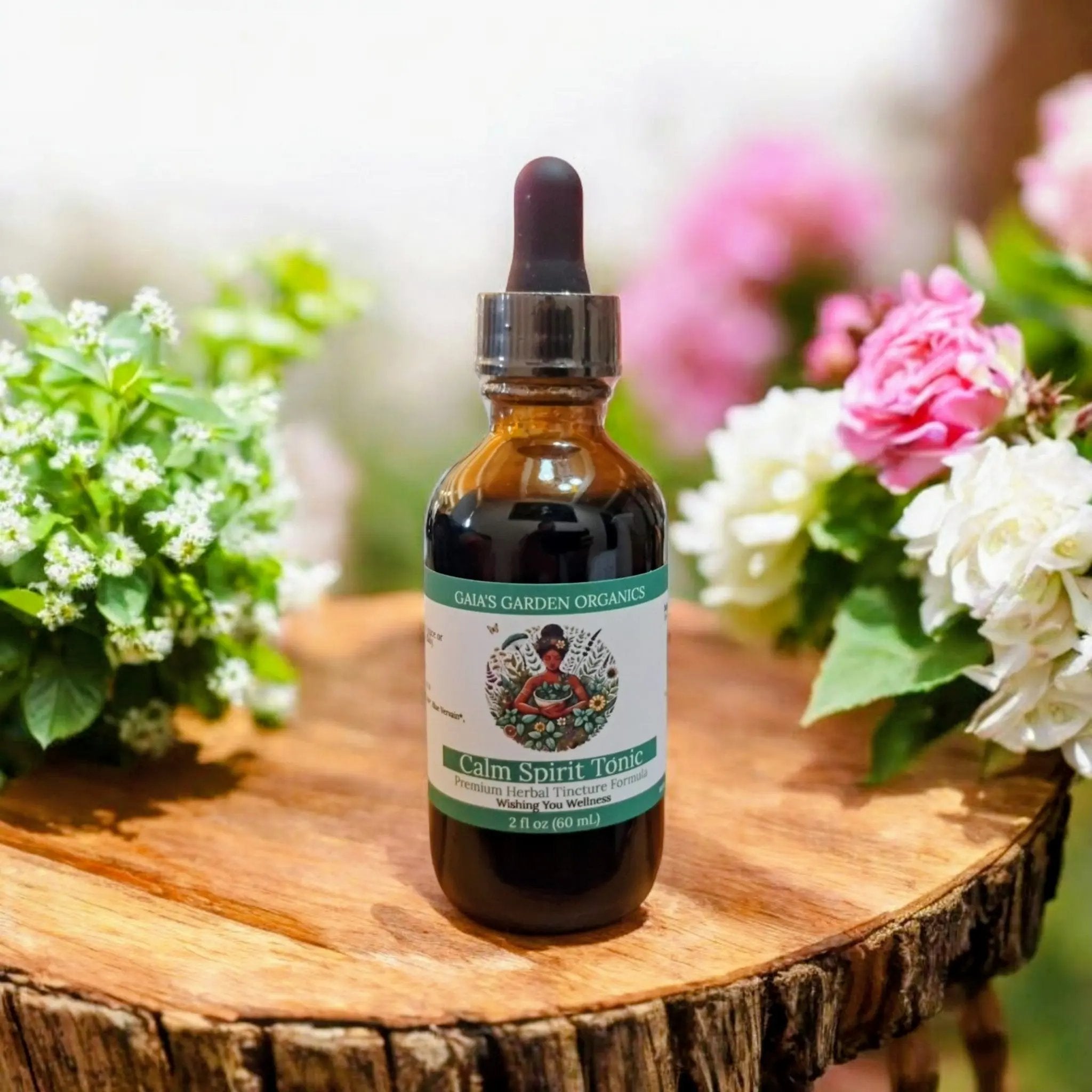
Blue Vervain (in Calm Spirit Tonic), the over-functioning herb
Blue Vervain (Verbena hastata) is the classic herb for the over-functioning, hyperresponsible "must do it myself" pattern. Evolutionary Herbalism's monograph names it the herb for the burned-out, overworked, type-A nervous system. It is one of the four herbs in our Calm Spirit Tonic, alongside tulsi, motherwort, and rose. For the resentment-fatigue audience, the blue vervain is the specific herb in the formula that addresses the part of the pattern where the body cannot let anyone else do it.
The protocol, in three steps
Step 1: The Sankalpa, by Day 3
The primary practice for resentment fatigue is the Sankalpa, the Yoga Therapy practice of a single present-tense sentence naming what you are moving toward, not what you are over-giving from. Not "I am setting better boundaries" (which is the boundary as a project, more work). Instead: "My time is full" or "I keep what is mine" or whatever lands for you, in your own handwriting, on a piece of paper you keep where you will see it. You read it in the morning, before the first request of the day comes in.
The Sankalpa is not a script for saying no. It is the felt-sense anchor that makes the no possible later. By Day 3 of the Spark Renewal, most readers tell us the Sankalpa has changed how it feels in the body when an ask comes in. The body has a moment of pause now. That moment is the whole practice.
Step 2: The Long-Exhale Breath, at the moment of agreement
Vishama Vritti (vee-SHAH-mah VRIH-tee), the unequal breath. In for four, out for eight, three rounds. The whole thing takes about ninety seconds. You do it the moment someone asks you for something and the automatic yes is rising.
What it does mechanistically: the long exhale activates the vagus nerve, drops the sympathetic surge that drives the automatic yes, and creates a two- to three-second window between the ask and the answer. In that window the actual want becomes accessible. The slow-breathing literature (Laborde et al., 2022 SR&MA) shows this effect is reliable within minutes.
This is the practice that turns the months-of-boundary-work into a present-moment skill. You do not need to be assertive. You need ninety seconds before you answer.
Step 3: Integration ("make it boring"), by Day 7
The Yoga Therapy framing is to "make it boring." Recovery is built in a hundred small daily moments, not in the dramatic boundary stand. The Sankalpa in the morning, the Long-Exhale before an answer, the Vitality Essence four drops twice a day, the Calm Spirit Tonic in the evening, the milky oat infusion in the afternoon. None of these moments is dramatic. The drama is the point being avoided. The repetition is the medicine.
By Day 7 most readers report the cumulative-yes pattern softening. By Week 4 the body has enough capacity to start saying the actual no when the actual want lands.
Why this works
The burnout literature is clean on the mechanism. Effort-reciprocity mismatch produces emotional exhaustion (Maslach and Leiter, 2016 review; Borgogni et al., 2014). The resolution is not stopping the effort; it is restoring the reciprocity, which can be other people or yourself. The over-accommodator's recovery is largely a self-reciprocity project: the energy that was going out without coming back starts coming back in, daily, in small reliable doses, from the practices and the herbs.
The herbal layer has its own evidence base. Milky oat's traditional use as a nervous-system trophorestorative is documented across the Eclectic and modern Western herbal literature (Northeast School of Botanical Medicine / 7Song). Blue vervain's specific indication for the over-functioning pattern is a Western tradition documented in Evolutionary Herbalism's clinical materia medica. The flower essence layer (Vitality, Confidence) is the energetic anchor; the tinctures and infusion are the daily body-level support.
Where to go from here
- Step 1 (free): The 5-Day Spark Renewal PDF, a clinical-herbalist guide for the depleted yes-saying body. Get the protocol.
- Step 2 (30-night guarantee): Vitality Essence, the spearmint flower essence matched to the depleted-spark pattern. Vitality Essence. If the boundary side is the louder edge of your pattern, pair with Confidence Essence (goldenrod, the boundary essence) or with Calm Spirit Tonic for the over-functioning blue-vervain layer.
- Step 3 (coming soon): Harmony Within, Gaia's Yoga Nidra book. Thirty full guided scripts including a Sankalpa-led recovery session for the chronically over-extended nervous system.
This guide is for general nervous-system support and is not a substitute for medical or psychological care. If your over-accommodation pattern includes coercive-control dynamics or unsafe relationships, please work with a licensed therapist or domestic-violence resource as primary support.
Looking for the deeper context? Our pillar guide Flower Essences 101 covers the Bach method, how essences work on the energetic layer, and how to pair Vitality with Confidence for the spark-and-boundary work.
PS: If you read this and felt seen but cannot yet imagine saying no, that is fine. Start with one practice this week. The boundary skill is built in tiny daily moments, not in the dramatic stand. The Sankalpa is a sentence. The Long-Exhale is ninety seconds. Vitality Essence is four drops. Begin with one of those, today, before the next ask lands.
Frequently asked
How fast does this actually work? I have been like this for years.
The breath piece (the Long-Exhale Breath) gives you the present-moment pause within ninety seconds the first time you do it; the automatic yes slows down. The flower essence layer (Vitality, Confidence) usually produces a felt shift over two to three weeks of twice-daily use. The nervous-system rebuild (milky oat, blue vervain in Calm Spirit Tonic) is the long arc, four to twelve weeks for the chronic-depletion pattern to noticeably soften. Most readers feel the present-moment pause in week one and the deeper baseline shift around weeks three to four.
What if I cannot say no, even with the practice?
This is the most common worry, and the protocol is built for it. The Long-Exhale Breath is not a no script. It is the ninety-second pause before any answer. The no does not need to be dramatic; often it is just 'let me get back to you tomorrow' or 'I cannot this week.' You are not building assertiveness. You are building the felt-sense window where you can hear your own actual answer before the automatic one fires. Many of Gaia's clinic clients spend the first month using the pause to delay the yes, not to say no, and that alone changes the cumulative load. The no comes later, when the body has enough capacity to hold it.
Is Vitality Essence safe with my antidepressant?
Yes. Flower essences have no documented pharmacological interactions with prescription medications, including SSRIs, SNRIs, bupropion, or atypical antidepressants. They work on the energetic layer rather than the biochemistry. Many of Gaia's clinic clients use Vitality alongside long-term psychiatric medication; the essence supports the felt-sense layer the medication does not reach. Never stop psychiatric medication without medical supervision. If you have specific concerns, consult your prescriber.
How is this different from therapy or a boundaries course?
Therapy and a boundaries course work on the cognitive and relational layer; they are useful and often necessary, and many of Gaia's clinic clients run this protocol alongside ongoing therapy. The protocol works on the body. The cumulative-yes pattern lives in the nervous system as long-arc depletion, not just as a thinking habit. A therapist can help you understand why you say yes; the protocol gives you the body capacity to actually do something different. The two layers (insight + body) work together. Neither alone tends to be enough.
What if it does not work for me?
If you run Vitality Essence and the 5-Day Spark Renewal protocol for 30 nights and do not feel a meaningful shift in the cumulative-yes pattern, write us. The 30-night satisfaction guarantee is unconditional: full refund, no questions, you keep the bottles. The most common reason the protocol does not produce a shift is the pattern is more depression-shaped than depletion-shaped (flat affect rather than fatigue from over-giving). If that is true for you, please work with a clinician; the spark-renewal protocol is for the workable end of the depletion spectrum, not for clinical depression.
Products from this article
Handcrafted in Umpire, Arkansas by Gaia Devi, clinical herbalist.
Explore our apothecary
Learn more
Flower Essences 101
A clinical herbalist's plain-English guide to what flower essences are and how to take them.
Find your match
The Boundary-Type Quiz
5-question clinical-herbalist diagnostic for the recovering people-pleaser. Matches a 7-day boundary practice to your pattern.
Shop the apothecary
The 5-Essence Starter Cabinet
All 5 essences bundled at 20% off, the full emotional toolkit.
Sources & further reading
Authoritative references consulted in writing this article. Open in a new tab.
- PubMed CentralMaslach C, Leiter MP. Understanding the burnout experience: recent research and its implications for psychiatry (2016)
- ScienceDirectBorgogni L et al. Interpersonal strain at work: A new burnout facet relevant for the health of hospital staff (2014)
- Northeast School of Botanical Medicine (7Song)Wild Oats: A Useful Nervine (clinical materia medica)
- Evolutionary HerbalismBlue Vervain: The Remedy for the Burned-Out and Overworked (clinical monograph)
- PubMedLaborde S et al. Effects of Voluntary Slow Breathing on Heart Rate Variability: A Systematic Review and Meta-Analysis (2022)