In this article (12)▾
You drink your morning coffee. By 11am you have a second cup. By 2pm you crash. By 4pm you have a third cup, then you cannot sleep at 11pm, so you wake exhausted and reach for the first cup. The cycle costs you the very thing it promises.
Most people who come to my clinic asking about "energy herbs" are running this cycle. They think they need a stimulant alternative. What they actually need is the upstream work that builds real vitality, where energy is a byproduct of a system that is well-regulated, not a chemical override on a depleted one.
This guide is about that upstream work. Five herbs (spearmint, calendula, hibiscus, lemon balm, marshmallow root) that build vitality through nervous-system support, anti-inflammatory action, and gentle adrenal protection, not through stimulation. The reason you stay tired even after coffee, and what to drink instead.
Why coffee makes the problem worse over time
Caffeine works by blocking adenosine receptors. Adenosine is the molecule that builds up across the day and signals your body to rest. When caffeine blocks those receptors, the rest signal stops registering. You feel awake.
The catch is that the adenosine is still building up. When the caffeine clears, the receptors come back online, and all the accumulated rest signal hits at once. That is the 3pm crash. The body then reaches for more caffeine, which delays the signal again. Over months and years, the system becomes desensitized: same dose, less effect, then more dose, then less sleep, then more fatigue, then more dose.
You cannot fix this with more caffeine. You also cannot fix it with no caffeine if you do not address what was underneath the dependence in the first place.
What sustained natural vitality actually requires
Three layers, all upstream of stimulation.
- Nervous-system regulation: A wound-tight nervous system burns energy continuously. A regulated one frees that energy for what you actually want to do.
- Anti-inflammatory baseline: Chronic low-grade inflammation is a major silent driver of fatigue. Reducing it returns measurable energy.
- Gut and adrenal support: The gut is where most of your serotonin lives and where many vitamins are absorbed. The adrenals are where the body's stress response burns through cofactors. Supporting both is upstream of feeling well.
The five herbs in Magical Marvel Tea work on these three layers, not on stimulation.
The five herbs and what each one does
Spearmint (Mentha spicata)
Spearmint is the cooling, clarifying mint. Where peppermint hits sharp and bright, spearmint is rounder and softer. It supports digestion, mental clarity, and the gentle uplift that comes from a well-functioning gut. Traditional use also includes hormonal support; recent research suggests spearmint may modestly reduce androgen levels in women with hormonal imbalance.
What spearmint does in the blend: it carries the brightness without the harsh edge of peppermint.
Calendula (Calendula officinalis)
Calendula is one of the most under-appreciated systemic herbs. Internally it is a lymphatic mover and a gentle anti-inflammatory; it supports the body's drainage and inflammation-clearing systems. The effect on energy is indirect: when the lymphatic system is moving well and inflammation is lower, fatigue lifts.
What calendula does in the blend: it lowers the inflammatory drag that quietly takes 20-30 percent of your daily energy budget.
Hibiscus (Hibiscus sabdariffa)
Hibiscus brings the tart cranberry-like flavor and a serious dose of antioxidant flavonoids. Its primary cardiovascular benefit (modest blood pressure reduction) is well-documented in RCTs. For the energy picture, hibiscus contributes by lowering oxidative stress, which is a measurable energy drain in chronically stressed adults.
What hibiscus does in the blend: it adds the antioxidant load that helps cells produce energy more cleanly.
Lemon Balm (Melissa officinalis)
Lemon balm is a gentle nervine and an anti-anxiety herb that paradoxically also supports cognitive function. The mechanism is calm focus: it takes the edge off without dulling thinking. Traditional use goes back to the Greeks, who called it "the gladdening herb."
What lemon balm does in the blend: it gives the tea its lift-without-stimulation quality. You feel awake without feeling wired.
Marshmallow Root (Althaea officinalis)
Marshmallow root is a demulcent. It coats and soothes the gut lining, which over weeks of daily use supports gut-membrane integrity. A healing gut wall means better nutrient absorption, less systemic inflammation, and (downstream) better energy.
What marshmallow does in the blend: the slow gut-membrane work that compounds across months. Most people do not notice it on a single cup; they notice it on the 60th cup.
The daily ritual
- When: Mid-morning or early afternoon. Replaces the second coffee of the day. Caffeine-free, so it does not compete with your morning cup if you keep it.
- How: One mug, steeped 8-10 minutes covered, with a small lid or saucer to keep the volatile oils in.
- Pacing: Daily for 30 days. The benefit is cumulative. A single cup is pleasant. Thirty cups across a month is medicine.
- Pair with: A 5-minute pause when you drink it. The pause is part of the medicine; vitality requires the nervous system get a chance to actually downshift.
What to expect
- Week 1: The afternoon crash softens. You might still want a second coffee but it is less urgent.
- Week 2-3: Sleep deepens, partly because the cumulative caffeine load is dropping. Morning wake-up is easier.
- Week 4-6: The chronic low-grade fatigue baseline lifts. People notice you have more presence in conversations. You take stairs instead of elevators because you have the juice.
- Month 2+: The new baseline is the default. The tea stays in rotation; the effort it required to maintain has dropped.
What this is not for
This is general wellness support, not medical treatment. Persistent fatigue can be a symptom of thyroid disease, anemia, sleep apnea, depression, autoimmune conditions, or other diagnoses. If your fatigue is severe, sudden-onset, or accompanied by other symptoms (weight change, mood change, breathlessness, pain), please see a physician for proper workup before treating with herbs.
Where to go from here
- Step 1 (free): Match your essence in 7 questions. The flower-essence quiz routes the depleted-vitality picture to Vitality Essence (spearmint flower essence) plus a daily renewal practice. Take the essence quiz.
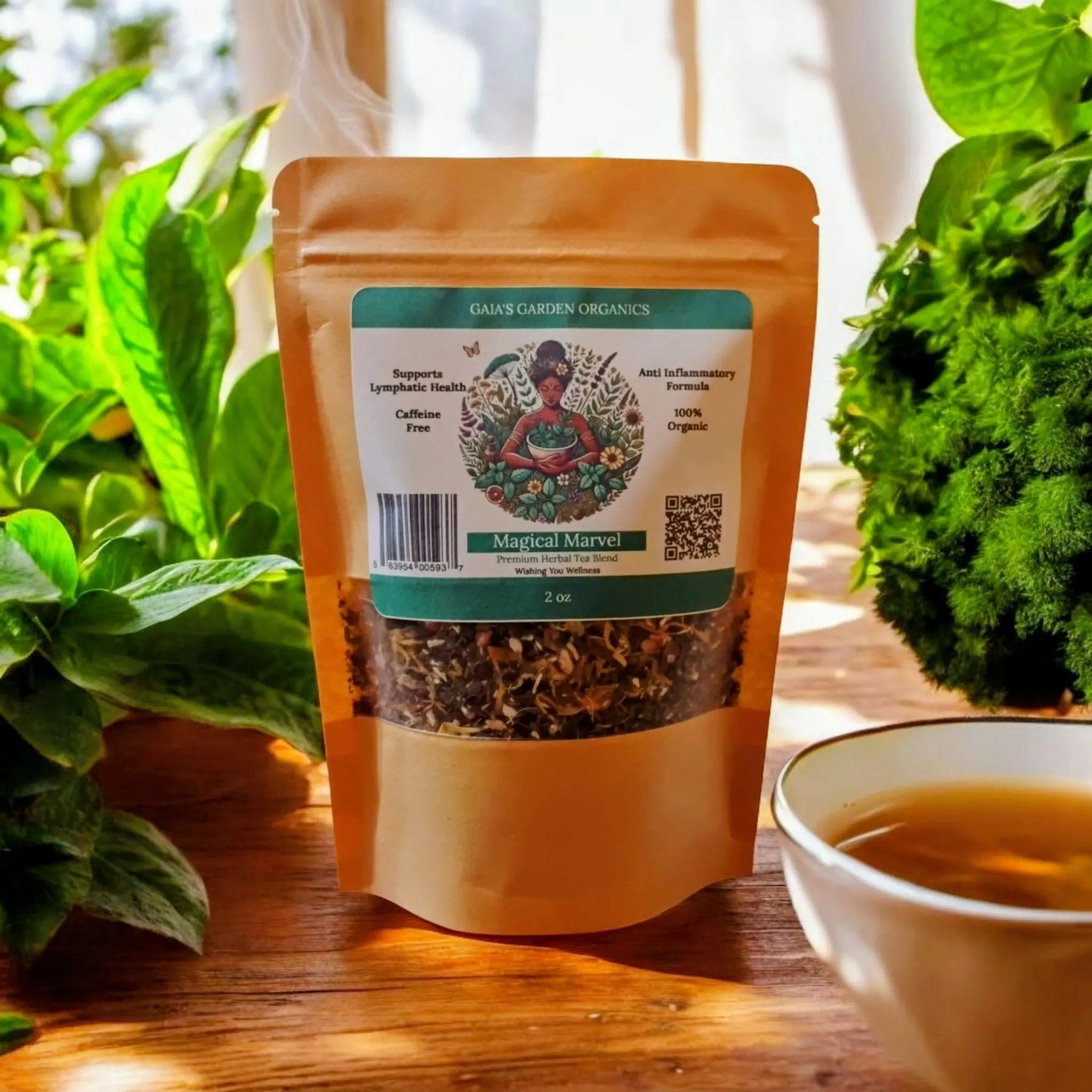
- Step 2 (30-night guarantee): Magical Marvel Herbal Tea as the daily cup. If the vitality pattern is layered with emotional flatness (the "I cannot find my spark" picture), pair with Vitality Essence (spearmint flower essence), the matched essence for the Spark archetype.
- Step 3 (coming soon): Harmony Within, my Yoga Nidra book, with practices for rebuilding the spark that chronic stress has dulled.
This guide is for general energy and vitality support and is not a substitute for medical care. Persistent fatigue should be evaluated by a physician for underlying conditions before assumed to be lifestyle-related.
For broader context on herbal teas, our pillar guide Herbal Teas 101 covers how teas work, daily ritual cues, and how to choose between teas, tinctures, and essences.
Frequently asked
Will this give me a caffeine-like energy boost?
No, and that is intentional. Caffeine works by blocking the rest signal, which is what creates the crash-and-rebound cycle. The five herbs in this blend work upstream: they lower the inflammation and nervous-system load that are silently costing you energy in the first place. You will not feel jolted. You will gradually feel less drained. That is the actual difference between stimulation and vitality.
Can I drink this with coffee?
Yes. Many of my clients keep their morning coffee and add Magical Marvel as the mid-afternoon replacement for the second or third cup. That is often the easiest path: the herbal tea handles the part of the day where coffee is doing the most damage (afternoon, when it disrupts the evening), without asking you to give up the morning ritual that you enjoy. Over weeks, most clients find they want less coffee overall, not as a forced shift but as a natural drop.
Is this safe in pregnancy?
Hibiscus and spearmint in this blend are contraindicated during pregnancy. Hibiscus can affect estrogen levels and uterine activity; spearmint at higher doses has some estrogenic activity. Calendula, lemon balm, and marshmallow root are generally considered safe at culinary tea doses in pregnancy. For pregnant-and-postpartum vitality support, please consult a midwife or OB-GYN; the right herbal-tea route in pregnancy is different from the general adult formula.
How long until I notice a difference?
Most clients report the afternoon crash softening within the first 5-7 days. The deeper baseline change (where the chronic low-grade fatigue lifts) builds over 4-6 weeks of daily use. The herbs are working on systemic upstream patterns (inflammation, gut, nervous-system regulation) that compound over weeks rather than landing in 20 minutes the way caffeine does. The benefit is real but slow.
Can I take this with my prescription medications?
Most prescriptions are compatible at culinary tea doses, but consult your prescriber if you take blood pressure medication (hibiscus can compound antihypertensives), thyroid medication (timing matters; take medications and tea at least 2 hours apart), or anticoagulants. Lemon balm has mild interactions with thyroid medications at higher doses. As always, give your healthcare provider the full list of what you are taking; that includes the herbal tea.
Products from this article
Handcrafted in Umpire, Arkansas by Gaia Devi, clinical herbalist.
Explore our apothecary
Learn more
Flower Essences 101
A clinical herbalist's plain-English guide to what flower essences are and how to take them.
Find your match
The Vitality-Type Quiz
5-question clinical-herbalist diagnostic for the depleted caretaker. Matches a daily spark practice + plant pairing.
Shop the apothecary
Medicinal Herbal Teas
Loose-leaf, clinical-herbalist-blended teas, each built around a specific job.
Sources & further reading
Authoritative references consulted in writing this article. Open in a new tab.
- PubMed (Chandrasekhar et al., 2012)A prospective, randomized double-blind, placebo-controlled study of safety and efficacy of a high-concentration full-spectrum extract of ashwagandha root in reducing stress and anxiety in adults
- NCCIHHerbs at a Glance (per-herb safety and evidence)
- Chestnut School of Herbal MedicineFlowering Herbs (article archive)