Herb glossary · for the closed-heart phase of grief
Rose
Rosa spp.
Family: Rosaceae · Parts used: Petals (and hips, separately)
Rose (Rosa spp.) is the heart's herb, a heart-opening nervine and gentle astringent traditionally used for grief, emotional bracing, postpartum tenderness, and the kind of nervous-system overwhelm that needs softening rather than sedation.
Traditional uses
Rose (Rosa spp., primarily damask rose R. damascena and rugosa rose R. rugosa in Western herbalism) has been working at the intersection of medicine and ritual since at least ancient Persia and Mesopotamia. The Romans associated it with Venus; medieval herbals carried it as a heart and womb tonic; and contemporary clinical herbalism has folded it back into formulas for emotional unrest, postpartum recovery, and gut-brain regulation.
Primary therapeutic territory
Rose is the herb for the over-stretched heart, the grief that needs holding, the heartbreak that has shut things down, the chronic vigilance that hardens around the chest. Western clinical herbalism classifies it as a heart-centered nervine, a mild astringent, and an aromatic, three actions that together make it uniquely suited to the kind of emotional-tenderness pattern that pure sedatives can't reach. Where lavender quiets agitation and passionflower stops the racing thoughts, rose softens the protective armor.
Other traditional uses
- Grief and bereavement. One of the most-named herbs in traditional grief support, both for fresh, acute loss and for the older, settled grief that's become a chronic backdrop. Often paired with hawthorn for compounded heart support.
- Postpartum emotional softening. A traditional ally during the tender weeks after birth, when the nervous system is unusually permeable. Rose tea, rose-petal compresses, and rose-infused honey have all been used in postpartum traditions across cultures.
- Premenstrual irritability and emotional reactivity. Where the cycle brings sharp mood swings, weepiness, or hardened defensiveness, rose has a long reputation as a softener.
- Anxiety with heart-pounding. The somatic anxiety that you feel in the chest more than the head, the anxiety that says "I can't breathe deep", is rose's exact territory.
- Mild gut-brain support. The astringent quality makes rose useful for stress-driven gut upset; the aromatic quality calms the autonomic nervous system at the same time.
The flower essence connection
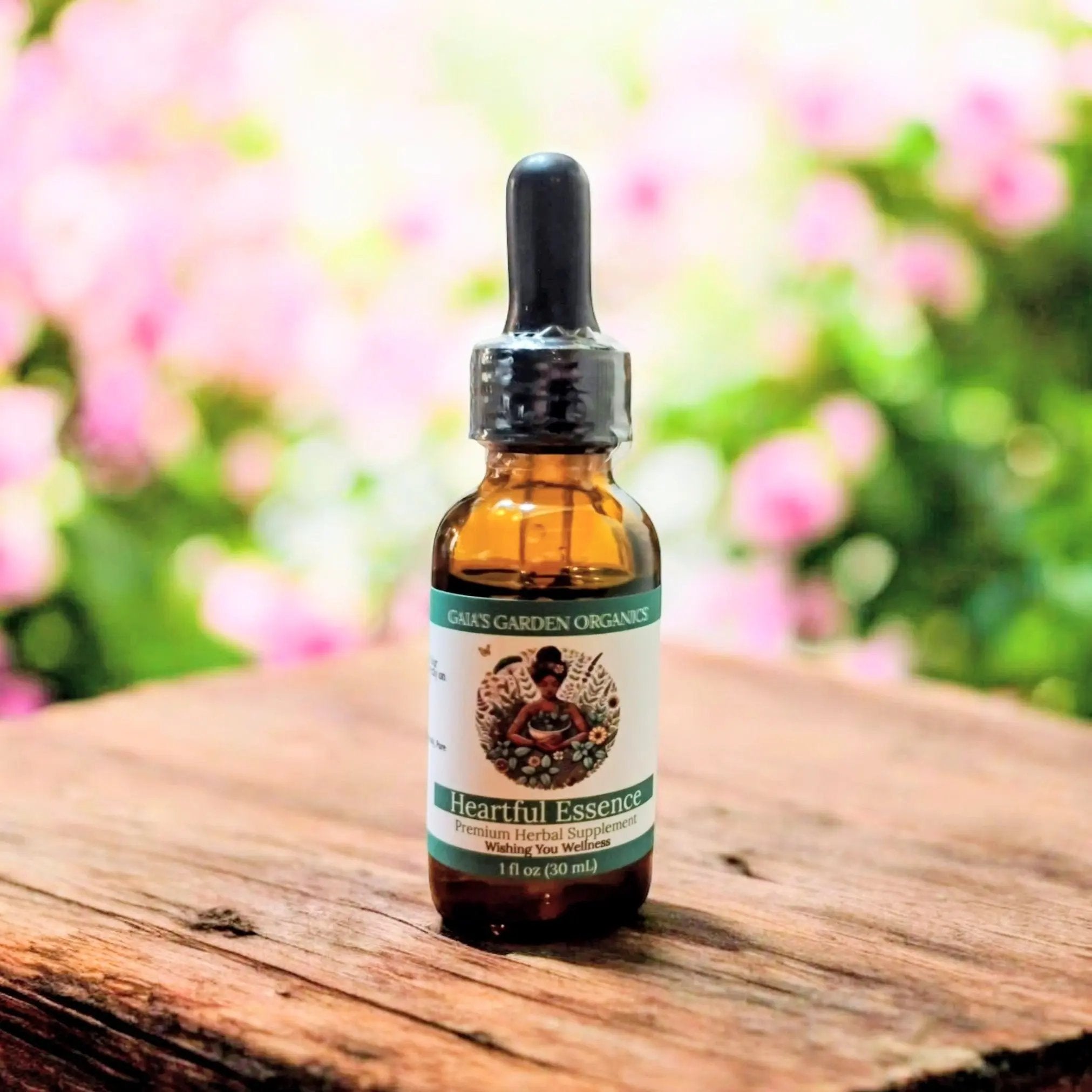
Rose is also the flower used to prepare our Heartful Essence. Where rose tea or tincture works through the herb's chemical constituents (volatile oils, tannins, polyphenols), the flower essence operates on the emotional-energetic level. Both preparations are heart-centered, but they reach the heart by different paths.
How we use rose at Gaia’s Garden
At Gaia's Garden Organics, rose (Rosa spp.) grows in our medicine garden in Umpire, Arkansas. We harvest it ourselves, by hand, at the moment its medicine is at peak.
In our formulas
Gaia's Heartful Essence - Organic Rose Flower Essence: Traditionally used to support heart-centered emotional healing, grief processing, and the slow softening that follows loss. Rose has been the classic emotional-healing ally across herbal traditions for thousands of years.
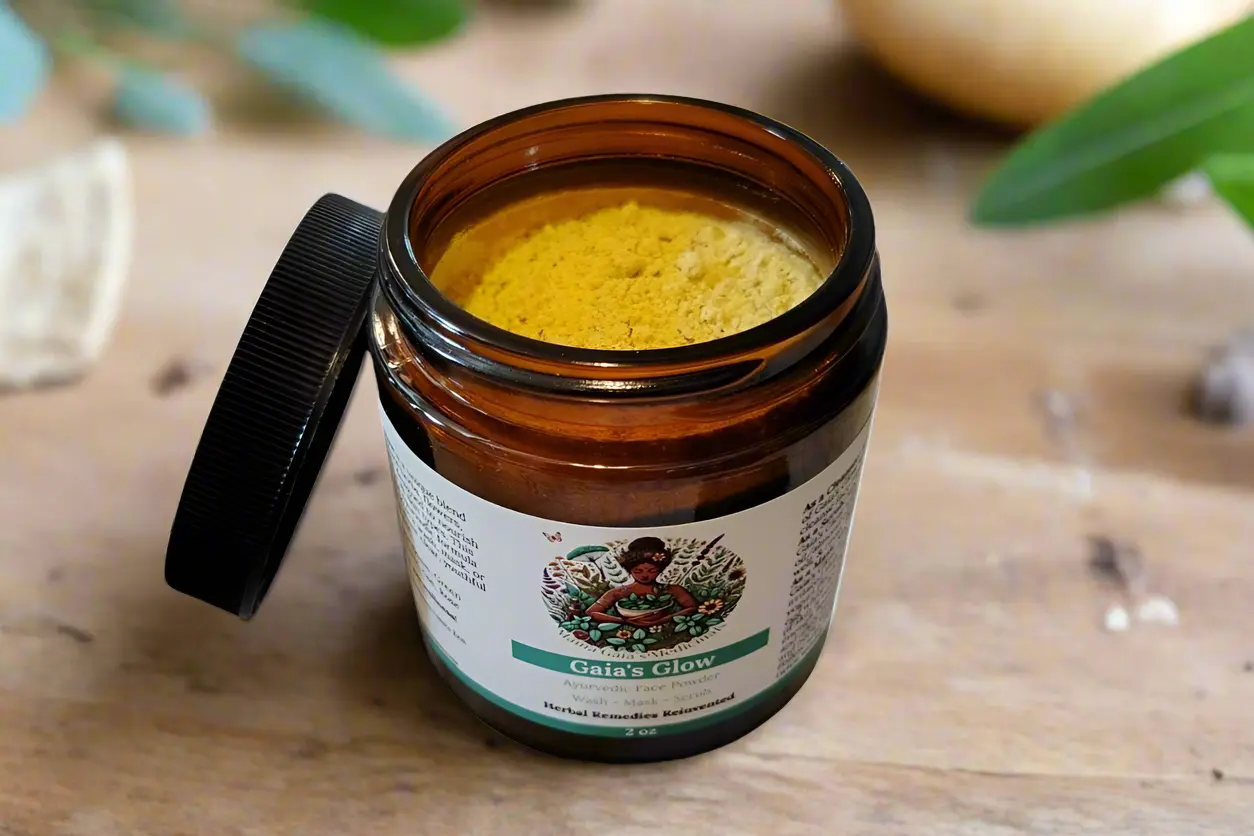
Gaia's Glow Ayurvedic Facial Powder: Natural antioxidants and a gentle, calming touch, the aromatic signature of this blend.
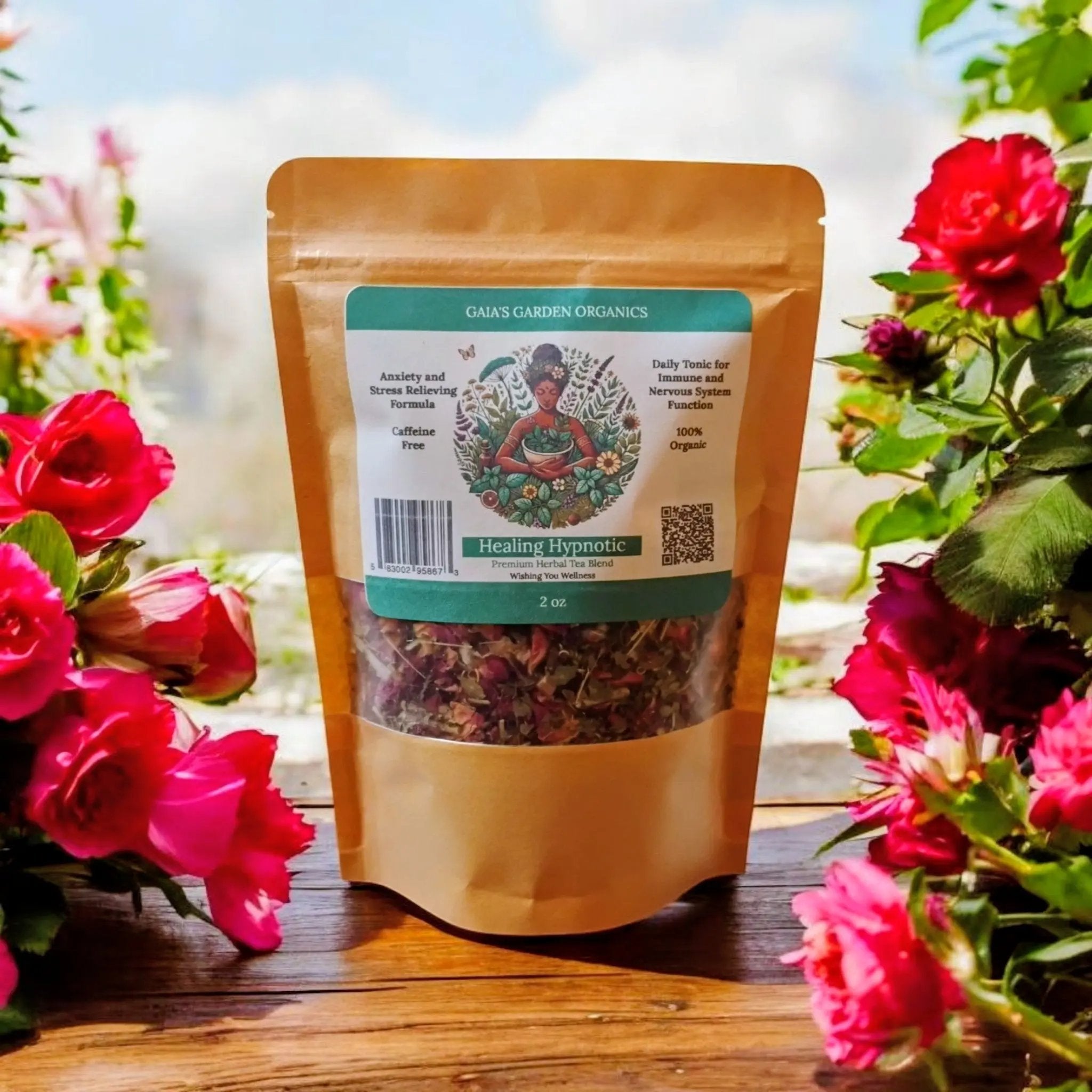
Gaia's Healing Hypnotic Herbal Tea: Heart-opening nervine, adds natural sweetness plus emotional softening for the end of a hard day.
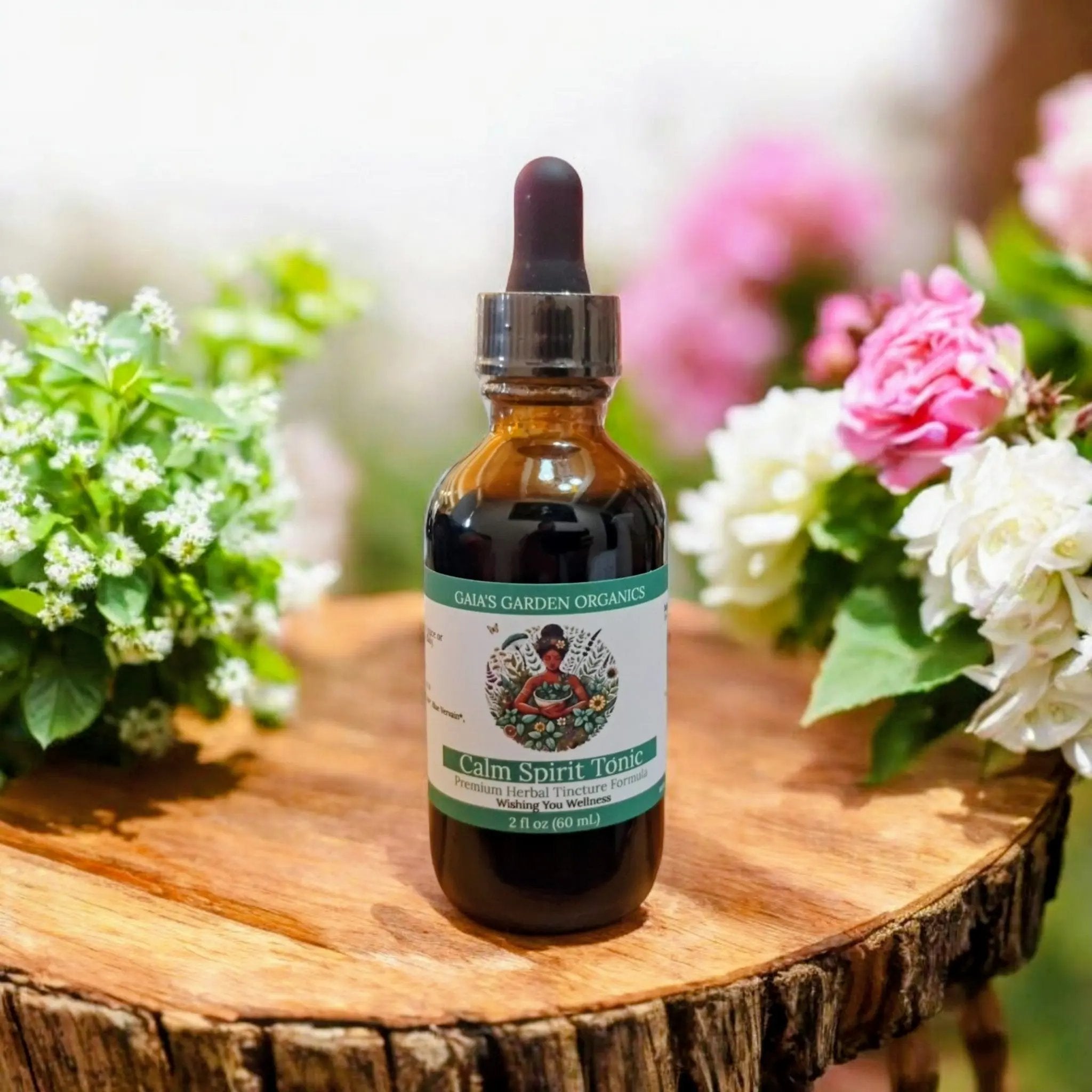
Gaia's Calm Spirit Tonic: Heart-opening nervine traditionally used to ease emotional reactivity and support a softer, more grounded response to stress.
Safety & considerations
Rose has an exceptionally clean safety profile, it has been food, medicine, and ritual ingredient for thousands of years across many cultures, and modern herbal references generally consider it among the safest nervines available.
Allergic sensitivity
People with severe pollen allergies occasionally react to rose petals (especially fresh) or rose hip products. If you have a known rose-family pollen allergy, introduce rose in small doses first.
Pregnancy and lactation
Rose tea and rose-petal preparations are generally considered safe during pregnancy and breastfeeding in moderate amounts, many traditional postpartum cultures use them specifically during this window. Concentrated rose essential oil internally is a different matter and should be avoided. Consult your midwife or obstetrician.
Drug interactions
Rose has very few documented drug interactions. The mild astringent quality means it can theoretically slow absorption of medications taken at the same time, separate by an hour as a precaution if you take medications on a strict schedule.
Children and pets
Rose is one of the gentlest pediatric nervines and is widely used in children's tea blends. For pets, the flower essence (Heartful) is safe for grieving or rescue animals at appropriate small doses. Rose tea is generally well-tolerated by dogs in small amounts; consult your veterinarian for pets on medication or with chronic illness.
Frequently asked
What's the difference between rose petals, rose hips, and rose flower essence?
Three different parts/preparations with different uses. Rose petals (the soft, fragrant flower) are the heart-centered nervine used in tea, tincture, and flower essence. Rose hips (the fruit that forms after the flower) are a vitamin-C-rich tonic used for immune support and connective tissue. Rose flower essence is a vibrational preparation made by sun-infusing the bloom, it works on the emotional level rather than biochemically.
Is rose really good for grief?
It has one of the longest and most consistent traditional reputations of any herb for grief and emotional tenderness. Modern clinical research is sparse, grief is hard to study in randomized trials, but the traditional record across many cultures is unusually unanimous. Clinical herbalists today still reach for rose first when the picture is grief-heavy.
Rose tea vs rose flower essence for emotional support, which one?
Different mechanisms, both useful, often used together. Rose tea has the herb's chemical constituents, aromatics, polyphenols, mild tannins, that directly affect the nervous and gut systems. Rose flower essence works on the emotional-energetic level and is preferred when the issue is purely emotional rather than somatic. Many people use both: tea daily, essence as needed for acute emotional moments.
Can I drink rose tea every day?
Yes, for most healthy adults. Daily rose tea has been a tradition across Persian, Indian, and European households for centuries. The mild astringency means it can occasionally cause gentle constipation in very high quantities; if so, reduce the amount or pair with a moistening tea like marshmallow.
Are roses from a flower shop the same as medicinal rose?
Almost never. Florist roses are typically heavily sprayed with pesticides and fungicides, and many are bred for appearance rather than aromatic potency. Always source rose petals from organic, food-grade growers (or grow your own) when using internally.
Is rose safe for grieving pets?
Rose flower essence (our Heartful Essence) is safe for dogs, cats, and horses at appropriate small doses, in fact, it's one of the most-recommended essences for pets who have lost a companion or are adjusting to household loss. Rose tea is generally well-tolerated by dogs in small amounts; consult your veterinarian, especially for pets on medication.
References
- American Botanical Council, Rose HerbalGram
- Boskabady MH et al. Pharmacological effects of Rosa damascena. Iran J Basic Med Sci. 2011;14(4):295-307
- Memorial Sloan Kettering About Herbs: Rose Hip
- Mountain Rose Herbs: Rose Petals monograph
- Bone K, Mills S. Principles and Practice of Phytotherapy. 2nd ed. Churchill Livingstone, 2013