Herb glossary
Mullein
Verbascum thapsus
Family: Scrophulariaceae · Parts used: Leaf and flower
Mullein (Verbascum thapsus) is the foundational lung herb of Western clinical herbalism, a soft-leafed biennial whose mucilaginous leaves have been used for at least two millennia for dry coughs, irritated airways, and the long, slow rebuilding of respiratory tissue.
Traditional uses
Mullein (Verbascum thapsus), sometimes called common mullein, great mullein, or "cowboy toilet paper" for its famously soft fuzzy leaves, is a biennial wildflower that grows in disturbed sunny soils across most of the temperate world. The first-year rosette of grey-green velvet leaves and the second-year tall yellow flower stalk are both used medicinally. Mullein has been a respiratory mainstay across European, Native American, and Appalachian folk medicine for hundreds of years, and a sudden surge in attention from social-media wellness culture in 2024-2025 has put it back on shopping lists for the first time in a generation.
Primary therapeutic territory
Mullein is the herb for the irritated, dry, or weakened lung, the persistent post-viral cough that won't quite resolve, the chronic dry tickle of seasonal allergies and air-quality irritation, the long-recovery breathing of bronchitis or pneumonia aftermath. Its mucilaginous leaves coat and soothe inflamed respiratory tissue; the saponins are mildly expectorant in a non-aggressive way; the overall personality is gentle, nourishing, and tonifying rather than acute. Many Western herbalists consider mullein the single most universally-applicable lung herb for tissue rebuilding.1,2
Other traditional uses
- Dry, unproductive coughs. Mullein's signature territory. Particularly the cough that lingers for weeks after a respiratory infection has otherwise cleared.
- Bronchial inflammation. Used as a daily tea or tincture during bronchitis recovery.
- Vape and ex-smoker lung support. The 2024-2026 wellness-culture interest in mullein has focused largely on this use case. Limited modern clinical research; the traditional rationale is sound.
- Seasonal respiratory irritation. Air pollution, wildfire smoke, and seasonal allergies, situations where the airways are chronically irritated by environmental factors.
- Earache. Topical mullein-flower-infused oil is one of the oldest folk remedies for ear pain in Western traditions, often combined with garlic.
- Lymphatic support. Mullein has a secondary traditional use as a mild lymphatic tonic, particularly for swollen submandibular glands during respiratory illness.
The fuzz: why straining matters
Mullein leaves are covered in tiny stellate hairs that, while harmless to handle, can irritate the throat if ingested. Always strain mullein tea through a fine cloth or coffee filter, not just a standard mesh strainer. This is the single most common mistake new mullein users make, it produces a scratchy, throat-irritating tea that is the opposite of what the herb is meant to do.3
In our garden and formulas
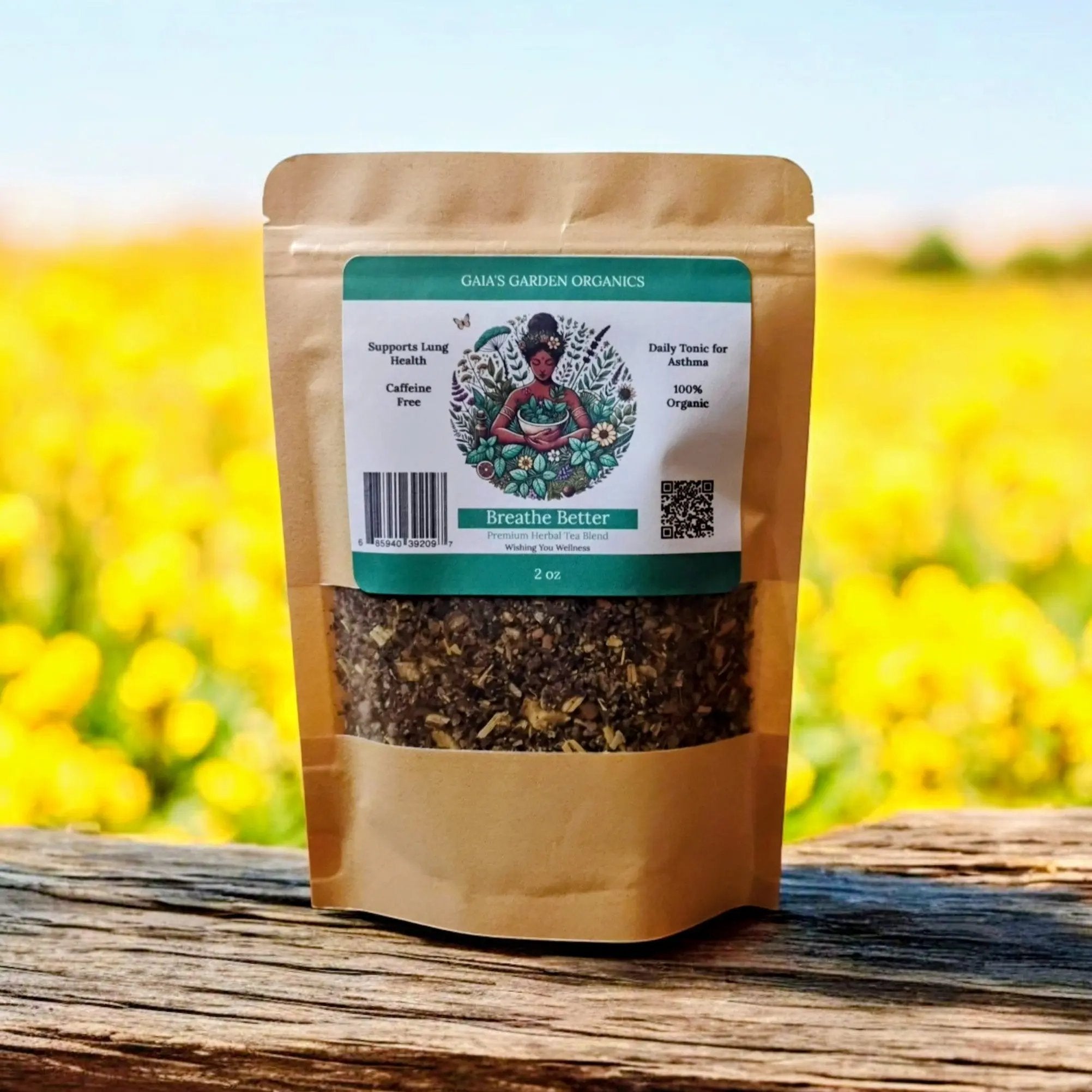
Mullein anchors our Breathe Better Tea as the foundational lung tonic, paired with licorice root and cinnamon for layered respiratory support.
How we use mullein at Gaia’s Garden
At Gaia's Garden Organics, mullein (Verbascum thapsus) grows in our medicine garden in Umpire, Arkansas. We harvest it ourselves, by hand, at the moment its medicine is at peak.
In our formulas
Gaia's Breathe Better Herbal Tea: Classic respiratory ally, traditionally used to support clear airways and productive, easy breathing.
Safety & considerations
Mullein has an excellent traditional safety record and is one of the gentlest lung herbs available. Most cautions are about preparation rather than the herb itself.
Strain the fuzz
As described above, the leaf hairs can irritate the throat if not properly filtered out. Use a fine cloth, paper coffee filter, or unbleached muslin, a standard mesh tea strainer is not enough.
Pregnancy and lactation
Mullein tea is generally considered safe during pregnancy and breastfeeding in moderate amounts. As with any herb, consult your midwife or obstetrician for regular use during these periods.
Drug interactions
Mullein has very few documented drug interactions. The mild diuretic effect of high doses may theoretically interact with diuretic medications. The mucilage may slow absorption of medications taken at the same time, separate by an hour as a precaution.
Active asthma or COPD
Mullein is supportive for chronic respiratory conditions but should not be used in place of prescribed inhalers, controllers, or bronchodilators. Talk with your pulmonologist before adding daily mullein if you have a diagnosed chronic lung condition.
Children and pets
Mullein is one of the gentler pediatric respiratory herbs, with traditional use in mild children's coughs and post-viral lingering symptoms. Always strain thoroughly. For pets, mullein has been used by holistic veterinarians for dogs with chronic respiratory issues; consult your veterinarian.
Frequently asked
Why is everyone suddenly talking about mullein tea?
Mullein had a viral wellness moment on TikTok and Instagram in 2024-2026, particularly around lung detox claims for ex-smokers, vapers, and people in wildfire-smoke regions. The traditional record actually supports much of this enthusiasm, mullein has been a Western respiratory mainstay for centuries, but some of the social-media claims (dramatic immediate transformation, etc.) overshoot the actual evidence. The herb is genuinely useful as a long-term respiratory tonic.
Why do I have to strain mullein tea so carefully?
The leaves are covered in tiny hair-like structures (stellate trichomes) that can irritate the throat if ingested. They look soft and harmless on the leaf, and they are, externally, but in tea they produce a scratchy, throat-tickling effect that contradicts the soothing point of the herb. Strain through a fine cloth, paper coffee filter, or unbleached muslin. A standard mesh tea strainer is not fine enough.
Mullein for vapers and ex-smokers, does it actually help?
Traditional use supports the rationale: mucilaginous coating of irritated airways, mild expectorant action, gentle long-term tonification. Modern clinical research specifically on this use case is limited. The honest answer is that mullein is a reasonable supportive herb during respiratory recovery from any irritant exposure, but it doesn't "detox" the lungs in the literal sense some social-media claims suggest. Improvement comes from time, abstinence, and tissue support, mullein helps with the third.
How long until mullein works?
For acute irritation (a fresh cough, post-viral throat tickle), some people feel soothing within hours. For chronic respiratory rebuilding, weeks to months of consistent daily use is typical. Mullein is a tonic, not an acute medicine, its strength is sustained gentle support rather than dramatic action.
Mullein leaf vs mullein flower, different uses?
Yes. The leaves are the lung herb described above. Mullein flowers are traditionally used in an infused oil for ear pain (often combined with garlic), that's a topical preparation, not internal. The flowers can also be steeped into tea but the leaves are the primary respiratory medicine.
Is mullein safe for kids and pets?
For children, yes, mullein is one of the gentler pediatric respiratory herbs, traditionally given as mild well-strained tea for lingering coughs. Always strain thoroughly. For pets, holistic veterinarians sometimes use mullein for dogs with chronic respiratory issues; consult your veterinarian, especially for pets on medication.
Does mullein tea actually help the lungs?
Traditional use supports the rationale: mullein's mucilage coats and soothes irritated airways, its saponins are mildly expectorant in a gentle way, and it tonifies respiratory tissue over time, which is why it's been a Western respiratory mainstay for centuries. Modern clinical research specifically on this use is limited, so the honest answer is that mullein is a reasonable supportive herb for the irritated, dry, or recovering lung rather than a dramatic fix. It's a tonic, so its strength is sustained gentle support, and it doesn't literally detox the lungs the way some social-media claims suggest.