Herb glossary · for the depleted caretaker, adrenally tired
Licorice Root
Glycyrrhiza glabra
Family: Fabaceae · Parts used: Root
Licorice root (Glycyrrhiza glabra) is one of the most-used herbs in traditional medicine globally, a sweet, demulcent, adrenal-supportive, anti-inflammatory powerhouse with a unique blood-pressure caveat that requires informed use.
Traditional uses
Licorice root (Glycyrrhiza glabra), sometimes simply "licorice", is a Mediterranean and Western Asian legume whose deeply-flavored root has been a major medicinal herb across European, Middle Eastern, Chinese, and Ayurvedic traditions for at least 4,000 years. In Traditional Chinese Medicine, licorice appears in more formulas than any other single herb, included not just for its own properties but for its capacity to harmonize and balance other herbs. In Western clinical herbalism, it serves as a foundational adrenal tonic, demulcent, and respiratory anti-inflammatory.1,2
Primary therapeutic territory
Licorice has three overlapping signature actions: it is a demulcent (soothing inflamed mucous membranes by coating them with mucilage), an adrenal tonic (supporting cortisol regulation and adrenal recovery from chronic stress), and an anti-inflammatory (with mechanisms partially overlapping the body's own corticosteroid pathways). This unusual combination makes licorice useful for the chronic-irritation pattern in respiratory, digestive, and adrenal contexts simultaneously, particularly the burned-out, dry, irritated presentation that depleted nervous systems often develop.
Other traditional uses
- Dry, irritated, chronic cough. One of the foundational respiratory demulcents, the herb you reach for when the lungs and throat are inflamed and underlying tissue support is what's needed. Often paired with mullein.
- Gastric ulcers and chronic heartburn. Deglycyrrhizinated licorice (DGL), a form with the blood-pressure-affecting compound removed, has substantial clinical-trial support for ulcer healing and reflux. Whole licorice has the same activity but with the blood-pressure caveat below.
- Chronic adrenal depletion. The classic herb for the "burned out, can't make cortisol on demand anymore" picture that emerges from years of chronic stress.
- Sore throat. Both internal (tea, tincture) and as a slow-dissolved lozenge for the demulcent coating effect.
- Eczema and chronic skin inflammation. Topical licorice extract has anti-inflammatory effects similar to mild corticosteroids without the skin-thinning side effect.
- Hepatic support. Traditional liver-protective use, particularly for chronic hepatitis. Glycyrrhizin has been studied as adjunctive treatment for chronic hepatitis C in some research.
The blood pressure caveat, important
Licorice's most distinctive feature, and most important caution, is its effect on the renin-angiotensin-aldosterone system. The compound glycyrrhizin (and its metabolite glycyrrhetinic acid) inhibits an enzyme that normally inactivates cortisol in the kidneys, leading to mineralocorticoid-like effects: sodium and water retention, potassium loss, and elevated blood pressure. At high doses or with prolonged daily use, this can produce clinically significant hypertension, hypokalemia (low potassium), and edema. The effect is dose-dependent and reversible; small culinary amounts in tea blends are generally fine, but daily medicinal-strength licorice should never be used by anyone with hypertension, kidney disease, heart failure, or who takes diuretic medications without medical supervision.3
In our garden and formulas
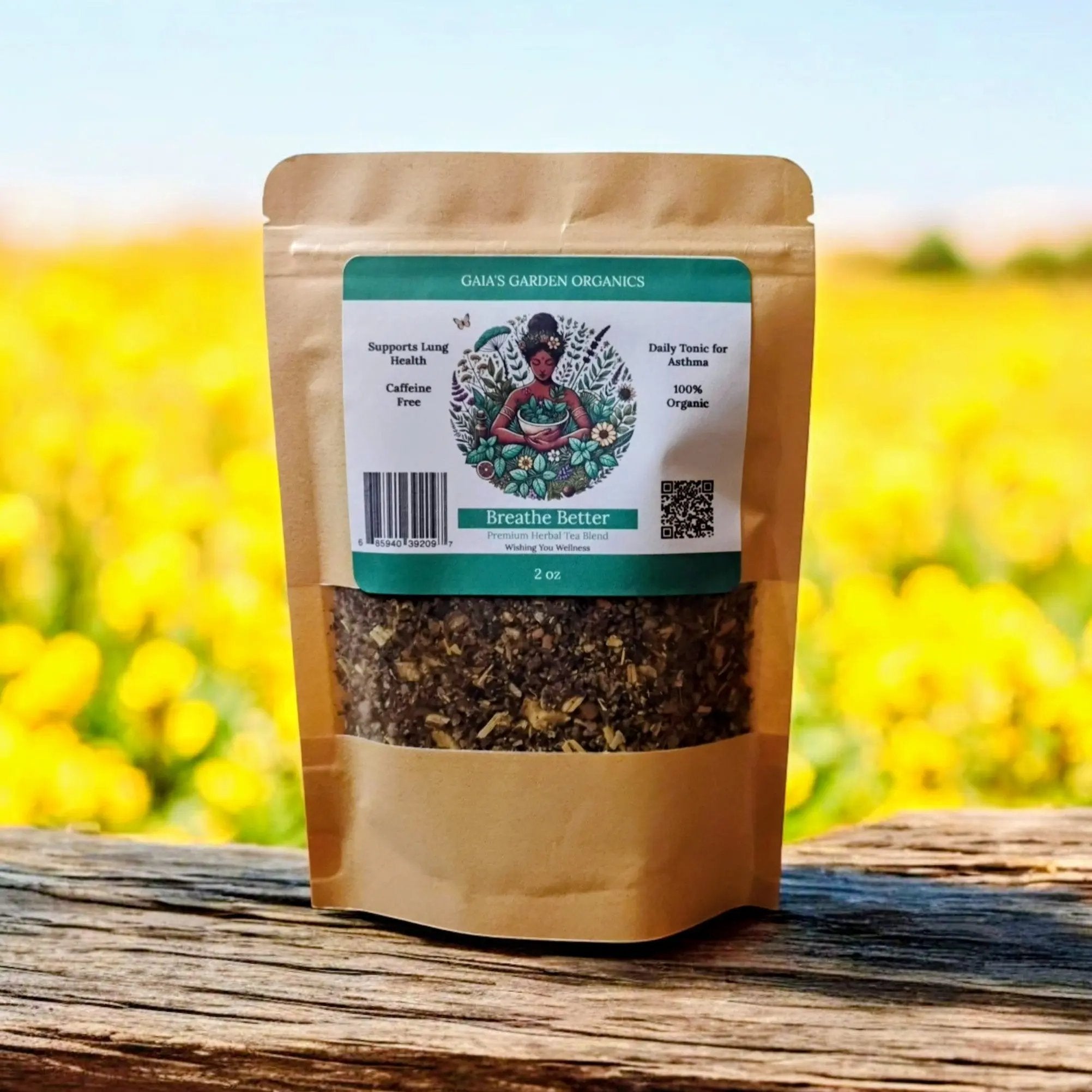
Licorice root appears in our Breathe Better Herbal Tea as the demulcent layer for irritated airways, alongside mullein and cinnamon. The amount in any single cup is well below what would cause blood-pressure issues for most people, but anyone with the conditions described above should consult a clinician before regular daily use.
How we use licorice root at Gaia’s Garden
At Gaia's Garden Organics, licorice root (Glycyrrhiza glabra) grows in our medicine garden in Umpire, Arkansas. We harvest it ourselves, by hand, at the moment its medicine is at peak.
In our formulas
Gaia's Breathe Better Herbal Tea: Traditionally used to soothe irritated tissues in the throat and airways. Adds a natural sweetness. (Note: if you are managing your blood pressure or take cardiovascular medication, consult a healthcare provider before daily long-term use.)
Safety & considerations
Licorice has the most situational safety profile of any herb in our garden, generally safe for most people in moderate amounts, but with several specific contraindications that require informed use.
Hypertension, kidney disease, heart failure
Daily medicinal-strength licorice is contraindicated in these conditions due to the glycyrrhizin-mediated effect on aldosterone and blood pressure. People with these conditions should avoid daily licorice tea and discuss any blend containing licorice with their physician.
Diuretic medication interactions
Licorice can cause significant potassium loss; combined with potassium-wasting diuretics (furosemide, hydrochlorothiazide), the effect can be additive and serious. People on these medications should avoid daily licorice without prescriber supervision.
Pregnancy
Daily medicinal-strength licorice is contraindicated during pregnancy. Several large epidemiological studies have linked heavy maternal licorice consumption with adverse neurodevelopmental outcomes in offspring. Occasional culinary amounts in tea blends are generally considered safe; daily medicinal use is not.
Hormonal sensitivity
Licorice has measurable effects on sex hormone metabolism (mild estrogenic and anti-androgenic activity). People with hormone-sensitive cancers or endocrine disorders should consult their oncologist or endocrinologist before regular use.
Length of use
Even in healthy adults, continuous daily medicinal-strength licorice for more than 4-6 weeks is generally not recommended without monitoring. Periodic breaks let the body re-establish baseline electrolyte and blood-pressure balance. DGL (deglycyrrhizinated) preparations don't have these limits.
Children and pets
Mild licorice in children's herbal tea blends has traditional use for cough but should be limited and short-term. For pets, avoid medicinal licorice except under veterinary supervision; the dose-response in smaller animals is more sensitive than in adults.
Frequently asked
Why does licorice raise blood pressure?
The compound glycyrrhizin inhibits an enzyme (11β-hydroxysteroid dehydrogenase) that normally inactivates cortisol in the kidneys. Without that inactivation, cortisol acts on mineralocorticoid receptors and produces effects similar to aldosterone, sodium retention, water retention, potassium loss, and elevated blood pressure. The effect is dose-dependent and reversible, but it's the reason licorice is the most situationally-cautioned herb in our garden.
What's the difference between licorice root and DGL?
DGL stands for deglycyrrhizinated licorice, a processed form with most of the glycyrrhizin (the blood-pressure-affecting compound) removed. DGL retains the demulcent and ulcer-healing properties of whole licorice without the cardiovascular risks, making it appropriate for daily long-term gut healing in people who can't use whole licorice. We use whole licorice in our tea blends; DGL is more typical of commercial digestive supplements.
Is the licorice in my Breathe Better Tea safe?
For most people in normal use, yes, the amount of licorice in a cup of blended tea is well below what would typically cause blood-pressure issues. The exceptions are people with hypertension, kidney disease, heart failure, who take diuretics, who are pregnant, or who would be drinking strong licorice tea daily for many weeks. If you're in any of those categories, talk to a clinician before regular use.
How much licorice tea is too much?
Variable by individual, but published cases of licorice-induced hypertension generally involve daily consumption of more than 100mg of glycyrrhizin per day for at least several weeks. A typical herbal-tea blend cup is well below this threshold. Strong licorice candy lovers (the actual licorice-extract kind, not the anise-flavored Twizzlers kind) can hit the threshold; people drinking 5+ cups of strong straight licorice tea daily for weeks can hit it; an occasional cup of a blend cannot.
Can I use licorice for chronic adrenal fatigue?
Licorice has a long traditional reputation for adrenal support, particularly for the burnout-and-can't-recover pattern. Modern research is mixed; the cortisol-extending mechanism is real but its clinical benefit for adrenal fatigue is still being studied. The blood-pressure caveat means licorice should not be daily medicinal use for more than 4-6 weeks at a time without monitoring. Working with a clinical herbalist is sensible for chronic adrenal protocols.
Is licorice safe for pets?
Generally avoid medicinal licorice for pets except under veterinary supervision. The blood-pressure and electrolyte effects can be more pronounced in smaller animals, and dosing is sensitive. Trace amounts in herbal preparations are usually fine; daily medicinal use is not appropriate without veterinary guidance.
References
- Asl MN, Hosseinzadeh H. Review of pharmacological effects of Glycyrrhiza spp. and its bioactive compounds. Phytother Res. 2008;22(6):709-24
- European Medicines Agency: Liquiritiae radix assessment report
- Memorial Sloan Kettering About Herbs: Licorice
- American Botanical Council / HerbalGram
- Mountain Rose Herbs: Licorice Root monograph