Herb glossary · for the cold-extremities, restless sleeper
Cinnamon
Cinnamomum verum
Family: Lauraceae · Parts used: Bark
Cinnamon (Cinnamomum verum, Ceylon cinnamon) is one of the most familiar warming spices in the global apothecary, a traditional circulatory stimulant, digestive aid, and the herb with the strongest modern clinical evidence for mild blood-sugar-regulating effects.
Traditional uses
Cinnamon comes from the inner bark of several species in the Cinnamomum genus. Two are most commonly used: Cinnamomum verum (also called C. zeylanicum), true Ceylon cinnamon, native to Sri Lanka, and Cinnamomum cassia (also called C. aromaticum), Chinese cassia, native to southern China. They look similar but have somewhat different therapeutic profiles and one important safety distinction. We use Ceylon cinnamon (C. verum) in our formulas. Both have been household and medicinal staples across Asian, Middle Eastern, and European traditions for at least 4,000 years.1
Primary therapeutic territory
Cinnamon's signature is warming and stimulating, to circulation, to digestion, to metabolism. Western clinical herbalism reaches for it when the picture is cold, sluggish, slow-digesting, or stagnating: cold hands and feet, slow digestion with gas, gentle support for blood-sugar regulation in pre-diabetic or insulin-resistant patterns, and in respiratory blends as a warming counterpoint to cooler herbs. Multiple human trials have shown modest improvements in fasting blood glucose and HbA1c (a longer-term blood sugar measure) in people with type 2 diabetes from regular cinnamon supplementation, though effect sizes vary considerably.1,2
Other traditional uses
- Blood sugar regulation in pre-diabetes and insulin resistance. The most-studied modern application; useful as part of broader lifestyle and dietary changes, not as standalone diabetes management.
- Cold hands and feet, peripheral circulation. A traditional warming circulatory tonic for the cold-extremities pattern.
- Digestive sluggishness with gas. A carminative spice for the slow-digestion, can't-absorb-properly pattern.
- Cold-weather respiratory support. The warming, mildly antimicrobial quality makes cinnamon traditional in cold-and-flu blends, particularly when the picture includes chill and slow circulation rather than fever and heat.
- Menstrual cramping with cold pattern. Traditional use for cramping that responds to warmth.
- Blood-pressure-supportive in some studies. A small body of research has shown mild blood-pressure-lowering effects, particularly in people with metabolic syndrome.
Ceylon vs Cassia, the coumarin distinction
The most important difference between Ceylon cinnamon (C. verum) and Cassia cinnamon (C. cassia) is the coumarin content. Cassia contains 1-2% coumarin by weight; Ceylon contains 0.004%, roughly 100-200 times less. Coumarin in high regular doses can cause liver toxicity. People who consume large amounts of cinnamon daily (in supplements, in tea, in heavily-spiced foods) should preferentially use Ceylon cinnamon for this reason. Most American grocery-store cinnamon is unlabeled cassia; reputable medicinal-quality cinnamon should be specified as Ceylon. We use Ceylon cinnamon in our blends.3
In our garden and formulas
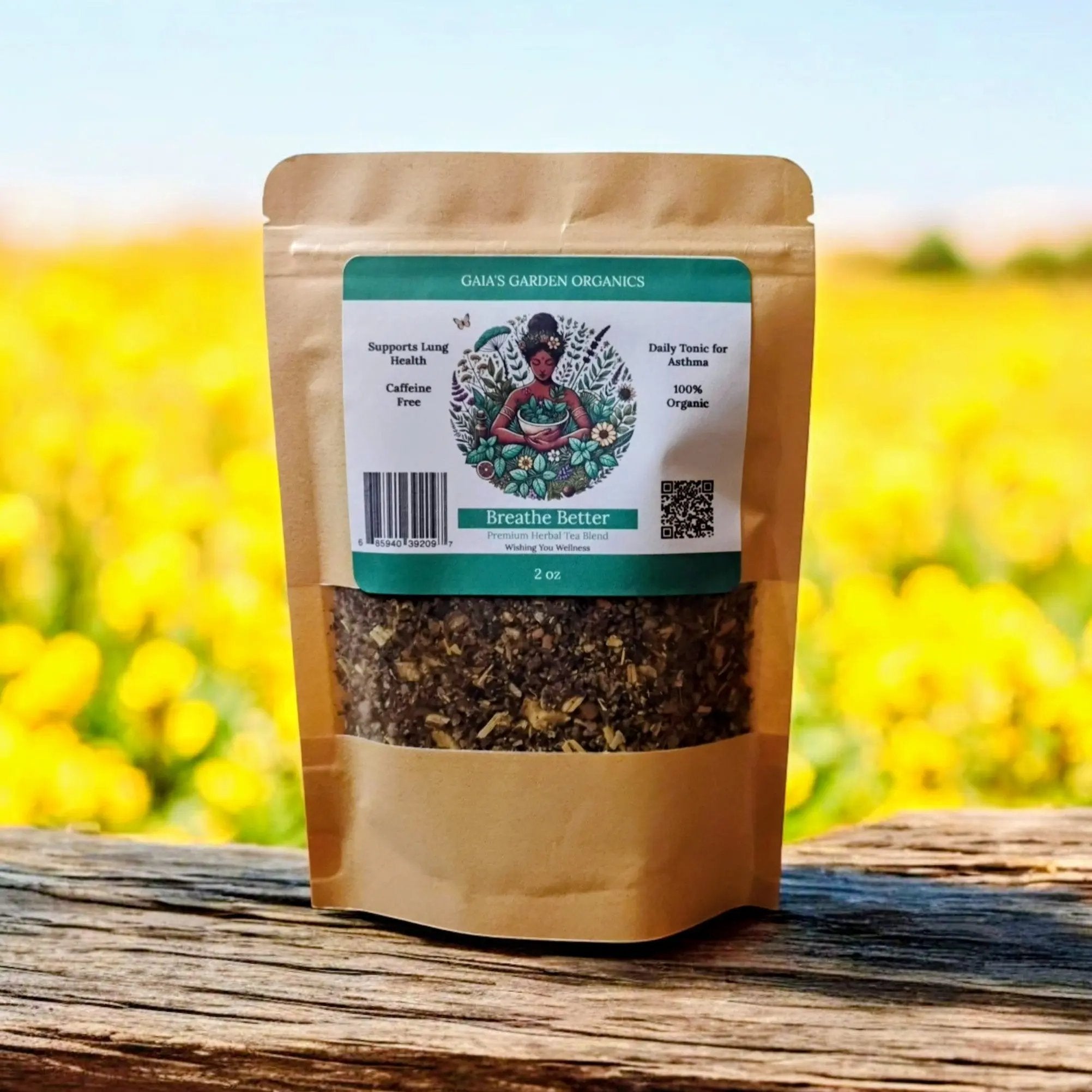
Cinnamon appears in our Breathe Better Herbal Tea as the warming circulatory layer alongside mullein and licorice root, useful for the chill-and-congestion pattern of cold-weather respiratory support.
How we use cinnamon at Gaia’s Garden
At Gaia's Garden Organics, cinnamon (Cinnamomum verum) grows in our medicine garden in Umpire, Arkansas. We harvest it ourselves, by hand, at the moment its medicine is at peak.
In our formulas
Gaia's Breathe Better Herbal Tea: Warming aromatic with traditional antimicrobial properties, supports the body during seasonal transitions.
Safety & considerations
Cinnamon is generally safe in the small amounts used for culinary and herbal-tea purposes. The cautions are around concentrated supplementation and the Cassia/Ceylon distinction.
Coumarin and liver toxicity (Cassia, not Ceylon)
High daily doses of Cassia cinnamon (more than 1-2 teaspoons per day, sustained over months) can produce liver toxicity due to coumarin content. Ceylon cinnamon contains roughly 100-200 times less coumarin and does not have this concern at any reasonable dose. If using cinnamon supplementation regularly for blood sugar or other purposes, use Ceylon.
Anticoagulant interactions
Coumarin in Cassia cinnamon has very mild blood-thinning activity and may compound anticoagulant medications (warfarin, apixaban). Ceylon has minimal coumarin and minimal interaction. If you take an anticoagulant, prefer Ceylon and discuss with your prescriber before regular supplementation.
Diabetes medications
Because cinnamon has measurable blood-sugar-lowering effects, regular supplementation combined with diabetes medication can require dose adjustment. Anyone on insulin or oral diabetes medication should monitor blood glucose if introducing daily medicinal cinnamon.3
Pregnancy and lactation
Culinary amounts of cinnamon are generally considered safe during pregnancy and breastfeeding. Concentrated supplementation, especially of Cassia, should be avoided during pregnancy due to potential uterine-stimulant action.
Children and pets
Cinnamon in small culinary amounts is widely tolerated by children. For pets, small amounts of Ceylon cinnamon are generally safe for dogs; concentrated cinnamon and Cassia varieties should be avoided. Cats are more sensitive, avoid except in trace amounts. Concentrated cinnamon essential oil should never be used internally in pets and is potentially toxic.
Frequently asked
What's the difference between Ceylon and Cassia cinnamon?
Two different species. Ceylon cinnamon (Cinnamomum verum, native to Sri Lanka) is the more delicately flavored, more expensive, and contains very little coumarin (0.004%). Cassia cinnamon (Cinnamomum cassia, native to southern China) is sharper-tasting, cheaper, and contains 1-2% coumarin, 100-200 times more. Coumarin in high daily doses can cause liver toxicity. Most American grocery-store cinnamon is unlabeled cassia. We use Ceylon in our tea blends.
Does cinnamon really help with blood sugar?
There's modest clinical evidence, meta-analyses of multiple trials have shown small but statistically significant reductions in fasting blood glucose and HbA1c in people with type 2 diabetes from daily cinnamon supplementation. The effect size varies considerably across studies and individuals. Cinnamon is reasonable supportive nutrition alongside lifestyle changes and prescribed treatment, not a replacement for diabetes medication.
How much cinnamon for blood sugar effects?
Most clinical trials used 1-6 grams (roughly ½ to 2 teaspoons) of cinnamon per day, often as encapsulated powder, sustained for at least 8-12 weeks before measuring outcomes. If using this much daily, switch to Ceylon to avoid coumarin issues. The amount in any single cup of our blended tea is much less and primarily there for the warming and circulatory action.
Is cinnamon safe to take with my diabetes medication?
Talk to your prescribing clinician first. Because cinnamon has measurable blood-sugar-lowering effects, the combined effect with insulin or oral diabetes medication can sometimes require dose adjustment of the medication. This is monitorable rather than dangerous, but it should be a conversation with your prescriber rather than a self-decision.
Can I take cinnamon while pregnant?
Culinary amounts (cinnamon in oatmeal, in baked goods, in herbal tea blends) are generally considered safe. Concentrated daily cinnamon supplementation, especially Cassia, should be avoided during pregnancy due to potential uterine-stimulant effects of high coumarin doses. As always, consult your midwife or obstetrician for any regular herbal supplementation.
Is cinnamon safe for pets?
Small amounts of Ceylon cinnamon are generally safe for dogs and have been used by holistic veterinarians for senior dog metabolic support. Concentrated cinnamon, Cassia varieties, and especially cinnamon essential oil should be avoided. Cats are more sensitive, avoid except in trace amounts. Always consult your veterinarian, especially for pets on medication.
References
- Allen RW et al. Cinnamon use in type 2 diabetes: an updated systematic review and meta-analysis. Ann Fam Med. 2013;11(5):452-9
- Costello RB et al. Do cinnamon supplements have a role in glycemic control in type 2 diabetes? A narrative review. J Acad Nutr Diet. 2016;116(11):1794-1802
- Memorial Sloan Kettering About Herbs: Cinnamon
- American Botanical Council / HerbalGram
- Mountain Rose Herbs: Ceylon Cinnamon monograph