Herb glossary · for the desk-bound body
Turmeric
Curcuma longa
Family: Zingiberaceae · Parts used: Rhizome
Turmeric (Curcuma longa) is the deep-orange Ayurvedic root behind one of the most clinically-studied anti-inflammatory herbs in modern phytotherapy, a traditional joint, skin, and digestive ally with significant drug-interaction caveats.
Traditional uses
Turmeric (Curcuma longa) is a tropical ginger-family rhizome native to South and Southeast Asia, cultivated continuously for at least 4,000 years. Its bright orange flesh is the source of curcumin and related curcuminoids, the compounds responsible for both the dramatic color and most of the herb's medicinal action. Turmeric is foundational across Ayurvedic, Traditional Chinese, Unani, and Southeast Asian household medicine, and is now one of the most-studied herbs in modern Western phytotherapy with thousands of published trials and reviews.1,2
Primary therapeutic territory
Turmeric's signature is anti-inflammatory action, broad-spectrum, mechanism-rich, and clinically documented across multiple inflammatory conditions. Modern research has shown effects on osteoarthritis pain comparable to over-the-counter NSAIDs, mild improvements in inflammatory markers in metabolic syndrome and type 2 diabetes, anti-inflammatory effects on chronic skin conditions, and adjunctive benefit in some inflammatory bowel conditions. The traditional use as a daily kitchen-medicine spice across South Asia is, by modern standards, an unusually long-running natural experiment in low-dose anti-inflammatory support.1
Bioavailability, important context
Curcumin's most-cited limitation is its poor oral bioavailability when taken alone, without specific preparation, very little crosses the gut wall into the bloodstream. Two traditional preparation methods dramatically improve absorption: combining with black pepper (piperine increases absorption 20-fold) and combining with fat (curcumin is fat-soluble). The traditional Indian "golden milk", turmeric with black pepper, ghee or coconut milk, and warming spices, is essentially the optimal absorption preparation arrived at by tradition and confirmed by modern research.
Other traditional uses
- Joint pain and osteoarthritis. The most-studied modern application; some standardized turmeric extracts have shown effects comparable to ibuprofen in clinical trials.
- Chronic skin inflammation. Topical turmeric paste is the traditional Ayurvedic preparation for eczema, acne, dull skin, and minor wounds. Internal use for chronic inflammatory skin conditions also has long traditional support.
- Digestive support and gentle bitter. A traditional carminative and liver-supportive spice; useful for sluggish digestion, particularly in people whose gut tolerates spicy and warming foods.
- Cardiovascular and metabolic support. Mild improvements in cholesterol, blood sugar, and inflammatory markers in metabolic syndrome.
- Mild mood support. A growing body of research has shown anti-depressant effects in some populations, possibly through the same anti-inflammatory mechanism that operates in physical conditions.
In our formulas
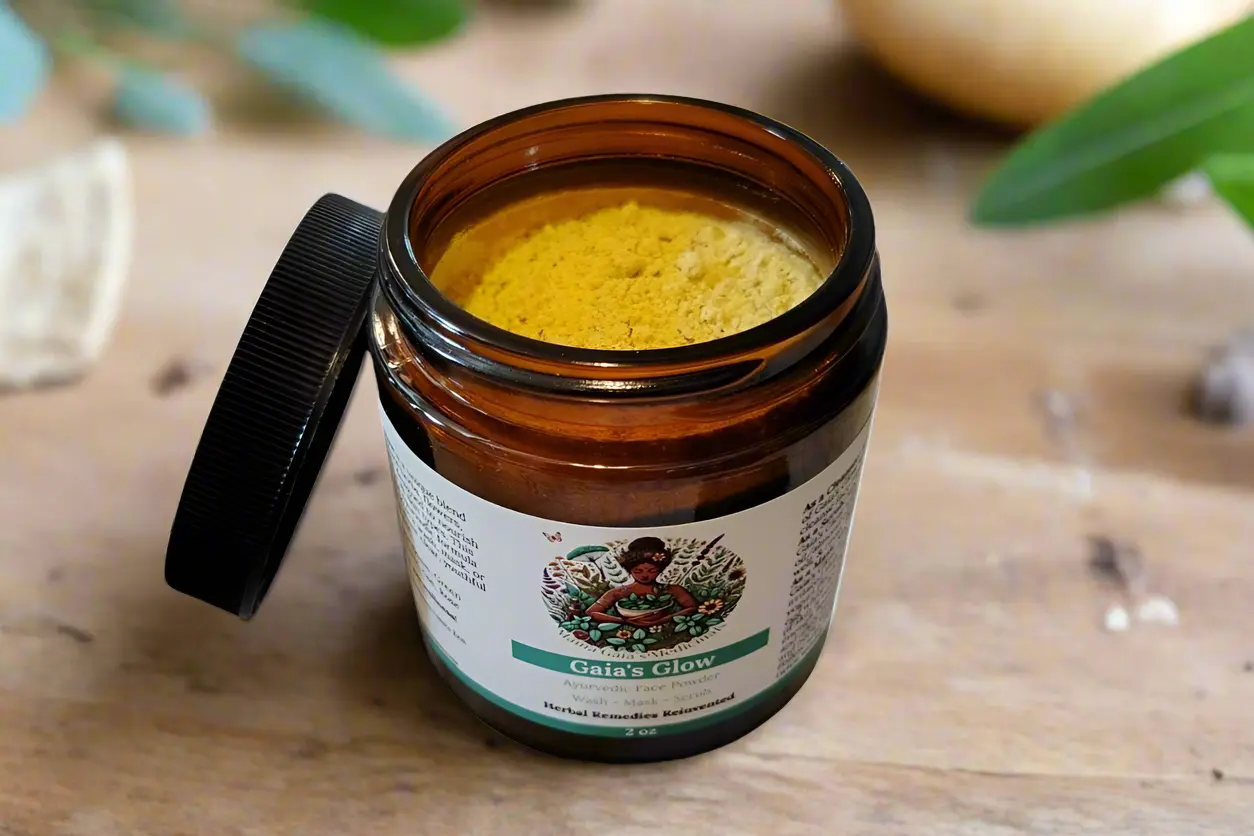
Turmeric is one of the foundational botanicals in our Ayurvedic Face Powder, where its anti-inflammatory and brightening qualities have been recognized in traditional Indian skincare for thousands of years.
How we use turmeric at Gaia’s Garden
At Gaia's Garden Organics, turmeric (Curcuma longa) grows in our medicine garden in Umpire, Arkansas. We harvest it ourselves, by hand, at the moment its medicine is at peak.
In our formulas
Gaia's Glow Ayurvedic Facial Powder: Antioxidant-rich Ayurvedic spice traditionally valued for its skin-brightening and calming properties.
Safety & considerations
Turmeric is generally safe at culinary doses and most traditional medicinal preparations. The cautions are about specific drug interactions and concentrated supplements.
Anticoagulant medications
Turmeric has measurable blood-thinning effects. Combined with anticoagulant medications (warfarin, apixaban, rivaroxaban) or daily aspirin, the effect can be additive and increase bleeding risk. Anyone on these medications should consult their prescriber before regular medicinal-strength turmeric. Discontinue turmeric supplements at least two weeks before planned surgery.3
Gallbladder disease and gallstones
Turmeric stimulates bile flow, which can provoke pain in people with gallstones or gallbladder obstruction. Avoid medicinal-strength turmeric if you have known gallstones; consult your physician.
Iron absorption
Turmeric can mildly inhibit iron absorption when consumed at the same time as iron-rich meals or supplements. Separate by an hour as a precaution if you're managing low iron.
Diabetes medications
Turmeric has mild blood-sugar-lowering effects. Combined with diabetes medication, this can occasionally require dose adjustment of the medication. Monitor blood glucose if introducing daily medicinal turmeric.
Pregnancy
Culinary amounts of turmeric are generally considered safe during pregnancy. Concentrated turmeric supplements should be avoided during pregnancy due to traditional emmenagogue reputation and limited safety research. Topical use, including in face powders, is generally fine. Consult your midwife.
Liver concerns
A small number of case reports have associated high-dose turmeric supplements with hepatotoxicity, particularly in formulations with enhanced bioavailability. The mechanism remains unclear. Anyone with active liver disease should consult their physician before regular medicinal-strength use.
Children and pets
Culinary amounts of turmeric are tolerated by older children. For pets, small amounts of turmeric powder mixed with food and fat have been used by holistic veterinarians for older dogs with arthritis; consult your veterinarian, especially for pets on anti-inflammatory or anticoagulant medications.
Frequently asked
Is turmeric in food the same as a turmeric supplement?
Different doses, somewhat different absorption. The amount of curcumin in food-grade turmeric is small, especially without piperine (black pepper) and fat to enhance absorption. Standardized supplements often contain 95% curcuminoids and may include absorption-enhancers like piperine or phospholipid carriers. Food turmeric is reasonable daily nutrition; supplements push toward pharmacological territory and have stronger drug-interaction concerns.
Does turmeric actually work for joint pain?
Yes, with strong clinical-trial support. Multiple randomized controlled trials and meta-analyses have shown standardized turmeric extracts produce reductions in osteoarthritis pain and stiffness comparable to over-the-counter NSAIDs (like ibuprofen) but with better gastrointestinal tolerance. Effects are generally apparent at 4-8 weeks of consistent daily use.
Why do I need black pepper with turmeric?
Curcumin (turmeric's main active compound) has notoriously poor oral absorption when taken alone. Piperine, the active compound in black pepper, increases curcumin absorption by approximately 2,000% (20-fold) by inhibiting the gut and liver enzymes that normally break it down. The traditional Indian "golden milk", turmeric, black pepper, fat, is essentially the optimal absorption preparation, arrived at by tradition centuries before modern bioavailability research confirmed it.
Is turmeric safe with my blood thinner?
Talk to your prescriber first. Turmeric has measurable blood-thinning effects, and combined with warfarin, apixaban, or daily aspirin can additively increase bleeding risk. This is monitorable rather than necessarily dangerous, but it's a conversation with your prescribing clinician, and you should stop turmeric supplements at least two weeks before planned surgery.
Can I use turmeric on my skin without staining everything?
Internal turmeric powder will absolutely stain skin temporarily yellow, this is part of its traditional Indian wedding face-powder use, intended to brighten the skin in the days before a ceremony. The staining fades over hours-to-a-day with washing. Modern face powders (including ours) typically use turmeric in small amounts blended with other ingredients, so the staining is much milder and rinses out fully.
Is turmeric safe for pets?
Small amounts of turmeric powder mixed with food and fat have been used by holistic veterinarians for older dogs with arthritis, a "golden paste" tradition similar to the human golden milk preparation. Always consult your veterinarian, especially for pets on anti-inflammatory or anticoagulant medications. Cats tolerate turmeric less well; use only under veterinary guidance.
References
- Daily JW et al. Efficacy of turmeric extracts and curcumin for alleviating the symptoms of joint arthritis. J Med Food. 2016;19(8):717-29
- Hewlings SJ, Kalman DS. Curcumin: a review of its effects on human health. Foods. 2017;6(10):92
- Memorial Sloan Kettering About Herbs: Turmeric
- American Botanical Council / HerbalGram
- Mountain Rose Herbs: Turmeric Root monograph