Herb glossary · for the chest-tight, racing-thought adult
Lavender
Lavandula angustifolia
Family: Lamiaceae · Parts used: Flowers at peak fragrance
Lavender (Lavandula angustifolia) is one of the most universally familiar nervines in Western herbalism, a calming, gently aromatic ally for anxiety, restlessness, tension headaches, and the kind of overstimulation that won't let go of the body.
Traditional uses
Lavender (Lavandula angustifolia), sometimes called English lavender, is a Mediterranean-origin shrub of the mint family, named from the Latin lavare, "to wash," for its long history in Roman bath houses. It has been a household herb across Europe for over 2,000 years, woven into pillows for sleep, distilled into oils for wound care, and steeped into teas for nervous unrest.
Primary therapeutic territory
Lavender is one of the most-studied calming herbs in modern phytotherapy. Clinical research, particularly on standardized lavender-essential-oil preparations, has found measurable effects on generalized anxiety, restlessness, and sleep quality.1,2 The whole-herb tea and tincture share these qualities at gentler intensity. Western clinical herbalism classifies lavender as a nervine relaxant and mild anxiolytic, with a particular affinity for tension that lives in the head, jaw, and shoulders.
Other traditional uses
- Tension headaches. The classic herb for the headache that comes from clenched-jaw, hunched-shoulder stress. Both topical (compress, infused oil) and internal (tea) preparations have a long folk reputation here.
- Sleep onset. A lavender-pillow tradition stretches across European folk medicine; modern aromatherapy research has found small but measurable improvements in sleep latency from lavender oil at the bedside.
- Digestive upset from anxiety. Lavender is one of the carminative nervines, herbs that calm both the mind and the gut at the same time. Useful when worry shows up as a knotted stomach.
- Postpartum and perimenopausal mood support. Used traditionally during hormonal transitions to ease irritability and emotional reactivity.
- Pediatric use. One of the gentlest nervines for the wound-up or bedtime-resistant child; small doses of mild tea are a long-standing folk practice.
The flower essence connection
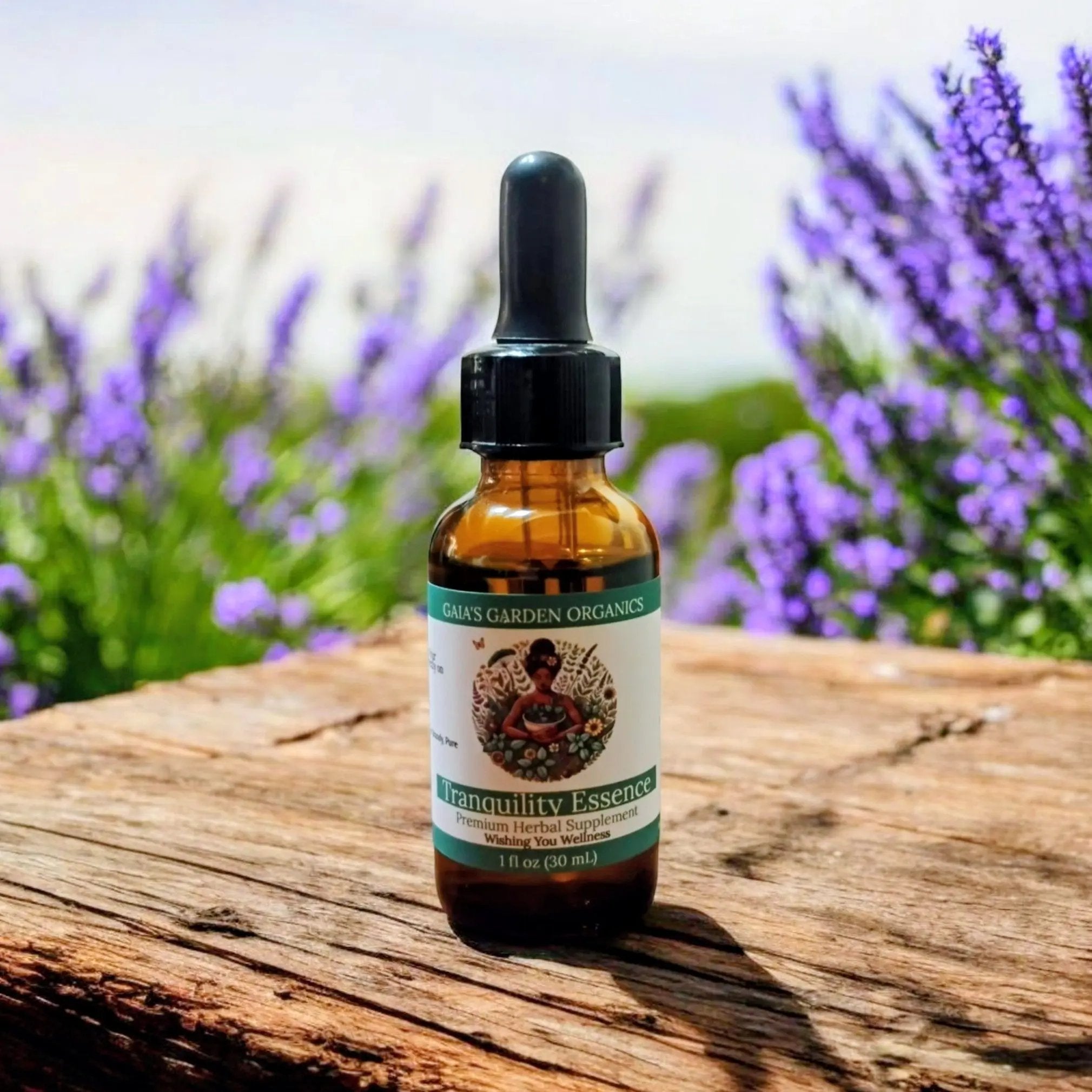
Lavender is also the flower used to prepare our Tranquility Essence, though flower essences work on the emotional and subtle-energetic level rather than through the chemical constituents that drive lavender's herbal-tea effects. Both preparations share lavender's calming reputation but operate on different pathways.
How we use lavender at Gaia’s Garden
At Gaia's Garden Organics, lavender (Lavandula angustifolia) grows in our medicine garden in Umpire, Arkansas. We harvest it ourselves, by hand, at the moment its medicine is at peak.
In our formulas
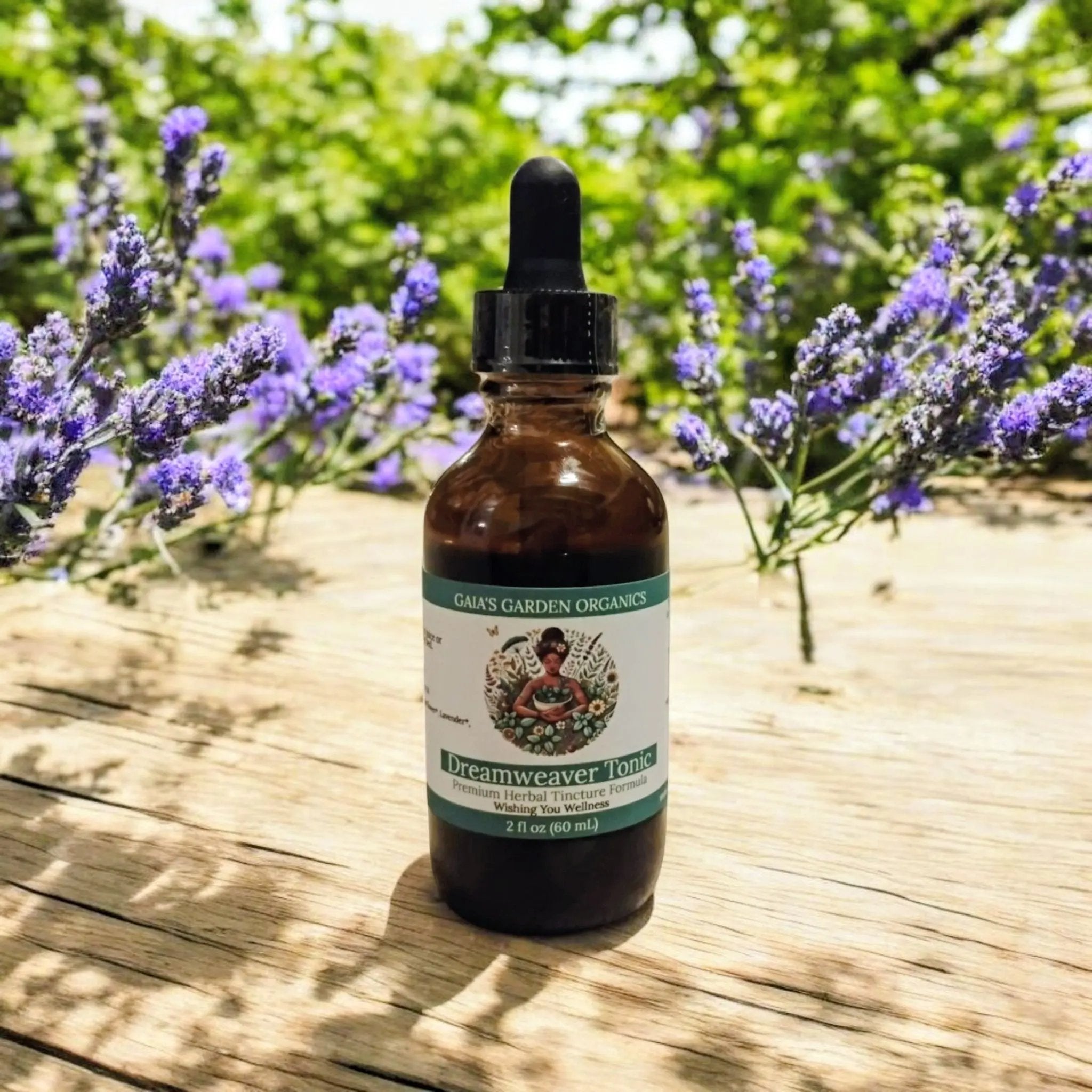
Gaia's Dreamweaver Tonic: Classic gentle sedative and neuromuscular relaxant, traditionally used to ease the physical clench that keeps the body from settling into rest.
Gaia's Tranquility Essence - Organic Lavender Flower Essence: Traditionally used to support a calm mood during occasional stress. The emotional signature of our Tranquility essence, lavender's reputation as a nervous-system ally spans clinical herbalism, Ayurveda, and traditional European folk medicine.
Safety & considerations
Lavender has an exceptionally favorable safety profile and is one of the most widely-used herbs in Western culture. A few notes for full clinical-accuracy:
Sedative interactions
Lavender preparations may compound the effect of pharmaceutical sedatives or sleep medications. The interaction is generally mild compared to stronger nervines, but it's worth flagging if you take benzodiazepines or prescription sleep aids.
Pregnancy and lactation
Mild lavender tea is generally considered safe during pregnancy and breastfeeding in moderate amounts. Concentrated lavender essential oil internally is a different matter and should be avoided. Consult your midwife or obstetrician before using any herb regularly during pregnancy.
Hormone-sensitive conditions
A small amount of research has suggested some lavender-essential-oil compounds may have weak estrogenic activity. The clinical relevance for whole-herb tea or tincture appears minimal, but anyone with a hormone-sensitive condition (certain breast cancers, endometriosis) should discuss with their oncologist or specialist.3
Children and pets
Mild lavender tea is among the gentlest pediatric nervines. For pets, lavender has traditional use for anxious dogs and cats, though concentrated essential oils are not safe for cats and should never be applied to or ingested by them. The flower essence we make from lavender is safe for pets at appropriate small doses; consult your veterinarian for pets on medication.
Allergic sensitivity
Skin contact with concentrated lavender oil occasionally causes irritation in sensitive individuals. Tea or tincture rarely produces this reaction.
Frequently asked
What's the difference between lavender essential oil, lavender tea, and lavender flower essence?
Three completely different preparations with different mechanisms. Essential oil is a concentrated steam-distilled extract used aromatically or topically. Tea (or tincture) is a water/alcohol extract used internally, gentler and slower-acting. Flower essence is a vibrational preparation made by sun-infusing the bloom; it works on the emotional level, not biochemically.
Is lavender good for sleep?
Yes, with clinical support. Both inhaled lavender (essential oil at the bedside) and internal preparations (tea, tincture) have research showing modest improvements in sleep onset and quality. Lavender is most useful for the over-stimulated, can't-shut-the-mind-off pattern of insomnia rather than physical exhaustion-without-sleep.
Lavender vs chamomile for anxiety?
Both are gentle nervines but with different fingerprints. Lavender is more aromatic and has stronger evidence for measurable anxiety effects in clinical studies; chamomile is softer, more digestive-leaning, and excellent for the worried-stomach pattern. Many calming tea blends combine both.
Can I take lavender daily?
Yes, most healthy adults tolerate daily lavender tea or low-dose tincture indefinitely. If you're taking it for chronic anxiety, it's worth pairing with periodic check-ins with a healthcare provider to make sure you're not masking a treatable underlying cause.
Is lavender safe for pets?
Lavender flower essence is safe for dogs, cats, and horses at appropriate small doses. Lavender tea or tincture is generally tolerated by dogs but should be avoided in cats due to alcohol sensitivity (for tincture) and feline metabolic quirks. Concentrated essential oils, especially undiluted, are NOT safe for cats and can be toxic; always avoid topical or internal use of essential oil with cats.
Does lavender lower blood pressure?
Some small studies have shown mild blood-pressure-lowering effects from lavender aromatherapy, particularly in stressful clinical settings. The effect appears to be largely mediated through stress reduction rather than a direct cardiovascular action. The clinical relevance is mild, lavender is not a hypertension treatment.