Herb glossary · for the recovering people-pleaser
Goldenrod
Solidago spp.
Family: Asteraceae · Parts used: Aerial parts at peak bloom
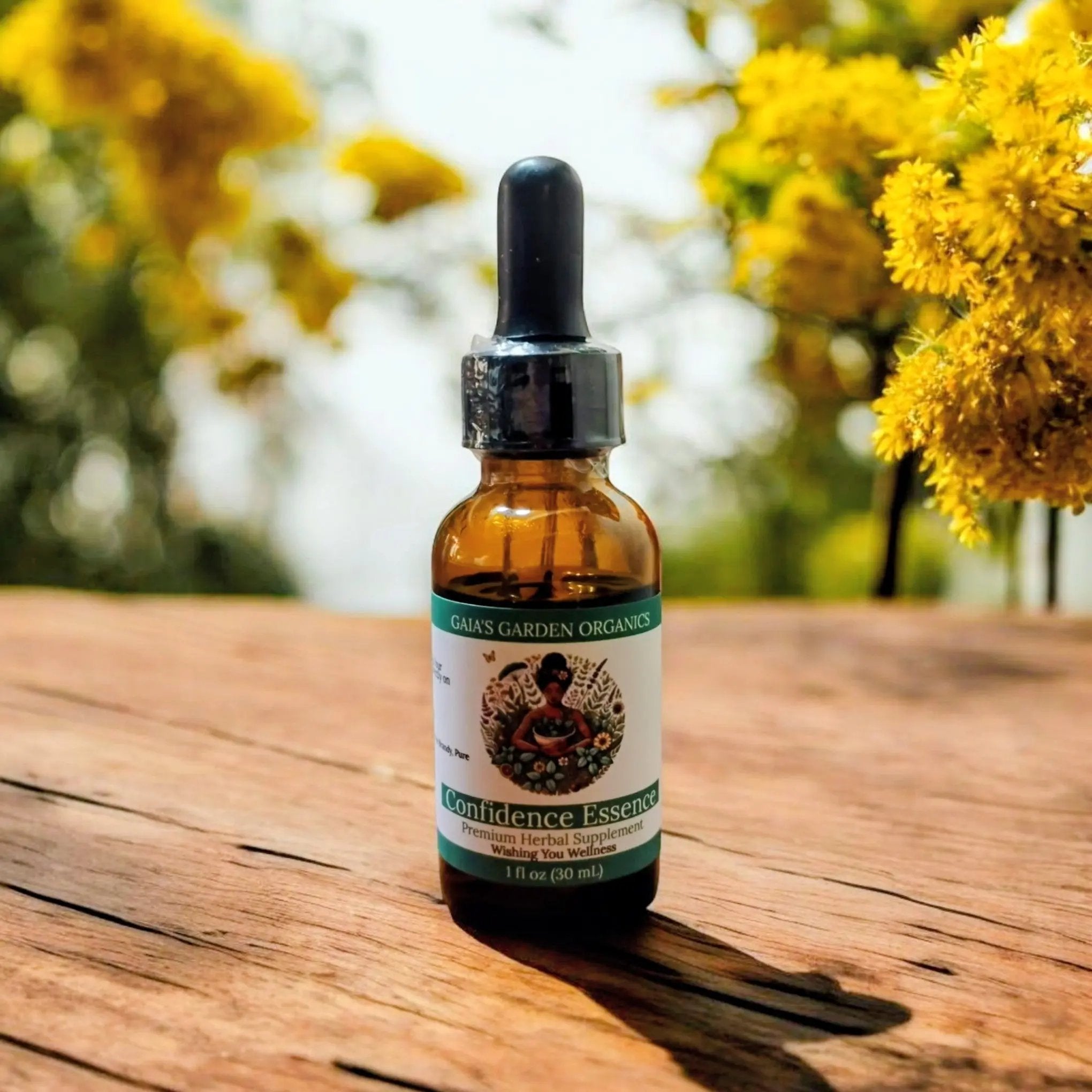
Goldenrod (Solidago spp.) is the late-summer goldenflower of pastures and meadows, a renal and urinary tonic with a long traditional reputation for seasonal allergies, and the same plant we use to prepare our Confidence Essence.
Traditional uses
Goldenrod (Solidago spp., primarily S. canadensis and S. virgaurea in Western herbalism) is a North American and European late-summer wildflower whose generic name comes from the Latin solidare, "to make whole." Native peoples across the Americas used it for wound healing and urinary support; European herbal medicine has carried it for kidney and bladder tonification since at least the 17th century. Today it remains a workhorse of clinical herbalism's renal toolkit.
Primary therapeutic territory
Goldenrod is one of the most reliable diuretics in the herbal pharmacopoeia, but unlike pharmaceutical diuretics, it is also gently anti-inflammatory and astringent to the urinary tract, making it a tonic rather than a flusher. Western clinical herbalism reaches for it during low-grade urinary tract irritation, mild kidney stones, edema with a kidney-not-clearing pattern, and as part of long-term urinary system support. It also has a long traditional reputation for upper respiratory and sinus complaints, particularly the kind that come with seasonal allergic patterns.1,2
The allergy myth
Goldenrod is famously and persistently mistaken for the cause of late-summer hay fever. It isn't. Goldenrod's pollen is heavy, sticky, insect-borne, and rarely airborne in significant quantities. The actual culprit is ragweed (Ambrosia spp.), which blooms at the same time and looks nothing like goldenrod. Ironically, goldenrod is one of the herbs traditionally used against the very allergic patterns it gets blamed for.
Other traditional uses
- Seasonal allergies and sinus congestion. Particularly the runny-nose, post-nasal-drip pattern. Often combined with elderflower or yarrow.
- Mild urinary tract discomfort. Pre-UTI tingles, the early signs of irritation. Always pair with adequate water intake and consult a clinician for confirmed UTIs.
- Kidney stone tendency. Traditional use as part of a long-term tonification protocol; consult a clinician for active stones.
- Wound healing. Traditional poultice and wash use; the genus name itself reflects this reputation.
- Connective tissue support. Modern herbalism often includes goldenrod in protocols for chronic Lyme, given its mild anti-inflammatory and renal-supportive actions.
The flower essence connection
Goldenrod is the flower used to prepare our Confidence Essence. The herbal-tea preparation works through goldenrod's chemical constituents (flavonoids, saponins, essential oils); the flower essence is a vibrational preparation that operates on the emotional level, traditionally for the issue of feeling unable to hold one's own ground in the presence of others' opinions. The two preparations share a "stand tall in the late-summer sun" quality but reach the body and psyche by different pathways.
How we use goldenrod at Gaia’s Garden
At Gaia's Garden Organics, goldenrod (Solidago spp.) grows in our medicine garden in Umpire, Arkansas. We harvest it ourselves, by hand, at the moment its medicine is at peak.
In our formulas
Gaia's Confidence Essence - Organic Goldenrod Flower Essence: Traditionally used to support self-assurance and clear boundaries during moments of stepping forward. Goldenrod's bright, upright form has long been associated in folk herbalism with standing tall in one's own life.
Safety & considerations
Goldenrod has a generally favorable safety profile and a long traditional record of safe use. A few situations call for caution:
Kidney and heart conditions
Because goldenrod is meaningfully diuretic, it should not be used by people with active kidney disease, congestive heart failure, or severe edema without medical supervision, the same way pharmaceutical diuretics aren't appropriate in those settings without adjustment.3
Drug interactions
The diuretic action means goldenrod may compound the effect of pharmaceutical diuretics (furosemide, hydrochlorothiazide, spironolactone). Anyone on these medications should consult their prescribing clinician before regular goldenrod use. The astringent quality may also slow absorption of medications taken at the same time, separate by an hour as a precaution.
Pregnancy and lactation
Most modern herbal references recommend avoiding goldenrod during pregnancy due to its diuretic and emmenagogue (uterine-stimulating) reputation. Lactation use is less restricted but consult your midwife or obstetrician.
Asteraceae (daisy family) allergy
Goldenrod is in the Asteraceae family, same as ragweed, daisies, marigolds, chamomile. People with severe allergies to other Asteraceae plants may cross-react. Introduce in small amounts.
Children and pets
Goldenrod tea has traditional pediatric use for mild urinary or sinus issues but is not typically a daily children's herb. The flower essence (Confidence) is safe for pets at appropriate small doses. Goldenrod tea internal for pets should be discussed with a veterinarian.
Frequently asked
Doesn't goldenrod cause allergies?
No, that's a long-running case of mistaken identity. Goldenrod's pollen is heavy and sticky, carried by insects rather than wind, and is not a significant allergen. The plant blamed for late-summer hay fever is actually ragweed (Ambrosia), which blooms at the same time and is wind-pollinated. Goldenrod is sometimes traditionally used to support the body during ragweed allergy flares.
Goldenrod tea vs the flower essence, which one for what?
Different mechanisms. Tea (or tincture) works through goldenrod's chemical constituents, diuretic, anti-inflammatory, astringent to the urinary tract. The flower essence (Confidence) is a vibrational preparation that works on the emotional level around self-assurance, boundaries, and the I-can-hold-my-own quality. Many people use both, tea for kidney/sinus support, essence for the inner ground.
Can I use goldenrod for a UTI?
For very early prodromal symptoms (the tingles before a full infection), traditional use of goldenrod tea with copious water is well-established. For confirmed or severe UTIs, see a clinician, bacterial infections of the urinary tract can ascend to the kidneys and become serious. Goldenrod is supportive, not antimicrobial enough to clear a true infection.
Is goldenrod safe to drink daily?
For most healthy adults, short-to-medium-term daily use (a few weeks at a time) is well-tolerated. Long-term continuous daily use is less common in traditional practice, most herbalists rotate goldenrod into protocols seasonally rather than running it year-round. Talk with a clinical herbalist for chronic kidney or sinus support.
Goldenrod for kidney stones, does it dissolve them?
It doesn't dissolve them, but the diuretic plus mildly anti-inflammatory action has a long traditional reputation for supporting passage and reducing recurrence in stone-forming patterns. Active stones should be managed with a urologist; goldenrod is part of long-term tonification, not crisis management.
Is goldenrod safe for pets?
The flower essence (Confidence) is safe for dogs, cats, and horses at appropriate small doses, particularly for shy or backed-down pets needing emotional fortification. Goldenrod tea internal for pets has limited research; consult your veterinarian before regular use, especially for pets with kidney or heart conditions or on medication.
References
- European Medicines Agency: Solidaginis virgaureae herba assessment report
- American Botanical Council, Goldenrod HerbalGram
- Memorial Sloan Kettering About Herbs: Goldenrod
- Mountain Rose Herbs: Goldenrod monograph
- Bone K, Mills S. Principles and Practice of Phytotherapy. 2nd ed. Churchill Livingstone, 2013