Herb glossary · for the desk-bound body
Calendula
Calendula officinalis
Family: Asteraceae · Parts used: Flowers
Calendula (Calendula officinalis) is the bright orange medicinal marigold of European herbal tradition, a foundational skin-healing, anti-inflammatory, and gently lymphatic herb that's both a topical first-aid staple and an internal tonic.
Traditional uses
Calendula (Calendula officinalis), sometimes called pot marigold to distinguish it from the unrelated French/African marigolds (Tagetes) of garden borders, is a Mediterranean-origin annual whose intensely-colored orange and yellow flowers have been Western Europe's primary skin-healing herb for at least 1,000 years. The petals are the medicinal part, used both topically and internally. Calendula appears in modern hospital wound-care research, in Ayurvedic and Traditional European Medicine traditions, and in the ingredient lists of more skincare formulations than nearly any other plant.1,2
Primary therapeutic territory
Calendula's signature is its action on tissue: anti-inflammatory, lymphatic-decongestive, mildly antimicrobial, and tissue-rebuilding. Topically, it accelerates wound healing and softens chronic skin inflammation. Internally, it supports the lymphatic system, making it a traditional ally for swollen glands, slow-healing skin issues that have an immune component, and the kind of low-grade chronic inflammation that lives below the radar of acute illness. Several human trials have shown improvements in radiation-induced dermatitis, post-surgical wound healing, and chronic venous leg ulcers from topical calendula preparations.1
Other traditional uses
- Topical wound and burn healing. Calendula-infused oil, salve, and cream are foundational household first-aid preparations across European tradition.
- Eczema, psoriasis, and chronic skin inflammation. Topical use for the chronic-skin-condition pattern; internal use as a slower lymphatic and immune support.
- Mouth ulcers and sore throat. Calendula tea as a mouthwash or gargle has substantial traditional use.
- Cradle cap and diaper rash. One of the gentlest pediatric topical herbs, widely used in baby skincare.
- Mild lymphatic support during chronic illness. A traditional "alterative", herbs that gently support the body's elimination and immune-clearance pathways.
- Female reproductive support. Traditional internal use for menstrual irregularity and post-childbirth tissue healing.
In our garden and formulas
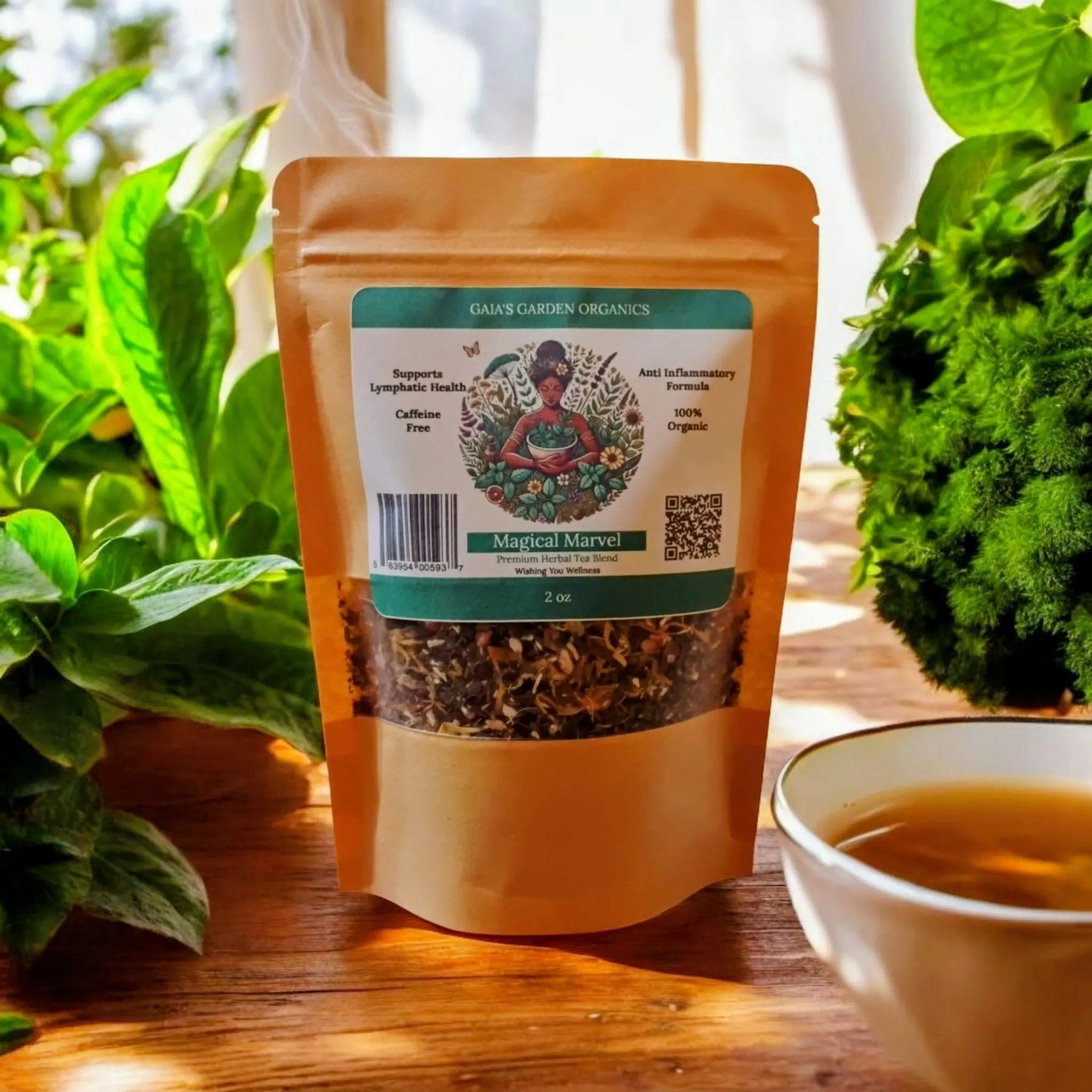
Calendula appears in our Magical Marvel Tea as the lymphatic-and-skin-supportive layer alongside lemon balm and hibiscus, and is one of the foundational botanicals in our Ayurvedic Face Powder for its anti-inflammatory action on the skin.
How we use calendula at Gaia’s Garden
At Gaia's Garden Organics, calendula (Calendula officinalis) grows in our medicine garden in Umpire, Arkansas. We harvest it ourselves, by hand, at the moment its medicine is at peak.
In our formulas
Gaia's Magical Marvel Herbal Tea: The 'sunshine flower' of the apothecary, traditionally used to support vitality and a steady, grounded energy.
Safety & considerations
Calendula has an exceptionally clean safety profile and is one of the gentlest medicinal herbs available, it has been used topically on infants and during pregnancy across many traditions with no significant adverse-effect record at typical preparations.
Asteraceae (daisy family) allergy
Calendula is in the Asteraceae family alongside ragweed, daisies, marigolds (Tagetes), chamomile, and yarrow. People with severe allergies to other Asteraceae plants may cross-react. Patch-test on the inner forearm before broader topical use, and introduce internal preparations in small amounts.
Pregnancy
Topical calendula is generally considered safe during pregnancy. Internal calendula tea or tincture has a traditional emmenagogue reputation and most modern herbal references recommend caution during the first trimester. Consult your midwife or obstetrician for any regular internal use.
Drug interactions
Limited documented drug interactions. Theoretical caution with sedative medications due to mild relaxing effect, and with diabetes medications due to a possible mild blood-sugar-lowering action; both interactions are minor.
Surgery
Internal calendula may have very mild blood-thinning effects. Discontinue at least two weeks before planned surgery as a precaution.
Children and pets
Calendula is one of the most pediatric-friendly herbs in Western herbalism, calendula salves, oils, and creams are widely used for diaper rash, cradle cap, scrapes, and other minor childhood skin issues from infancy onward. For pets, calendula salve is generally well-tolerated by dogs and cats for minor skin issues; consult your veterinarian for chronic skin conditions.
Frequently asked
Is calendula the same as the marigolds in my garden?
Almost certainly not. Common garden marigolds are Tagetes (French marigold, African marigold), pretty but very different chemistry, and not medicinal in the calendula sense. Calendula officinalis (sometimes called pot marigold) is a different genus entirely. The flowers look similar at a glance, orange-yellow daisy-style, but a botanical key or experienced grower will tell them apart easily.
Calendula salve vs calendula tea, when to use which?
Salve, oil, or cream for topical applications: minor wounds, scrapes, eczema, dry skin, diaper rash, post-surgical scar support. Tea or tincture for internal use: lymphatic support, mouth/throat issues (as gargle), gentle gut and skin support from the inside. Many traditional protocols use both, internal calendula tea while applying calendula salve topically for chronic skin issues.
Is calendula safe to use on babies?
Yes, calendula is among the most pediatric-friendly herbs in Western herbalism. Calendula salves, oils, and creams are widely used for diaper rash, cradle cap, scrapes, and minor childhood skin issues from infancy onward. Always patch-test new products on a small area first, and consult your pediatrician for chronic or worsening skin conditions.
Does calendula tea actually do anything for skin?
Internal calendula works more slowly and indirectly than topical, through lymphatic and gentle immune support. For acute skin issues, a fresh wound, a flare-up of eczema, topical calendula has the more dramatic effect. For chronic skin conditions with a deeper inflammatory pattern, combining internal tea with topical preparations is the traditional approach.
Can I make calendula salve at home?
Yes, calendula-infused oil is one of the simplest herbal preparations. Pack a clean dry jar with dried calendula flowers (fresh flowers can introduce moisture and spoilage), cover with olive or sweet almond oil, infuse 4-6 weeks in a warm spot, strain, and the resulting golden oil can be used as-is or thickened with beeswax into a salve. Many home apothecary blogs have detailed instructions.
Is calendula safe for pets?
Yes, calendula salve is one of the gentlest topical herbs for dogs and cats with minor skin issues, and is widely used in holistic veterinary practice. Internal calendula has limited veterinary research; consult your veterinarian for chronic skin conditions or if your pet might lick a topical application before it absorbs.
References
- Pommier P et al. Phase III randomized trial of Calendula officinalis compared with trolamine for the prevention of acute dermatitis during irradiation for breast cancer. J Clin Oncol. 2004;22(8):1447-53
- European Medicines Agency: Calendulae flos assessment report
- Memorial Sloan Kettering About Herbs: Calendula
- American Botanical Council / HerbalGram
- Mountain Rose Herbs: Calendula Flowers monograph