Free shipping on orders over $75 · Handcrafted in Arkansas · Code WELCOME10 for 10% off your first order
Gaia's Garden Organics
Plant Medicine · Handcrafted

April 23, 2026

Seed to Bottle: Why Handcrafted Herbal Medicine Matters

The quiet difference between a remedy made by a machine and one made by human hands — and why every bottle in our apothecary is still grown, harvested, blended, and labeled here.

By Gaia Devi Stillwagon, Clinical Herbalist · 11 min read

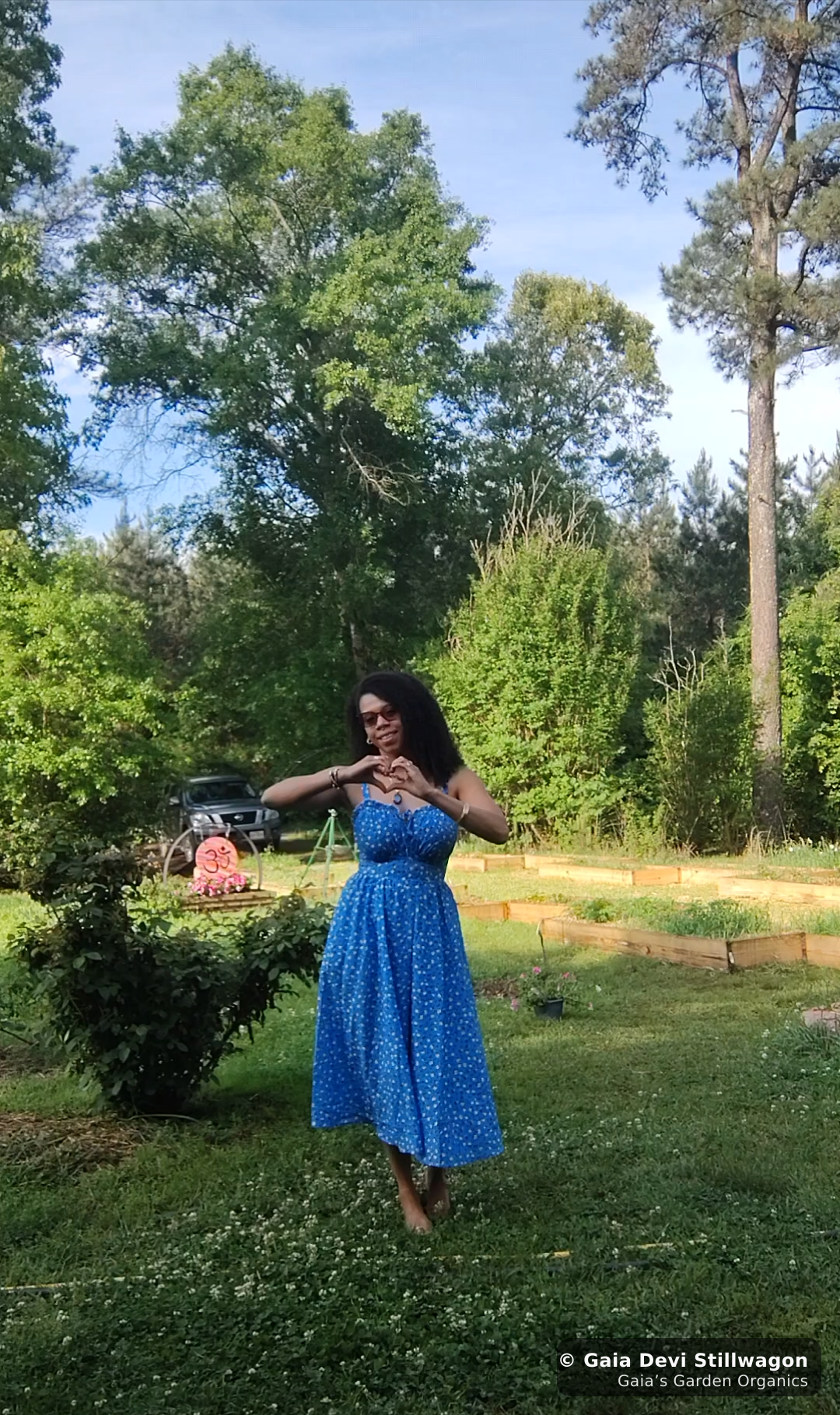
Gaia Devi Stillwagon, clinical herbalist and founder of Gaia's Garden Organics, in her medicinal herb garden in Umpire, Arkansas.
In this article (12)

Seed to Bottle: Why Handcrafted Herbal Medicine Matters

The quiet difference between a remedy made by a machine and one made by a pair of human hands — and why every bottle in our apothecary is still grown, harvested, blended, and labeled here in our Arkansas garden.

12 min read By Gaia Devi Stillwagon, Clinical Herbalist Our Story
Most of the herbal products on major apothecary shelves today are made by someone who has never touched the plant. The herb is grown on a contracted farm somewhere, dried in an industrial drier somewhere else, shipped to a co-packer, blended by a machine, bottled by a machine, labeled by a machine, and finally shipped to the brand that put their story on the front. It's efficient, it's legal, and it's what scaled the modern wellness industry. It's also not what we do — and this piece is about why.

I don't mean this as a rant against industry. Large-scale herbal medicine makes plants accessible to millions of people who wouldn't otherwise encounter them, and that matters. But for those of us who still believe that how medicine is made changes the medicine itself, there's a different path. A smaller, slower path. A path where a single clinical herbalist grows, harvests, and blends every bottle with her own hands. That's our path. This is the why behind it.

Gaia Devi Stillwagon, clinical herbalist and founder of Gaia's Garden Organics, in her medicinal herb garden in Umpire, Arkansas.
Gaia Devi Stillwagon — clinical herbalist, founder, and the hands behind every bottle we make.

What "seed to bottle" actually means

When we say every remedy in our apothecary is seed to bottle, we mean exactly what it sounds like. Every step between the seed and the bottle you receive happens in-house, by hand, by us.

Concretely:

  • We plant the seeds. Most years, over thirty medicinal herb species are started from seed in our garden in Umpire, Arkansas.
  • We tend the plants. Watering, weeding, protecting from deer and drought, watching for pests. No synthetic pesticides, no herbicides, nothing sprayed on a plant that will become medicine.
  • We harvest at peak. Each herb has a window — often just a few days — when the constituents are at their strongest. We harvest by hand, in the morning, when the dew has lifted and the plants are fully hydrated.
  • We dry and extract. Dried in the shade on screens, tinctured in small glass vessels at precise weight-to-volume ratios, infused for weeks.
  • We blend. Every tea blend is measured and combined by hand in small batches.
  • We bottle. Every amber bottle is filled by hand.
  • We label. Every label is applied by hand.
  • We pack and ship. Every order that leaves here has been handled by us from the moment the seed went into the soil.

That's the full chain. No co-packer, no white-label, no "formulated by Gaia, manufactured by a third party." The bottle you receive came from my hands.

Why it matters, from a clinical perspective

I spent years in my early career believing that well-made remedies from trusted suppliers could serve clients as well as the ones I made myself. I don't believe that anymore. Here's what I learned — and what every working herbalist I know eventually learns — about the difference between handcrafted and industrial:

1. Timing is everything, and only a human can catch it

Plants have optimal harvest windows that are often just a few days wide. Hawthorn flowers at one specific moment in spring; St. John's wort buds for only a couple of weeks when the phloroglucinol content is at its peak; valerian roots are strongest in a narrow fall window. An industrial harvest has to schedule around logistics — contracts, equipment, processing queues. A human-scale harvest can watch the plant and move when it's ready. The difference shows up in the finished remedy.

2. Small-batch preserves what scale destroys

Volatile oils are the aromatic soul of many medicinal herbs — think of the scent of fresh chamomile, lavender, or lemon balm. Those oils are what make the plants medicinal. They're also fragile: heat, time, large-scale drying, and long shipping can degrade them significantly. A small batch dried on a screen in a shaded barn retains what a commercial drier strips.

3. The plant responds to care

I know this sounds unscientific. But every working herbalist I've met has the same observation: plants grown by someone who knows them and loves them seem to produce stronger medicine than plants grown as a crop. Whether that's a measurable chemical difference or something subtler, I can't tell you. I can tell you I've never met an experienced herbalist who thinks it doesn't matter.

4. The clinical intention makes it into the bottle

When a bottle is made by hand, by the same person who will stand behind it to the client, something happens that's hard to name. Call it quality control by conscience. Nothing gets bottled that the maker wouldn't give to a family member. Nothing goes out the door that the maker wouldn't take herself.

A view of the medicinal herb garden — the growing source of every seed-to-bottle remedy.
The growing source of every remedy in our apothecary — one garden, one herbalist, one pair of hands.

What the industrial version looks like

I want to be fair about this. Most major wellness brands don't hide what they do; they just don't advertise it. Here's what a typical "premium" wellness tincture on a mainstream shelf looks like, from the inside:

  1. A brand decides to launch a product. Marketing decides on positioning first; the formula is developed afterward to match the positioning.
  2. The brand contracts a co-packer — a manufacturing facility that produces supplements and herbal products for many brands simultaneously.
  3. The co-packer sources plant material from a global supplier. Chamomile from Egypt, valerian from Eastern Europe, passionflower from South America.
  4. Material arrives at the co-packer already dried and sometimes already extracted. The co-packer blends, bottles, and labels.
  5. The finished product ships to the brand, who ships it to fulfillment, who ships it to you.

There's nothing illegal or necessarily wrong about this chain. Many of the plants are grown competently, many of the co-packers are clean and well-regulated. The problem isn't contamination. The problem is that nowhere in the chain does a single human with clinical training and a relationship to the plants make a decision that isn't also a business decision. The medicine becomes a product.

What a single clinical herbalist's apothecary looks like

Our garden is about a third of an acre in the Ouachita foothills of Arkansas. Not large. Small enough that I know every plant. Small enough that when deer broke through last spring, I watched it happen. Small enough that the soil carries my footprints more than anything else's.

Inside the house, the apothecary room holds the drying screens, the tincture jars, the shelves of finished bottles, and the packaging table. A single working space, cleaned and tidied every day. Orders are filled from this room — not from a warehouse — and every bottle that leaves has been touched by me on the way out.

Skylar, my husband, handles the business side — the website, the customer messages, the shipping logistics, the tech. That frees me to spend my time where it matters: in the garden, at the drying screens, at the blending table. It's a small operation. It'll stay that way, because the way we work is the point.

What you can tell from a handcrafted apothecary

If you're trying to tell the difference between a handcrafted apothecary and a well-marketed mass-produced one, a few signals help:

  • A named herbalist with clinical training. Not just a "founder" with a story — an actual clinician who works with individual clients and whose name is on the bottle.
  • A described growing or sourcing process. A real handcrafted apothecary will tell you where the plants come from, often by growing them themselves. Vague "organic, wildcrafted, premium" language without specifics is a red flag.
  • Seasonal availability. Plants flower and fruit in seasons. Small apothecaries sometimes run out of specific remedies for a few months until the next harvest. That's not a supply problem — that's a sign the apothecary is bound to real growing cycles.
  • Small product lines. A genuine handcrafted apothecary typically offers fifteen to thirty remedies. Not two hundred. Two hundred means a co-packer.
  • A clear preservation method. Brandy and mountain water for flower essences; organic alcohol at stated percentages for tinctures. If a product hides its preservation or uses a proprietary blend of preservatives, it's probably industrial.

You can apply these five to any apothecary, ours or otherwise. It's a fair test.

The cost of doing it this way

Seed-to-bottle is expensive in a way that's worth being honest about. Our bottles aren't cheaper than a mass-market equivalent. They're often slightly pricier. Here's what that price difference buys:

  • The labor of a trained clinical herbalist doing every step of the work.
  • Small-batch sizes that preserve quality at the cost of efficiency.
  • Organic growing practices that cost more than conventional sourcing.
  • Amber glass bottles rather than cheaper plastic.
  • Direct responsibility for quality from the person making the medicine.

If your budget is tight, I'd rather you buy one well-matched Gaia's Garden remedy than a cart full of generic supplements. One bottle used consistently for a season does more than a cabinet of unused ones.

What we make, and why each one exists

Every remedy in our apothecary exists because I needed it at some point — for myself, for a family member, or for a client. Nothing in the catalog is speculative. A short tour:

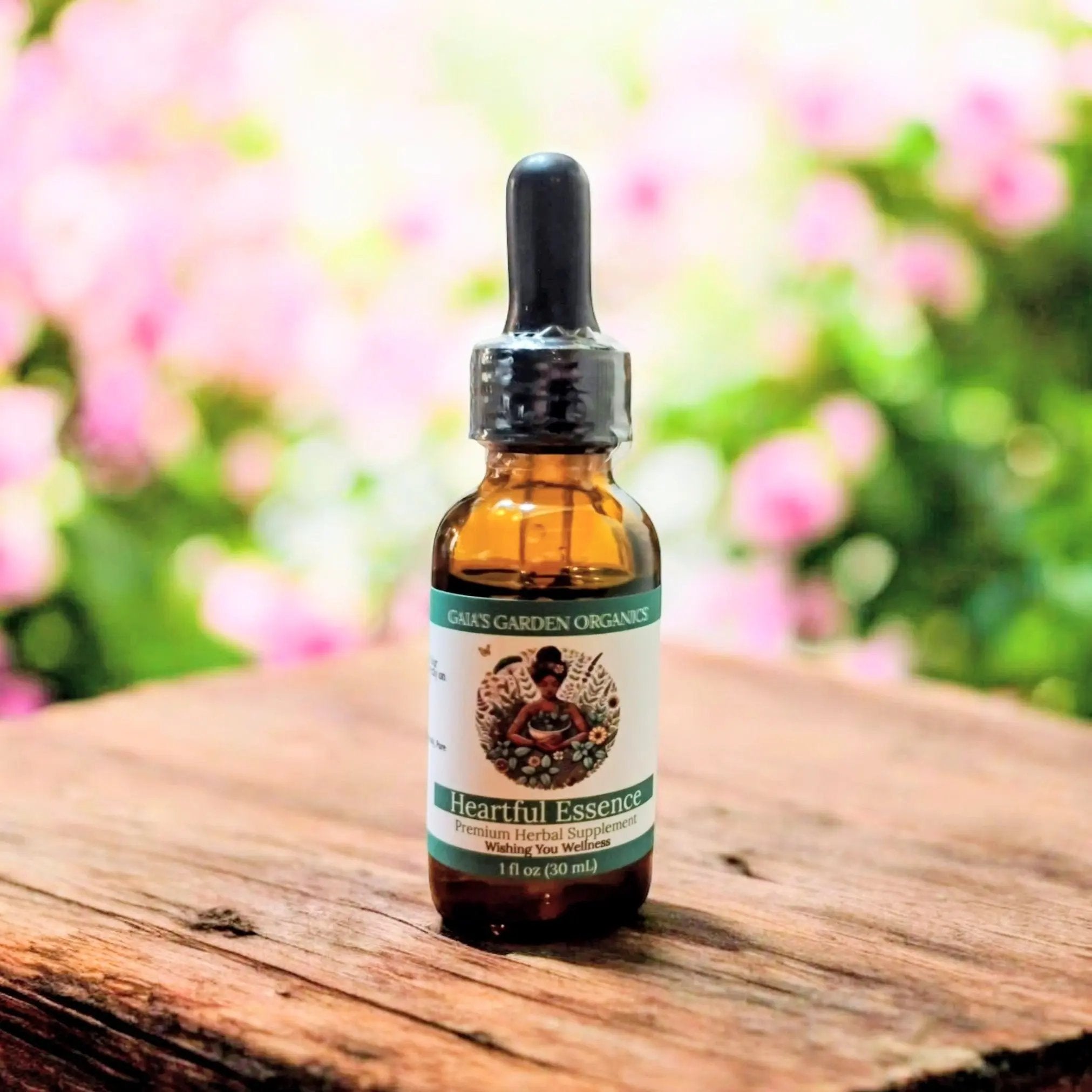
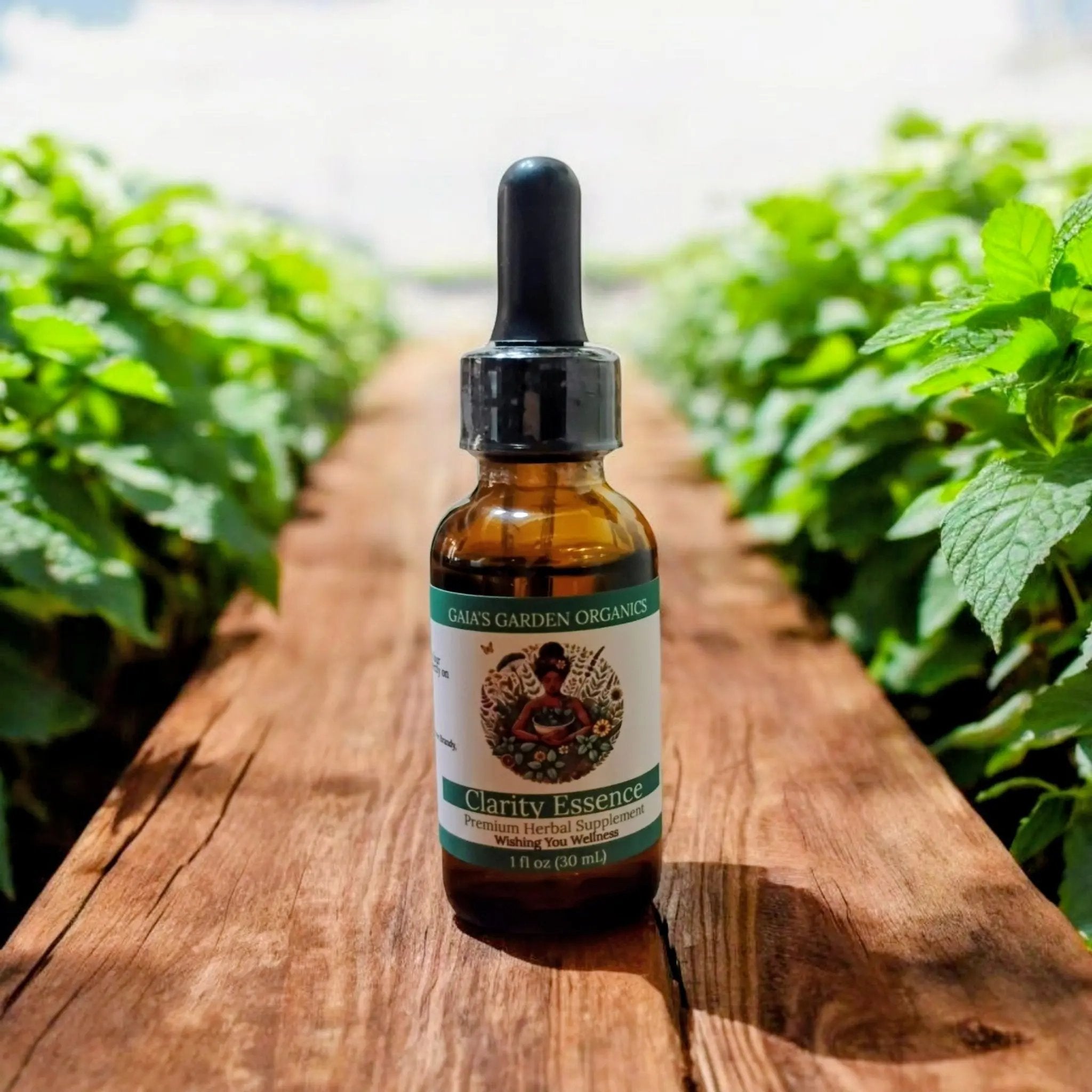
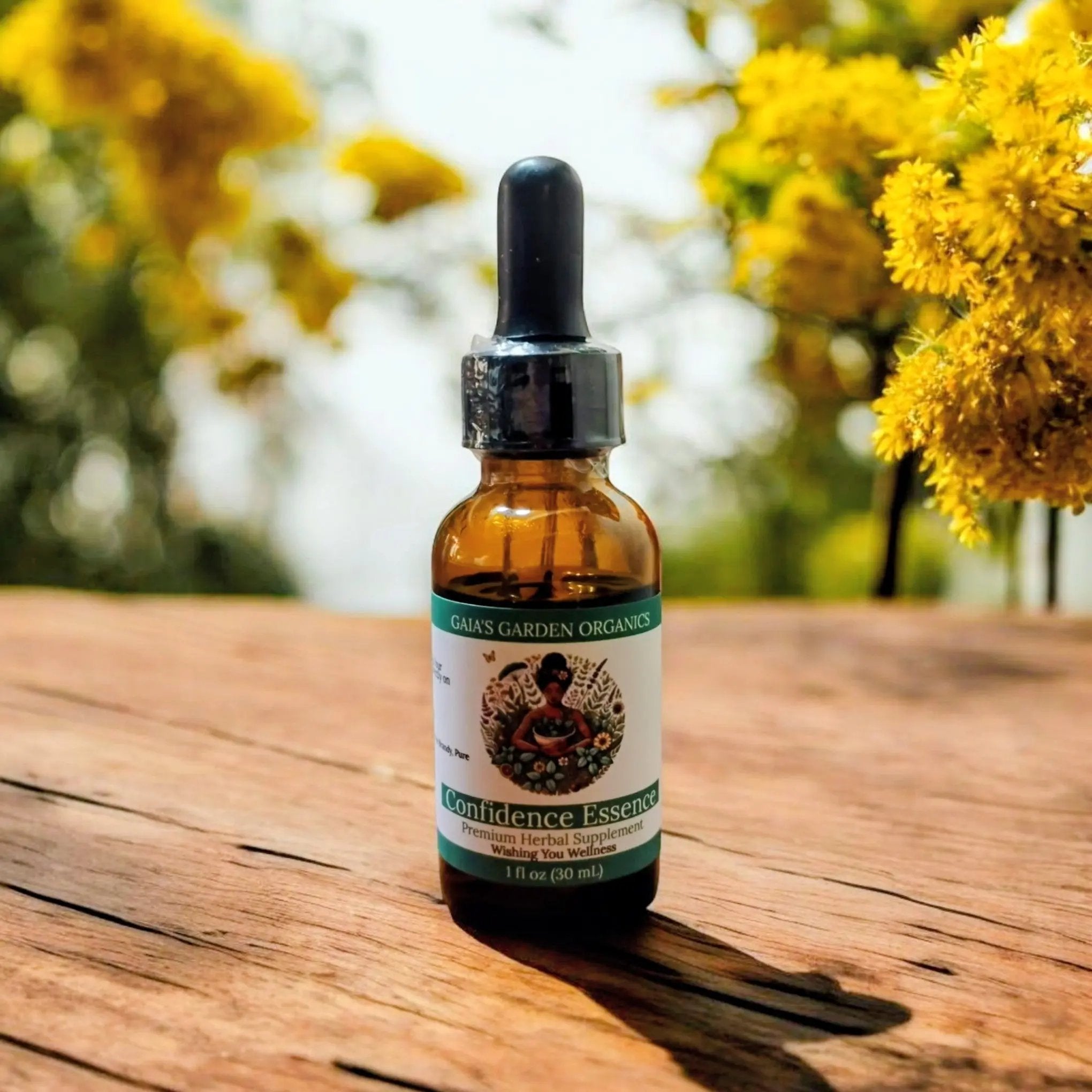
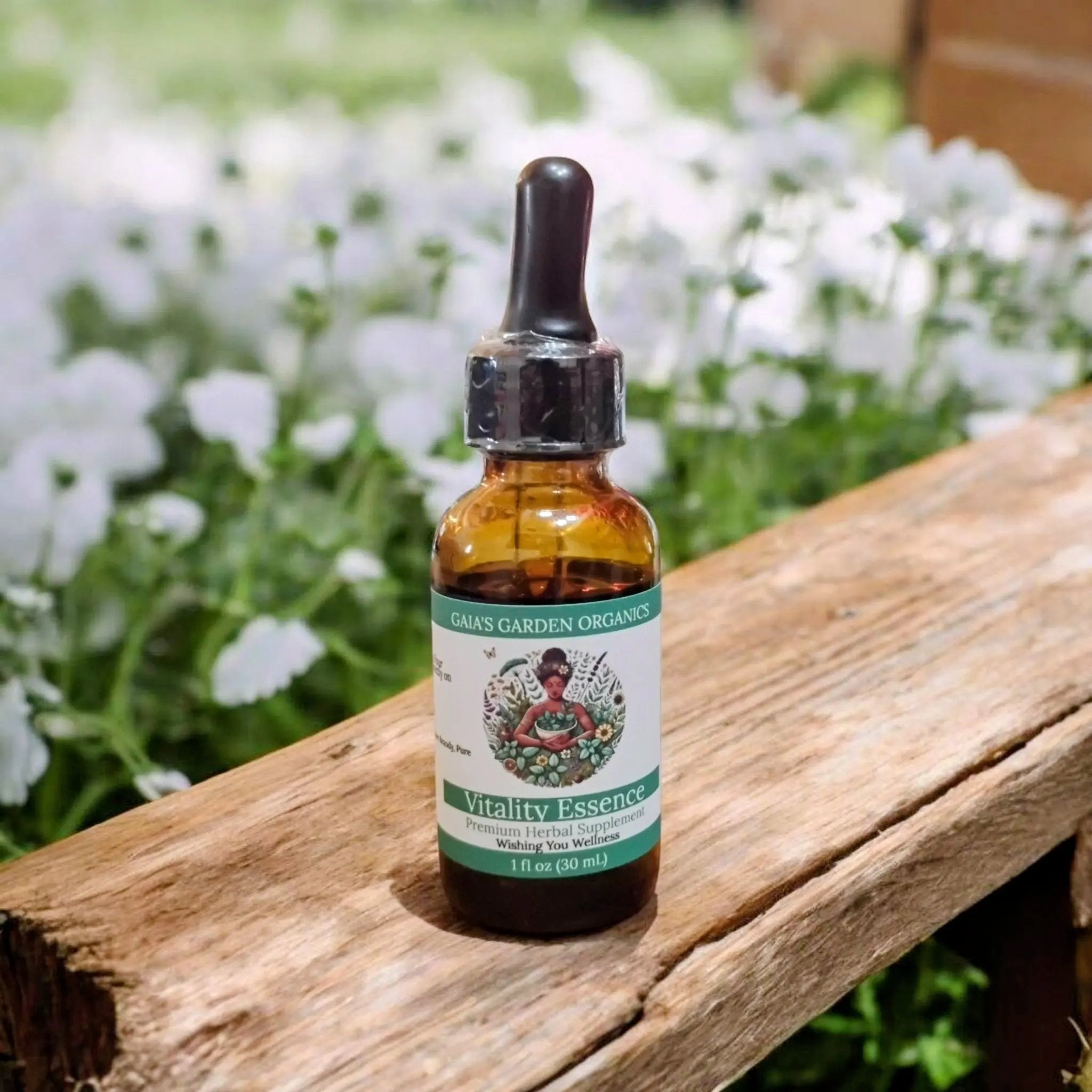
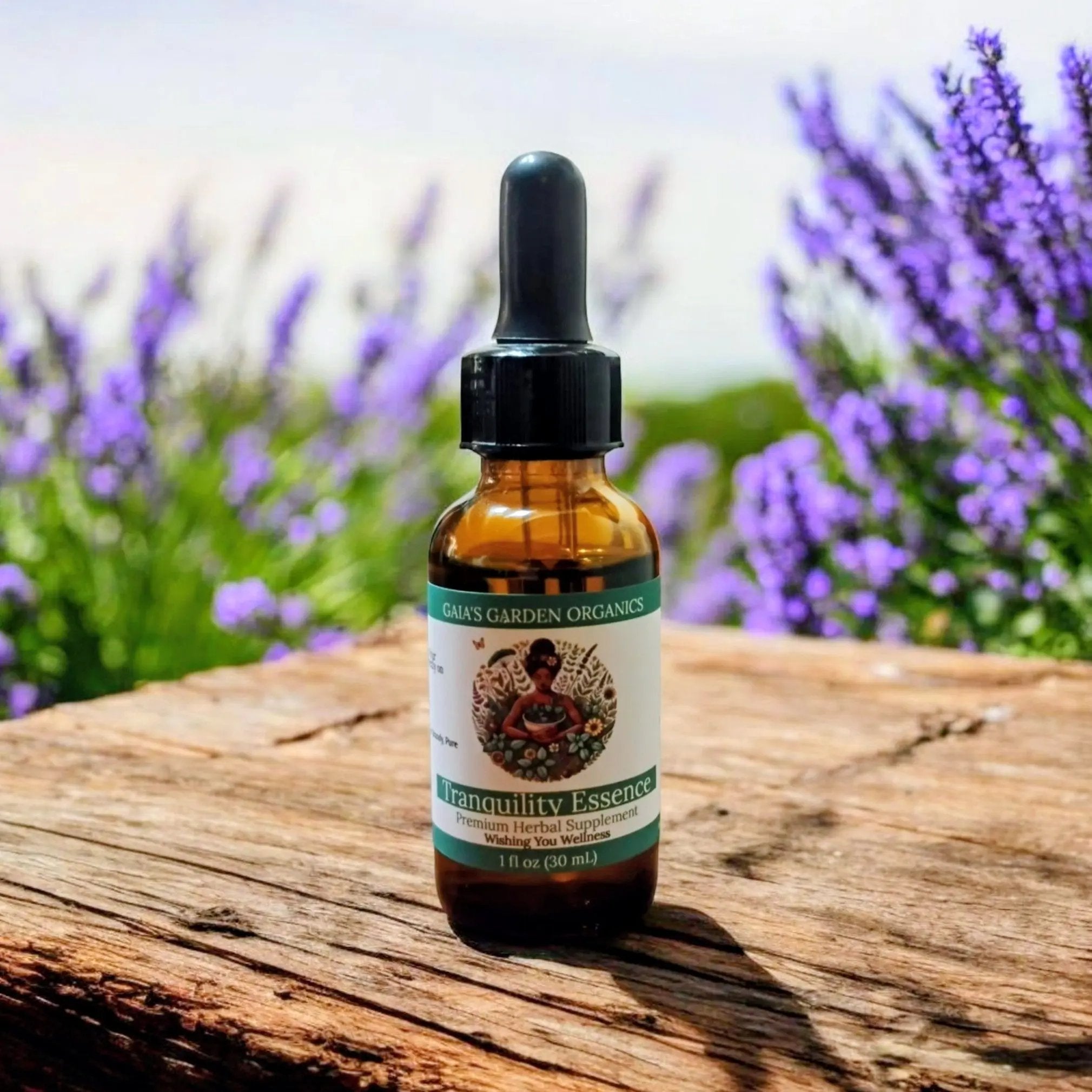
  • The five flower essences (Tranquility, Clarity, Confidence, Heartful, Vitality) — built to cover the five most common emotional patterns I see in clinical practice.
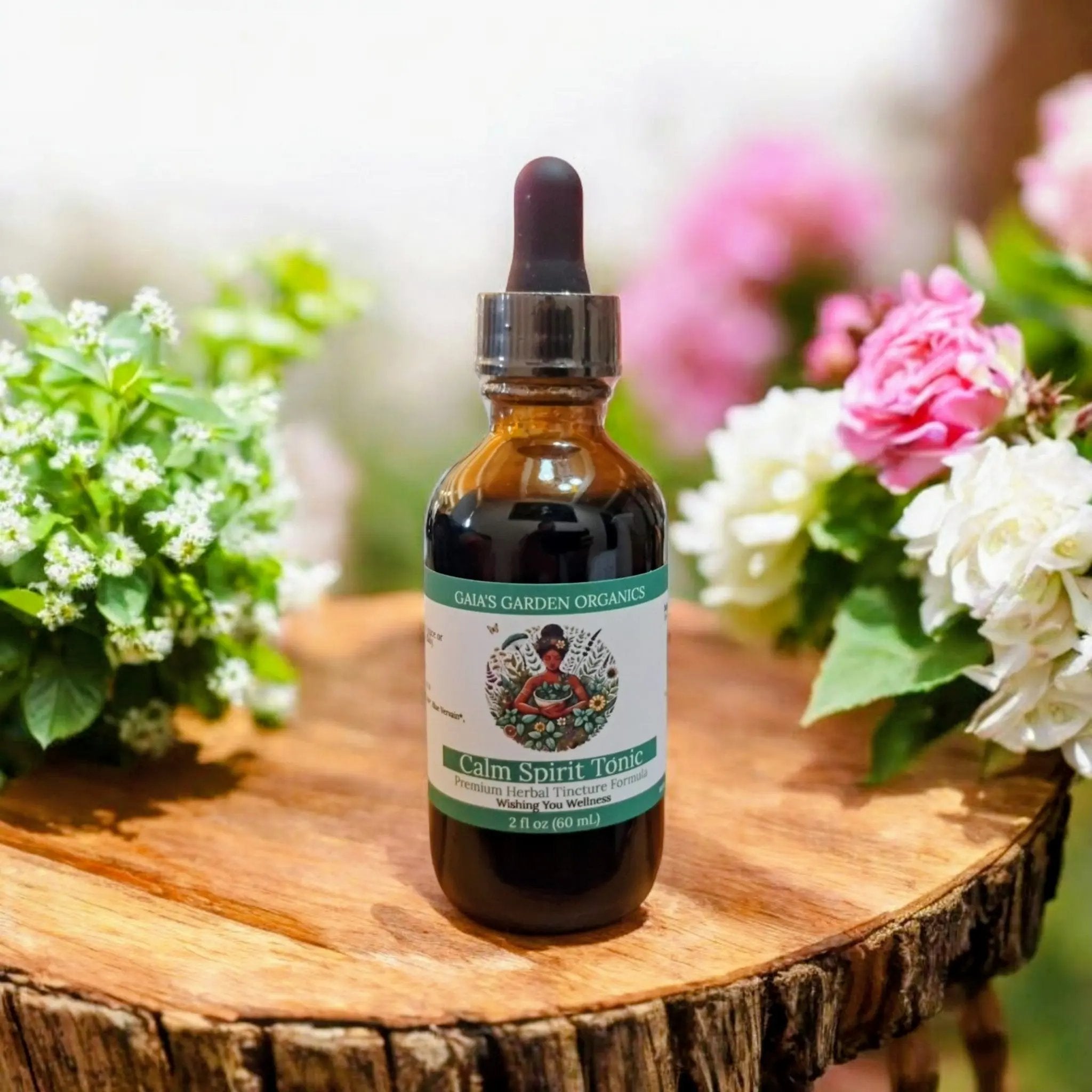
  • Calm Spirit Tonic — the daytime nervine I wished I'd had during a particularly hard year of my own.
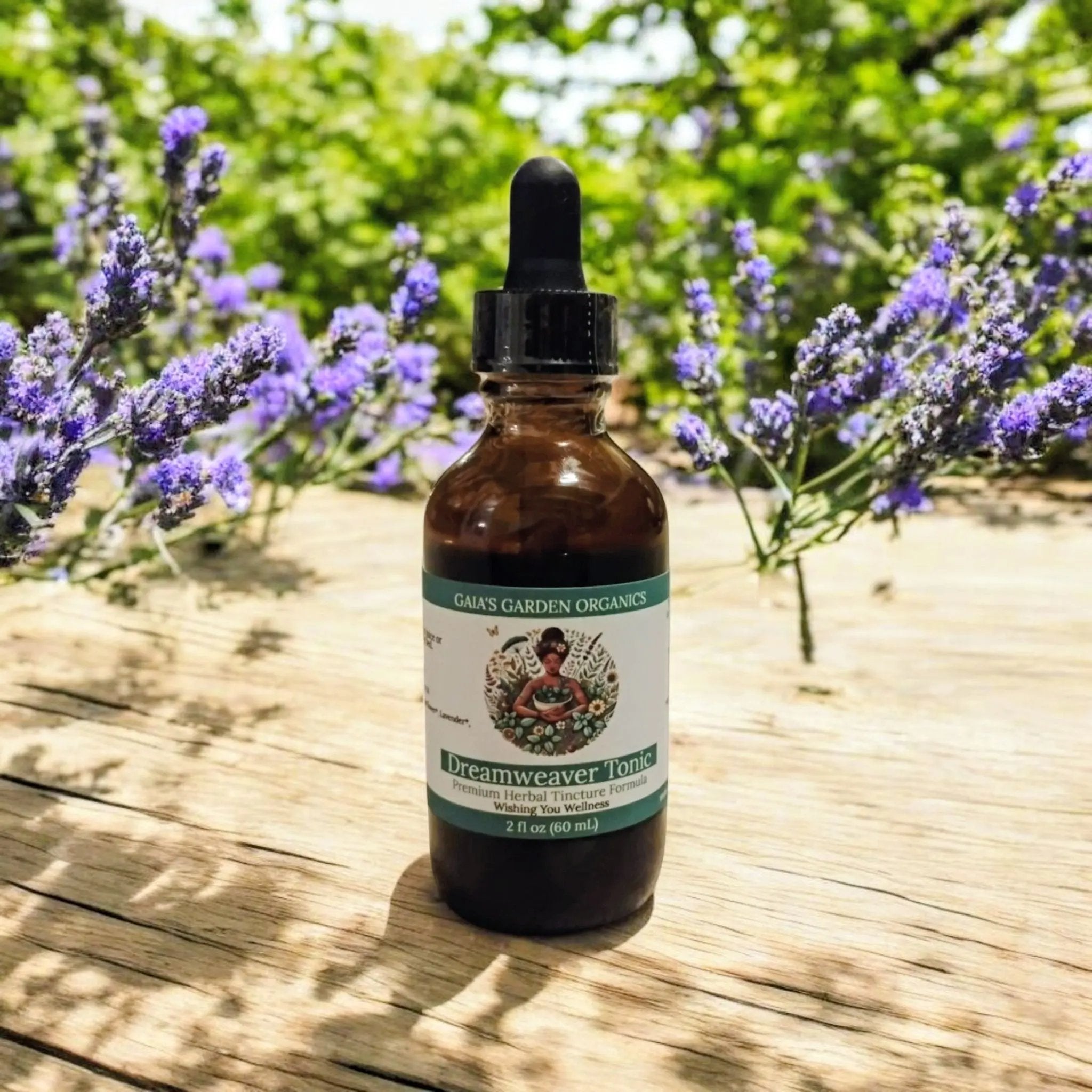
  • Dreamweaver Tonic — originally made for my own insomnia; now the bedtime tincture I recommend most often to clients.
  • Happy Heart Tea — developed during a grief season for a friend, now the most common "sending this with love" gift in our catalog.
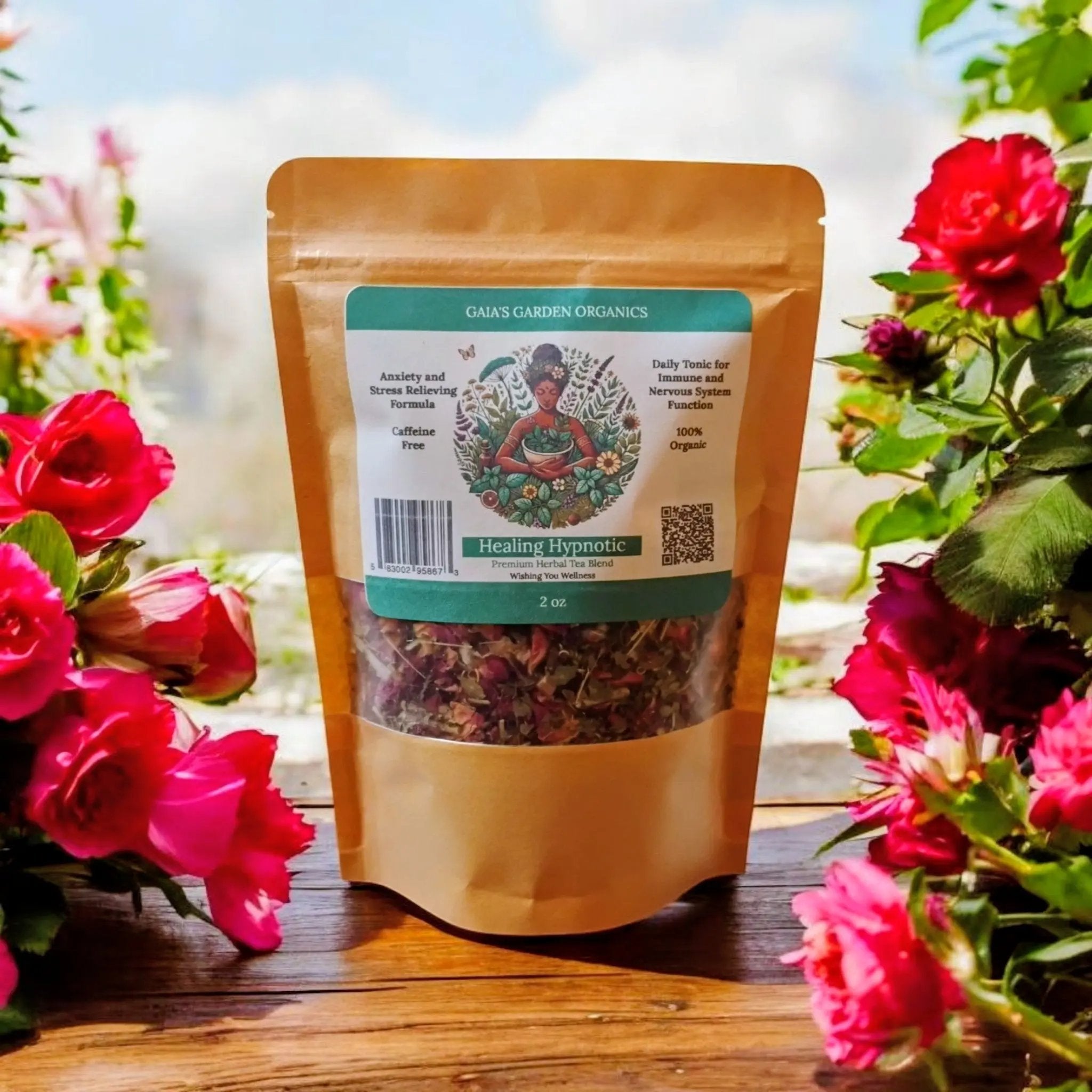
  • Healing Hypnotic Tea — the evening wind-down blend I drink myself every night.
  • Breathe Better Tea and Flu Fighter Tea — the two seasonal blends I keep on hand every winter.

Each of these is something I've personally used, formulated, and refined over seasons. Each one is in the catalog because it earned its spot — not because a marketing plan called for product expansion.

What this means for you as a customer

A few practical things that follow from the way we make our medicine:

  • Sometimes we're out of something. We don't stockpile a year's supply. If a specific blend sells through faster than expected, the replenishment is tied to the next harvest.
  • We email you back. Questions go directly to us, not a customer service queue. Response is usually within a day or two.
  • The product description is accurate. What's in the bottle is what the label says — the plants we grew, the preservation method we described, the preparation technique we claim.
  • We stand behind our remedies. Damaged-in-transit replacements are handled directly (our refund policy has the details).
  • You're supporting a real small family business. Orders from our apothecary go directly to the household of the herbalist who made them.

A note on humility

I'd be lying if I said handcrafted herbal medicine is the only legitimate kind. There are competent, well-intentioned herbalists who work with larger supply chains and still produce meaningful remedies. There are industrial tinctures that genuinely help people. Not every plant medicine has to be made by a single pair of hands.

But there's something specific about the seed-to-bottle path — about the herbalist who tended the plant, watched it bloom, cut it by hand, dried it on a screen, measured it into a jar, and applied the label to the finished bottle — that I believe matters. Not just for the chemistry of what's inside, but for the relationship between the person who made the medicine and the person who takes it.

When you open a bottle from our apothecary, you're not receiving a product. You're receiving the work of a year of one small family's life — the seeds we planted, the hours we tended, the careful decisions about when and how to harvest, the quiet work at the blending table. All of that is in the bottle. All of that reaches you.

Frequently Asked Questions

What does "seed to bottle" mean?

It means every step of the remedy's production — from planting the seed to sealing the finished bottle — happens in-house by the same small team, without a co-packer or third-party manufacturer. For us, that means Gaia plants, grows, harvests, extracts, blends, bottles, and labels every product personally.

Is handcrafted herbal medicine actually better than mass-produced?

In clinical experience, yes — primarily because the harvest window timing, small-batch quality, and close quality control all make it into the finished remedy in ways that scaled production can't replicate. That said, well-made industrial remedies can still serve people; the point isn't that one is valid and the other isn't, it's that the two are genuinely different.

How can I tell if an herbal product is truly handcrafted?

Look for a named herbalist with clinical training, a specific growing or sourcing process described in detail, a small product line (usually fewer than 30 items), clear preservation methods stated on the label, and occasional seasonal unavailability. Vague "premium, organic, wildcrafted" language without specifics is a red flag.

Why are some Gaia's Garden products sometimes out of stock?

Because we work within real growing and harvest cycles. A blend that uses plants harvested in early summer will run low by late winter and come back in stock after the next harvest. We don't stockpile to avoid stockouts — that would mean older stock or industrially produced backup, and neither fits our standards.

What makes your preservation method different?

Our flower essences are preserved in the traditional Bach method — organic brandy and sun-infused Arkansas mountain water — which is the clinical gold standard for shelf-stable vibrational plant medicine. Our tinctures are prepared at precise weight-to-volume ratios in organic alcohol, the Western clinical herbalism standard. No proprietary preservative blends, no filler botanicals.

Does everyone at Gaia's Garden actually work on the products?

Yes. Gaia Devi does the clinical formulation, growing, harvesting, extracting, blending, and bottling. Skylar (her husband) handles the business side — website, customer service, shipping logistics. The two of us are the whole operation, and that's by design.

Explore the apothecary

If you've read this far, you probably already know whether our approach is one you want to support. If you're ready to try a single bottle, our essence quiz is the gentlest way to find your first remedy. If you want to explore the full catalog, the apothecary is the place to browse.

And if you have questions — about a specific plant, about whether a remedy fits your situation, about anything at all — reach out. I read every message.

Frequently asked

What does seed to bottle mean?

Every step of the remedy''s production — from planting the seed to sealing the finished bottle — happens in-house by the same small team, without a co-packer or third-party manufacturer. For us that means Gaia plants, grows, harvests, extracts, blends, bottles, and labels every product personally.

Is handcrafted herbal medicine actually better than mass-produced?

In clinical experience, yes — primarily because harvest window timing, small-batch quality, and close quality control all make it into the finished remedy in ways that scaled production cannot replicate. That said, well-made industrial remedies can still serve people.

How can I tell if an herbal product is truly handcrafted?

Look for a named clinical herbalist, a specific growing or sourcing process described in detail, a small product line (usually under 30 items), clear preservation methods on the label, and occasional seasonal unavailability.

Why are some Gaia''s Garden products sometimes out of stock?

Because we work within real growing and harvest cycles. A blend using plants harvested in early summer will run low by late winter and come back in stock after the next harvest. We do not stockpile to avoid stockouts — that would mean older stock or industrial backup.

What makes your preservation method different?

Flower essences are preserved in the traditional Bach method — organic brandy and sun-infused Arkansas mountain water — the clinical gold standard for shelf-stable vibrational plant medicine. Tinctures are prepared at precise weight-to-volume ratios in organic alcohol.

Does everyone at Gaia''s Garden actually work on the products?

Yes. Gaia Devi does the clinical formulation, growing, harvesting, extracting, blending, and bottling. Skylar handles the business side — website, customer service, shipping logistics. The two of us are the whole operation, and that''s by design.

Products from this article

Handcrafted in Umpire, Arkansas by Gaia Devi, clinical herbalist.
Explore our apothecary

Keep reading