In this article (14)▾
Hawthorn and motherwort are the two herbs most clinical herbalists reach for first when the conversation turns to the heart. They are classical, well-evidenced, and have distinct effects despite the surface overlap. They are not interchangeable.
Almost every week someone tells me a version of the same thing. The cardiologist ran the tests, the tests came back clean, and the heart still races at 2am. Or the blood pressure sits at the high end of normal and the doctor says "watch it" without saying what to watch it with. Those are two different problems, and they want two different plants. This guide is the framework I use in clinic to pick between them, or to layer them.
Both heart herbs here are most often taken as a tincture, and this guide walks through how herbal tinctures are dosed day to day.
Meet the two plants
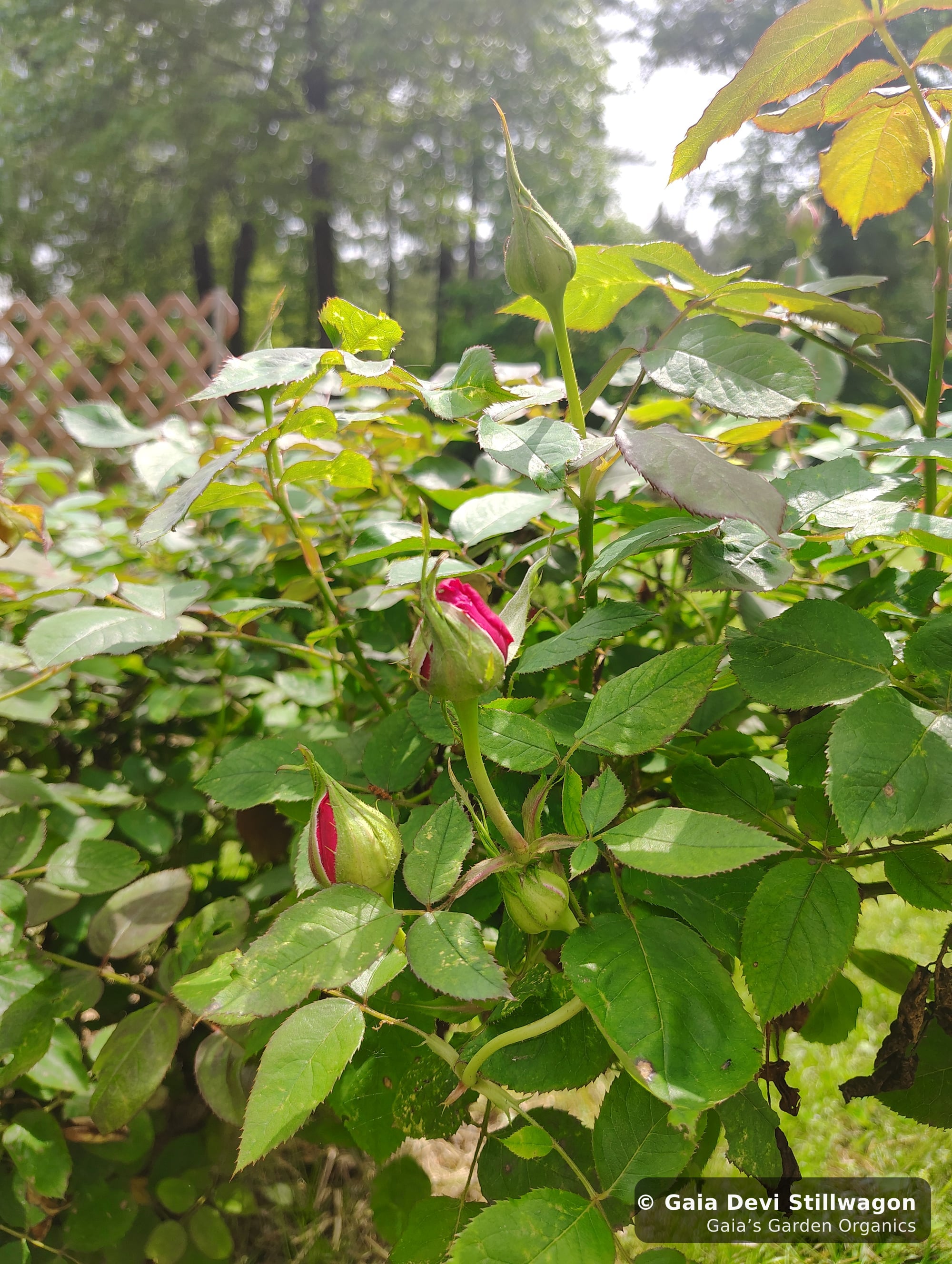
Hawthorn (Crataegus spp.) is a small thorny deciduous tree in the rose family (Rosaceae). Lobed leaves, five-petalled white or pink blossoms in May, red single-seeded berries in September. The European medicinal species are C. monogyna and C. laevigata. Leaf, flower, and berry are all medicinal, and that matters when you shop, because "hawthorn berry" and "hawthorn leaf and flower" are not the same product. European practice leans on leaf-and-flower; the American shelf sells berry.
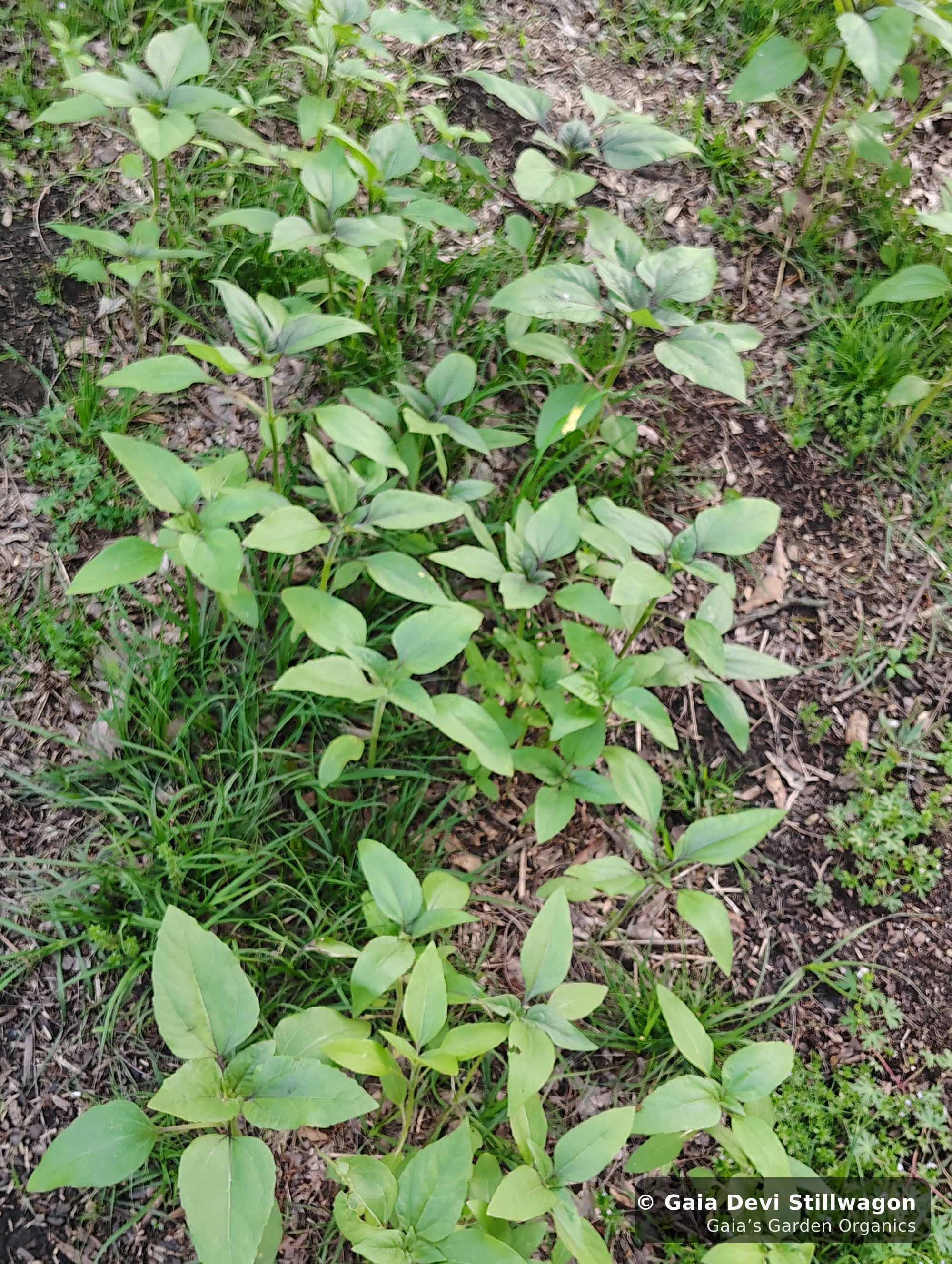
Motherwort (Leonurus cardiaca) is a tall, sharply-toothed perennial in the mint family (Lamiaceae), which means a square stem and opposite leaves. Look for the pink lipped flowers tucked into the leaf axils, stacked in whorls up the stalk. The aerial parts are what we use, harvested in full flower. The Latin name translates as "lion-hearted," and it is one of the few herbs valued nearly identically in European, Russian, and Chinese medicine for over a thousand years.
One sourcing note. If you have shopped in a Chinese pharmacy you may have met a different hawthorn. Crataegus pinnatifida, shan zha, is used in Traditional Chinese Medicine primarily as a digestive herb rather than a cardiac tonic. Same genus, different species, different job.
Hawthorn (Crataegus): the steady tonic
Hawthorn is the long-arc heart muscle tonic. It works on the structural and functional layer of the heart over weeks to months, not minutes.
What hawthorn does, in traditional terms: gentle support for contraction efficiency, modest vessel dilation, and a heavy antioxidant flavonoid load. Its high oligomeric proanthocyanidin (OPC) content is why it also has a reputation for vascular wall integrity. The effect builds slowly. It is a daily-for-months medicine, and people who take it for a week and stop have not tested it.
Energetics and taste: Roughly neutral and moist, sweet-sour-astringent, both toning and relaxing. It is genuinely pleasant, closer to a fruit than a medicine, which is not trivial for a herb whose mechanism depends on you drinking it every day for two months.
Pattern match: chronic cardiovascular support, mild blood pressure elevation with stable cardiac function, age-related heart muscle decline, post-cardiac-event maintenance under cardiology guidance.
Hawthorn also carries a centuries-old Western reputation as the "emotional heart" herb, used for grief, heartbreak, and the chest-tight armoring that long stress builds. In clinic that reputation holds. The people who do best on hawthorn are often the ones carrying something, not just the ones with a number on a cuff.
What the hawthorn research actually shows, and what it does not
Hawthorn has unusually substantial research support for a Western herb, and it is worth being precise, because the internet rounds it up.
The often-quoted positive signal is a Cochrane systematic review of 14 randomized controlled trials, which concluded that hawthorn extract produced significant benefit in symptom control and physiologic outcomes for chronic heart failure when used as an adjunct to conventional treatment (Pittler et al., Cochrane, 2008). Note the words "as an adjunct." Not instead of. Alongside.
That is not the end of the story, and I would rather you heard the rest from me than from a comment section. The HERB CHF trial (2009) tested standardized hawthorn extract against placebo in heart failure patients already on standard therapy and did not produce the improvement the earlier literature predicted. And the current position of the National Center for Complementary and Integrative Health is deliberately cautious: NCCIH states that there is conflicting evidence on the effects of hawthorn in people with heart failure, and not enough evidence to know whether it affects heart disease, angina, abnormal heartbeat, or arterial plaque. NCCIH also notes that no studies have tested whether hawthorn is safe beyond 16 weeks.
The honest summary: hawthorn's evidence is real, mixed, and generated mostly with standardized extracts at trial doses in people with diagnosed heart failure. That is not the same population as a healthy adult drinking a daily cup of tea. The traditional record is long and the safety record is good. Those remain the strongest reasons to use it.
Motherwort (Leonurus cardiaca): the acute cardiac nervine
Motherwort is the in-the-moment heart herb. It acts on the heart and the nervous system in tandem, which is why it has been used historically for palpitations driven by anxiety, perimenopause, postpartum mood, and grief. Herbalists call this a cardio-nervine.
Culpeper, writing in 1652, put it better than any modern herbalist has managed. "There is no better herb to take melancholy vapours from the heart, to strengthen it, and make a merry, cheerful, blithe soul than this herb."
What motherwort does: it steadies the body during acute heart-anxiety moments. Within roughly 20 to 30 minutes of a tincture dose, most people describe the chest opening, the breath deepening, the body releasing a brace it did not know it held.
Pattern match: anxiety-driven palpitations, perimenopausal heart racing, postpartum mood-driven heart symptoms, premenstrual irritability with chest tension, grief that lands as physical chest tightness.
A warning about the taste
Motherwort is among the bitterest herbs in common Western herbalism. Not "a bit bitter." Genuinely, memorably bitter, cooling and relaxing on the palate in a way that makes first-time users think something is wrong with the bottle. Nothing is wrong with the bottle.
That bitterness is not a flaw to be masked. In traditional practice the bitter taste is part of the medicine, and it is why motherwort is gently digestive and liver-supportive alongside its heart work. If you cannot get it down neat, put the dose in a little water.
How each herb is best prepared
The two plants do not favor the same format, and this is where people take the right herb the wrong way.
- Hawthorn favors slow, water-based preparation. Tea and long infusion suit it, because you are building a cumulative effect over weeks rather than chasing an onset. Berries want a longer steep or a gentle simmer (a decoction), since you are extracting dense fruit tissue rather than a leaf. Tincture works too, and standardized extracts are what most trials used.
- Motherwort favors tincture. The point of motherwort in an acute moment is speed, and a tincture held briefly under the tongue is the fastest route. Motherwort tea is fine in a daily blend but not what you want when the heart is already going.
- Fresh versus dried matters more for motherwort. Mint-family aerial parts lose character with age. Hawthorn berry is far more forgiving of drying and storage.
Our tinctures use organic alcohol at a weight-to-volume extraction calibrated per herb, because the right calibration for a dense dried berry is not the right one for a fresh flowering aerial part.
On dose
Most articles either print one number as though it were a prescription or refuse to print anything at all. Neither helps you read a label. Published ranges genuinely differ, and they differ for a reason: the amount depends on which part of the plant you are using and how it was prepared. Here is what the commonly published guidance actually says.
- Hawthorn, standardized leaf and flower extract. Usually 80 to 300 mg, two to three times a day. The clinical trials sit at the higher end; the HERB CHF trial used 450 mg twice daily for six months.
- Hawthorn, dried berry. Traditional practice runs around 4 to 5 grams a day, simmered as a decoction rather than steeped, because you are extracting dense fruit rather than a leaf.
- Hawthorn tincture. Commonly 4 to 5 mL, three times a day.
- Motherwort tincture. Published guidance spans roughly 1 to 5 mL, up to three times a day, in a little water. That is a wide spread because motherwort is dosed to effect, and because the bitterness sets its own ceiling.
- Motherwort tea. Around 3 to 10 grams of dried herb a day.
Three things matter more than the numbers. Preparations are not interchangeable, so a berry decoction figure tells you nothing about a standardized leaf and flower capsule. Hawthorn is cumulative, so consistency over weeks beats a larger dose taken sporadically. And anyone on cardiac medication should set dose with a clinician rather than an article, because hawthorn is the more interaction-prone of the two and the whole point of it is to change how the heart works.
Product-specific directions live on each product page, and they are the ones to follow for anything we make.
Side-by-side
- Parts used: Hawthorn leaf, flower, and berry. Motherwort aerial parts in flower.
- Onset: Hawthorn weeks. Motherwort minutes.
- Primary action: Hawthorn structural and tonic. Motherwort calming and steadying.
- Best format: Hawthorn tea, decoction, or standardized extract. Motherwort tincture.
- Taste and energetics: Hawthorn sweet-sour-astringent, roughly neutral, toning. Motherwort intensely bitter, cooling, relaxing.
- Best for chronic: Hawthorn (daily, 4 to 8 weeks to land, sometimes longer).
- Best for acute: Motherwort (as-needed during palpitations or chest-tightness moments).
Safety, contraindications, and drug interactions
This is the section most comparison articles skip, and it matters most, because both herbs act on an organ system many readers are already medicating.
Hawthorn
- Side effects. Generally well tolerated. NCCIH lists dizziness, nausea, vomiting, diarrhea, and muscle pain among reported effects.
- Cardiac medications. Hawthorn can compound the effect of digoxin, beta-blockers, calcium channel blockers, and antihypertensives generally. The interaction is usually mild but additive. Do not start daily hawthorn without your cardiologist's input, and never use it as a replacement for prescribed treatment.
- Blood pressure. Hawthorn's mild lowering effect stacked on an antihypertensive can occasionally produce hypotension. If you are introducing it while medicated, monitor rather than assume.
- Duration. NCCIH notes that no research has tested whether hawthorn is safe beyond 16 weeks. That is an absence of data, not a finding of harm, but worth knowing before an indefinite protocol.
- Surgery. Discontinue at least two weeks before any planned surgery.
- Pregnancy and lactation. Caution in pregnancy given limited research. Lactation is less restricted; consult your midwife or obstetrician.
- Children and pets. Not typically a pediatric herb. Holistic veterinarians sometimes work with hawthorn for older dogs with mild cardiovascular issues, always under veterinary supervision.
Motherwort
- Pregnancy. Contraindicated through most of pregnancy because of its uterine-stimulant action. Midwives sometimes use it in late pregnancy and labor under professional guidance, and it is a classic postpartum herb once the baby has arrived. Do not self-prescribe it while pregnant.
- Heavy menstrual bleeding. Motherwort is traditionally avoided during menstrual flooding, since its emmenagogue action can increase flow.
- Heart medications. Motherwort has measurable effects on rate and rhythm and can interact with digoxin, beta-blockers, calcium channel blockers, and antiarrhythmics. Generally mild, potentially additive.
- Bleeding and surgery. Motherwort may slow clotting. Discontinue at least two weeks before planned surgery, and consult your physician if you take warfarin, apixaban, or daily aspirin.
- Bradycardia. If your resting heart rate naturally runs under 60 bpm, talk to a clinician first. Motherwort's mild rate-lowering effect could compound a rhythm that is already slow.
- Sedatives. Motherwort can compound the effect of sedating prescriptions.
- Children and pets. Not typically a pediatric herb. Limited veterinary research; consult your veterinarian, especially for animals on cardiac or anti-anxiety medication.
When neither herb is the answer
I want to be blunt, because heart symptoms are the one area where the herbal internet does real harm by being reassuring.
Herbs are not the first move for chest pain that radiates into the jaw, neck, or left arm; for palpitations that come with fainting, near-fainting, or breathlessness at rest; for a new irregular rhythm you can feel; for sudden swelling in the ankles or legs; or for any chest symptom arriving with sweating or nausea. Those want a physician, and several want an emergency room, not a tincture.
Hawthorn and motherwort are for the picture after the workup comes back reassuring, or alongside a treatment plan your cardiologist already knows about. If you have not had the workup, get the workup. That is the herbalist's advice, not the disclaimer.
Using them together, and with other heart herbs
Many clients need both layers: daily hawthorn as the long-arc tonic, motherwort as the acute tool. Neither plant is usually given alone in traditional practice, and the classical pairings are worth knowing.
- Hawthorn with motherwort. A classical European combination, for a fast or irregular-feeling rhythm sitting on a heart that also needs long-term support.
- Hawthorn with rose. The traditional grief formula. Hawthorn holds the physical heart, rose works the emotional layer.
- Hawthorn with linden. For the tense, anxiety-linked elevated-pressure picture.
- Motherwort with rose. The classic postpartum combination, for the nervous, weepy, cannot-quite-settle weeks after birth.
- Hibiscus alongside either. Tart, high in antioxidants, traditionally used for circulation. It also makes hawthorn taste like something you want again tomorrow, which matters more than herbalists admit for a herb that only works if you keep drinking it.
A formulating rule from the clinical tradition: three to five herbs, in roughly equal parts, is a formula. Past that you are diluting every herb in the blend to buy the feeling of thoroughness.
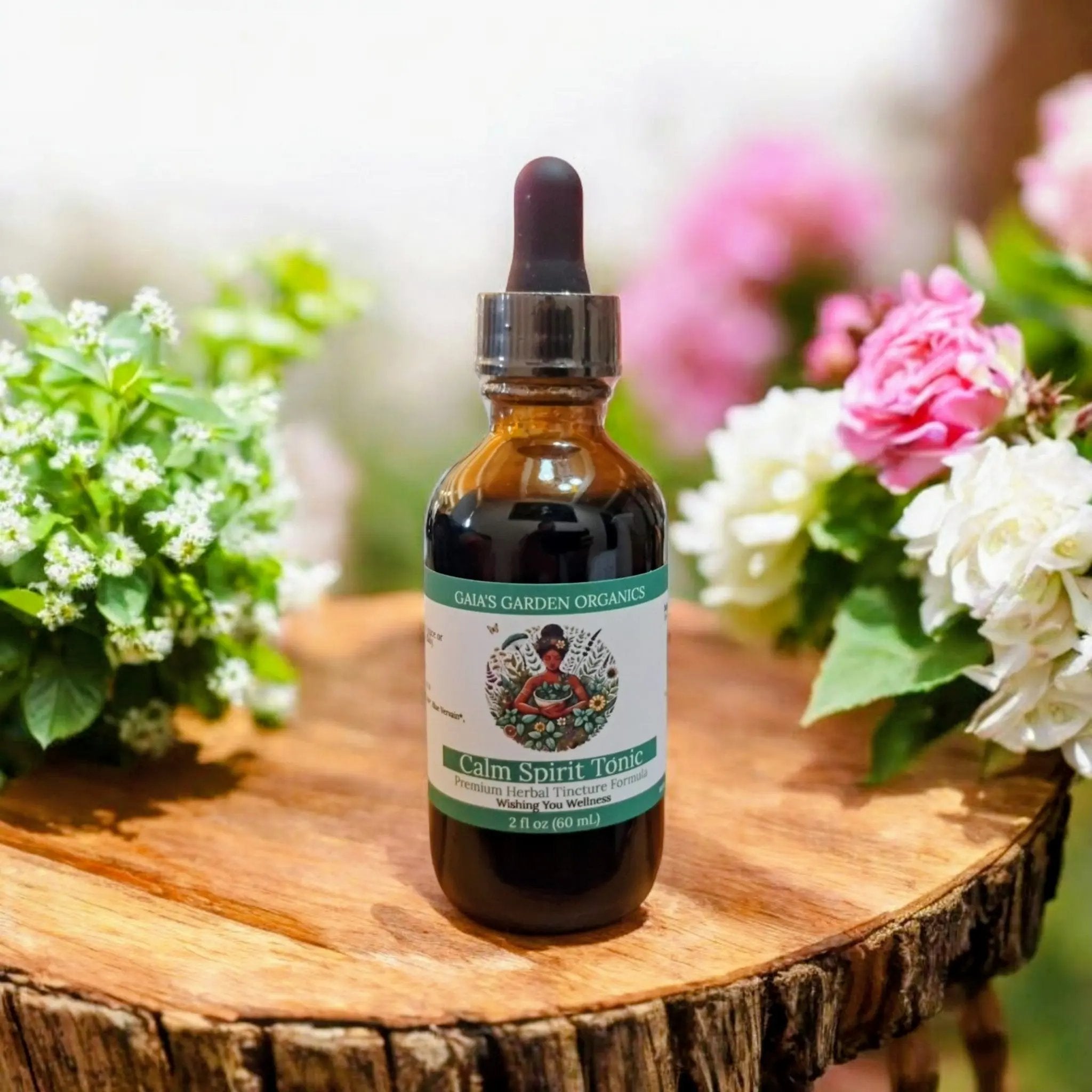
In our catalog that runs as one product and one honest gap. Calm Spirit Tonic carries motherwort at tincture strength, with rose, blue vervain, and tulsi, for the panic-shaped moments. I do not currently make a hawthorn preparation, so the long-arc tonic layer is one you would source separately, and hawthorn is the more interaction-prone of the two, so take that one to your cardiologist first.
If you are only going to run one, run hawthorn, and run it eight weeks before you judge it. The acute tool is more satisfying. The daily tool is more useful.
Where to go from here
- Step 1 (free): Match your essence in 7 questions. Take the essence quiz.
- Step 2 (30-night guarantee): Calm Spirit Tonic (motherwort at tincture strength, with rose, tulsi, and blue vervain) is the product I make that carries motherwort. It is the acute-layer tool for the anxiety-shaped heart-racing moments this guide describes. I do not currently make a hawthorn preparation, so if the long-arc tonic layer is what you are after, source that separately and bring it to your cardiologist first. If the heart pattern you are describing is grief rather than rhythm, Heartful Essence (rose flower essence) works the emotional layer, not the cardiovascular one.
- Step 3 (coming soon): Harmony Within, my Yoga Nidra book.
This guide is general cardiovascular education. People with diagnosed heart conditions or on cardiovascular medications should work with a cardiologist as primary.
Frequently asked
Are hawthorn and motherwort safe to take together?
Yes, they are a classical European herbal pairing. Hawthorn covers the long-arc structural support and motherwort handles the acute nervous-system-driven heart moments. Many traditional formulas combine them. The two herbs work on overlapping but distinct territory and complement each other rather than competing.
I take blood pressure medication. Which herb is safer?
Both can interact, in different ways. Hawthorn can modestly compound the effect of antihypertensives and specifically interacts with digoxin. Motherwort can compound the effect of sedating prescriptions and some cardiac medications. Neither is categorically safer; both require a conversation with your prescriber before starting daily use. At culinary tea doses, the interaction risk is lower than at tincture doses, but it isn't zero.
Which one for menopausal palpitations?
Motherwort, with hawthorn as a daily baseline. Perimenopausal and menopausal heart racing is most often nervous-system-driven (hormonal fluctuation activates the autonomic system), which is motherwort's specialty. Many of my menopausal-anxiety clients run Calm Spirit Tonic (motherwort-containing) for acute episodes, alongside a daily hawthorn preparation for the cumulative cardiovascular support.
How long until I notice something?
Different timescales for each. Motherwort lands within 20-30 minutes of a tincture dose for acute symptoms. Hawthorn builds over 4-8 weeks of daily use for the structural cardiac support. Most clients notice the acute relief from motherwort quickly and the chronic baseline shift from hawthorn around the 6-week mark.
Can I use these in pregnancy or while nursing?
Both should be avoided during pregnancy. Motherwort can stimulate uterine activity; hawthorn safety in pregnancy isn't well-studied. For nursing, both are generally considered safe at moderate tea doses; motherwort even has a traditional postpartum mood-support use (the name itself reflects this). As always, consult your prenatal or postpartum care provider before starting.
Products from this article
Handcrafted in Umpire, Arkansas by Gaia Devi, clinical herbalist.
Explore our apothecary
Learn more
Flower Essences 101
A clinical herbalist's plain-English guide to what flower essences are and how to take them.
Find your match
Browse the Free Practice Library
8 pattern-matched archetype entry points (sleep, anxiety, tension, heart, inner quiet, clarity, boundary, spark), each as a 5-question quiz, a 3-day mini-course, or a one-tap interactive tool.
Shop the apothecary
Medicinal Herbal Teas
Loose-leaf, clinical-herbalist-blended teas, each built around a specific job.
Sources & further reading
Authoritative references consulted in writing this article. Open in a new tab.
- PubMed (HERB CHF, 2009)Hawthorn Extract Randomized Blinded Chronic Heart Failure (HERB CHF) Trial
- Cochrane / PubMed (Pittler et al., 2008)Hawthorn extract for treating chronic heart failure (Cochrane review)
- PubMed (meta-analysis, 2021)Efficacy of Hibiscus sabdariffa on Reducing Blood Pressure in Patients With Mild-to-Moderate Hypertension: A Systematic Review and Meta-Analysis of Published Randomized Controlled Trials
- NCCIHHerbs at a Glance (per-herb safety and evidence)
- Chestnut School of Herbal MedicineFlowering Herbs (article archive)